literature
Political literature hunted from the best-seller list or the recesses of online. Our favorite stories showcase politicians from both sides of the aisle and beyond.
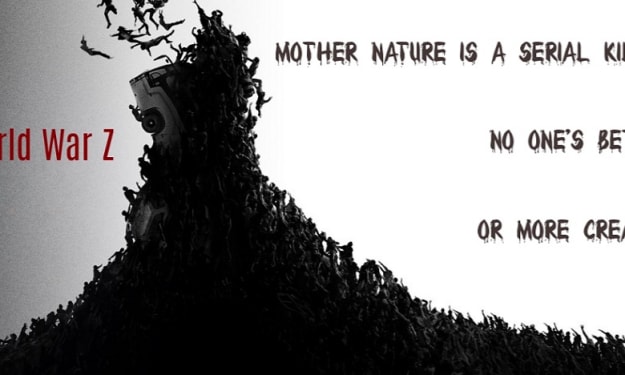
Coronavirus: Our Own Personal World War Z
You may have seen the movie, and its own way the movie attempts to cover the same principles as the book. It focuses largely on the politics, economic consequences, and measures that first allow an extremely contagious pathogen to first spread, then be eradicated. However, I highly recommend that if you want a very accurate, highly probable assessment of our global response to a pandemic, read the book by Max Brooks.
By Elizabeth Tebb7 years ago in The Swamp
Billion Dollar Smiles
Large oak desks presented newsmen and women the opportunity to sit like the panel on high and the individual sitting by herself. Dozens of tablets and digital recording devices and cameras surrounded the woman like animals’ eyes peeping out from the brush of the jungle. She wore a forest green colored suit with gold trim and a matching pillbox hat. She poured a glass of water from the large pitcher. It was chilled but had no ice in it. She breathed calmly, almost seductively. Her voluptuous figure caught the attention of the photogs who would sell her photographs for millions. The curve of her mouth said judicious. Her nose perceptive. And her eyes burned like lanterns in darkness. She moved the microphone closer. Her ebony skin matched the digital apparatus. The hearing commenced.
By Skyler Saunders7 years ago in The Swamp
The Politics of Dancing
There was a time, not so very long ago, when I was certain that the path we walked was not the path of my choosing. Fraught with danger and warning signs that were ignored, we had marched in headfirst with nothing but nerves of steel, a pocketful of pharmaceuticals, and $20 worth of peyote, spiralling totally out of control. As graduate students we spent an inordinate amount of time pondering right versus wrong, light versus dark, and lager versus ale through the early morning hours, nestled in college bars and private rooms in Asian massage parlors, as if it was all just a masturbatory fantasy, only to find that the crisis had now reached critical levels.
By Robert Gottesman7 years ago in The Swamp
Grit and Ferocity
The studio lights seemed to permeate through every crevice. Producers and electricians and other staff members busied about the space, ensuring that this show would be a knockout. This warm summer day became belied by the artificial lights and pumping air conditioning system. Makeup and hair crews applied their talents to the two figures on stage. Jill Mackey peered at her subject for tonight with slight disdain and a little wonderment. She stood 5'9" but could not compare to the 6'8" of Mr. Taylor Goshon. Jill revealed nothing that would indicate her 57 years on this earth. She wore a purple pantsuit with pearls and buttons and matching pumps. Goshon exhibited his 63 years of life with a thin grey beard that wrapped around his visage. He wore a light blue shirt and dark suit, a grey and white striped tie, and brown loafers.
By Skyler Saunders7 years ago in The Swamp
Monikers
Gold and platinum balusters with encrusted diamonds sparkled like bioluminescent creatures. The king and queen stood at the top of the stairs and walked with elegance and precision. They journeyed down the spiral case with as much splendor and care as befitting royalty. Their black skin shone against the white garments that covered their bodies. The queen showed honey brown skin and donned a full length gown. She displayed relaxed, flowing blonde hair. The king’s skin showed medium brown and he sported short locks with a pristine mess dress uniform. Once they reached the bottom of the stairs, a gaggle of photogs snapped pictures with flashes lighting up like bottle rockets. They made their way to the grand ballroom stage where everyone in attendance shot to their feet. “The Star-Spangled Banner” played from the live orchestra. This was America.
By Skyler Saunders7 years ago in The Swamp
The Reconciliation
Dzerzhinsky Square, Moscow November, 1937 I squinted through the falling snow at the entrance of the looming prison opposite me. A massive boulevard separates us, and, anyway, the hulking Chekisti next to me will not let me go any closer. I cinched my overcoat tighter against the Moscow chill. One Party ration card does not provide enough for winter here. And my Bogdan is no longer a Party member. The fool has ruined everything with his tongue.
By Grant Patterson7 years ago in The Swamp
Fascinating Books About American Politicians
In the two-century history of American democracy, there have been many influential and pivotal political actors that forever changed the course and narrative of American politics, sometimes in a positive manner, though often in ways far more complex. From Abraham Lincoln to Franklin D. Roosevelt, many presidents and other holders of political offices have used their power and influence to make profound change, for better or worse.
By Fred Eugene Park8 years ago in The Swamp
World Aflame
Vespucciland and brand reigned at the fashion shows. The Wilmington, Delaware based company set the tone for other fashion houses. Its head designer, Trill von Caseman had dreamed up the idea of the fashion line in his basement. He wanted to create a label that featured high end clothing and accessories that could compete with the French and Italian designers. Caseman’s 38-year-old frame held within it the fire to innovate, to concoct, to invent. A T-shirt cost $800. Dress shoes showed price tags approaching $10,000. But with the advent of celebrities wearing his line on red carpets and musicians sporting his gear in their videos, the American company excelled at marketing.
By Skyler Saunders8 years ago in The Swamp
Ideas, Not Guns
Henrik Colm, contributing editor for the Delaware Times, stepped away from his computer. The glow from his smart devices illuminated his cherrywood skin, cropped Afro. He silenced his smartphone and switched off his tablet and notebook. He wanted to get out into the world and get his information on the six percent of private school shootings that have occurred on American soil from 2000 to 2018.
By Skyler Saunders8 years ago in The Swamp
Appropriate
The pieces of fabric fell to the floor like joy unraveling. Kitchens remained bereft of all food items. Potato sacks replaced the dresses and suits and denim jeans and t-shirts. Everyone in the United States all looked the same—ashen and like grey blobs of paint against a portrait of utter bleakness. Henrik Niles and his wife Anita were with their three children, Bradford (12), Caxton (eight), and Cecily (five), all huddled in their house as the government officials cleared out their home in Alapocas, Delaware. The expansive space proved to be a gem for the Appropriators to rummage through, ransack, and rob the rightful owners, their property. The sun on this day in August blistered the Delaware area and sent tensions high. Families lined up down the blocks filled with spacious mansions. This anger simmered as the Appropriators went in and out of homes like pest control agents.
By Skyler Saunders8 years ago in The Swamp
Post 9/11 Radicalization in Literature: Do Literary Works Show Modern Flaws?
Introduction The events of 9/11 triggered a change in both the world and in literature—a change that has frequently occurred within the history of war and terrorism. The genre of "9/11 literature" has led to issues of validity and accuracy for the writers of which have addressed the devastation head on, and those who use the weakening of a western society as a backdrop to the development of their characters. The conflicts that arise within culture result in the representation of prejudices from the "victims" and contrasting bitterness of the "enemy." Depending on the author and their own experiences and thoughts of such cases, leads to the creation of a protagonist—one that we respect, or one that we find unlikeable. Within the novel Saturday by Ian McEwan, the protagonist of Perowne follows the prior, as a neurosurgeon who is reflective of his faults and open to the errors of the wider world. On the other end The Reluctant Fundamentalist by Mohsin Hamid is formed around the monologue of an individual who feels personally victimized by the Western culture, making for an uncomfortable read and unlikeable personality. The Guardian review of Fundamentalist supports this as the article addresses this narration as "epically one-sided … his developing concern with issues of cultural identity, American power and the victimisation of Pakistan" (Anthony, 2012).
By Caitlin Askew8 years ago in The Swamp