interview
Interviews with top political activists, history buffs, lawmakers, whistleblowers and everyday voters.
Italian Citizenship Ruling: What It Means for Families Abroad
For many people around the world, the idea of Italian citizenship is more than paperwork. It is about identity, family stories, and a connection to ancestors who once left Italy in search of a different life. Some carry old photographs of grandparents who boarded ships decades ago. Others grow up hearing stories about small villages, olive trees, and crowded family dinners. Because of this deep connection, court decisions about citizenship often feel personal. The recent discussion around the Italian citizenship ruling has created both hope and confusion for many families abroad. People want to understand what the decision means and whether it changes their chances of claiming citizenship through ancestry. To understand the moment clearly, it helps to explore how Italian citizenship laws work and why this ruling matters.
By Muqadas khan8 months ago in The Swamp
WHY ARAB STATES BEING TARGETED?
It is absolutely clear that they will go after every country that threatens Israel or is considered an existential or security threat to it. The agenda of Washington, D.C. is very clear: they will target every country that threatens Israel, and either destroy it through carpet bombing or erase it, just as they did with Atomic bombings of Hiroshima and Nagasaki.
By Ibrahim Shah 8 months ago in The Swamp
The Most Shocking Revelation of the Clinton Epstein Testimony
In 2019, Jeffrey Epstein, a man who made multiple trips to visit the Whitehouse during the Clinton years, and was tied to at least one other president, Donald J. Trump, was indicted and taken into custody on human trafficking charges as a result of a long standing investigation into illicit sexual encounters, sex with and the trafficking of minors, and other varied accusations.
By Jason Morton8 months ago in The Swamp
The Protection-of-Innocence Reciprocity Doctrine. AI-Generated.
Core Moral Premise The highest duty of any legitimate social order is the protection of innocent life. Innocent life has absolute moral primacy. Any system that systematically insulates predators, tolerates predatory asymmetry, rewards hypocrisy, or allows aggressors to retain insulation has inverted its purpose and forfeited legitimacy. Truth, justice, reciprocity, humility, mercy, forgiveness, and vertical accountability are structural necessities rather than optional virtues. Vertical accountability means recognition of and submission to a moral law higher than oneself. Authority must flow toward those who most consistently demonstrate sustained competence in moral and epistemic discipline. This competence is shown through observable conduct and trajectory over time, not through doctrinal label, tribal identity, credential alone, or self-profession.
By Peter Thwing - Host of the FST Podcast8 months ago in The Swamp
Sir Jim Ratcliffe: "The UK Has Been Colonised".
For the richest British man who resides in Monaco its very easy to sit there and criticise the UK. What was it that the businessman was moaning about? Speaking to Ed Conway of Sky News, Sir Jim said the UK faces very profound problems. Those are political, social, and economic challenges.
By Nicholas Bishop9 months ago in The Swamp
YouTube Just Blocked This Popular Hack for Free Background Play. AI-Generated.
In a move that has sparked widespread frustration across the internet, YouTube has officially blocked a widely used hack that allowed free users to play videos in the background — a feature that was once exclusive to YouTube Premium subscribers. This change, rolled out quietly across mobile web browsers, marks a significant shift in how the platform enforces its subscription benefits. What Was the Hack? For years, YouTube Premium users have enjoyed features such as ad‑free viewing, downloads, and background playback — the ability to keep videos playing even when the app is minimized or the phone screen is turned off. Free users, unwilling to pay, found clever workarounds. By opening YouTube in third-party browsers like Samsung Internet, Brave, Vivaldi, or Microsoft Edge, they could bypass the Premium paywall and keep audio playing while multitasking. This loophole, cherished by listeners who use YouTube like a music or podcast app, no longer works. Google has updated YouTube’s mobile web experience so that background audio stops when the display goes dark or the browser is minimized if the user is not a Premium subscriber. Official Confirmation from YouTube Reports confirmed by Google show that the company has deliberately updated the mobile web experience to make background playback exclusive to Premium subscribers. A YouTube spokesperson told Android Authority: “Background playback is a feature intended to be exclusive for YouTube Premium members.” This change affects mobile browsers on both Android and iOS devices. Even when playing videos through browsers like Samsung Internet or Vivaldi, audio cuts off shortly after the screen turns off — mimicking the behavior of the official YouTube app’s restrictions. Why It Matters YouTube’s move is clearly aimed at driving more users toward Premium subscriptions, which cost around $13.99/month in the United States and £12.99/month in the UK. These subscriptions bundle perks like ad-free viewing and background playback — features once accessible through browser workarounds. Background playback is a high-value feature for users who listen to music, news, or podcasts while on the move. By gating it behind a paywall, YouTube increases the perceived value of Premium and nudges free users toward paying. Users’ Reactions The response online has been largely negative. Many free users expressed frustration on social media, calling the change “anti-consumer” because background playback was a core convenience. Tech forums have seen debates about alternatives, with some users exploring browser tweaks or third-party apps. However, most workarounds are unreliable or violate YouTube’s terms of service. Interestingly, the Brave browser team has shared guidance on how users might temporarily restore background playback, though this may not last due to YouTube’s server-side enforcement. How the Block Works YouTube’s enforcement appears to be server-side, rather than browser-specific. It checks whether an account has the right to background play before allowing audio to continue when the device is locked. Once a non-Premium account is detected, playback stops within seconds, and lock screen media controls are removed. This system makes it hard for browsers to bypass the restriction, as it relies on real-time entitlement validation. What This Means for the Future This crackdown is part of a broader trend: streaming services increasingly gate what was once free behind subscription walls. As ad revenue slows and competition grows, platforms like YouTube push more aggressively for paid conversions. For users, the message is clear: reliable background playback now requires YouTube Premium. Workarounds may exist but are temporary and unstable. Conclusion YouTube’s decision to block the popular background play hack marks a turning point in how the platform balances free access with subscription incentives. While the move makes business sense, many free users are disappointed. Whether it pushes users to Premium or to competing platforms remains to be seen. One thing is certain: the era of free background play on mobile devices is officially over — at least for most users. ✅ Tip for Bloggers:
By Ayesha Lashari9 months ago in The Swamp
melinda gates. AI-Generated.
Melinda Gates, widely known as Melinda French Gates, has long been recognized as one of the most influential philanthropists of the modern era. While many first learned her name through her marriage to Microsoft co-founder Bill Gates, her identity and impact extend far beyond that association. Over the years, Melinda Gates has built a reputation grounded in leadership, advocacy for women, and a deep commitment to global health and social equity. In recent times, however, public discussions around the Bill Gates Epstein files have added a new layer of attention to her personal and professional journey. Early Life and Professional Foundations Born in Dallas, Texas, Melinda French Gates demonstrated an early interest in technology and problem-solving. She pursued degrees in computer science and economics, a rare combination for women at the time, and later earned an MBA. Her career path led her to Microsoft, where she worked on multimedia and product development projects. It was during her time at the company that she met Bill Gates, beginning a partnership that would eventually influence global philanthropy. Despite stepping away from a full-time corporate role after marriage, Melinda Gates never withdrew from professional ambition. Instead, she redirected her focus toward long-term social impact. Building a Global Philanthropic Vision Together, Bill and Melinda established the Bill & Melinda Gates Foundation, which would grow into one of the largest charitable organizations in the world. While the foundation addressed issues ranging from infectious diseases to education, Melinda French Gates became particularly known for championing women’s rights and gender equality. She consistently emphasized that empowering women and girls creates ripple effects across entire communities. Her advocacy covered access to healthcare, family planning, education, and economic opportunity. Through grants, partnerships, and policy engagement, Melinda Gates helped elevate these issues to the global stage. A Strong Voice for Women and Girls Melinda Gates’ influence extends beyond funding. She has emerged as a public intellectual and advocate, using speeches, interviews, and writing to highlight structural inequalities. Her book The Moment of Lift explored how lifting women uplifts societies, drawing from real-world experiences and personal reflections. What sets Melinda French Gates apart is her insistence on listening to those directly affected by inequality. Rather than positioning herself as a distant benefactor, she has consistently amplified grassroots voices, especially in underserved regions. Bill Gates, Epstein Files, and Public Scrutiny In recent years, renewed attention to the Bill Gates Epstein files has placed Melinda Gates under an intense media spotlight. Jeffrey Epstein’s connections with powerful figures sparked global concern, and questions surrounding Bill Gates Epstein meetings became part of wider public discourse. Melinda Gates later acknowledged that these associations troubled her deeply. In interviews, she described Epstein as a disturbing presence and stated that his involvement was one of several factors that strained her marriage. Her willingness to address the issue calmly and directly stood out in a media environment often driven by speculation. Importantly, Melinda French Gates chose not to sensationalize the situation. Instead, she maintained a clear focus on values, accountability, and personal integrity, reinforcing her long-held commitment to ethical leadership. Divorce and a New Chapter In 2021, Melinda Gates and Bill Gates announced their divorce, ending a marriage that had lasted nearly three decades. The decision captured global attention, not only because of their prominence but also because of the foundation they had built together. Following the separation, Melinda French Gates began reshaping her public role. She continued philanthropic work while asserting greater independence in her initiatives and investments. The transition marked a shift from partnership-based leadership to a more autonomous vision. Independent Philanthropy and Ongoing Impact Today, Melinda Gates focuses on supporting organizations led by women and addressing systemic barriers that limit opportunity. Her philanthropic strategy increasingly emphasizes trust-based funding and long-term structural change rather than short-term solutions. She has also spoken openly about power dynamics, wealth, and responsibility, encouraging transparency and ethical decision-making among global leaders. These perspectives have resonated widely, especially as conversations about inequality and accountability grow louder worldwide. Public Image and Long-Term Legacy Despite controversies linked to the Bill Gates Epstein discussions, Melinda Gates has largely preserved a public image defined by credibility and purpose. Her approach—measured, thoughtful, and grounded in principles—has earned respect across political and cultural lines. Rather than allowing controversy to define her, Melinda French Gates has continued shaping a legacy centered on impact, empathy, and leadership. Her work reminds audiences that influence is not solely a product of wealth but of how that wealth is used. Conclusion Melinda Gates’ story is one of evolution, resilience, and conscious choice. From her early career in technology to global philanthropy, and from navigating public scrutiny tied to the Bill Gates Epstein files to forging an independent path, she has consistently prioritized values over image. As Melinda French Gates continues her work, her journey offers a broader lesson: meaningful leadership is built not only through success but through accountability, courage, and a willingness to grow. In a world increasingly focused on transparency and ethical action, her voice remains
By Saboor Brohi 9 months ago in The Swamp
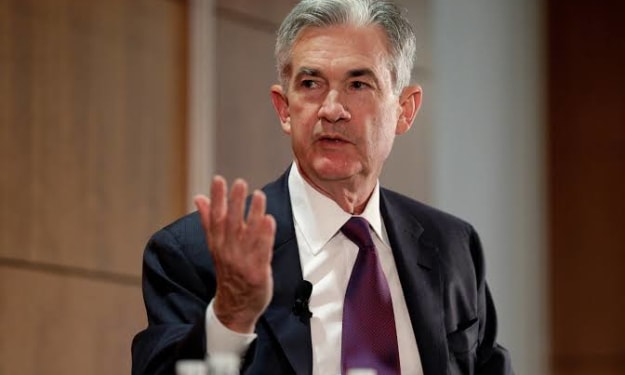
Jerome Powell. AI-Generated.
Few figures wield as much influence over the global economy as the chair of the U.S. Federal Reserve. Jerome Powell has held that responsibility during one of the most economically complex periods in modern history—marked by inflation concerns, shifting interest rate policies, political pressure, and growing debate about the independence of central banks. As his term approaches its conclusion, attention is increasingly turning toward potential successors, with former Federal Reserve governor Kevin Warsh emerging as a prominent name in policy discussions. This moment represents more than a leadership transition. It reflects a broader conversation about how monetary policy should respond to economic uncertainty and how the balance between political authority and central bank autonomy should be maintained. Jerome Powell’s Leadership in Uncertain Times Jerome Powell’s tenure has been defined by a cautious and institution-focused approach. He has emphasized financial stability, consumer protection, and clear regulatory boundaries while allowing emerging financial markets to develop under existing rules. As inflation gradually eased but remained unresolved, markets expected limited room for major policy shifts before Powell’s departure, underscoring the importance of continuity during the final months of his leadership. Powell’s term as Federal Reserve chair is scheduled to end on May 15, 2026, though he could technically remain on the Board of Governors until 2028—something past chairs rarely choose to do. His measured style has often placed him at the center of political debate, particularly as elected officials have pressed for more aggressive interest rate cuts to stimulate growth. Political Pressure and Institutional Independence The relationship between the White House and the Federal Reserve has historically required careful navigation. Recently, that dynamic has intensified. Reports indicate that President Donald Trump has considered replacing Powell and is preparing to announce a nominee for the next Fed chair, with strong speculation surrounding Kevin Warsh. The president has repeatedly criticized the Fed for not cutting rates deeply enough, even as the central bank held them steady around 3.50%–3.75% following recent meetings. This tension highlights a recurring question in economic governance: How independent should a central bank be when monetary policy decisions affect employment, borrowing costs, and investment worldwide? Experts warn that political pressure on the Fed could shape expectations in financial markets and alter long-standing norms about institutional autonomy. Kevin Warsh: A Possible Successor Kevin Warsh is not a newcomer to the world of monetary policy. He served as a Federal Reserve governor from 2006 to 2011 after being appointed by President George W. Bush. Currently affiliated with Stanford University’s Hoover Institution, Warsh has remained active in economic policy debates and has appeared on shortlists for top financial leadership roles. In fact, Treasury officials confirmed that Warsh is among the candidates considered to replace Powell when the chair’s term ends. Warsh has advocated for clearer coordination between the Treasury and the central bank to help markets better understand the intended size of the Fed’s balance sheet and future policy direction. At the same time, he has argued that the Federal Reserve should remain within its traditional responsibilities and avoid extending its authority into areas better handled by other government institutions. These positions suggest a policymaker focused on structural clarity rather than rapid experimentation. A Complex Relationship Between Powell and Warsh The connection between Jerome Powell and Warsh is shaped by both policy overlap and philosophical differences. Notably, discussions have taken place within political circles about replacing Powell with Warsh, though Warsh reportedly advised against attempting to remove the sitting chair prematurely and suggested allowing the term to conclude naturally. This stance reflects respect for institutional processes—even amid political disagreement—and demonstrates how leadership transitions at the Fed are rarely simple. On policy matters, the two share some conservative instincts but diverge in emphasis. Powell has avoided endorsing cryptocurrencies as money while permitting market development, whereas Warsh has acknowledged Bitcoin’s potential as a store of value yet remains cautious about private digital currencies functioning as everyday payment tools. Such distinctions hint at how the Fed’s tone could evolve depending on future leadership. Investigation Adds Another Layer of Scrutiny Powell’s final stretch as chair has also been overshadowed by a federal criminal investigation launched in November 2025. Prosecutors are examining whether he made misleading statements to Congress regarding the cost and scope of renovations at the Federal Reserve’s headquarters. Grand jury subpoenas were issued in January 2026, though Powell has not been charged with any crime. The inquiry has intensified political conflict surrounding the Fed, even as officials maintain that investigative decisions were made independently. While investigations do not necessarily alter policy outcomes, they can shape public perception and increase scrutiny of institutional leadership. Markets Watching the Transition Financial markets tend to react strongly to leadership changes at the Federal Reserve because expectations about interest rates influence everything from mortgage costs to stock valuations. Traders increasingly anticipate only one additional rate cut before Powell’s departure if economic data supports such a move. Meanwhile, economic growth has shown resilience—reaching 4.4% in one recent quarter—adding complexity to decisions about whether to loosen or maintain current policy levels. If Warsh ultimately assumes the role, analysts expect a continued focus on balance sheet discipline and institutional credibility, though the precise direction would depend on evolving economic conditions. The Broader Significance The transition from Jerome Powell to a potential successor like Kevin Warsh is not merely a personnel change. It represents a defining moment for monetary governance in an era shaped by geopolitical uncertainty, technological transformation, and shifting political expectations. Central banks operate most effectively when their decisions are predictable, transparent, and insulated from short-term political pressures. Yet they must also remain responsive to democratic oversight and economic realities. Powell’s legacy may ultimately be judged by his steady leadership during turbulent periods and his commitment to institutional stability. Warsh, if selected, would inherit not only the tools of monetary policy but also the responsibility of preserving public trust in the Federal Reserve. Conclusion Jerome Powell stands at a pivotal crossroads in his career, guiding the Federal Reserve through the closing chapter of his chairmanship while debates intensify over who should lead next. Kevin Warsh’s emergence as a leading contender underscores the importance of experience, policy clarity, and institutional respect in shaping the future of the world’s most influential central bank. Regardless of who occupies the chair, the underlying challenge remains the same: balancing economic growth with price stability while safeguarding the independence that allows the Federal Reserve to act in the long-term interest of the economy. As markets, policymakers, and citizens watch closely, the Powell–Warsh narrative serves as a reminder that leadership at the Federal Reserve is never just about one individual—it is about the direction of global finance itself.
By Saboor Brohi 9 months ago in The Swamp