interview
Interviews with top political activists, history buffs, lawmakers, whistleblowers and everyday voters.
Talks in Islamabad: Can Pakistan Resolve the US-Iran Conflict? A World Holding Its Breath in the Beginning
Talks in Islamabad: Can Pakistan Resolve the US-Iran Conflict? A World Holding Its Breath in the Beginning In April 2026, the world witnessed a rare and historic diplomatic moment: high-level talks between the United States and Iran held in Islamabad, Pakistan. The Islamabad Talks, or these talks, were the first time the two countries had spoken directly to each other at such a high level in decades.
By Farida Kabir6 months ago in The Swamp
Peter Magyar and the Quiet Shift in Public Voice Today
Sometimes change does not arrive with noise. It builds slowly, through moments that feel small at first but begin to connect over time. The name peter magyar has recently entered public conversation in a way that reflects this kind of shift. It is not just about one individual, but about how a single voice can resonate in a wider space. People are paying attention, not only to what is being said, but to what it represents. There is curiosity, but also a deeper sense that something is changing beneath the surface. This article explores the story of peter magyar and what it reveals about public voice, trust, and the growing need for honesty in modern society.
By Muqadas khan7 months ago in The Swamp
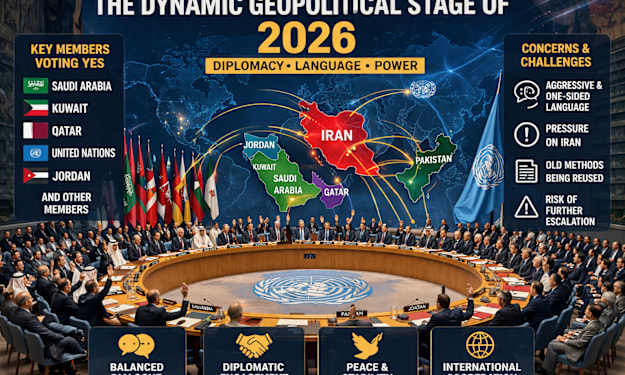
The Dynamic Geopolitical Stage of 2026: Diplomacy, Language, and Power
The year 2026 marks a deeply dynamic and sensitive phase in global geopolitics, where conflicts are no longer shaped solely by military actions or economic sanctions, but increasingly by diplomacy, narratives, and the strategic use of language. At the center of this evolving landscape stands the United Nations, which continues to function as the primary global platform for debate, negotiation, and the passing of resolutions. However, the role of the UN in 2026 is not without controversy, as questions arise about the fairness, tone, and implications of the decisions being made within its chambers.
By Ibrahim Shah 7 months ago in The Swamp
The "Benefits Cliff"
The System Is Not Cash, It Is Replacement For a family of five in Salem, Oregon, the low-income support system is not built primarily on direct cash transfers. It is built on a small number of high-impact programs that function as after-tax purchasing power, replacing major expenses rather than adding to pre-tax income. This distinction matters because it changes how the system must be evaluated. Income is taxed before it becomes usable, while benefits replace costs that would otherwise require after-tax dollars. That means these programs effectively operate as a parallel income structure, but one that is locked into specific categories such as food, housing, childcare, and healthcare rather than flexible cash.
By Peter Thwing - Host of the FST Podcast7 months ago in The Swamp
Four Countries Four Different roles in peace talk of US -Iran War
In the current global landscape, the Middle East has once again emerged as the center of international politics and economic concern. Rising tensions in the region have alarmed major world powers, highlighting the importance of certain countries that possess not only geographical significance but also strategic and diplomatic leverage. Among these, Pakistan, Turkey, Egypt, and Saudi Arabia stand out as key players capable of influencing the course of events.
By Ibrahim Shah 7 months ago in The Swamp
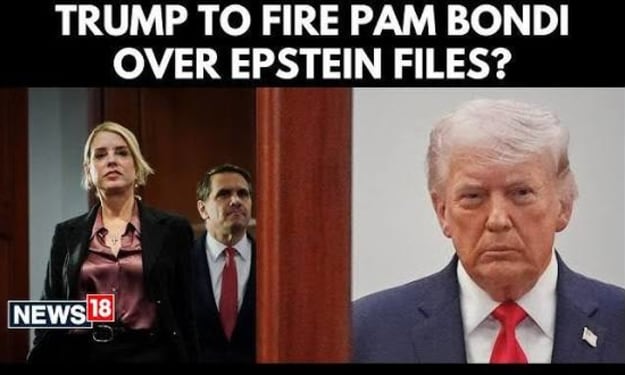
Why Did Donald Trump Remove Pam Bondi?
Introduction The sudden removal of Pam Bondi from her position as Attorney General by Donald Trump has sparked intense debate across political and legal circles. Bondi, a long-time loyalist and political ally of Trump, was widely seen as someone who aligned closely with his agenda. Yet, despite this loyalty, she was dismissed—raising an important question: why would Trump remove someone so closely tied to his administration?
By shaoor afridi7 months ago in The Swamp
Saudi Arabia East- West Petroline
The Middle East has long been the center of global energy politics, with its vast oil and gas reserves shaping not only regional dynamics but also the priorities of major world powers. However, in recent years, a critical question has emerged: should the world continue relying on a few strategic maritime chokepoints for energy transportation, or is it time to develop alternative routes?
By Ibrahim Shah 7 months ago in The Swamp
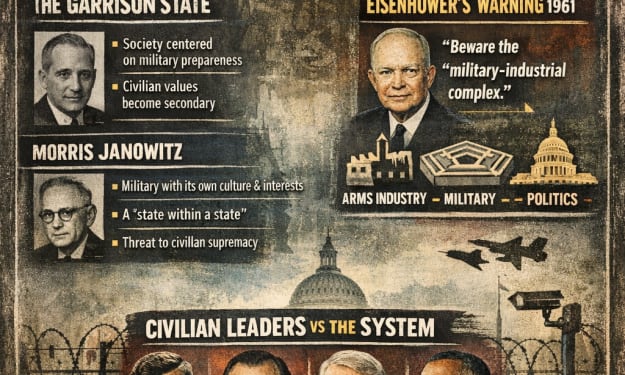
Militarization, Civilian Authority, and the Challenge to Democratic Governance
In modern political systems, one of the most subtle yet profound transformations occurs when societies gradually internalize a military mindset. This shift is not always visible, nor does it happen abruptly. Instead, it unfolds quietly, as civilians begin to perceive the world through the lens of security, threat, and strategic competition. Over time, the distinction between civilian and military leadership can erode, raising critical questions about the future of democratic governance.
By Ibrahim Shah 7 months ago in The Swamp
The Economic Shockwaves of Middle East Conflict
Dubai has long been regarded as a global hub for gold trade and finance, but the ongoing conflict in the Middle East has begun to shake even its strongest economic pillars. With flight operations disrupted and regional instability rising, the ripple effects of war are now being felt across multiple sectors—from energy and aviation to tourism and global finance.
By Ibrahim Shah 7 months ago in The Swamp
Why the United States Temporarily Eased Sanctions on Iranian Oil
In a surprising and strategically calculated move, the United States recently decided to temporarily ease sanctions on Iranian oil exports. This decision comes at a time when global energy markets are under immense pressure due to escalating tensions around the Strait of Hormuz—one of the world’s most critical maritime chokepoints for oil transportation. The move, though limited in scope and duration, reflects the complex balance between geopolitical strategy and economic necessity.
By Ibrahim Shah 7 months ago in The Swamp
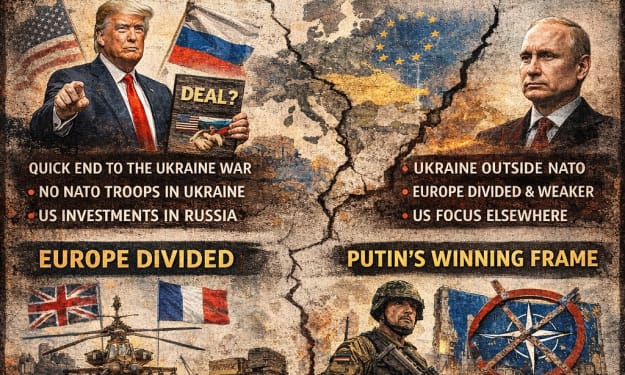
IS Russia Winning Ukraine War?
For much of the conflict, Europe framed Ukraine’s struggle as a clear case of resistance against Russian aggression. The narrative was straightforward: Ukraine was defending sovereignty, and Europe stood firmly behind it. However, by 2026, the situation has evolved into something far more complex. The war is no longer just about Ukraine—it has become a broader strategic test for Europe itself. At the center of this test lies what analysts are calling the “Trump Conundrum.”
By Ibrahim Shah 7 months ago in The Swamp
The decline of the West and the rise of ‘the Rest’ will lead to a new world order
As Donald Trump rampages through the global economic system with his tariff war and throws the United States’ commitment to NATO into serious doubt, fears – even panic – are mounting about the collapse of world order. Part of the anxiety stems from how suddenly these changes appear to have unfolded. In the aftermath of the 2008 global economic crisis, what was often described as the US-led liberal international order seemed alive and well, though not without challenges.
By Ibrahim Shah 7 months ago in The Swamp