how to
Call it Political Involvement for Dummies: Guides to learn how to become an activist, run a campaign or do anything in the political sphere.
America’s Strategic Grip on the Strait of Hormuz
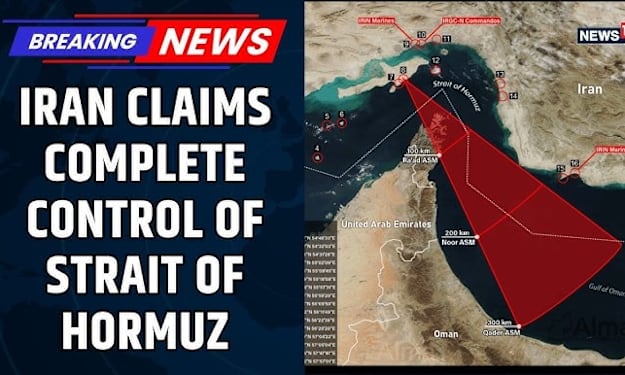
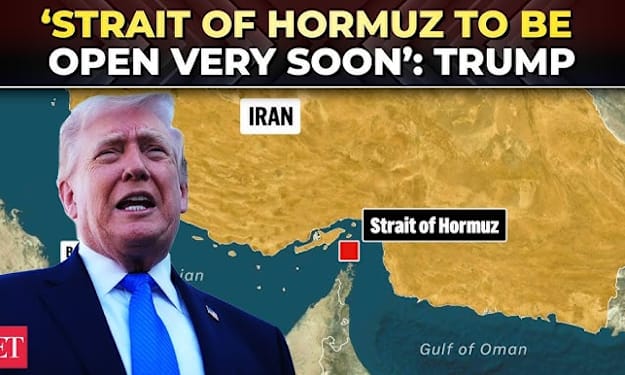
Introduction The Strait of Hormuz is one of the most critical maritime chokepoints in the world. Connecting the Persian Gulf to the open ocean via the Gulf of Oman, it serves as a lifeline for global energy supplies. Roughly a fifth of the world’s oil passes through this narrow passage. Given its importance, the United States maintains a significant presence in the region—but does that translate into control? The answer is more nuanced.
By shaoor afridi6 months ago in The Swamp
Eric Swalwell and the Collapse of a 2026 California Governor Campaign
Eric Swalwell, a longtime Democratic representative from California, has become one of the most controversial figures in the 2026 California governor’s race following a rapid political collapse triggered by serious misconduct allegations reported in April 2026. Once considered a competitive contender in the crowded race to replace term-limited Governor Gavin Newsom, Swalwell’s campaign unraveled within days after investigative reporting from major outlets including CNN and the San Francisco Chronicle brought forward accusations from multiple women. The developments have significantly reshaped the Democratic field and intensified uncertainty in an already fragmented election landscape.
By Story Prism6 months ago in The Swamp
Talks in Islamabad: Can Pakistan Resolve the US-Iran Conflict? A World Holding Its Breath in the Beginning
Talks in Islamabad: Can Pakistan Resolve the US-Iran Conflict? A World Holding Its Breath in the Beginning In April 2026, the world witnessed a rare and historic diplomatic moment: high-level talks between the United States and Iran held in Islamabad, Pakistan. The Islamabad Talks, or these talks, were the first time the two countries had spoken directly to each other at such a high level in decades.
By Farida Kabir6 months ago in The Swamp
America’s Naval Blockade at the Strait of Hormuz
Introduction The Strait of Hormuz, one of the world’s most strategic maritime chokepoints, has once again become the center of global tension. In April 2026, the United States launched a naval blockade targeting Iranian ports after diplomatic talks with Iran collapsed. This move has not only escalated military tensions but also triggered widespread economic and political consequences across the globe.
By shaoor afridi7 months ago in The Swamp
Peter Magyar and the Quiet Shift in Public Voice Today
Sometimes change does not arrive with noise. It builds slowly, through moments that feel small at first but begin to connect over time. The name peter magyar has recently entered public conversation in a way that reflects this kind of shift. It is not just about one individual, but about how a single voice can resonate in a wider space. People are paying attention, not only to what is being said, but to what it represents. There is curiosity, but also a deeper sense that something is changing beneath the surface. This article explores the story of peter magyar and what it reveals about public voice, trust, and the growing need for honesty in modern society.
By Muqadas khan7 months ago in The Swamp
The United States Wants Control Over the Strait of Hormuz
The United States Wants Control Over the Strait of Hormuz The Strait of Hormuz has become the center of one of the most dangerous geopolitical confrontations in recent history. As tensions between the United States and Iran escalate, Washington’s desire to ensure control—or at least secure access—to this narrow waterway reflects far more than a regional dispute. It is about global energy security, military strategy, and economic stability.
By shaoor afridi7 months ago in The Swamp
The Dynamic Geopolitical Stage of 2026: Diplomacy, Language, and Power
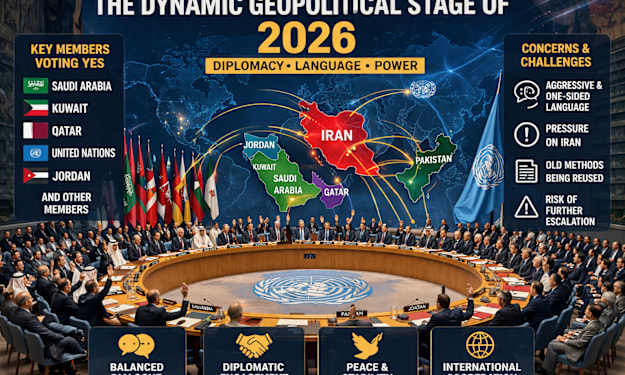
The year 2026 marks a deeply dynamic and sensitive phase in global geopolitics, where conflicts are no longer shaped solely by military actions or economic sanctions, but increasingly by diplomacy, narratives, and the strategic use of language. At the center of this evolving landscape stands the United Nations, which continues to function as the primary global platform for debate, negotiation, and the passing of resolutions. However, the role of the UN in 2026 is not without controversy, as questions arise about the fairness, tone, and implications of the decisions being made within its chambers.
By Ibrahim Shah 7 months ago in The Swamp
What Wisconsin Election Results Reveal About People Today
Elections are not just about numbers. They carry emotion, tension, and sometimes quiet hope. When people follow Wisconsin election results, they are not only looking at who won or lost. They are trying to understand what those results say about real lives, real concerns, and real choices. Behind every vote is a person thinking about their future, their family, and their place in the world. Wisconsin, with its shifting political landscape, often reflects deeper changes happening across the country. This is why its election results draw so much attention. This article explores what Wisconsin election results truly reveal, not just politically, but emotionally and socially.
By Muqadas khan7 months ago in The Swamp
Does Donald Trump Intend to Use an Atomic Bomb in a War?
The idea of a U.S. president using an atomic bomb in war is alarming and highly consequential. Currently, there’s no credible evidence that former U.S. President Donald J. Trump has publicly expressed an intention to use an atomic bomb in conflict, and such a move would break longstanding U.S. and international policy prohibiting first use of nuclear weapons. Yet recent world events and Trump’s rhetoric have renewed debate about U.S. nuclear policy and the risk of escalation.
By shaoor afridi7 months ago in The Swamp
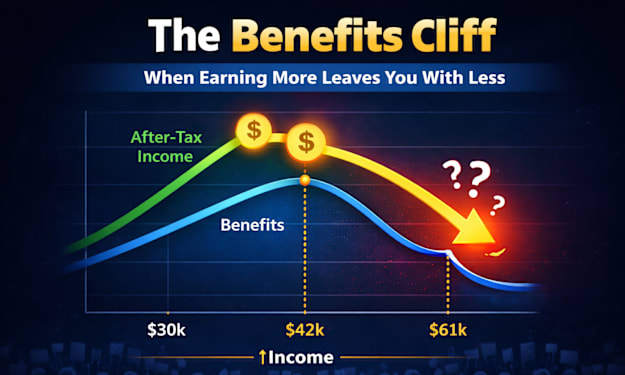
The "Benefits Cliff"
The System Is Not Cash, It Is Replacement For a family of five in Salem, Oregon, the low-income support system is not built primarily on direct cash transfers. It is built on a small number of high-impact programs that function as after-tax purchasing power, replacing major expenses rather than adding to pre-tax income. This distinction matters because it changes how the system must be evaluated. Income is taxed before it becomes usable, while benefits replace costs that would otherwise require after-tax dollars. That means these programs effectively operate as a parallel income structure, but one that is locked into specific categories such as food, housing, childcare, and healthcare rather than flexible cash.
By Peter Thwing - Host of the FST Podcast7 months ago in The Swamp