history
Past politicians, legislation and political movements have changed the course of history in ways both big and small. Welcome to our blast to the past.
Youm-e-Takbeer: Pakistan’s Peaceful Rise as a Responsible Nuclear Power
Youm-e-Takbeer: Pakistan’s Peaceful Nuclear Milestone :Explore the history and significance of Youm-e-Takbeer, Pakistan’s peaceful rise as a responsible nuclear power and symbol of strategic stability.
By Shamshair Khan Hasan Zaiabout a year ago in The Swamp
Why Chagai Was Chosen: The Hidden Story Behind Pakistan’s Nuclear Tests
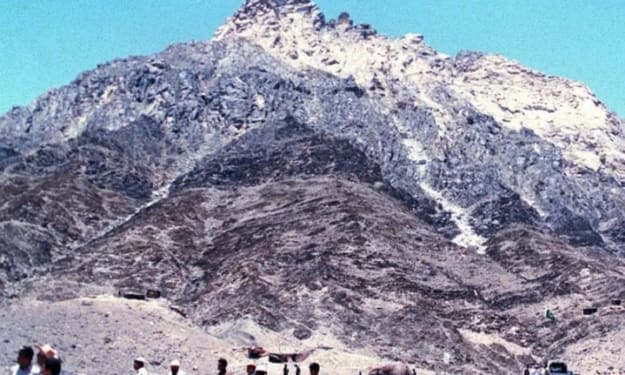
From the Hijacking of the PIA Plane to the Chants of ‘Allahu Akbar’ in Chaghi: When the Black Granite of the Chaghi Mountain Turned White "To India!" the hijacker screamed, pressing a pistol to the pilot’s temple. Pakistan International Airlines (PIA) Flight 544 had taken off from the city of Turbat in Balochistan just ten minutes earlier when this threatening voice reached the pilot’s ears. The Fokker aircraft had departed from Turbat and was en route to Karachi, a city in the Sindh province. According to the pilot, Uzair Khan, the moment the hijacker was distracted by a noise from the rear of the aircraft, he pressed a button that sent a signal to radar indicating that the passenger plane had been hijacked. Later, in the documentary "Flight 544," Uzair Khan explained, “The hijacker had brought maps and such. He told me to keep flying straight. Flying straight would have eventually brought us to the Indian border.” “I told him that the aircraft didn’t have enough fuel. He accepted my request and said we should refuel at Bhuj Airport in Indian Gujarat and then fly to New Delhi.” He adds that after receiving these instructions, “As I neared the border, I used aviation code and said ‘Kilo Delta,’ a term used for the Pakistani city of Hyderabad. Then, while letting the hijacker hear, I asked airport control if this was Bhuj Airport in India. Air traffic control already knew the Pakistani aircraft had been hijacked, so they responded, ‘Yes, this is Bhuj Airport.’” He explains, “Thus, while convincing the hijacker that it was the Indian city of Bhuj, I managed to land at Pakistan’s Hyderabad Airport in the dark of night. That was exactly what I wanted.” This hijacking took place on May 24, 1998. Just days earlier, from May 11 to 13, India had conducted multiple nuclear tests, and it was widely expected that Pakistan would soon respond with its own. After landing at Hyderabad Airport, Pakistani officers there posed as Indian personnel. Following several hours of negotiation, they managed to overpower the three hijackers before dawn. No passengers or crew were harmed. The hijackers were members of the Baloch Students Organization (BSO). According to Pakistani authorities and media reports from that time, the motive behind the hijacking on May 24, 1998, was to prevent Pakistan from responding to India’s nuclear tests. A CNN report from May 1998 indicated that shortly before the hijacking, there were reports of Pakistan preparing a site in Balochistan for nuclear tests. This led to anti-government protests by some political groups in the province. The next day, leading newspapers across Pakistan reported on their front pages that the hijackers had demanded Pakistan not conduct nuclear tests in Balochistan and had also called for increased funding for the province. The three hijackers were later sentenced to death and were executed on May 28, 2015—exactly 17 years after Pakistan’s nuclear tests—at jails in Karachi and Hyderabad. --- How Did Pakistan Manage to Conduct Nuclear Tests on May 28, 1998? Dr. Samar’s Congratulations on India's Tests According to Dr. Samar Mubarakmand, a member of the Pakistan Atomic Energy Commission, he received a call from a friend in the military on the morning of May 11, 1998, informing him about India’s nuclear tests in Pokhran. Speaking at a Khwarizmi Science Society event in Lahore on November 30, 1998, Dr. Samar recounted, “I said, ‘Congratulations!’ I was genuinely happy.” His military friend responded, “You’re congratulating us on India’s nuclear tests?” To which he replied, “Yes, because now we’ll be able to conduct our own.” Dr. Samar explained that back in 1972, when then-Prime Minister Zulfikar Ali Bhutto gathered the country’s scientists in Multan, they had all taken an oath to develop nuclear weapons. After India conducted its first nuclear test in 1974 at Pokhran, Pakistan accelerated its nuclear program. Soon after, Dr. Abdul Qadeer Khan returned from abroad to join the effort. By the late 1980s, the Kahuta plant was complete, and Dr. A.Q. Khan was appointed its head, having previously worked there as a scientist. In this context, after India’s 1998 nuclear tests, it was widely expected that Pakistan would respond. During the same 1998 Lahore event, Dr. Samar said, “As expected, after India’s tests, the Prime Minister became very active. He asked me, ‘Are you ready for this?’ I replied, ‘Absolutely.’ He said, ‘Good! Prepare.’” On the international front, U.S. President Bill Clinton began efforts to prevent Pakistan from conducting nuclear tests, citing concerns of a nuclear conflict in South Asia. In their book “The Man From Pakistan,” Douglas Frantz and Catherine Collins detailed U.S. efforts and Pakistan’s response. They wrote that Clinton called Prime Minister Nawaz Sharif four times, offering incentives to dissuade him from testing. Clinton promised to forgive U.S. loans, remove the Pressler and Solarz amendments (which restricted aid to Pakistan), and secure new military assistance from Congress. In the book “Deception,” Adrian Levy and Catherine Scott-Clark noted that a U.S. delegation led by Deputy Secretary of State Strobe Talbott arrived in Islamabad on May 13, and Pakistan’s Foreign Minister Gohar Ayub reportedly mocked their offer of F-16 jets. In a 2006 interview in London, Nawaz Sharif said Clinton called him five times to urge restraint and avoid testing. “When Talbott came, they thought we would agree. Clinton thought the same. But only we knew what we were going to do.” Frantz and Collins further wrote that three days after India’s tests, CIA Director George Tenet told closed sessions of the U.S. Senate and Congress Intelligence Committees that satellite images showed underground nuclear test preparations in Pakistan’s Chaghi Hills.
By Ikram Ullahabout a year ago in The Swamp
We Are Not a Democracy: Why the Founders Built a Republic
We say we want to destigmatize mental health to create a space where people can speak openly, seek help without shame, and be heard with compassion. But if you look closer, you'll see a very different trend emerging. Mental health isn't always treated as a concern to be addressed. Increasingly, it's being used as a weapon.
By Robert Lacyabout a year ago in The Swamp
Norway Cargo Ship Crash 2025: Human Error Shocking Impact & What It Means for Maritime Safety
Norway Cargo Ship Crash 2025: Human Error Shocking Impact & What It Means for Maritime Safety On the quiet morning of May 22/2025 the peaceful coastal village of Byneset near Trondheim Norway woke up to an unimaginable sight a 443-foot cargo ship lodged in someone’s backyard. For locals used to misty fjords chirping seabirds and the calm rhythm of Norwegian village life the sudden arrival of a steel giant was nothing short of surreal. But beyond the headlines and aerial footage that quickly circled the globe this incident is about much more than a ship crash. It’s about people responsibility trust and the thin line between routine and disaster. Johan Helberg a retired fisherman who’s lived his entire life in Byneset was asleep in his home just meters from the coastline. He awoke not to the thunder of crashing metal or a blaring alarm but to the doorbell. It was my neighbor Johan later recounted to a local news station. He said You have a ship in your garden.’ I thought he was joking. Stepping out into the cold morning air, Johan was greeted by the imposing steel bow of a massive container vessel the NCL Salten wedged just five meters from his front door. The ship had plowed through the shallow shore, breaking through the silence like a colossal mechanical beast.
By Adnan Rasheedabout a year ago in The Swamp
Western Media and the Double Standard in Portraying Black Men
In the digital age, media narratives significantly shape public perception. However, a persistent issue remains: the portrayal of Black men in Western media often reflects deep-seated biases and double standards. These portrayals not only influence societal attitudes but also have tangible effects on the lives of Black individuals.
By Mohammad Ashiqueabout a year ago in The Swamp
Rep. Gerry Connolly Dies at 75 After Cancer Battle
Rep. Gerry Connolly Dies at 75 After Cancer Battle The passing of Representative Gerry Connolly of Virginia at the age of 75 leaves behind more than a vacant congressional seat it leaves a space in the hearts of countless people who saw in him not just a politician but a deeply principled man who genuinely cared for his community and country. After a courageous battle with esophageal cancer Connolly passed away peacefully at his home in Fairfax County surrounded by his family. Born on March 30/1950 in Boston Massachusetts Gerald Edward Connolly was a man driven by conviction and a commitment to public service. From his early days he displayed a deep curiosity about global affairs and government which led him to earn a Master's degree in Public Administration from Harvard University. His path into politics was never about power it was about people. For nearly 30 years Gerry Connolly served Northern Virginia with heart and distinction. He began his political career in local government serving on the Fairfax County Board of Supervisors and eventually becoming its chairman. In that role he oversaw critical initiatives that modernized public infrastructure and expanded services for a rapidly growing community. He was known to work long hours sometimes responding to resident emails late into the night not because he had to but because he believed that every voice deserved to be heard.
By Adnan Rasheedabout a year ago in The Swamp
Pakistan Promotes Army Chief Asim Munir to Field Marshal: Why It Matters
Pakistan Promotes Army Chief Asim Munir to Field Marshal: Why It Matters In a move steeped in symbolism and history Pakistan has promoted its current Chief of Army Staff General Asim Munir to the rank of Field Marshal a title that holds immense military prestige yet has rarely been bestowed in the country’s history. This development is not merely ceremonial it echoes through the corridors of power the barracks of soldiers and the hearts of millions of Pakistanis who have lived through decades of political instability military dominance and the ever changing tides of national security.
By Adnan Rasheedabout a year ago in The Swamp
How China Became a Superpower
China's emergence as a global superpower is one of the most significant transformations in modern history. Over the past four decades, the nation has evolved from a largely agrarian, impoverished country into the world’s second-largest economy and a central player in global geopolitics. This transformation has been driven by a unique blend of economic reform, strategic state planning, political stability, and global engagement. Historical Background In 1949, the People’s Republic of China was established under the leadership of the Communist Party, ending decades of civil war and foreign occupation. However, the initial decades of communist rule were marked by economic stagnation and political upheaval, such as the Great Leap Forward and the Cultural Revolution. These movements severely disrupted China’s development, resulting in widespread poverty and inefficiency. The turning point came in 1978, when Deng Xiaoping initiated a series of reforms that would lay the foundation for China’s rise. By introducing market-oriented policies and opening up to foreign investment, China began to shift from a planned economy to a "socialist market economy." This hybrid model retained state control in key sectors while embracing capitalism in others. Economic Reform and Growth China's economic growth since the 1980s has been nothing short of phenomenal. Through a strategy known as “Reform and Opening-Up,” the country encouraged private enterprise, created Special Economic Zones (SEZs), and welcomed foreign investment. These changes unleashed massive productivity, moved millions out of poverty, and turned China into the “world’s factory.” Between 1980 and 2020, China's GDP grew at an average annual rate of nearly 10%. It became the world’s largest exporter and a manufacturing powerhouse, producing everything from electronics to textiles. Infrastructure development also played a key role, with massive investments in roads, railways, ports, and urban development. Technological Advancement In recent years, China has shifted focus from low-cost manufacturing to high-tech innovation. Government initiatives like "Made in China 2025" aim to dominate industries such as robotics, AI, biotechnology, and green energy. Chinese tech giants like Huawei, Tencent, and Alibaba have become global leaders, and the country has made major strides in areas like 5G, electric vehicles, and quantum computing. China is also investing heavily in space exploration, with the Chang’e lunar missions and a growing presence in satellite and space station technologies. These advances not only reflect economic power but also signify strategic influence on the global stage. Military Modernization Another critical aspect of China's superpower status is its military transformation. The People’s Liberation Army (PLA) has undergone extensive modernization, focusing on advanced weaponry, cyber capabilities, and maritime strength. With the world's largest standing army and the second-largest defense budget, China is increasingly asserting its influence in the South China Sea, Taiwan Strait, and beyond. The Belt and Road Initiative (BRI), though primarily economic, also serves strategic purposes by expanding China's influence across Asia, Africa, and Europe through infrastructure projects and investments. Diplomatic and Political Influence China has strategically positioned itself as a leader in the Global South, offering loans, aid, and infrastructure to developing nations. Through platforms like the Shanghai Cooperation Organization (SCO) and the BRICS alliance, it promotes a multipolar world order that challenges Western dominance. At the United Nations and other international institutions, China plays an increasingly assertive role, advocating for sovereignty, non-interference, and reforms in global governance structures. Domestic Stability and Governance Unlike many other emerging powers, China has maintained internal political stability through centralized governance by the Communist Party. The government’s long-term planning—through five-year plans and strategic economic directives—has ensured consistent development goals and policy continuity. While criticisms exist over human rights and political freedoms, the Chinese model has proved effective in achieving rapid economic and technological progress under a controlled political environment. Challenges Ahead Despite its rise, China faces significant challenges: a shrinking workforce due to an aging population, environmental degradation, debt levels, and geopolitical tensions with the U.S. and its allies. Questions also remain about the sustainability of its political model and how it will handle domestic pressures for reform. Conclusion China's journey to becoming a superpower is the result of strategic reforms, economic planning, and a vision for national rejuvenation. Its rise is reshaping the global balance of power and forcing a rethinking of international relations. Whether it can maintain this trajectory will depend on how it navigates both internal challenges and the complex dynamics of the 21st-century world.
By Shah saab ITabout a year ago in The Swamp
Joe Biden Diagnosed with Aggressive Prostate Cancer: Nation Rallies Behind Former President
Former President Joe Biden Diagnosed with Aggressive Prostate Cancer A Personal and Political Reflection The world received a heavy hearted update this week: former U.S President Joe Biden has been diagnosed with an aggressive form of prostate cancer. At 82 years old Biden’s diagnosis has sparked a wave of concern not only as a political leader but as a father grandfather husband and symbol of resilience. The news has resonated beyond party lines serving as a sobering reminder that illness spares no one regardless of power or prestige. According to his medical team Biden is battling advanced aggressive prostate cancer a serious condition that can spread quickly if not treated in time. Unlike slow growing forms of prostate cancer which are common among older men and often remain manageable this type demands urgent attention. Sources close to the former president revealed that the diagnosis came after routine blood work showed elevated PSA (Prostate Specific Antigen) levels. Further tests including MRI scans and a biopsy confirmed the presence of a high grade fast spreading cancer. Doctors have advised a combination of hormone therapy chemotherapy and possibly radiation in the coming weeks. While the prognosis remains cautious Biden’s medical team remains optimistic about managing the disease due to early intervention.
By Adnan Rasheedabout a year ago in The Swamp
Museum of Idaho welcomes Mummies of the World A Journey Through Time and Humanity
Museum of Idaho welcomes Mummies of the World A Journey Through Time and Humanity In a rare and fascinating opportunity the Museum of Idaho has opened its doors to one of the most unique exhibitions in the world Mummies of the World. This internationally acclaimed exhibit is not just a showcase of preserved bodies it is a journey into ancient civilizations medical science cultural rituals and the universal human story that connects us across time. For many visitors the word mummy conjures up images of Egyptian pharaohs wrapped in linen and laid to rest in golden tombs. While such wonders are indeed part of this exhibit Mummies of the World expands the narrative far beyond the sands of Egypt. This traveling exhibition brings together a breathtaking collection of real human and animal mummies from across the globe including South America Europe Asia and even the United States.
By Adnan Rasheedabout a year ago in The Swamp
The Hair Dance in Qatar: What Does It Mean?
In a world of social media virality, political symbolism, and cultural ambiguity, one short video clip can stir up global curiosity, criticism, or even laughter. This is exactly what happened when a video from Qatar went viral online—showing a high-profile Qatari politician performing what many have labeled a “hair dance” in honor of Donald Trump. As the camera zooms in on his animated head movements and hair shaking, viewers are left baffled. What is this act? A gesture of hospitality? A satire? Or something else altogether?
By Keramatullah Wardakabout a year ago in The Swamp
Royal Navy Achieves Historic First: Warship Destroys Supersonic Missile in Live-Fire Test. AI-Generated.
Royal Navy Achieves Historic First: Warship Destroys Supersonic Missile in Live-Fire Test In a landmark achievement that marks a new era in naval defense capabilities, one of the Royal Navy’s most advanced warships, HMS Dragon, successfully shot down a supersonic missile during a high-stakes military exercise. The interception, a first in the Royal Navy’s history, occurred during NATO’s Exercise Formidable Shield 2025 and has been hailed as a “historic first” in British maritime defense.
By Adnan Rasheedabout a year ago in The Swamp