finance
Money talks; reviewing the global economy, government spending, taxes, and economic policy that affect our social and political future.
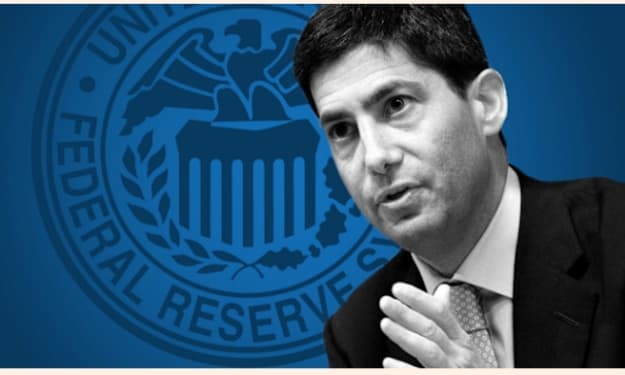
Kevin Warsh: The Fed Chair Nominee Forged by the 2008 Financial Crisis. AI-Generated.
A New Chapter in Federal Reserve Leadership As the United States continues to navigate a complex economic landscape, Kevin Warsh has emerged as a prominent figure. Recently nominated to serve as Chair of the Federal Reserve, Warsh’s appointment is being closely watched by economists, investors, and policymakers alike. His career trajectory, shaped significantly by the 2008 financial crisis, offers insights into how crisis management can define a generation of economic leaders. Early Life and Education Kevin Warsh was born in the late 1970s and displayed early aptitude in economics and finance. His educational path includes: Harvard University, where he earned a degree in Economics Additional studies in public policy and finance, sharpening his understanding of macroeconomic systems These formative experiences equipped him with the analytical tools necessary to navigate volatile economic conditions later in his career. Career Beginnings: From Wall Street to Public Service Warsh’s professional journey began in investment banking and financial consulting, where he gained firsthand experience in financial markets. However, his move into public service marked a turning point: He joined key financial advisory roles, advising policymakers on banking regulation and economic policy His early experience during the dot-com bubble and the housing market fluctuations provided a solid foundation for understanding systemic risk By the time the 2008 financial crisis struck, Warsh was already positioned to play a significant role in shaping policy responses. The 2008 Financial Crisis: Defining Moment The 2008 global financial crisis tested the resilience of the U.S. economy and the world at large. Kevin Warsh became a key advisor in navigating the crisis: He worked on strategies to stabilize the banking system Contributed to the Federal Reserve’s emergency measures Provided input on monetary policy decisions, including interest rate adjustments and liquidity injections Observers note that this period was formative for Warsh, forging his reputation as a crisis-ready economist. His hands-on involvement gave him deep insights into systemic vulnerabilities and the importance of proactive policy intervention. Nomination to Federal Reserve Chair Kevin Warsh’s nomination as Fed Chair reflects confidence in his experience and strategic thinking. Analysts expect him to: Address inflationary pressures while supporting economic growth Oversee monetary policy adjustments with a keen understanding of market reactions Promote financial stability, drawing on lessons from previous crises His leadership style is described as analytical, cautious, and forward-looking, qualities shaped by the high-stakes environment of 2008. Economic Philosophy and Policy Approach Warsh is known for a balanced, data-driven approach to economic policy: Emphasis on financial stability: He prioritizes reducing systemic risk while supporting growth Pragmatic monetary policy: Decisions are guided by empirical data rather than ideological biases Focus on long-term planning: Recognizes the need to anticipate market shifts and structural changes This philosophy positions him as a Fed Chair capable of navigating both short-term shocks and long-term challenges. Challenges Ahead Warsh faces a complex economic environment: Inflation fluctuations post-pandemic Global economic uncertainty, including trade tensions and geopolitical risks Technological disruption in financial markets, including digital currencies and fintech innovations His experience during the 2008 crisis may provide a roadmap for managing unexpected economic turbulence while maintaining public and market confidence. Criticism and Public Perception While Warsh has strong credentials, some critics highlight potential concerns: Connections to Wall Street could raise perceptions of bias toward financial institutions His measured, analytical style may be seen as less bold during urgent crises Navigating political pressures from Congress and the Executive branch could challenge independence Supporters, however, argue that experience during past crises outweighs these concerns, positioning him as a competent and steady leader. Impact of His Leadership If confirmed, Kevin Warsh’s tenure could influence: Interest rates and borrowing costs for businesses and consumers Financial regulations, potentially strengthening safeguards against systemic risks Global confidence in U.S. economic policy, especially among international investors His leadership may also set precedents for how future Fed Chairs respond to economic shocks and crises. Lessons from Kevin Warsh’s Career Warsh’s journey offers several takeaways: Crisis shapes leaders: Real-world challenges provide practical experience that cannot be replicated in textbooks Analytical thinking is essential: Data-driven approaches are crucial for complex economic decisions Resilience matters: Long-term success in economic policy requires the ability to adapt under pressure For aspiring economists and policymakers, Warsh exemplifies how experience, preparation, and analytical rigor combine to form effective leadership. Conclusion: A Fed Chair Forged by Crisis Kevin Warsh’s nomination as Federal Reserve Chair is not just a career milestone—it symbolizes the rise of a generation of economic leaders molded by financial crises and global uncertainty. His experience, particularly during the 2008 financial meltdown, gives him a unique perspective on risk management, monetary policy, and systemic stability. As the U.S. faces new economic challenges, Warsh’s leadership will be closely watched, both domestically and internationally. The lessons from his career highlight the importance of preparedness, insight, and adaptability, qualities essential for navigating the complex world of modern finance.
By Zahid Hussain9 months ago in The Swamp
Gold Prices in Pakistan Today: Historic Highs and Market Dynamics. AI-Generated.
Gold prices in Pakistan have climbed to unprecedented levels, with the price per tola of 24-karat gold reaching a new historic high. On Wednesday, the local gold market recorded one of its biggest single-day increases, with the per tola rate jumping significantly over the previous session. According to industry sources and Pakistan’s principal bullion associations, gold per tola was trading at Rs 551,662, while 10-gram gold was quoted at Rs 472,961 — both figures marking a notable surge amid ongoing economic uncertainty. �
By Ayesha Lashari9 months ago in The Swamp
Vets May Be Required to Publish Prices for Common Pet Treatments. AI-Generated.
Veterinary practices across the UK may soon be required to publish prices for common pet treatments, following growing concerns over affordability, transparency, and competition within the industry. The move comes amid rising frustration from pet owners who say they are often left in the dark about costs until after treatment has begun.
By Ayesha Lashari9 months ago in The Swamp
Low Pay and Boredom Led Me to Get a Secret Second Job. AI-Generated.
I never imagined I would become the kind of person who secretly works two jobs. Growing up, I believed hard work at one place should be enough. You show up on time, do your job well, stay loyal, and eventually life rewards you. At least, that’s what I was taught.
By Ayesha Lashari9 months ago in The Swamp
"Rescued Men Still Owe Hotel Bill Three Weeks Later: A Closer Look at the Dilemma. AI-Generated.
Introduction: Three weeks ago, a group of men were dramatically rescued from a perilous situation, sparking headlines around the world. The men, whose lives were in immediate danger, were saved by a heroic rescue operation, but their struggle didn’t end there. As they started to recover from their traumatic ordeal, they were faced with a financial burden that many had not anticipated: an unpaid hotel bill that had continued to grow during their stay.
By Ayesha Lashari9 months ago in The Swamp
"UK Introduces Major Police Reform: 'British FBI' to Oversee Terrorism and Fraud Investigations". AI-Generated.
Introduction The United Kingdom has recently announced a sweeping overhaul of its law enforcement structure, with a bold initiative aimed at tackling terrorism and fraud more effectively. As part of the reforms, a new national agency—often referred to as the ‘British FBI’—will take on the responsibility of leading investigations into these complex and high-stakes crimes. This move marks a significant shift in how the UK addresses national security threats, organized crime, and financial fraud.
By Ayesha Lashari9 months ago in The Swamp
Help with US border
Overview of the Proposal President Donald Trump recently suggested — in a social media post on Truth Social — that the United States “should have” invoked Article 5 of the North Atlantic Treaty Organization (NATO) in order to bring NATO forces to the U.S. southern border to help stem illegal immigration. According to Trump, calling on NATO allies to secure the border would “free up large numbers of Border Patrol Agents for other tasks.” Article 5 is NATO’s collective defense clause, stating that an armed attack on one member is considered an attack on all. It’s the cornerstone of the alliance’s mutual defense guarantee — and in nearly 80 years, it has been invoked only once, when NATO allies responded to the September 11, 2001 terrorist attacks on the United States. Trump’s remarks represent a sharp departure from how Article 5 has historically been understood and applied. Illegal immigration — no matter the scale — is not typically viewed as an armed attack by another state, which is the standard under the treaty to trigger collective defense.
By USA daily update 9 months ago in The Swamp