finance
Money talks; reviewing the global economy, government spending, taxes, and economic policy that affect our social and political future.
Why the Rising Price of Gold Signals a Long-Term Global Shift. AI-Generated.
For centuries, gold has been seen as a symbol of wealth, stability, and power. Yet in recent years, its rising price is no longer just about tradition or short-term market fear. Instead, gold is increasingly reflecting a deeper, long-term shift in the global economic and political landscape. What we are witnessing today is not a temporary spike driven by crisis headlines, but a structural change in how nations, investors, and institutions view money, risk, and trust.
By Ayesha Lashari9 months ago in The Swamp
Podcast: Why the Price of Gold Reflects a Long-Term Shift. AI-Generated.
The rising price of gold has captured the attention of investors, economists, and everyday consumers alike. Once seen primarily as a hedge against inflation or a store of value during crises, gold is now being viewed through a broader lens—as a symbol of a deeper, long-term shift in the global economic system. In a recent podcast discussion, analysts explored why gold’s surge is not just a short-term reaction to market fear but a reflection of lasting structural change.
By Sajida Sikandar9 months ago in The Swamp
Stock Market News, Feb. 2, 2026: Dow Surges Over 500 Points, S&P 500 Nears Record After Strong Manufacturing Data. AI-Generated.
The U.S. stock market enjoyed a robust session on February 2, 2026, as investors digested a combination of strong economic data, trade optimism, and declining commodity prices. The Dow Jones Industrial Average surged more than 500 points, while the S&P 500 approached record territory, and the Nasdaq also posted solid gains. Meanwhile, oil and gold prices declined, reflecting easing inflation fears and an improved risk appetite among investors.
By Sajida Sikandar9 months ago in The Swamp
Dow Rockets Over 500 Points as Markets Rally on Strong Economic Data and U.S.–India Trade Deal. AI-Generated.
The U.S. stock market opened February with a bang. On Monday, the Dow Jones Industrial Average surged over 500 points, while the S&P 500 closed just shy of its all-time high, fueled by strong manufacturing data and optimistic news on international trade. Meanwhile, oil and gold prices declined, reflecting a market still sensitive to global commodities trends.
By Ayesha Lashari9 months ago in The Swamp
US House Takes Up Deal to Restore Government Funding, Tuesday Vote Expected. AI-Generated.
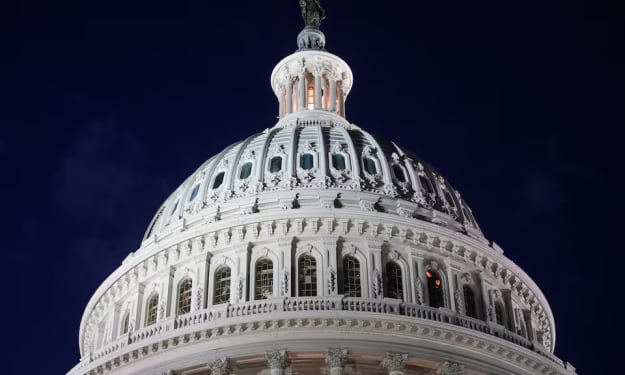
As Washington inches closer to a government shutdown deadline, the US House of Representatives is preparing to take up a bipartisan deal aimed at restoring government funding, with a pivotal vote expected on Tuesday. The move comes after days of negotiations, closed-door meetings, and mounting public pressure to keep federal agencies open and functioning. The funding agreement, while not perfect for either party, reflects the reality of a divided Congress where compromise is often the only path forward. For millions of Americans who rely on federal services—ranging from air travel safety to social assistance programs—the upcoming House vote represents more than a procedural step. It is a test of whether lawmakers can set aside political differences to avoid disruption and economic uncertainty. Why Government Funding Is at Risk Government funding operates on a deadline-driven system. When Congress fails to pass appropriations bills or temporary funding measures, agencies can be forced into a shutdown. Nonessential services halt, federal workers may be furloughed, and public confidence in governance takes another hit. In this case, funding gaps emerged after lawmakers were unable to finalize full-year spending bills. Instead, they turned to a stopgap agreement designed to temporarily restore funding and give negotiators more time to work out long-term solutions. The deal now before the House is part of that effort, crafted to bridge differences without triggering a shutdown. What’s in the Deal? While the full legislative text runs hundreds of pages, the core goal is straightforward: maintain current funding levels for most government operations while extending the deadline for comprehensive budget negotiations. This approach avoids major policy changes, focusing instead on stability. Key elements reportedly include continued funding for defense and non-defense programs, protections for essential federal services, and provisions to prevent abrupt cuts that could impact national security or public welfare. Importantly, the deal does not introduce sweeping new spending initiatives, a point that has helped attract cautious support from lawmakers concerned about fiscal discipline. However, that same restraint has drawn criticism from members who wanted deeper spending cuts or more aggressive policy riders. The agreement, like many in Congress, lives in the uncomfortable middle ground. The Political Tightrope House leadership faces a delicate balancing act ahead of Tuesday’s vote. With slim margins and internal divisions, especially within the majority caucus, passing the deal will likely require bipartisan backing. That means relying on votes from across the aisle—an approach that can invite backlash from more hardline factions. Some lawmakers argue that temporary funding deals only delay tough decisions and contribute to long-term budget dysfunction. Others counter that avoiding a shutdown is the responsible choice, particularly given economic uncertainties and ongoing global challenges. For House leaders, the immediate priority is clear: secure enough votes to move the bill forward and send it to the Senate, where a similar sense of urgency prevails. What Happens If the Vote Fails? If the House fails to pass the funding deal, the consequences could be swift. A shutdown would disrupt federal operations, delay government payments, and potentially impact markets already sensitive to political instability. Past shutdowns have shown that even short interruptions can have lasting effects on public trust and government efficiency. Failure would also intensify political blame games, with each party accusing the other of brinkmanship. That scenario could further complicate future negotiations, making it harder to reach agreements on broader fiscal issues. Public Impact and Voter Sentiment For many Americans, government funding debates can feel distant—until services stop. Airport delays, closed national parks, and stalled benefit processing tend to shift public opinion quickly. Lawmakers are acutely aware that voters often express frustration with shutdown politics, regardless of which party they blame. Recent polling has suggested that the public largely favors compromise to keep the government running, even if it means temporary solutions rather than sweeping reforms. This sentiment has added pressure on House members who may be ideologically opposed to the deal but wary of political fallout. The Senate and White House Angle Assuming the House passes the funding measure, attention will quickly turn to the Senate and the White House. Senate leaders have signaled openness to a short-term solution, emphasizing the need to avoid disruptions. The White House, for its part, has indicated support for measures that maintain government operations and protect key priorities. Still, timing remains critical. Even small delays can create logistical challenges for agencies preparing contingency plans. That’s why Tuesday’s House vote is seen as a crucial inflection point rather than just another step in a long process. A Familiar Pattern, A High-Stakes Moment The current funding standoff fits a familiar pattern in modern American politics: looming deadlines, last-minute deals, and narrow votes. Yet familiarity does not lessen the stakes. Each episode reinforces perceptions about Congress’s ability—or inability—to govern effectively. Supporters of the deal argue that it buys time and stability, allowing lawmakers to pursue more thoughtful negotiations without the pressure of an immediate shutdown. Critics worry it sets a precedent for governing through temporary fixes rather than durable solutions. Looking Ahead Whether the deal passes or fails, the broader budget battle is far from over. A temporary funding measure only postpones the hard conversations about spending priorities, deficits, and fiscal responsibility. Still, for now, the focus remains on Tuesday’s vote and the immediate goal of restoring government funding. As the House prepares to take action, all eyes will be on the vote count and the political alliances that form around it. In a deeply polarized environment, even a short-term agreement can feel like a significant achievement—or a missed opportunity depending on where one stands. What’s certain is that the outcome will shape not only the next phase of budget negotiations but also public confidence in Congress at a moment when stability feels increasingly fragile.
By Saboor Brohi 9 months ago in The Swamp
Trump's tariff cut spells relief in India despite scant details. AI-Generated.
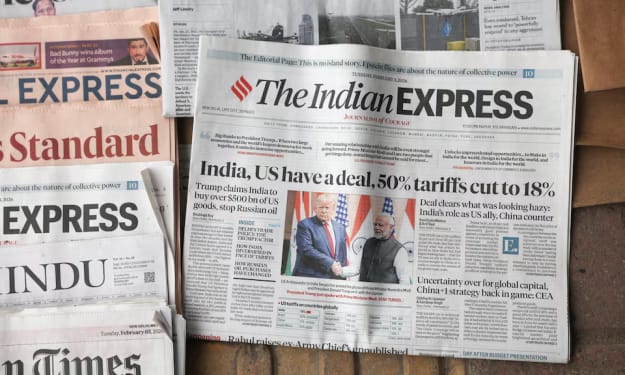
When news broke that former U.S. President Donald Trump was considering a cut in tariffs, the reaction in India was swift and largely positive. For a country that has spent years navigating shifting trade winds with the United States, even a hint of relief from protectionist policies felt like a welcome pause. Markets steadied, exporters breathed easier, and policymakers allowed themselves a moment of cautious optimism. Yet beneath the surface, the announcement came with limited clarity, leaving businesses and analysts weighing hope against uncertainty. A Long Shadow of Tariffs To understand why the possibility of a tariff cut matters so much to India, it helps to revisit the past decade of U.S.–India trade relations. During Trump’s presidency, tariffs became a central tool of American economic policy. While the primary focus was often China, India was not immune. Higher duties on steel, aluminum, and certain manufactured goods disrupted supply chains and added costs for Indian exporters trying to compete in the U.S. market. India responded with its own set of countermeasures, targeting select American goods. While both sides avoided an all-out trade war, the relationship grew more transactional and less predictable. Businesses on both ends learned to operate in an environment where policy shifts could arrive suddenly, altering long-term plans overnight. Why the New Signal Matters Against this backdrop, Trump’s reported inclination to reduce tariffs—if carried through—represents more than a symbolic gesture. For Indian exporters, especially in sectors like textiles, auto components, engineering goods, and pharmaceuticals, lower tariffs could translate into better margins and renewed competitiveness. The U.S. remains one of India’s largest trading partners, and any easing of barriers has a direct impact on revenue and employment at home. Financial markets reflected this sentiment almost immediately. Investor confidence ticked upward, particularly in export-oriented companies that have felt squeezed by higher costs in recent years. The Indian rupee showed signs of stability, and trade-focused stocks saw modest gains as traders priced in the possibility of improved access to the American market. Relief Tempered by Uncertainty Despite the positive mood, the lack of concrete details has kept enthusiasm in check. No official timeline, scope, or sector-specific breakdown has been clearly outlined. Are the proposed cuts broad-based, or will they apply only to select industries? Will they be temporary bargaining chips or part of a longer-term trade reset? These unanswered questions matter deeply to businesses making investment decisions months or years in advance. Trade experts in India have been quick to caution against overinterpretation. They point out that tariff policy, especially under Trump, has often been used as leverage in negotiations rather than as a fixed commitment. Without formal announcements or signed agreements, companies are wary of expanding capacity or entering new contracts based solely on preliminary signals. Strategic Implications for India From a policy perspective, the development places India at an interesting crossroads. On one hand, lower U.S. tariffs could strengthen India’s export-led growth strategy at a time when global demand remains uneven. On the other, it underscores the importance of diversifying trade partnerships to reduce dependence on any single market’s political mood. In recent years, India has accelerated efforts to deepen ties with the European Union, Southeast Asia, and emerging markets in Africa and Latin America. A potential easing of U.S. tariffs does not negate this strategy, but it does offer breathing room. Policymakers may use this window to push for more balanced trade terms, focusing on technology transfer, services, and digital trade—areas where India holds competitive advantages. Domestic Industries Watch Closely Different sectors within India are responding in different ways. Manufacturing-heavy industries, which bore the brunt of earlier tariff hikes, are among the most optimistic. For small and medium-sized exporters, even marginal tariff reductions can mean the difference between profit and loss. Meanwhile, agricultural producers are more cautious. Past trade negotiations have often linked tariff relief to market access demands that can be politically sensitive in India. Farmers’ groups and domestic producers remain alert to the possibility that gains in one area could come with concessions in another. The Political Dimension There is also a broader geopolitical layer to consider. U.S.–India relations have generally trended upward over the past decade, driven by shared strategic interests. Trade, however, has remained a persistent friction point. A move toward tariff reduction could signal an attempt to reset the economic side of the relationship, aligning it more closely with strategic cooperation. For Trump, such a move may also carry domestic political calculations, aimed at balancing protectionist rhetoric with economic pragmatism. For India, the challenge lies in engaging constructively without overcommitting to promises that may shift with the political cycle. A Moment of Cautious Hope In the end, Trump’s tariff cut signal has delivered something India values deeply in uncertain global times: a sense of possibility. It has reminded markets and policymakers alike that trade relationships are dynamic and that even entrenched policies can evolve. Yet the relief remains provisional, contingent on details that have yet to emerge. Until clarity arrives, India’s response is likely to remain measured. Businesses will monitor developments closely, policymakers will keep negotiations flexible, and investors will balance optimism with realism. The headline may suggest relief, but the story is still unfolding—one policy announcement away from either solid progress or renewed ambiguity. For now, India stands cautiously hopeful, ready to seize opportunity if it materializes, but seasoned enough to know that in global trade, promises matter most when they are written, signed, and sustained.
By Saboor Brohi 9 months ago in The Swamp