
They Were Everywhere in 2012. Then Everyone Stopped Wearing Them.
Converse, Kappa, and PUMA didn’t disappear. They became the brands you walk past on your way to something more comfortable.
Summer 2012, Hunan Road Pedestrian Street, Nanjing. I walked from one end to the other and counted seven pairs of Converse in ten minutes. Three black high-tops, two white low-tops, one red high-top, one gray collaboration pair. The guy in the red pair crouched by the roadside tying his laces. The toe cap was already frayed. The girl in the white pair queued at the milk tea shop. Someone in front of her turned around and glanced at her. They were wearing exactly the same shoes. Neither said anything. They looked away.
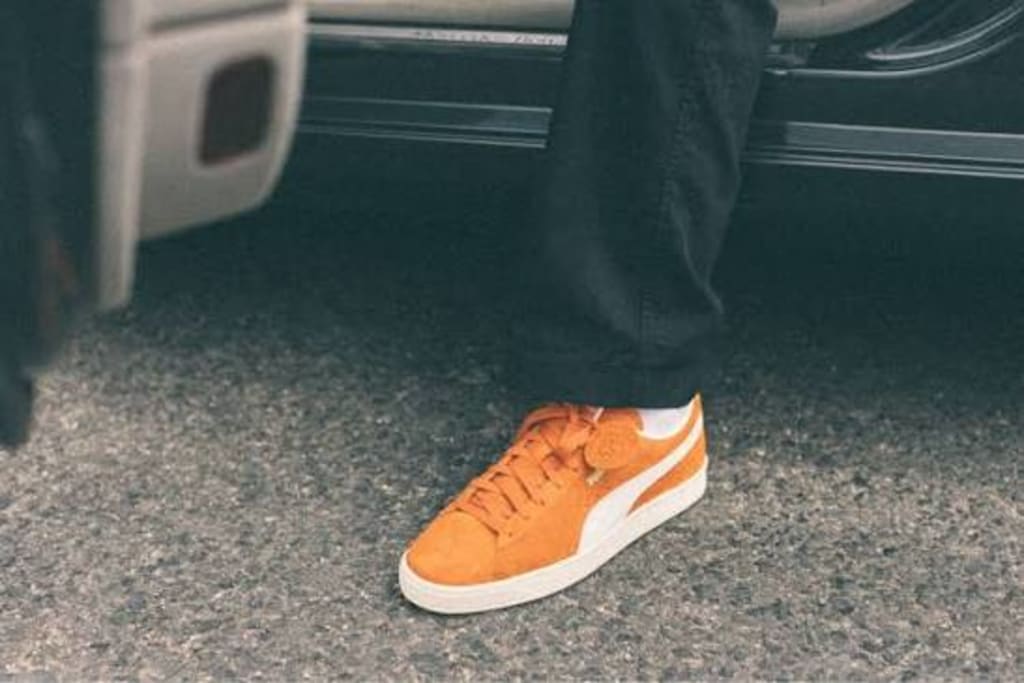
Kappa was on that street too. A guy walked past us in a tape-logo jacket, zipped to the top, the white tape running from shoulder to wrist. Five minutes later another guy came out of the same milk tea shop in the same jacket in a different color. They ran into each other. One smiled and said, “What a coincidence.” PUMA sneakers sat in the first row inside the shoe store: white upper, black running stripe on the side, 499 yuan. The clerk said that model sold best. They could not restock fast enough.
That was when these brands needed no explanation. The logo was a pass. You did not have to say anything. People knew you “got it.”
The change did not happen on one day. It was like the sole of a shoe wearing thin. You do not notice until you step on a pebble, feel a sting under your foot, and realize it has worn through.
The first crack appeared at the heel. A college student bought a pair of classic Converse and wore them to class. He walked twelve thousand steps there and back. Back in the dorm, he took them off and saw a dark red stain on the heel of his sock. He peeled the sock off. The skin was broken. He kicked the shoes under the bed and wore running shoes to class the next day. The Converse sat under the bed for three months. Then his mother took them home when she visited. He did not throw them away. He just never wore them again.
He did not post about it. He did not leave a bad review. He did not even think it was a big deal. He just switched shoes. When enough people do that, the numbers change.
The shoe store owner felt it early. When he stocked up, the new Converse models sat on the shelf for a month with no one asking about them. The classic models still sold after three restocks, but overall sales were falling. He asked a regular customer, “Why haven’t you been buying Converse lately?” The customer said, “I still have two pairs at home. They won’t wear out. I don’t want to buy more.” The owner said, “New models came in. Want to take a look?” The customer glanced at the shelf and said, “Aren’t they all the same?”
“Aren’t they all the same?” That sentence was the whole of aesthetic fatigue. No analysis needed, no data. A man who had bought Converse for five years summed it up in five words.
But aesthetic fatigue was only the first layer. The second layer was on the feet.
A guy with wider feet came into the store and tried on a classic high-top. He wore them for five minutes, stood up, took two steps, and said, “Too tight.” The clerk said, “They’ll loosen up as you wear them.” He took two more steps, crouched down, pinched the toe box, and said, “The front is too narrow.” The clerk said, “That’s just how this model is. Want to look at something else?” He looked at the shelf and said, “The others are pretty much the same.” He put the shoes back in the box and left. The clerk put them back in the cabinet without a word. She had this conversation several times a week.
The third layer was on the price tag. A man wanted to buy Converse. He opened a shopping app, searched “Converse classic,” and saw a pair of canvas sneakers priced at 699 yuan. He scrolled down and saw running shoes at the same price. They had cushioning technology, breathable mesh, and the words “squishy-step feel.” He scrolled back up, looked at the Converse for about three seconds, and placed the order for the running shoes. He did not think Converse was bad. He did the math: 699 yuan for canvas shoes that rubbed his feet, or a pair of comfortable running shoes. It was not a hard calculation.
Kappa’s decline took a different path. A distributor ordered two thousand tape-logo hoodies in 2015. By 2017, eight hundred were still in the warehouse, tags on, covered in dust. He called the regional manager. The manager said, “Wait a bit longer. The retro trend will come back.” The distributor said, “My warehouse rent won’t wait.” He moved the stock to a discount store at 120 yuan apiece. It cleared in three days. After that he stopped ordering Kappa and switched to a domestic sportswear brand. Same price range, sold fast, no need to wait for a trend.
PUMA had one comeback moment. A girl saw a collaboration pair on social media, ordered them, waited two weeks, wore them once, took a photo, and posted it with the caption “Finally here.” Three months later the shoes were at the bottom of her shoe cabinet, under a pair of clogs and a pair of German army trainers. She did not think PUMA was bad. She just “couldn’t remember to wear them.” When she opened the cabinet, her hand hit the clogs first, so she wore the clogs. PUMA gained a burst of buzz from that comeback. It did not earn “the next time.” The comeback relied on collaborations and celebrities, not on a product that made people want to wear it again and again.
In 2023, I walked down Hunan Road again. I passed two pairs of Converse in ten minutes. One was on a middle-aged man. His toe caps were yellowed, his heels worn down. He walked slowly, soles scraping the ground. The other was on a high school student. It was a collaboration pair, laces pulled tight. He looked down at his phone as he walked. The upper was still clean. Kappa’s old storefront had become a milk tea shop, with a queue outside. PUMA was still there. The window displayed running shoes with thick soles and mesh uppers. The sneakers sat on a side shelf, a little dusty.
The shoe store was still there too. The owner had moved Converse from three shelves down to one, next to domestic sneakers and clogs. Someone pushed the door open and asked, “Do you still have Converse?” The owner sat behind the register, pointed to the corner, and said, “Over there. Classic models. Always have them.” His tone was like he was talking about a retired old employee. Still around, but no longer standing at the front.
I picked up a classic high-top and looked at it. Same shape, same toe cap, same laces. The tag said 749 yuan. I put it back, walked to the next shelf, and picked up a pair of domestic sneakers for 99 yuan. I tried them on and took two steps. Soft sole, no rubbing. I bought those.
As I walked out, I thought of the guy in the red high-tops crouched by the roadside tying his laces in 2012. His toe caps were frayed, but he did not switch. People switch now. They did not stop liking Converse. They have options.
Converse won’t disappear. It will stay in that corner, classic models, always there. But “always there” and “everywhere on the street” are different. The gap is the bloodstain on a heel, the 699-yuan price tag, the sentence “Aren’t they all the same?” A classic can make people remember you. It cannot make them pay again and again. The next time they put you on, their feet have to say, “Not bad.”
Feet are more honest than the brain.
About the Creator
Jin
Writer of reamstories
https://reamstories.com/jin
Enjoyed the story? Support the Creator.
Subscribe for free to receive all their stories in your feed. You could also become a paid subscriber, letting them know you appreciate their work.
Comments
There are no comments for this story
Be the first to respond and start the conversation.