work
The mind at work; explore the ins and outs of mental health in the workplace and how to optimize employee psyche and, by extension, your organization's bottom line.
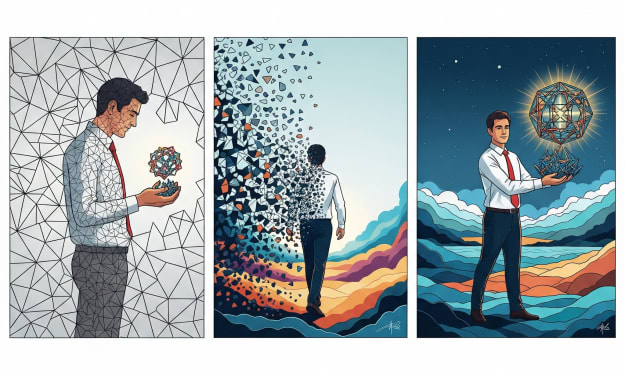
The Unconscious Architect: A Psychoanalytic Exploration of the Transition from Employee to Entrepreneur. AI-Generated.
Abstract This research article delves into the profound intrapersonal shift that occurs when an individual transitions from the structured role of an employee to the autonomous, yet precarious, world of entrepreneurship. Moving beyond traditional business and sociological perspectives, this paper employs a psychoanalytic lens to uncover the unconscious motivations, conflicts, and transformations that underpin this significant life change. Drawing upon the foundational theories of Sigmund Freud, Melanie Klein, and Jacques Lacan, alongside contemporary psychoanalytic thought, the article posits that the entrepreneurial leap is not merely a career move but a deeply personal quest for wholeness, a re-negotiation of authority rooted in early developmental experiences, and a powerful expression of innate creativity. The paper will explore key psychoanalytic concepts such as sublimation, object relations, the father complex, and the role of the ego in navigating the anxieties and triumphs of this transition. Furthermore, this analysis is specifically tailored to the context of the job seeker in Umeå, Sweden, a city characterized by its burgeoning innovation, unique work culture of lagom, and supportive entrepreneurial ecosystem. By examining the interplay between these external realities and the internal, unconscious world of the individual, this article aims to provide a richer, more nuanced understanding of the mechanisms of change at play, offering valuable insights for those contemplating their own professional evolution.
By Alexander Hyogorabout a year ago in Psyche
The Difficulty Of Freedom
In the US, many people Celebrate today as a Day of Freedom from Tyranny. Now, if you go into the History of the US, there are Challenges that Exist, and some may say this is not accurate, or that it is a day about the "Possibility" of Freedom.
By H.E. Dr. Cody Dakota Wooten, COIE, DFM, DHMabout a year ago in Psyche
The Sewing Box
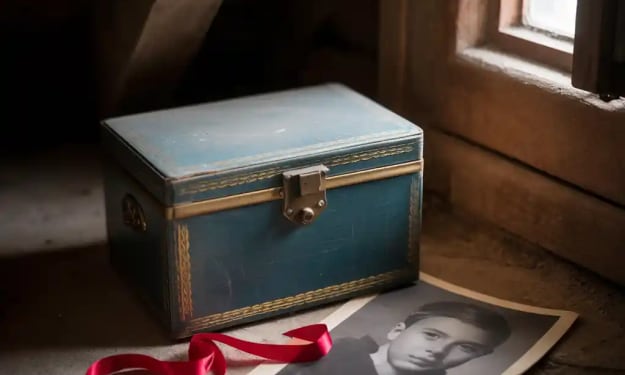
The box had been there for years — untouched, unspoken, and always in the same corner of Nana’s old attic. Covered in lace that had long since yellowed, it waited like a quiet witness. When Nana passed away that winter, I returned home after seven years to settle her affairs — not entirely ready for what I would find. I hadn’t been back since I was sixteen. Back then, I ran away more than I visited. Back then, Nana was already growing forgetful, calling me by my mother’s name, or sometimes by her own sister’s. But she never forgot about the sewing box. She’d always say, “Don’t touch it, Isla. That’s not for you — not yet.” -- The funeral was small. Nana never had many friends left. It was just me, the priest, and the mailwoman who brought her groceries during her final years. The house felt too quiet when I returned — like it had been waiting just for me. I slept in the guest room that night, but I didn’t really sleep. I kept thinking of the sewing box. It wasn’t just nostalgia. Something about it tugged at me — like it had its own heartbeat. -The attic The next morning, I climbed the attic stairs, flashlight in hand. The switch hadn’t worked in years. The air was thick with dust and lavender. Nana always loved lavender. It masked the scent of mothballs and age. I walked past old suitcases, brittle magazines, faded photographs with crinkled edges. And there it was — in the far left corner, exactly where I remembered. The sewing box. It was a faded green, with golden thread-like trim and a broken hinge. A cracked ceramic bird perched on top, its wing chipped. I sat cross-legged in front of it, just like I used to. But this time, I didn’t hesitate. Inside, there were spools of thread, needles, buttons in little paper envelopes. But underneath, tucked beneath a swatch of blue satin, was something else. Letters. Dozens of them, tied with red ribbon, yellowed with age. The top one had my mother’s name — Claire. My heart thumped against my ribs. I opened the first letter. Dear Claire, I know you won’t understand now, but I hope one day you will forgive me. I didn’t have a choice. You were only a baby when he left, and I couldn’t risk it — not again. I had to keep you safe. Nobody believed me back then, but he wasn’t who he said he was. He wasn’t just “James from the library.” He had a darkness I didn’t see — not until it was too late. You have his eyes, you know. I hated them for years, but now… now I wonder if maybe you deserved to know. There’s more in this box than thread, darling. There are truths I never dared speak aloud. — Mother froze. James? My grandfather? I’d never heard anything about him. My mom rarely spoke of her childhood, and when she did, it was always about the happy things — summer at the lake, Sunday cakes, Nana’s lullabies. But not once had she mentioned her father. I read another letter. And then another. Each one was more detailed than the last. Each one filled with fear, and regret, and love twisted in grief. My Nana had been hiding the truth for decades. Not just from my mother — but from the world.
By Arshad khanabout a year ago in Psyche
Unplug to Recharge: Coping with Tech Burnout in 2025
It’s 2025, and we live in a world that never powers down. Notifications blink at us from every corner — smartphones, laptops, smartwatches, even our refrigerators. We are always reachable, always expected to respond, and often silently judged by how quickly we reply. With so many devices competing for our attention, it’s no surprise that tech burnout has become a very real mental health issue.
By Briana Felicianoabout a year ago in Psyche