trauma
At its core, trauma can be thought of as the psychological wounds that persist, even when the physical ones are long gone.
The Therapist Who Gaslit Me Into Thinking I Was the Problem
The Therapist Who Gaslit Me Into Thinking I Was the Problem I thought therapy was supposed to heal you. I thought therapists were supposed to help you find clarity. What I didn’t know—what no one warned me about—is that when you give your mind to the wrong person, they can twist it into something unrecognizable. This is the story of how the very person I trusted to help me recover broke me even further. The First Session: Finally, Hope I was desperate when I first walked into her office. Let’s call her “Dr. A.” It was the middle of the pandemic. I’d just come out of a toxic relationship, was laid off from my job, and was barely sleeping. Anxiety had wrapped itself around my chest so tightly that I sometimes forgot how to breathe. I knew I needed help. Dr. A was warm, articulate, and had that calm energy that made you feel like maybe—just maybe—you weren’t crazy. She nodded at all the right moments. She seemed to get me. I left that first session thinking, This is it. I’m finally going to get better. And for a little while, it felt like I was. The Subtle Shift It didn’t happen all at once. That’s the thing about gaslighting—it’s not loud. It’s a whisper that slowly drowns out your inner voice. At first, she challenged me in ways that felt productive. When I told her my ex used to scream at me during fights, she asked, “What do you think you were doing to trigger that reaction?” When I said my mother emotionally neglected me as a child, she responded with, “Are you sure you're not just interpreting her behavior through a victim lens?” I remember blinking. Confused. Unsure. But she was the professional. I wanted to trust her. So I leaned in. Over the next few months, I stopped telling stories about how I’d been hurt and started digging for how I had caused it. I became obsessed with “taking accountability.” I stopped trusting my instincts. I started believing maybe I was the toxic one. Maybe I had exaggerated the trauma. Maybe I deserved what happened to me. Rewriting Reality One day, I told her I was thinking about cutting off contact with my father, a man who had emotionally abused me my whole life. She paused. Then she said, “I think your desire to cut people off comes from your discomfort with being challenged.” I felt my stomach drop. I knew she was wrong—but the doubt crept in anyway. I left that session crying in my car, not because I was sad, but because I felt like I had betrayed myself. I knew I wasn’t afraid of being challenged. I was afraid of being hurt again. But I couldn’t say it out loud. I’d already been taught not to trust my pain. That’s when I started gaslighting myself. The Breaking Point Six months in, I had a panic attack in her office. It wasn’t the first time, but this one was different. I was shaking, hyperventilating, unable to form words. I had been triggered by a memory I didn’t expect. She looked at me and said calmly, “You're having this reaction because you’re not doing the work. You’re choosing to stay in a victim mindset.” There was no softness. No grounding. No empathy. Just diagnosis. In that moment, I felt smaller than I ever had in my life. And somehow—despite the screaming in my body—I still tried to believe her. Maybe I was being dramatic. Maybe I was just lazy with my healing. That night, I self-harmed for the first time in years. The Escape It wasn’t one big revelation that saved me. It was a thousand tiny moments where I realized my sessions were leaving me more confused, more ashamed, and more broken than when I arrived. I started reading about therapy ethics, gaslighting, and emotional invalidation. And then I found it: a Reddit post from a woman describing almost the exact same experience with her therapist. Every sentence felt like a mirror. I finally said it to myself: It’s not me. It’s her. I ghosted Dr. A the next day. No closure. No goodbye. I didn’t owe it to her. The Aftermath It took me over a year to try therapy again. This time, I chose a trauma-informed therapist who emphasized consent, validation, and collaboration. Someone who didn’t make me feel like my pain was a problem to be solved—but something to be held with compassion. That new therapist helped me rebuild what had been so carefully torn down. She taught me how to re-trust my gut, how to validate my own experience, how to stop apologizing for my emotions. She even helped me work through the trauma of my first therapist, which, ironically, was the hardest to name. Because who wants to admit that the person who was supposed to help you hurt you instead? Why I’m Telling This Story I hesitated to write this. I didn’t want to scare anyone away from therapy. The right therapist can save your life. But the wrong one? The wrong one can make you feel like your suffering is your fault. Like your memories are fiction. Like you’re too broken to fix. If you’re in therapy and constantly feeling more ashamed, more doubtful, or more disconnected from yourself, that is not “growth.” That is not “accountability.” That is harm. You’re allowed to fire your therapist. You’re allowed to walk away. You’re allowed to say, “This doesn’t feel right.” I’m telling this story because someone out there needs to hear it: You’re not the problem. You never were.Start writing...
By Soul Draftsabout a year ago in Psyche
The Complex Role of Dopamine in Our Lives: Understanding the Science Behind Pleasure and Motivation
*The Complex Role of Dopamine in Our Lives: Understanding the Science Behind Pleasure and Motivation* Dopamine is a neurotransmitter that plays a crucial role in our brain's reward and pleasure centers. It is often referred to as the "feel-good" hormone, and for good reason. Dopamine is released in response to pleasurable activities, such as eating, exercise, or social interactions, and it helps to motivate us to repeat those behaviors. However, when dopamine is released in excess or in response to artificial stimuli, such as social media or pornography, it can have negative consequences for our mental and physical health. *The Science Behind Dopamine* Dopamine is a chemical messenger that transmits signals between neurons in the brain. When we experience something pleasurable, dopamine is released, and it binds to dopamine receptors in the brain, producing a feeling of pleasure and satisfaction. This process is known as the brain's reward system, and it is essential for motivating us to engage in behaviors that are necessary for survival, such as eating and reproduction. However, the brain's reward system can be hijacked by artificial stimuli, such as social media, video games, or pornography. These stimuli can cause a rapid release of dopamine, leading to feelings of pleasure and addiction. Over time, the brain becomes accustomed to these artificial stimuli, and it requires more and more dopamine to feel the same level of pleasure. This can lead to a vicious cycle of addiction, where individuals become increasingly dependent on these stimuli to feel good. *The Consequences of Excessive Dopamine Release* Excessive dopamine release can have negative consequences for our mental and physical health. Some of the potential consequences include: - Addiction: Excessive dopamine release can lead to addiction, as individuals become dependent on the pleasurable feelings associated with dopamine release. - Decreased motivation: When dopamine is released in response to artificial stimuli, it can decrease motivation and interest in activities that do not provide a rapid dopamine release. - Decreased pleasure: Over time, the brain becomes accustomed to the artificial stimuli, and it requires more and more dopamine to feel the same level of pleasure. - Negative impact on mental health: Excessive dopamine release can contribute to mental health issues, such as depression, anxiety, and obsessive-compulsive disorder. *How to Manage Dopamine Levels* Fortunately, there are ways to manage dopamine levels and reduce the negative consequences of excessive dopamine release. Some strategies include: - *Dopamine detox*: Taking a break from artificial stimuli, such as social media or video games, can help to reset the brain's dopamine system. - *Engage in natural pleasures*: Engaging in natural pleasures, such as exercise, reading, or spending time with friends and family, can help to increase dopamine levels in a healthy way. - *Set clear goals*: Setting clear goals and working towards them can help to increase motivation and provide a sense of purpose. - *Practice self-care*: Practicing self-care, such as getting enough sleep, eating a healthy diet, and engaging in regular exercise, can help to support overall brain health. *The Importance of Self-Awareness* Self-awareness is critical in managing dopamine levels and reducing the negative consequences of excessive dopamine release. By being aware of our own behaviors and motivations, we can take steps to manage our dopamine levels and reduce our dependence on artificial stimuli. *Conclusion* Dopamine is a complex neurotransmitter that plays a crucial role in our brain's reward and pleasure centers. While dopamine is essential for motivating us to engage in behaviors that are necessary for survival, excessive dopamine release can have negative consequences for our mental and physical health. By understanding the science behind dopamine and taking steps to manage our dopamine levels, we can reduce the negative consequences of excessive dopamine release and improve our overall health and well-being. *The Role of Dopamine in Motivation* Dopamine plays a critical role in motivation, as it helps to reinforce behaviors that are necessary for survival. However, when dopamine is released in response to artificial stimuli, it can decrease motivation and interest in activities that do not provide a rapid dopamine release. *The Impact of Dopamine on Mental Health* Dopamine has a significant impact on mental health, and excessive dopamine release can contribute to mental health issues, such as depression, anxiety, and obsessive-compulsive disorder. By understanding the role of dopamine in mental health, we can take steps to manage our dopamine levels and reduce the risk of mental health issues. *The Importance of Balance* Balance is critical in managing dopamine levels and reducing the negative consequences of excessive dopamine release. By finding a balance between artificial stimuli and natural pleasures, we can reduce our dependence on artificial stimuli and improve our overall health and well-being. *Conclusion* In conclusion, dopamine is a complex neurotransmitter that plays a crucial role in our brain's reward and pleasure centers. By understanding the science behind dopamine and taking steps to manage our dopamine levels, we can reduce the negative consequences of excessive dopamine release and improve our overall health and well-being. By finding a balance between artificial stimuli and natural pleasures, we can reduce
By Ikram Ullahabout a year ago in Psyche
The Complexities of Co-Dependency
Have you ever met a person who couldn't do the simplest of tasks on their own? That person might even be you. There is always a deeper understanding of things like introverts, extroverts, the ego, etc., within society. The idea that someone doesn't like to be surrounded by noise isn't too uncommon. Just like the idea that an individual is their best drowning in a sea of people. Sometimes, you can struggle with an entirely different aspect of self. One that might even make you lose your own. Co-dependency.
By The Darkest Sunriseabout a year ago in Psyche
"The Interpretation of Dreams" by Sigmund Freud: A Journey into the Unconscious Mind
"The Interpretation of Dreams" by Sigmund Freud: A Journey into the Unconscious Mind "The Interpretation of Dreams" is not just a book; it is the foundation of modern psychology and a journey into the mysterious world of the unconscious. First published in 1899, this book revolutionized our understanding of dreams. Dreams are no longer seen as random or meaningless images; instead, they are glimpses into our hidden desires, fears, and experiences. Freud's writing is a blend of science, philosophy, and personal discovery. This book explains how dreams are formed, their connection to the unconscious mind, and how they reveal hidden truths through symbols. Although it can be challenging, for those interested in understanding the human mind, it is a feast for the intellect.
By Ikram Ullahabout a year ago in Psyche
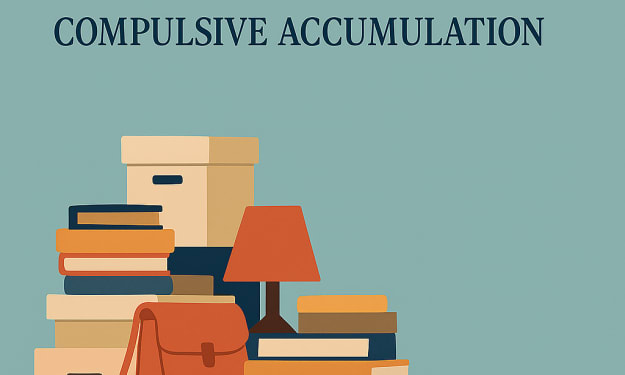
The Psychology of Hoarding: Inside the Mind of Compulsive Accumulation
Introduction In today’s society, where minimalism and decluttering are often glorified, the reality of Hoarding Disorder stands in stark contrast — a condition that disrupts lives, endangers health, and challenges the boundaries of our understanding of mental illness. Far from being a lifestyle choice or mere disorganization, Hoarding Disorder is a serious psychological condition now formally recognized in the Diagnostic and Statistical Manual of Mental Disorders, Fifth Edition (DSM-5). Despite its prevalence, the disorder remains largely misunderstood, stigmatized, and underdiagnosed.
By Siria De Simoneabout a year ago in Psyche
Hangxiety, are you worth it?
I've stopped thinking in black and white. Right and Wrong have left the building. Instead, the era of nuance has arrived. Measured responses, figuring this out in proportion to how I experience this life. And it has made things so much harder, suddenly there is no All or Nothing, only a constant array of Somethings.
By Kirstyn Brookabout a year ago in Psyche
The Peace Within Accountability
There is peace in accountability. If you’d met me several years ago, you couldn’t have paid me to admit that. The truth is, several years ago, I myself was oblivious to this notion. I’d been in conflict after conflict and not one time had I come out on the bottom of it, even if I truly had. If I said it was so, you couldn’t convince me otherwise. And oh, honey I would die on that hill. There was something powerful about lacking any control for much of my life, eventually learning that I can build my own narrative beautifully crafted in any way that I want. What did I want? Control. How did I get it? By being right. Ultimately, I spent over twenty seven of the twenty-eight years on this Earth failing at what I now know as gaslighting. Crafting weak fairytales in a vain attempt to keep what little control I had over my life.
By The Darkest Sunriseabout a year ago in Psyche