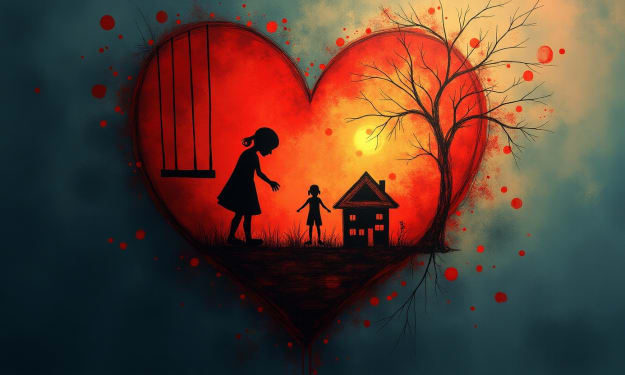
ptsd
Post Traumatic Stress Disorder; The storm after the storm.
The Complex Role of Dopamine in Our Lives: Understanding the Science Behind Pleasure and Motivation
*The Complex Role of Dopamine in Our Lives: Understanding the Science Behind Pleasure and Motivation* Dopamine is a neurotransmitter that plays a crucial role in our brain's reward and pleasure centers. It is often referred to as the "feel-good" hormone, and for good reason. Dopamine is released in response to pleasurable activities, such as eating, exercise, or social interactions, and it helps to motivate us to repeat those behaviors. However, when dopamine is released in excess or in response to artificial stimuli, such as social media or pornography, it can have negative consequences for our mental and physical health. *The Science Behind Dopamine* Dopamine is a chemical messenger that transmits signals between neurons in the brain. When we experience something pleasurable, dopamine is released, and it binds to dopamine receptors in the brain, producing a feeling of pleasure and satisfaction. This process is known as the brain's reward system, and it is essential for motivating us to engage in behaviors that are necessary for survival, such as eating and reproduction. However, the brain's reward system can be hijacked by artificial stimuli, such as social media, video games, or pornography. These stimuli can cause a rapid release of dopamine, leading to feelings of pleasure and addiction. Over time, the brain becomes accustomed to these artificial stimuli, and it requires more and more dopamine to feel the same level of pleasure. This can lead to a vicious cycle of addiction, where individuals become increasingly dependent on these stimuli to feel good. *The Consequences of Excessive Dopamine Release* Excessive dopamine release can have negative consequences for our mental and physical health. Some of the potential consequences include: - Addiction: Excessive dopamine release can lead to addiction, as individuals become dependent on the pleasurable feelings associated with dopamine release. - Decreased motivation: When dopamine is released in response to artificial stimuli, it can decrease motivation and interest in activities that do not provide a rapid dopamine release. - Decreased pleasure: Over time, the brain becomes accustomed to the artificial stimuli, and it requires more and more dopamine to feel the same level of pleasure. - Negative impact on mental health: Excessive dopamine release can contribute to mental health issues, such as depression, anxiety, and obsessive-compulsive disorder. *How to Manage Dopamine Levels* Fortunately, there are ways to manage dopamine levels and reduce the negative consequences of excessive dopamine release. Some strategies include: - *Dopamine detox*: Taking a break from artificial stimuli, such as social media or video games, can help to reset the brain's dopamine system. - *Engage in natural pleasures*: Engaging in natural pleasures, such as exercise, reading, or spending time with friends and family, can help to increase dopamine levels in a healthy way. - *Set clear goals*: Setting clear goals and working towards them can help to increase motivation and provide a sense of purpose. - *Practice self-care*: Practicing self-care, such as getting enough sleep, eating a healthy diet, and engaging in regular exercise, can help to support overall brain health. *The Importance of Self-Awareness* Self-awareness is critical in managing dopamine levels and reducing the negative consequences of excessive dopamine release. By being aware of our own behaviors and motivations, we can take steps to manage our dopamine levels and reduce our dependence on artificial stimuli. *Conclusion* Dopamine is a complex neurotransmitter that plays a crucial role in our brain's reward and pleasure centers. While dopamine is essential for motivating us to engage in behaviors that are necessary for survival, excessive dopamine release can have negative consequences for our mental and physical health. By understanding the science behind dopamine and taking steps to manage our dopamine levels, we can reduce the negative consequences of excessive dopamine release and improve our overall health and well-being. *The Role of Dopamine in Motivation* Dopamine plays a critical role in motivation, as it helps to reinforce behaviors that are necessary for survival. However, when dopamine is released in response to artificial stimuli, it can decrease motivation and interest in activities that do not provide a rapid dopamine release. *The Impact of Dopamine on Mental Health* Dopamine has a significant impact on mental health, and excessive dopamine release can contribute to mental health issues, such as depression, anxiety, and obsessive-compulsive disorder. By understanding the role of dopamine in mental health, we can take steps to manage our dopamine levels and reduce the risk of mental health issues. *The Importance of Balance* Balance is critical in managing dopamine levels and reducing the negative consequences of excessive dopamine release. By finding a balance between artificial stimuli and natural pleasures, we can reduce our dependence on artificial stimuli and improve our overall health and well-being. *Conclusion* In conclusion, dopamine is a complex neurotransmitter that plays a crucial role in our brain's reward and pleasure centers. By understanding the science behind dopamine and taking steps to manage our dopamine levels, we can reduce the negative consequences of excessive dopamine release and improve our overall health and well-being. By finding a balance between artificial stimuli and natural pleasures, we can reduce
By Ikram Ullahabout a year ago in Psyche
How Childhood Neglect Impacts Adults
Today, I wanted to take the time to talk about something that is really important to me: childhood neglect and abuse. For the longest time in my life, I felt the need to justify what happened to me, to think "well, it's my fault", or "there's something wrong with me", or "my parents aren't terrible people maybe I'm just imagining my mistreatment". The thing is, the older I've gotten, the more I've learned of the complex impacts of childhood neglect and abuse. It's not always easy to detect because we are confused as kids; we don't know that what's being done to us is wrong. The families where this happens are sometimes the kinds of families that look alright from the outside world, but instead are deeply hurting. That's what my experience with childhood neglect and abuse was like. I was isolated in my room a lot, a witnessed physical abuse, and listened to arguments constantly. Even though my whole life I was trying so hard to just find my way, the thing is, my family never gave me the support I needed to succeed, so then I turned into this:
By Slgtlyscatt3redabout a year ago in Psyche
The Complexities of Co-Dependency
Have you ever met a person who couldn't do the simplest of tasks on their own? That person might even be you. There is always a deeper understanding of things like introverts, extroverts, the ego, etc., within society. The idea that someone doesn't like to be surrounded by noise isn't too uncommon. Just like the idea that an individual is their best drowning in a sea of people. Sometimes, you can struggle with an entirely different aspect of self. One that might even make you lose your own. Co-dependency.
By The Darkest Sunriseabout a year ago in Psyche
"The Interpretation of Dreams" by Sigmund Freud: A Journey into the Unconscious Mind
"The Interpretation of Dreams" by Sigmund Freud: A Journey into the Unconscious Mind "The Interpretation of Dreams" is not just a book; it is the foundation of modern psychology and a journey into the mysterious world of the unconscious. First published in 1899, this book revolutionized our understanding of dreams. Dreams are no longer seen as random or meaningless images; instead, they are glimpses into our hidden desires, fears, and experiences. Freud's writing is a blend of science, philosophy, and personal discovery. This book explains how dreams are formed, their connection to the unconscious mind, and how they reveal hidden truths through symbols. Although it can be challenging, for those interested in understanding the human mind, it is a feast for the intellect.
By Ikram Ullahabout a year ago in Psyche
Hangxiety, are you worth it?
I've stopped thinking in black and white. Right and Wrong have left the building. Instead, the era of nuance has arrived. Measured responses, figuring this out in proportion to how I experience this life. And it has made things so much harder, suddenly there is no All or Nothing, only a constant array of Somethings.
By Kirstyn Brookabout a year ago in Psyche
Understanding PTSD: A Comprehensive Psychological Overview of Post-Traumatic Stress Disorder
Introduction Post-Traumatic Stress Disorder, commonly known as PTSD, is a deeply impactful psychological condition that can emerge after a person has lived through or witnessed a traumatic event. Although the term is often linked to soldiers returning from war, the reality is that PTSD can affect anyone — survivors of abuse, accidents, natural disasters, medical trauma, or even secondary exposure to traumatic events through loved ones or professional work.
By Siria De Simoneabout a year ago in Psyche
The Sewing Box
The box had been there for years — untouched, unspoken, and always in the same corner of Nana’s old attic. Covered in lace that had long since yellowed, it waited like a quiet witness. When Nana passed away that winter, I returned home after seven years to settle her affairs — not entirely ready for what I would find. I hadn’t been back since I was sixteen. Back then, I ran away more than I visited. Back then, Nana was already growing forgetful, calling me by my mother’s name, or sometimes by her own sister’s. But she never forgot about the sewing box. She’d always say, “Don’t touch it, Isla. That’s not for you — not yet.” -- The funeral was small. Nana never had many friends left. It was just me, the priest, and the mailwoman who brought her groceries during her final years. The house felt too quiet when I returned — like it had been waiting just for me. I slept in the guest room that night, but I didn’t really sleep. I kept thinking of the sewing box. It wasn’t just nostalgia. Something about it tugged at me — like it had its own heartbeat. -The attic The next morning, I climbed the attic stairs, flashlight in hand. The switch hadn’t worked in years. The air was thick with dust and lavender. Nana always loved lavender. It masked the scent of mothballs and age. I walked past old suitcases, brittle magazines, faded photographs with crinkled edges. And there it was — in the far left corner, exactly where I remembered. The sewing box. It was a faded green, with golden thread-like trim and a broken hinge. A cracked ceramic bird perched on top, its wing chipped. I sat cross-legged in front of it, just like I used to. But this time, I didn’t hesitate. Inside, there were spools of thread, needles, buttons in little paper envelopes. But underneath, tucked beneath a swatch of blue satin, was something else. Letters. Dozens of them, tied with red ribbon, yellowed with age. The top one had my mother’s name — Claire. My heart thumped against my ribs. I opened the first letter. Dear Claire, I know you won’t understand now, but I hope one day you will forgive me. I didn’t have a choice. You were only a baby when he left, and I couldn’t risk it — not again. I had to keep you safe. Nobody believed me back then, but he wasn’t who he said he was. He wasn’t just “James from the library.” He had a darkness I didn’t see — not until it was too late. You have his eyes, you know. I hated them for years, but now… now I wonder if maybe you deserved to know. There’s more in this box than thread, darling. There are truths I never dared speak aloud. — Mother froze. James? My grandfather? I’d never heard anything about him. My mom rarely spoke of her childhood, and when she did, it was always about the happy things — summer at the lake, Sunday cakes, Nana’s lullabies. But not once had she mentioned her father. I read another letter. And then another. Each one was more detailed than the last. Each one filled with fear, and regret, and love twisted in grief. My Nana had been hiding the truth for decades. Not just from my mother — but from the world.
By Arshad khanabout a year ago in Psyche
She Grew Anyway - part 1
This story started in 1985 in a village in India where suicides were common in those days. Young men and women, facing challenges and difficulties in life used to die by consuming pesticides which are used to protect fields from pests. This story also shows how untreated generational trauma affects lives of children in those families for decades together and even to till date. This is the story of a girl baby who lost her mother to suicide when she was only a year old and left by her dad. The story of survival, rejection, resilience and a divine protection. The girl's name is Priscilla and her mother's name is Shushan
By ann prasanna gogireddyabout a year ago in Psyche