pop culture
Representations of mental health in pop culture; dissect and discuss popular psychology, mental illness stigmas, and media depictions.
The Numb Age
Introduction: The Hidden Epidemic In today’s hyper-connected world, most of us are drowning—not in water, but in noise. Not from sirens or shouting, but from pings, reels, ads, and algorithmically curated chaos. It’s not a virus or a war. It’s something quieter, but just as damaging: dopamine exhaustion.
By Debarghya Chatterjee2 years ago in Psyche
The Forgotten Language of Touch: How Physical Contact Shapes Our Emotional Well-being
In a world dominated by screens and digital expressions, we have learned to communicate through messages, emojis, and reactions. We connect in online meetings, express love with virtual hearts, and offer condolences through comment sections. Yet, in our reliance on words and technology, we’ve drifted away from one of the oldest and most profound forms of communication—physical touch.
By Mysteries with Professor Jahani2 years ago in Psyche
The Invisible Weight: Living with the Emotional Baggage We Don’t Talk About
The Backpack No One Sees When my friend Julia died suddenly in a car accident, her husband, Mark, showed up to her funeral wearing a crisp suit and a smile that didn’t reach his eyes. He shook hands, accepted casseroles, and thanked everyone for their support. Two years later, at a dinner party, he casually mentioned he still sets a place for her at the table. The room fell silent. No one knew what to say—not because they didn’t care, but because grief, like so much of our emotional baggage, lives in the shadows.
By Mysteries with Professor Jahani2 years ago in Psyche
How Small Acts of Kindness Changed My Perspective on the World
The Day a Stranger’s Umbrella Taught Me About Humanity It was a gray, drizzly afternoon in Kyoto when I first grasped the quiet power of kindness. I stood outside a train station, drenched and frustrated, silently berating myself for forgetting my umbrella. Out of nowhere, a woman in her sixties—her silver hair peeking beneath a sunhat despite the rain—paused beside me. Without speaking, she opened her bright red umbrella and held it over both of us. We walked in silence for two blocks until she nodded toward my destination: a tucked-away tea shop. When I thanked her, she smiled and said, “The rain feels lighter when shared.” Her words lingered long after the clouds parted.
By Mysteries with Professor Jahani2 years ago in Psyche
Why Wednesday Addams’ Is the Perfect Gen Z Antihero
She doesn’t smile. She doesn’t conform. She isn’t interested in being liked—and yet, the world is obsessed with her. When Netflix’s Wednesday hit the screen, it didn’t just resurrect a classic gothic icon. It gave Gen Z something rare: a character who doesn’t chase approval, doesn’t flinch at awkward silences, and definitely doesn’t apologize for being different. In an age of curated perfection, Wednesday Addams walks in like a cold draft from an open crypt—refreshing, unsettling, and unapologetically real. --- The Antihero We’ve Been Waiting For Wednesday Addams isn’t your average heroine. She doesn't save the day with charm or smile through her struggles to win hearts. She navigates her world—both supernatural and social—with cutting sarcasm, deadpan wit, and a glare that could freeze boiling water. She's the kind of girl who brings a knife to fencing class and a violin to a crime scene. But in this twisted, hyper-connected era where authenticity is marketed like a product and rebellion is branded, Wednesday doesn’t just play the part of an outsider—she is one. That’s what makes her resonate so deeply with Gen Z. --- The Power of Being Unapologetically You Gen Z is often accused of being “too sensitive” or “too online.” But what critics often miss is that this generation has grown up in the constant glare of the internet, where every move can be recorded, judged, and memeified. It's a world where individuality is celebrated on the surface—but subtly punished beneath. Enter Wednesday. She isn’t trying to be relatable. She wears what she wants (always black), says what she thinks (usually savage), and doesn’t waste time pretending to care about popularity. Her entire persona screams, “I am not like the others”—and she doesn't care if that makes people uncomfortable. In a society drowning in the pressure to fit in, she’s a black-clad lifeboat of self-possession. --- Mental Health, Isolation, and the Outsider Archetype One of the more compelling aspects of Wednesday’s character is how she explores loneliness and mental health without ever stating it outright. She's not immune to emotional conflict—she just handles it on her own terms. She’s often isolated, even when surrounded by others. She battles her inner demons while facing very real ones. She’s independent to a fault, pushing people away even when she needs them. That quiet war—between detachment and desire for connection—is painfully relatable. Many Gen Z viewers recognize that tug-of-war within themselves. In Wednesday’s icy detachment, they find a version of their own guarded hearts. --- A Feminist Icon Without the Hashtag Wednesday is a feminist, but not in the way media often packages female empowerment. She doesn’t deliver monologues about equality. She doesn’t need to. Her strength is in her silence, her defiance, her intelligence, and her refusal to let anyone—man, monster, or mean girl—define her. She’s smarter than her teachers, braver than her peers, and more emotionally mature than most adults. And she doesn’t need to show skin, dumb herself down, or soften her edges to be accepted. In fact, she doesn’t care about being accepted at all. That, in itself, is power. --- She Doesn’t Want to Be a Role Model—And That’s Why She Is One Perhaps the ultimate reason why Wednesday Addams is the perfect Gen Z antihero is that she refuses the title. She’s not trying to lead anyone. She's not “inspiring change” or “building a brand.” She just is. And in a generation that values authenticity over perfection, and realness over relatability, that’s the most heroic thing of all. She gives Gen Z permission to be weird, to be dark, to be honest, to be real—without the need to filter it for mass appeal. So yes, Wednesday Addams is cold, creepy, and emotionally unavailable—but in this glittering digital age, she’s exactly the kind of flawed, fascinating antihero Gen Z needs. Not to fix the world. But to remind them they don’t have to fit into it.
By Gift Abotsi 2 years ago in Psyche
The Importance of Staying True to Yourself
Introduction: In a world full of distractions, expectations, and pressures, it can be easy to lose sight of who you truly are. Society often pushes us to fit into molds that aren’t aligned with our true selves, whether it’s through social media, peer influence, or even family dynamics. But staying true to yourself is one of the most important things you can do for your personal well-being and fulfillment. Living authentically allows you to be at peace with who you are, attract the right people into your life, and pursue your passions without fear or regret. In this article, we’ll explore the significance of staying true to yourself and how embracing your authenticity can lead to a richer, more fulfilling life.
By Inside the soul2 years ago in Psyche
Why the World Needs More People with a Good Heart?
Introduction: In a world that often feels chaotic, divided, and sometimes unkind, one of the most precious gifts we can offer is a good heart. But what does it mean to have a good heart? It’s not about being perfect, or always doing the right thing. Rather, it’s about carrying kindness, empathy, and a genuine care for others, regardless of the situation. In a society that often emphasizes success, status, and material wealth, having a good heart is a silent but powerful revolution. People with good hearts offer something that is so desperately needed today — a chance for humanity to reconnect with its compassion. And this world needs more of them now than ever before.
By Inside the soul2 years ago in Psyche
The Power of Forgiveness: How Letting Go Can Free Your Heart
Introduction: Forgiveness is not just about letting others off the hook. It's about freeing yourself. In a world full of grudges, bitterness, and unresolved conflicts, forgiveness is the key to peace. It’s a strength, not a weakness — and it’s one of the most powerful tools we have to heal ourselves and build stronger, more meaningful relationships. The process of forgiving can be incredibly liberating. It’s an act that empowers you to move forward in life, without the burden of past pain. Whether it’s forgiving someone who hurt you deeply or forgiving yourself for mistakes you've made, the act of letting go of resentment brings healing in profound ways. In this article, we'll explore how the power of forgiveness can transform your life and help you find peace within.
By Inside the soul2 years ago in Psyche
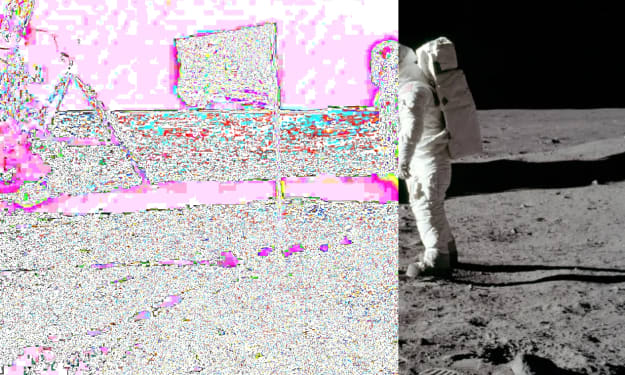
Apollo 11: A Forensic Approach to Photographic Consistency
Note: This process began in 2021 and is now concluding There is a quiet, unrelenting pain in recognizing that the truth—the hard, unvarnished truth—often holds no power in the face of perception. I have spent years deliberately training myself to acknowledge my own errors, embracing the discomfort of self-examination. And yet, the more I correct myself, the more the world accuses me of an inability to concede. The irony is a bitter one.
By Andrew Lehti2 years ago in Psyche
Richard Dominick’s Role in the Decline of American Society’s Behavioral Standards
The Jerry Springer Show, known for its sensationalized conflicts, outrageous confrontations, and controversial content, played a significant role in shaping American media and public discourse. Richard Dominick, the show's executive producer from 1994 to 2008, was instrumental in driving the show’s most infamous elements—escalating its shock value, prioritizing drama over discourse, and pushing the boundaries of what was acceptable on daytime television. Through his leadership, the show not only entertained but also contributed to the normalization of problematic behaviors such as violence, public humiliation, and moral decay. This essay argues that Dominick’s leadership in shaping the show’s content significantly contributed to the normalization of toxic behaviors in American society, fostering a culture of aggression, spectacle, and desensitization to social norms.
By Vera Locke2 years ago in Psyche