photography
Photography that showcases mental health issues and those suffering; photos that educate, empathize, and let you see the world through a new lens.
I’m the One Who Never Falls Apart—Until I Did
By Nadeem Shah I’ve always been “the strong one.” You know the type—the person who listens at 2 a.m. when someone needs to vent, who holds space for tears that aren’t their own, who never seems to crack no matter how heavy the storm gets. That was me.
By Nadeem Shah about a year ago in Psyche
The Silence Between Us
By Nadeem Shah It had been 472 days since we last spoke. Not that I was counting—at least, not anymore. In the beginning, I counted everything. The days since the argument. The hours since I thought about calling. The number of messages I typed and never sent. The seconds I stood outside your door that one night… and turned away.
By Nadeem Shah about a year ago in Psyche
Jim Morrison was right, people are strange!
Jim Morrison was right, people are strange! What is it about humans that we seem to “want” to attract drama into our lives?! Feelings of animosity are never enjoyable so why on earth do we so often not only entertain them but willingly attract them into our sphere of being?!
By Feral La Femmeabout a year ago in Psyche
The Complex Role of Dopamine in Our Lives: Understanding the Science Behind Pleasure and Motivation
*The Complex Role of Dopamine in Our Lives: Understanding the Science Behind Pleasure and Motivation* Dopamine is a neurotransmitter that plays a crucial role in our brain's reward and pleasure centers. It is often referred to as the "feel-good" hormone, and for good reason. Dopamine is released in response to pleasurable activities, such as eating, exercise, or social interactions, and it helps to motivate us to repeat those behaviors. However, when dopamine is released in excess or in response to artificial stimuli, such as social media or pornography, it can have negative consequences for our mental and physical health. *The Science Behind Dopamine* Dopamine is a chemical messenger that transmits signals between neurons in the brain. When we experience something pleasurable, dopamine is released, and it binds to dopamine receptors in the brain, producing a feeling of pleasure and satisfaction. This process is known as the brain's reward system, and it is essential for motivating us to engage in behaviors that are necessary for survival, such as eating and reproduction. However, the brain's reward system can be hijacked by artificial stimuli, such as social media, video games, or pornography. These stimuli can cause a rapid release of dopamine, leading to feelings of pleasure and addiction. Over time, the brain becomes accustomed to these artificial stimuli, and it requires more and more dopamine to feel the same level of pleasure. This can lead to a vicious cycle of addiction, where individuals become increasingly dependent on these stimuli to feel good. *The Consequences of Excessive Dopamine Release* Excessive dopamine release can have negative consequences for our mental and physical health. Some of the potential consequences include: - Addiction: Excessive dopamine release can lead to addiction, as individuals become dependent on the pleasurable feelings associated with dopamine release. - Decreased motivation: When dopamine is released in response to artificial stimuli, it can decrease motivation and interest in activities that do not provide a rapid dopamine release. - Decreased pleasure: Over time, the brain becomes accustomed to the artificial stimuli, and it requires more and more dopamine to feel the same level of pleasure. - Negative impact on mental health: Excessive dopamine release can contribute to mental health issues, such as depression, anxiety, and obsessive-compulsive disorder. *How to Manage Dopamine Levels* Fortunately, there are ways to manage dopamine levels and reduce the negative consequences of excessive dopamine release. Some strategies include: - *Dopamine detox*: Taking a break from artificial stimuli, such as social media or video games, can help to reset the brain's dopamine system. - *Engage in natural pleasures*: Engaging in natural pleasures, such as exercise, reading, or spending time with friends and family, can help to increase dopamine levels in a healthy way. - *Set clear goals*: Setting clear goals and working towards them can help to increase motivation and provide a sense of purpose. - *Practice self-care*: Practicing self-care, such as getting enough sleep, eating a healthy diet, and engaging in regular exercise, can help to support overall brain health. *The Importance of Self-Awareness* Self-awareness is critical in managing dopamine levels and reducing the negative consequences of excessive dopamine release. By being aware of our own behaviors and motivations, we can take steps to manage our dopamine levels and reduce our dependence on artificial stimuli. *Conclusion* Dopamine is a complex neurotransmitter that plays a crucial role in our brain's reward and pleasure centers. While dopamine is essential for motivating us to engage in behaviors that are necessary for survival, excessive dopamine release can have negative consequences for our mental and physical health. By understanding the science behind dopamine and taking steps to manage our dopamine levels, we can reduce the negative consequences of excessive dopamine release and improve our overall health and well-being. *The Role of Dopamine in Motivation* Dopamine plays a critical role in motivation, as it helps to reinforce behaviors that are necessary for survival. However, when dopamine is released in response to artificial stimuli, it can decrease motivation and interest in activities that do not provide a rapid dopamine release. *The Impact of Dopamine on Mental Health* Dopamine has a significant impact on mental health, and excessive dopamine release can contribute to mental health issues, such as depression, anxiety, and obsessive-compulsive disorder. By understanding the role of dopamine in mental health, we can take steps to manage our dopamine levels and reduce the risk of mental health issues. *The Importance of Balance* Balance is critical in managing dopamine levels and reducing the negative consequences of excessive dopamine release. By finding a balance between artificial stimuli and natural pleasures, we can reduce our dependence on artificial stimuli and improve our overall health and well-being. *Conclusion* In conclusion, dopamine is a complex neurotransmitter that plays a crucial role in our brain's reward and pleasure centers. By understanding the science behind dopamine and taking steps to manage our dopamine levels, we can reduce the negative consequences of excessive dopamine release and improve our overall health and well-being. By finding a balance between artificial stimuli and natural pleasures, we can reduce
By Ikram Ullahabout a year ago in Psyche
"The Interpretation of Dreams" by Sigmund Freud: A Journey into the Unconscious Mind
"The Interpretation of Dreams" by Sigmund Freud: A Journey into the Unconscious Mind "The Interpretation of Dreams" is not just a book; it is the foundation of modern psychology and a journey into the mysterious world of the unconscious. First published in 1899, this book revolutionized our understanding of dreams. Dreams are no longer seen as random or meaningless images; instead, they are glimpses into our hidden desires, fears, and experiences. Freud's writing is a blend of science, philosophy, and personal discovery. This book explains how dreams are formed, their connection to the unconscious mind, and how they reveal hidden truths through symbols. Although it can be challenging, for those interested in understanding the human mind, it is a feast for the intellect.
By Ikram Ullahabout a year ago in Psyche
The Sewing Box
The box had been there for years — untouched, unspoken, and always in the same corner of Nana’s old attic. Covered in lace that had long since yellowed, it waited like a quiet witness. When Nana passed away that winter, I returned home after seven years to settle her affairs — not entirely ready for what I would find. I hadn’t been back since I was sixteen. Back then, I ran away more than I visited. Back then, Nana was already growing forgetful, calling me by my mother’s name, or sometimes by her own sister’s. But she never forgot about the sewing box. She’d always say, “Don’t touch it, Isla. That’s not for you — not yet.” -- The funeral was small. Nana never had many friends left. It was just me, the priest, and the mailwoman who brought her groceries during her final years. The house felt too quiet when I returned — like it had been waiting just for me. I slept in the guest room that night, but I didn’t really sleep. I kept thinking of the sewing box. It wasn’t just nostalgia. Something about it tugged at me — like it had its own heartbeat. -The attic The next morning, I climbed the attic stairs, flashlight in hand. The switch hadn’t worked in years. The air was thick with dust and lavender. Nana always loved lavender. It masked the scent of mothballs and age. I walked past old suitcases, brittle magazines, faded photographs with crinkled edges. And there it was — in the far left corner, exactly where I remembered. The sewing box. It was a faded green, with golden thread-like trim and a broken hinge. A cracked ceramic bird perched on top, its wing chipped. I sat cross-legged in front of it, just like I used to. But this time, I didn’t hesitate. Inside, there were spools of thread, needles, buttons in little paper envelopes. But underneath, tucked beneath a swatch of blue satin, was something else. Letters. Dozens of them, tied with red ribbon, yellowed with age. The top one had my mother’s name — Claire. My heart thumped against my ribs. I opened the first letter. Dear Claire, I know you won’t understand now, but I hope one day you will forgive me. I didn’t have a choice. You were only a baby when he left, and I couldn’t risk it — not again. I had to keep you safe. Nobody believed me back then, but he wasn’t who he said he was. He wasn’t just “James from the library.” He had a darkness I didn’t see — not until it was too late. You have his eyes, you know. I hated them for years, but now… now I wonder if maybe you deserved to know. There’s more in this box than thread, darling. There are truths I never dared speak aloud. — Mother froze. James? My grandfather? I’d never heard anything about him. My mom rarely spoke of her childhood, and when she did, it was always about the happy things — summer at the lake, Sunday cakes, Nana’s lullabies. But not once had she mentioned her father. I read another letter. And then another. Each one was more detailed than the last. Each one filled with fear, and regret, and love twisted in grief. My Nana had been hiding the truth for decades. Not just from my mother — but from the world.
By Arshad khanabout a year ago in Psyche
"The Gentle Path to Healing"
It sounds like you've shared a really thoughtful piece about healing and self-care. Here are a few ways to reword it, focusing on slightly different angles: Option 1 (Focus on the Turning Point): > Her presence was a turning point. She didn't judge or try to solve my problems; she simply offered support when I needed it most. Shortly after, I started therapy, which felt daunting at first. Expressing my inner turmoil was a challenge, but with consistent effort, I began to understand myself better. Healing wasn't a quick fix, but reaching out for help was the crucial first step in rediscovering my true self. > > Learning to set boundaries became an act of self-love. I used to say "yes" to everything, fearing I'd disappoint others or appear difficult. I mistakenly believed I was being helpful, but in reality, I was neglecting my own needs. Each time I agreed to something that didn't align with my well-being, I was denying myself the chance to nurture my own happiness. Saying "no" wasn't about becoming cold; it was about valuing my own capacity and limits. Surprisingly, establishing these boundaries didn't disrupt things – instead, it felt like an act of self-care. > > The path to healing isn't a straight line. Some days bring lightness and hope, while others feel heavy with old stresses. I used to think feeling down meant I was failing, that healing was a final destination. But the truth is, healing is a winding, uneven journey with forward steps, backward steps, and sideways moments. The important thing is to keep returning to yourself, to keep making choices that support your healing, even when it feels impossible. Now, when darkness returns, I can meet it with calm and acceptance, knowing it's part of the process. > > In conclusion, remember that whatever you're facing, you are not broken – you are human. It's perfectly okay to step back, rest, or seek support. It takes courage to acknowledge your limits and ask for help. Sometimes, our lowest points can lead to profound personal growth, as they did for me. When I felt like I had hit rock bottom, I was actually beginning a slower, more authentic life, one I can finally be proud of. As you navigate your own journey, remember that the light will return. It comes in moments, big and small, reminding you that you are here, and that you matter. > Option 2 (Focus on Self-Compassion): > The simple presence of a supportive person, who offered understanding without judgment, encouraged me to seek therapy soon after. Initially, therapy felt intimidating, as I struggled to articulate my inner world. However, with time and persistence, I began to gain clarity about my experiences. Healing wasn't instantaneous; it was the act of asking for help that initiated my journey back to my authentic self. > > Learning to establish boundaries became an essential act of self-compassion. My tendency to always say "yes" stemmed from a fear of disappointing others or appearing selfish. I mistakenly believed I was doing the right thing by agreeing to everything, even when it conflicted with my own needs. In reality, I was betraying myself. Each time I overextended myself, I was denying myself the opportunity to nurture my own well-being and happiness. Saying "no" wasn't about becoming unkind; it was about recognizing and honoring my own limits. I was surprised to find that setting boundaries didn't create chaos; instead, it felt like a profound act of self-love. > > The journey of healing is rarely linear. There will be days filled with lightness and hope, and others when old feelings resurface. I used to interpret these low points as setbacks, believing that healing meant reaching a permanent state of well-being. However, healing is a fluid process, characterized by progress that isn't always consistent. There will be forward steps, backward steps, and detours. The crucial element is to continually return to yourself, to keep making choices that support your healing, even when it feels incredibly challenging. Now, when difficult feelings arise, I can approach them with a sense of calm, allowing myself to feel them and remembering that they are a natural part of the journey. > > Ultimately, please remember that whatever you are experiencing, you are not flawed; you are human. It is perfectly acceptable to need to withdraw, take a break, or seek support. It requires courage to acknowledge your limits and ask for help. Often, our most challenging moments can pave the way for significant personal transformation, as they did for me. When I felt like I had lost everything, I was actually beginning to embrace a more intentional and genuine way of living, a life I now value deeply. As you navigate your own path, hold onto the understanding that the light will return. It finds you in moments, both big and small, reminding you of your presence. You are here, and that is significant. > Option 3 (More Concise): > Her non-judgmental support led me to therapy, which was initially scary as I didn't know how to express myself. Over time, I began to understand my inner world. Healing wasn't immediate; asking for help was the start of my journey back to myself. > > Setting boundaries became an act of self-love. My "yes-saying" came from a fear of disappointing others, but it was a betrayal of my own needs. Saying "no" wasn't cold; it was valuing my limits and surprisingly kept things running smoothly. > > Healing isn't linear, with good days and bad days. I used to think feeling low was a failure, but healing is an uneven process. The key is to keep returning to yourself and making choices that aid healing, even when it's hard. Now, I meet darkness with calm, knowing it's part of the journey. > > Remember, you're not broken, just human. Needing breaks or support is normal and takes courage. Breakdowns can lead to growth, as mine did. When I felt I'd lost everything, I began a slower, more real life I'm proud of. Know that the light returns in moments, big and small, reminding you that you are here and that you matter. > Let me know if you'd like me to try rephrasing it in a different way or focusing on a specific aspect!
By Nasir Khanabout a year ago in Psyche
The Hidden Psychology of Connection
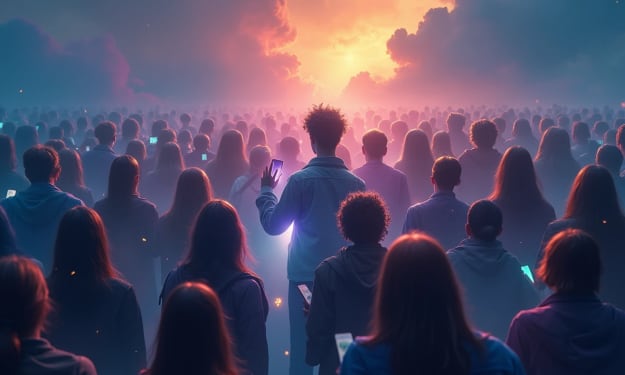
In a world more digitally connected than ever, loneliness is paradoxically thriving. As we scroll through social media feeds and interact with AI companions, we find ourselves surrounded by virtual connections that, in reality, leave us feeling more isolated than before. Eric Solomon, Ph.D., explores this paradox and reveals how the very tools meant to keep us connected might be deepening our sense of isolation. The Paradox of Digital Connection Loneliness is not a new phenomenon, but it has evolved alongside our technological advances. With smartphones, social media, and now AI companions, we have access to constant streams of communication. Yet, despite the illusion of constant connection, many of us feel more isolated than ever. This paradox becomes strikingly clear when we look around in public spaces like New York’s Union Square. People, once engaged in face-to-face conversation, are now engrossed in their phones, disconnected from the world around them. The same technology that promised to bridge the gap between us seems to have only widened it. As Solomon points out, the rise of AI chatbots and virtual assistants, like ChatGPT, reflects a new attempt to address this loneliness. These tools can simulate emotional availability, offering comfort and companionship. However, while they provide solace, they do so without reciprocity. The lack of genuine human interaction makes these digital companions seem comforting at first, but over time, they can leave us feeling even emptier and more disconnected. How Loneliness Affects Our Brain Understanding the psychological impact of loneliness is crucial. Our brains are wired for real, emotionally attuned connections. Attachment theory tells us that from birth, we crave secure relationships, and these connections are essential for our emotional and psychological well-being. But in today’s world, much of our interaction is mediated through screens, and these interactions are often brief, shallow, and performative. The result? We enter an insecure attachment loop. As we feel more isolated, we withdraw further, making it harder to trust others and open ourselves to vulnerability. This isolation becomes a vicious cycle: the lonelier we feel, the more difficult it becomes to connect, leading to even deeper isolation. The Role of Technology in Deepening Isolation Technology, though not entirely to blame, plays a significant role in exacerbating this issue. AI companions, while appearing to fulfill emotional needs, do not offer real connection. Our nervous systems, tricked into believing that these virtual interactions provide the warmth and understanding we seek, end up reinforcing our sense of emptiness. Studies have shown that those who rely heavily on chatbots for emotional support often experience greater loneliness and fewer meaningful real-life interactions. The very tools we turn to for comfort—smartphones, social media, and AI—are intensifying the loneliness they are meant to alleviate. The Collapse of Flourishing A recent Global Flourishing Study, involving over 200,000 people from more than 20 countries, reveals a disturbing trend: young adults—especially those aged 18 to 29—are struggling with mental, emotional, and social well-being. Unlike previous generations, their well-being doesn’t improve as they age. Instead, it remains stagnant, or even worsens, leading to what researchers call "the collapse of flourishing." In many parts of the world, the happiness curve that typically dips in midlife and then rises in later years has flattened entirely for this age group. The problem is not just that they are alone, as Robert Putnam’s seminal work "Bowling Alone" suggested. It’s that many young people aren't participating in social activities at all. The shift towards productivity, comparison, and digital engagement has undermined the sense of community and connection that once served as a foundation for well-being. Breaking the Cycle of Isolation So, what can we do about it? The first step is recognizing that digital detoxes won’t solve the problem. Shaming ourselves for spending too much time on our phones or social media may feel like a solution, but it’s only a temporary fix. Real change begins with acknowledging the root cause of our loneliness: the breakdown of genuine, secure human connections. Solomon emphasizes that loneliness is not simply a feeling but a neurological and behavioral issue. The more we isolate ourselves, the more our brains adapt to this isolation, making it harder to connect with others. However, there is hope. Small, consistent acts of human connection can help rewire our nervous systems. Reaching out to someone for a real conversation, attending social gatherings, or simply taking the time to be present with others can help rebuild trust and emotional resilience. The Importance of Human Connection In a world where technology is advancing faster than our ability to process its impact on our mental health, it’s easy to overlook the power of genuine human connection. While AI and digital tools can provide temporary comfort, they cannot replace the deep, meaningful bonds that come from real-life interactions. Even as technology continues to shape our lives, we must remember that true flourishing is rooted in connection with others. It’s not enough to have endless digital interactions or AI companions. We need to rebuild the emotional infrastructure of our lives—one that values vulnerability, trust, and real-time, face-to-face interactions. By doing so, we can begin to heal the psychological wounds that loneliness has inflicted on us. Conclusion As we navigate the complexities of the digital age, the challenge of loneliness looms larger than ever. Yet, as Eric Solomon’s insights reveal, there is a path forward. It may require stepping away from the digital world, even if just for a moment, to engage in the raw, imperfect, and beautiful connections that make us human. In these moments, we can find the antidote to loneliness—a deep sense of belonging that no screen or chatbot can ever replicate.
By SophiaSosoabout a year ago in Psyche