medicine
The medicalization of mental illness has given rise to many forms of pharmacological relief that restore chemical imbalances in one's brain.
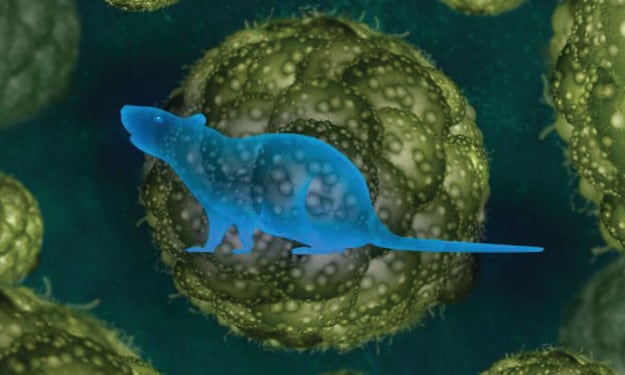
Understanding Xenograft Models: An Introduction to Cancer Research
Understanding Xenograft Models: An Introduction to Cancer Research In the realm of cancer research, scientists continually strive to discover novel treatments and therapies to combat this complex and devastating disease. One approach that has revolutionized oncology research is the use of Xenograft models, particularly the Xenograft mouse model. These models have played a pivotal role in advancing our understanding of cancer biology, drug development, and personalized medicine.
By Thera Indx3 years ago in Psyche
Psychosis
"Psychosis is a condition that affects the way your brain processes information. It causes you to lose touch with reality. People might see, hear, or believe things that aren’t real. Psychosis is a symptom, not an illness" (WebMD Editorial Contributors, 2021). Another way of defining it is - "psychosis is a combination of symptoms resulting in an impaired relationship with reality. It can be a symptom of serious mental health disorders. People who are experiencing psychosis may have either hallucinations or delusions" (Carey, 2018).
By Mahpara Mukhtar3 years ago in Psyche
The Role of Clinical Research Organizations (CROs) in Advancing Medical Science
In the dynamic landscape of medical research and drug development, Contract Research Organizations (CROs) play a pivotal role in accelerating advancements in medical science. CROs serve as specialized partners for pharmaceutical and biotechnology companies, providing a wide range of services to conduct clinical trials and research studies efficiently and effectively. From drug discovery to regulatory compliance, CROs streamline the complex process of bringing new therapies to market.
By Thera Indx3 years ago in Psyche
Skin picking disorder
Skin-picking is something that is not uncommon and from time-to-time people tend to pick their skins. But it seems to become a problem when it is severe and cannot stop from picking their skin, and it becomes a disorder. "Dermatillomania, also known as excoriation disorder (per the DSM-5) or skin-picking disorder, is a psychological condition that manifests as repetitive, compulsive skin picking. It is one of a category of disorders known as body-focused repetitive behaviors (BFRBs) that are currently classified in the DSM-5 under Obsessive-Compulsive and Related Disorders" (Psychology Today, 2017).
By Mahpara Mukhtar3 years ago in Psyche
Dissociative disorders
"Dissociative disorders are mental health conditions that involve feelings of being detached from reality, being outside of your own body or experiencing memory loss (amnesia)" (Cleveland Clinic, 2023). Some dissociative illnesses have a very brief lifespan, maybe as a result of a traumatic life experience, and they go away on their own within a few weeks or months. Others have a significantly longer lifespan.
By Mahpara Mukhtar3 years ago in Psyche
How Do Researchers Overcome the Challenges of Tumor Engraftment in PDX Mouse Models?
Introduction: Patient-Derived Xenograft (PDX) mouse models have emerged as a valuable tool in cancer research, offering a more representative and translational platform for studying tumor biology and evaluating potential therapeutic interventions. However, the successful engraftment of patient tumors into mice presents significant challenges that researchers must overcome.
By Thera Indx3 years ago in Psyche
Separation Anxiety disorder
It is quite normal when a person feels anxiety when separated from someone who they love, especially children and young babies. But overtime, the babies and young children realize that the parents and their loved ones are probably going to return. However, this problem may sometimes persist and lead on, making it a huge problem for the person and for their loved ones. This is known as separation anxiety disorder.
By Mahpara Mukhtar3 years ago in Psyche
AI in healthcare services
AI in Healthcare: Revolutionizing Diagnosis, Treatment, and Patient Care Introduction: Artificial Intelligence (AI) has emerged as a transformative force in the healthcare industry, revolutionizing the way we approach diagnosis, treatment, and patient care. By leveraging vast amounts of data and powerful algorithms, AI applications have the potential to improve accuracy, efficiency, and outcomes in healthcare settings. In this advanced discussion, we will explore the various ways AI is transforming healthcare and its impact on diagnosis, treatment, and patient care. AI in healthcare refers to the use of artificial intelligence technologies and techniques in the field of healthcare. It involves the application of algorithms, data analysis, and machine learning to assist in various aspects of healthcare, including diagnosis, treatment, monitoring, and patient care. Here are some key areas where AI is making an impact in healthcare: 1. AI for Diagnosis: AI algorithms can analyze medical images, such as X-rays, MRIs, and CT scans, with remarkable accuracy and speed. Deep learning models trained on vast datasets can detect abnormalities, identify early signs of diseases, and assist radiologists in interpreting complex images. AI-powered diagnostic tools can expedite the detection process, leading to faster diagnoses, improved patient outcomes, and reduced healthcare costs. 2. AI for Treatment Planning: With AI, healthcare professionals can develop personalized treatment plans based on individual patient characteristics, medical history, and genetic data. Machine learning algorithms can analyze large volumes of patient data to identify patterns, predict treatment responses, and recommend the most effective interventions. AI systems can also suggest optimal medication dosages, reducing the risk of adverse drug reactions and improving overall treatment outcomes. 3. AI for Medical Research: AI is accelerating medical research by analyzing vast amounts of data from various sources, including scientific literature, clinical trials, and patient records. Natural Language Processing (NLP) techniques enable AI systems to extract relevant information, identify trends, and generate insights to aid in drug discovery, disease understanding, and treatment development. AI can also facilitate the identification of potential participants for clinical trials, leading to more efficient and inclusive research studies. 4. AI for Remote Patient Monitoring: Remote patient monitoring using AI-enabled devices allows healthcare providers to continuously monitor patients' vital signs, activity levels, and disease progression from a distance. Wearable devices, such as smartwatches and biosensors, can collect real-time data, which is then analyzed by AI algorithms to detect any deviations or anomalies. This proactive monitoring enables early intervention, reduces hospital readmissions, and improves patient engagement and self-management. 5. AI for Precision Medicine: Precision medicine aims to provide tailored treatments based on an individual's unique genetic makeup, lifestyle, and environmental factors. AI plays a crucial role in analyzing large-scale genomic data, identifying genetic markers associated with specific diseases, and predicting patient responses to specific treatments. By integrating AI into precision medicine workflows, healthcare professionals can make more informed decisions, leading to more effective and personalized therapies. 6. AI for Clinical Decision Support: AI-powered clinical decision support systems provide healthcare professionals with real-time guidance and recommendations based on evidence-based medicine and best practices. By analyzing patient data, symptoms, and medical history, these systems can suggest appropriate diagnostic tests, treatment options, and potential drug interactions. AI-driven decision support systems enhance clinical decision-making, improve patient safety, and reduce medical errors. Conclusion: The integration of AI into healthcare is revolutionizing diagnosis, treatment, and patient care. By leveraging advanced algorithms and massive datasets, AI systems can provide accurate and personalized insights, leading to earlier diagnoses, more effective treatments, and improved patient outcomes. However, it is important to address challenges such as data privacy, regulatory compliance, and ethical considerations to ensure responsible and beneficial implementation of AI in healthcare. With continued advancements and collaborations between AI researchers and healthcare professionals, the future holds immense potential for AI to transform and enhance the healthcare landscap
By Busari Taiye Hammed3 years ago in Psyche
Phobias
Having a deliberate fear of something is completely normal. It may make sense as the person just has a slight fear of something and it goes away over time. But at times, there is some sort of fear that forms over time to a point where a person has this exaggerated form of fear regarding a situation or object. This form of fear is known as phobias.
By Mahpara Mukhtar3 years ago in Psyche