medicine
The medicalization of mental illness has given rise to many forms of pharmacological relief that restore chemical imbalances in one's brain.
The Sewing Box
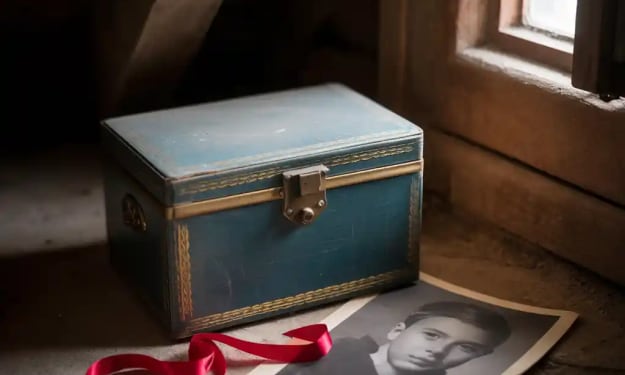
The box had been there for years — untouched, unspoken, and always in the same corner of Nana’s old attic. Covered in lace that had long since yellowed, it waited like a quiet witness. When Nana passed away that winter, I returned home after seven years to settle her affairs — not entirely ready for what I would find. I hadn’t been back since I was sixteen. Back then, I ran away more than I visited. Back then, Nana was already growing forgetful, calling me by my mother’s name, or sometimes by her own sister’s. But she never forgot about the sewing box. She’d always say, “Don’t touch it, Isla. That’s not for you — not yet.” -- The funeral was small. Nana never had many friends left. It was just me, the priest, and the mailwoman who brought her groceries during her final years. The house felt too quiet when I returned — like it had been waiting just for me. I slept in the guest room that night, but I didn’t really sleep. I kept thinking of the sewing box. It wasn’t just nostalgia. Something about it tugged at me — like it had its own heartbeat. -The attic The next morning, I climbed the attic stairs, flashlight in hand. The switch hadn’t worked in years. The air was thick with dust and lavender. Nana always loved lavender. It masked the scent of mothballs and age. I walked past old suitcases, brittle magazines, faded photographs with crinkled edges. And there it was — in the far left corner, exactly where I remembered. The sewing box. It was a faded green, with golden thread-like trim and a broken hinge. A cracked ceramic bird perched on top, its wing chipped. I sat cross-legged in front of it, just like I used to. But this time, I didn’t hesitate. Inside, there were spools of thread, needles, buttons in little paper envelopes. But underneath, tucked beneath a swatch of blue satin, was something else. Letters. Dozens of them, tied with red ribbon, yellowed with age. The top one had my mother’s name — Claire. My heart thumped against my ribs. I opened the first letter. Dear Claire, I know you won’t understand now, but I hope one day you will forgive me. I didn’t have a choice. You were only a baby when he left, and I couldn’t risk it — not again. I had to keep you safe. Nobody believed me back then, but he wasn’t who he said he was. He wasn’t just “James from the library.” He had a darkness I didn’t see — not until it was too late. You have his eyes, you know. I hated them for years, but now… now I wonder if maybe you deserved to know. There’s more in this box than thread, darling. There are truths I never dared speak aloud. — Mother froze. James? My grandfather? I’d never heard anything about him. My mom rarely spoke of her childhood, and when she did, it was always about the happy things — summer at the lake, Sunday cakes, Nana’s lullabies. But not once had she mentioned her father. I read another letter. And then another. Each one was more detailed than the last. Each one filled with fear, and regret, and love twisted in grief. My Nana had been hiding the truth for decades. Not just from my mother — but from the world.
By Arshad khanabout a year ago in Psyche
Inside the Mind: An Exploration of Human Thought
Inside the Mind: An Exploration of Human Thought Human thought is among the most complex and fascinating phenomena in existence. The mind—an invisible, intangible space—is the seat of consciousness, memory, emotion, and imagination. For centuries, scientists, philosophers, and artists alike have attempted to peer into the mind, seeking to understand how we think, why we feel, and what makes our thoughts so uniquely human. This exploration of human thought spans multiple disciplines, from neuroscience and psychology to philosophy and artificial intelligence, offering insight into the intricate workings of our inner world.
By Abdul hasib Habibiabout a year ago in Psyche
What TikTok is Really Doing to Gen Z Brains
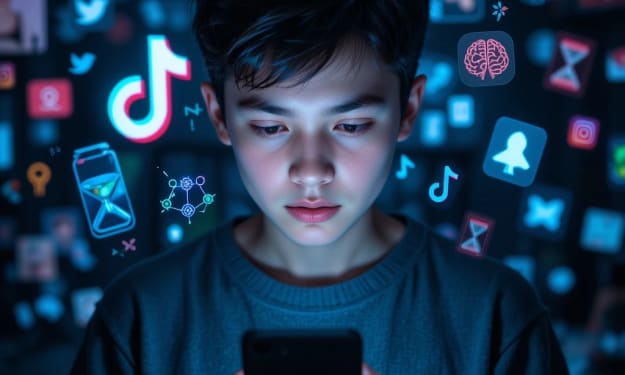
In a world where everything is a scroll away, TikTok has emerged not just as an entertainment platform—but as a neurological experiment played out on millions of young minds. With over a billion active users, TikTok has dramatically shaped how Gen Z consumes, processes, and craves content. But as viral dances, meme-worthy skits, and dopamine-loaded loops dominate our screens, it’s time to ask: What is TikTok really doing to Gen Z’s brains? The answer isn't just in your screen time—it’s in your brain chemistry.
By Keramatullah Wardakabout a year ago in Psyche
How Long Does Ketamine Last for Depression? Duration, Effects, and What to Expect
Depression can be crushing. When traditional antidepressants don’t work, or take too long to kick in, some people turn to ketamine. Known for its rapid effects, ketamine has emerged as a breakthrough option in treatment-resistant depression.
By Richard Baileyabout a year ago in Psyche
Breaking Free: My Journey Beyond Chronic Illness
Years of chronic illness were my constant companion. Beyond just diagnosis, chronic illness became more of a shadow that followed me around; whispering limitations, doubts and despair. Instead of just giving up jobs or plans; I had to give up who I once was as well. Today however, wellness is no longer just a dream but an established reality in my life.
By Robert Brownabout a year ago in Psyche
We Resign from More Than just Jobs. Top Story - June 2025.
There are many goodbyes and "I quits" when it comes to being chronically unwell; in my case through a multitude of different chronic illnesses caused by not two, but three tumours in my uterus. I cannot say that I have been gaslit by the healthcare and medical profession over the last nine months (could have delivered a baby in this time, but anyway); yet being unwell takes its toll on your psyche, and most of all, on your entire life. And the loss is more than just monetary. Doctors need to keep investigating to find the root cause; and that discovery on you the unwell patient can be physically, mentally, emotionally and financially exhausting.
By Justine Crowleyabout a year ago in Psyche