humanity
Mental health is a fundamental right; the future of humanity depends on it.
ADHD Unmasked: What Science Tells Us About the Distracted Mind
Introduction In recent decades, Attention Deficit Hyperactivity Disorder (ADHD) has moved from the periphery of clinical discussions to the forefront of psychological research, media conversations, and social awareness. Once regarded as a childhood issue characterized mainly by hyperactivity, ADHD is now understood as a complex neurodevelopmental condition that affects individuals across the lifespan. Yet, despite its growing recognition, ADHD remains widely misunderstood. This article delves into the psychological and neuroscientific foundations of ADHD, explores how it manifests in everyday life, and addresses common myths and misconceptions.
By Siria De Simoneabout a year ago in Psyche
The Productivity Paradox: Working Less to Achieve More
Introduction In a society that often glorifies hustle culture and equates busyness with success, the notion of working less to achieve more seems counterintuitive. However, a growing body of psychological and neuroscientific research supports what some might call a radical idea: reducing work hours, implementing rest periods, and respecting personal boundaries can actually enhance productivity, creativity, and long-term well-being.
By Siria De Simoneabout a year ago in Psyche
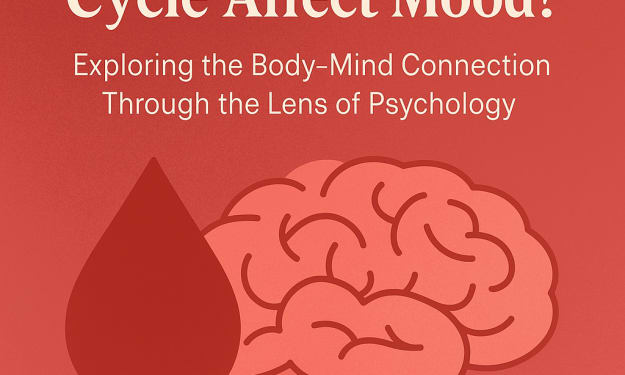
Does the Menstrual Cycle Affect Mood?
Introduction In recent years, the scientific community has increasingly acknowledged the profound connection between physiological processes and psychological wellbeing. One area where this connection is particularly apparent, yet often misunderstood or overlooked, is the relationship between the menstrual cycle and mood. Many women report mood fluctuations that align with different phases of their cycle, ranging from mild irritability to severe emotional distress. Yet, cultural taboos and misinformation continue to cloud our understanding of this important psychophysiological topic.
By Siria De Simoneabout a year ago in Psyche
The Psychology of Bullying: What Drives Aggression and How We Can Break the Cycle
Introduction: Why Understanding Bullying Matters Bullying is more than just a series of isolated incidents of aggression or cruelty. It is a psychological, social, and sometimes systemic phenomenon that has lasting effects on both the victims and the perpetrators. While often associated with childhood and adolescence, bullying can persist into adulthood and manifest in workplace dynamics, online interactions, and social hierarchies.
By Siria De Simoneabout a year ago in Psyche
I Tried to Meditate and Accidentally Summoned a Panic Attack
The Great Meditation Experiment (Or: How I Learned to Stop Worrying and Love the Chaos) Let me set the scene: It’s 3 AM. I’ve just watched a YouTube video titled "10 Minutes to Inner Peace!" featuring a man who looks like he’s never once stressed-eaten an entire pizza while crying over a spreadsheet. Inspired, I sit cross-legged on my floor, close my eyes, and prepare to ascend to a higher plane of existence.
By Just One of Those Thingsabout a year ago in Psyche
Logos and Labels: The Psychology Behind Status Signaling in Different Social Classes
Introduction In modern consumer culture, logos are everywhere: stitched across jackets, emblazoned on handbags, and printed on shoes. But an intriguing paradox emerges upon closer inspection: luxury brands with large, conspicuous logos are often more popular among consumers from lower socioeconomic backgrounds, while the wealthiest individuals tend to favor high-end, logo-free fashion. This pattern is not accidental. It reflects deep psychological and sociocultural dynamics that shape the ways people express identity, seek validation, and signal status.
By Siria De Simoneabout a year ago in Psyche
She Grew Anyway - part 2
Before starting...... Missed Part 1? Click Here So Now Priscilla was one year old left all alone. Her grandmother came forward to take care of her. After her mother's death, her grandfather stopped drinking alcohol, and by that time he almost wasted all his wealth on drinking alcohol and gambling. Both grandparents loved her very much as they saw their daughter in her. When she was nine years old, they celebrated her birthday in very grand manner. Priscilla did not know how her mother look like and she did not have any memory of her. In those days photos also were very uncommon, so she really knew nothing about her mother. She considered her grandparents were her own parents. She was enjoying life happily ignoring her past. She thought she was really blessed having that life.
By ann prasanna gogireddyabout a year ago in Psyche
Shadow Work: Narcissists, Toxic People and Healing
In a brief, somewhat uncomfortable acquaintance, I encountered a person who embodied some of the toxic traits of manipulation that I had previously ignored greatly by quieting my intuition and being a person who didn't want to be overly judgmental, or give everyone the benefit of the doubt.
By Sai Marie Johnsonabout a year ago in Psyche
The Stranger Who Listened When No One Else Would
There are moments in life when you feel completely invisible. When the noise around you is so loud, yet you feel unheard. Like you’re shouting in an empty room, hoping someone—anyone—will finally listen. For me, that moment came on an ordinary evening that turned out to be anything but.
By shoaib khanabout a year ago in Psyche