humanity
Mental health is a fundamental right; the future of humanity depends on it.
I'm begging you to deconstruct
I'm 30, and traditionally at this age there is an expectation that you start settling into who you are as a person. Even in this ever aging society where the generations begin to linger on for good or ill, 30 is a big age. But it's also still quite young. Even if we have great hardships ahead, I can expect to make it at least another 30 years and probably more like 50 given family history of longevity and personal health. Even feeling older than I've ever felt, I still also feel young. And this is an example of how we need to reframe how we think about everything.
By Bryce Greene-Forgueabout a year ago in Psyche
The Things Life Never Warned Me About
By Nadeem Shah Life has a strange way of teaching lessons we never signed up for. When I was younger, I imagined growing up would be a linear path—school, career, love, stability, and then happiness neatly tucked at the end. I had it all mapped out, confident that if I followed the rules, life would reward me.
By Nadeem Shah about a year ago in Psyche
How to Support a Friend Who Is Struggling with Their Mental Health
There’s a certain kind of silence that tells you more than any confession ever could. It hangs in the air heavy, deliberate as though your friend has decided to let you see only the edges of their storm.
By Prince Esienabout a year ago in Psyche
Why Vulnerability is My Greatest Strength
By Nadeem Shah For most of my life, I wore armor. Not the kind made of steel and iron, but the invisible kind—woven from silence, guarded smiles, and perfectly rehearsed “I’m fine” responses. I convinced myself that strength meant never letting anyone see the cracks. If people didn’t see my pain, they couldn’t use it against me. If they didn’t know my fears, they couldn’t hurt me.
By Nadeem Shah about a year ago in Psyche
The Invisible Weight of Anxiety
By: Nadeem Shah Anxiety isn’t always loud. Sometimes it’s not the shaking hands, the racing heart, or the heavy breathing you see in movies. Sometimes it’s a quiet, constant hum in the back of your mind—a relentless narrator that never shuts up.
By Nadeem Shah about a year ago in Psyche
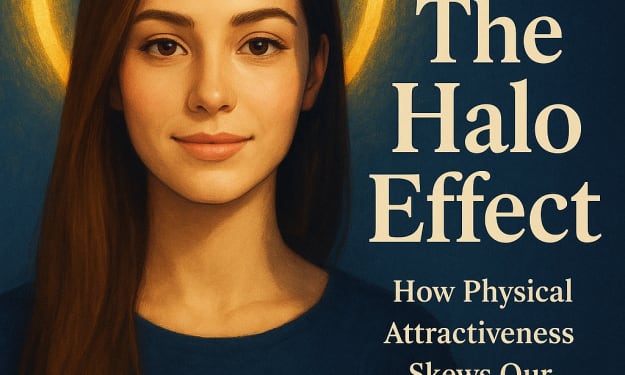
The Halo Effect: How Physical Attractiveness Skews Our Judgment. AI-Generated.
The Halo Effect: How Physical Attractiveness Skews Our Judgment Have you ever met someone and instantly assumed they were kind, intelligent, or trustworthy simply because they were physically attractive? That instant, almost unconscious leap in judgment is no accident it’s called the Halo Effect, one of the most powerful psychological biases influencing our perceptions every day. This phenomenon occurs when one positive trait, such as beauty, creates a “halo” that leads us to assume other unrelated positive traits. In other words, our brains are quick to believe that “good-looking” equals “good person.” The First Impression Trap: First impressions are formed within seconds sometimes even milliseconds of meeting someone. When we see a person who fits our cultural or personal standards of attractiveness, our brain lights up with positive assumptions. Without realizing it, we might think, “They must be confident, capable, and kind,” before they’ve even spoken a word. This isn’t just about romance; it happens in classrooms, job interviews, and even courtrooms. Research shows that attractive defendants are more likely to receive lighter sentences, and attractive job candidates often land roles over equally qualified but less attractive competitors. The Halo Effect silently shapes these decisions without us being aware of it. Why Our Brains Are Wired This Way: The Halo Effect isn’t just a random flaw in judgment it has evolutionary roots. In prehistoric times, outward appearance often signaled health and genetic fitness. Attractive individuals were unconsciously perceived as healthier, stronger, and more capable of surviving. Fast forward to modern society, and our brains are still running this outdated program, mistaking beauty for virtue. The problem is that in today’s world, external appearance often has little to do with a person’s morality, skills, or intentions. Yet, the bias persists, shaping not only our personal relationships but also hiring decisions, political opinions, and even product marketing. The Media’s Role in Fueling the Halo Effect: Modern media supercharges the Halo Effect. Advertisements often use attractive models to sell products completely unrelated to appearance, like cars or insurance, banking on the fact that our brains link beauty with quality. Celebrities, too, benefit from this bias — a famous actor’s good looks can lead audiences to assume they are wise, moral, or intelligent, even if they’ve shown no evidence of such qualities. Social media adds another layer, with carefully curated photos creating the illusion of a perfect life, further strengthening the mental shortcut that “good-looking” equals “good in every way.” The Dark Side of the Halo Effect: While the Halo Effect can sometimes make the world seem friendlier and more welcoming, it can also be deeply unfair and damaging. Those who don’t meet society’s beauty standards might face unconscious discrimination in work, education, and social life. Conversely, attractive individuals might be overestimated and placed in roles or situations they are unprepared for, leading to disappointment or failure. On a personal level, it can also result in misplaced trust thinking someone is honest or kind purely based on their looks can make us vulnerable to manipulation. Recognizing and Resisting the Bias: Awareness is the first step toward overcoming the Halo Effect. Before making a judgment about someone, ask yourself: Am I basing my opinion on actual evidence or just a gut feeling influenced by appearance? In professional settings, structured evaluation systems like blind auditions for musicians or skill-based hiring processes can help reduce the impact of this bias. In daily life, slowing down your decision-making and actively looking for counter-evidence can protect you from overvaluing someone’s attractiveness. Turning the Halo into a Spotlight: Interestingly, we can also use our awareness of the Halo Effect for good. By recognizing when we’re being influenced by attractiveness, we can consciously choose to give equal attention to people who might otherwise be overlooked. In leadership, education, and community building, this means actively seeking diverse voices and perspectives, not just those that come from the most photogenic individuals. This shift not only creates fairer outcomes but also enriches our experiences with a wider range of people and ideas.
By Muhammad Hussainabout a year ago in Psyche