humanity
Mental health is a fundamental right; the future of humanity depends on it.
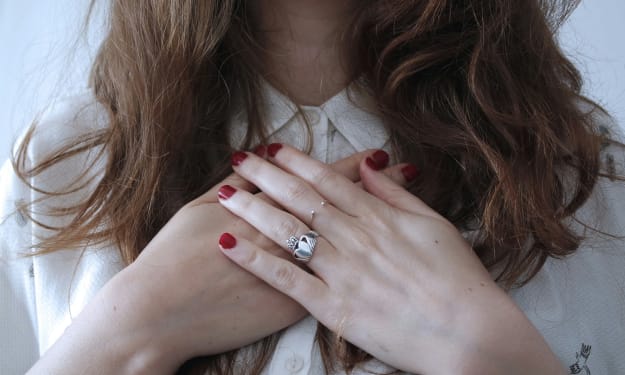
Understanding Life’s Struggles: The Path to Empathy and Growth.
Sometimes, we find ourselves questioning why people behave the way they do. It’s easy to observe someone’s actions and think, "Why are they acting like this?" But what if their behavior is shaped by unseen struggles or emotional wounds? In our fast-paced world, it’s easy to forget that everyone is carrying a personal battle we can’t see. As time passes, though, life has a way of offering answers. Through personal experiences, we gain understanding—what once seemed inexplicable now begins to make sense.
By Rahul Kumar Yadav2 years ago in Psyche
Why Every Woman Deserves Respectful Maternity Care
Introduction: A Universal Right Childbirth is one of the most transformative moments in a woman’s life, but for many women in Ethiopia, this experience is marred by neglect, mistreatment, and the absence of dignity. Despite efforts to improve maternal health, only 32% of births in Ethiopia are attended by skilled professionals, according to the 2022 Ethiopian Demographic and Health Survey (EDHS). This stark reality underscores the urgent need for respectful maternity care (RMC)—care that honors women’s autonomy, safety, and dignity during childbirth.
By Rufael Eshetu Yigezu2 years ago in Psyche
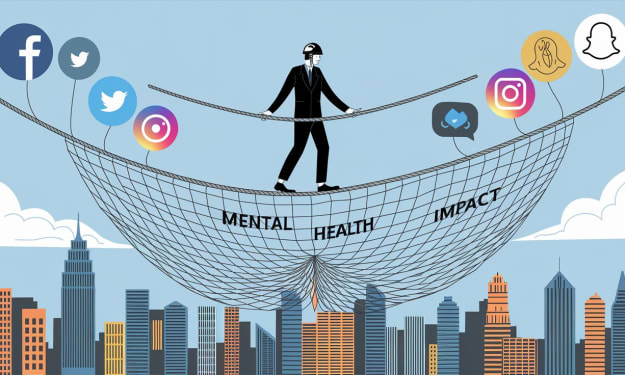
The Mental Health Impact of Social Media
In the modern age, social media is omnipresent. Platforms like Instagram, Facebook, TikTok, and Twitter have revolutionized how we communicate, build relationships, and share our lives. These digital networks offer unprecedented opportunities for connection, creativity, and community. Yet, beneath this vibrant facade lies a complex web of emotional and psychological effects that can profoundly influence mental health.
By Speak Up, Stand Out2 years ago in Psyche
The Rise of Male Loneliness: A Growing Concern in Modern Society
In the fast-paced, digital age, male loneliness has emerged as a pressing issue with profound societal and personal implications. While loneliness is a universal experience, its manifestations among men reveal unique challenges, shaped by cultural norms, shifting social landscapes, and evolving lifestyles.
By Abdelmounim Touileb2 years ago in Psyche
Why Do Infections of the Brain Only Make People Meaner?
The fact that on average the entire population of the globe has become more angry, unfriendly, and generally just bigger assholes is one aspect of the Covid-19 epidemic that is less remarked upon and studied then it should be. It is now well known that Covid-19 does enter into and replicate in the brains of infected animals, including humans, and that this causes inflammation and damage to nerve cells and can impact behavior in subtle and not so subtle ways. To take just on example from the animal kingdom when laboratory mice are infected with some strains of Covid-19 at a high enough inoculum level they develop a strange stunted gait or hiccup in the way they walk. Almost like they are trying to hop/jump instead of walk but somehow the signals for both are becoming mixed up in their brains resulting in a very bizarre, but indicative behavior. Those that display this behavior (almost) always die soon after. It is a very disturbing thing to see and our own human brain is instinctively repulsed by witnessing it. It falls so far outside the normal standard way of how we are "used" to seeing mice walk that it triggers a sort of revulsion, a primal revulsion is the best word I can use to describe it. If I were H.P. Lovecraft (not the racist dickhead one, but the master of eldritch horror one) I might call it a thing that should not be, and that would be a very good way to put it. There can also be changes in animal behavior in terms of what I would call their mental state. They can become more aggressive, they may attack each other for much smaller transgressions, those attacks may become more vicious, and they become much more self destructive and generally less concerned for their own or other animals well being overall. Of course, often times they are too sick to do any of these things, at least not very well.
By Everyday Junglist2 years ago in Psyche
The Mysterious "Hum" Heard Around the World: Nature’s Greatest Puzzle
The Hum is one of the most baffling enigmas of modern times, with no definitive explanation despite decades of investigation. From scientific theories to paranormal speculation, the search for answers has only deepened the intrigue. This article delves into the origins, possible explanations, and real-life accounts of the Hum, inviting you to explore one of the most perplexing mysteries in the natural world.
By John HERBERT2 years ago in Psyche
Comparing the Psychological Profiles of Two Villain's Mothers
My fans (readers of my online writing) know that I enjoy the comic book inspired movies and shows put out by DC and Marvel. I was making a joke today about how Superman can not be true to the comic book scripts about him anymore because the modern setting just doesn't allow him to be the Superman we all know and love from the comic books. No payphones? Yeah, Superman is done. However, Batman and The Xmen can still do lots of stuff in the modern world even if their comic books were written long ago. Though I haven't written a review yet on the great recent release of "Deadpool and Wolverine" I do want to discuss what I've been noticing about the Max show "Penguin" and the Todd Phillips film "Joker". Both depictions (of Arthur and of Oz) show us very profound characters (their mothers) who were a significant piece of the psychological mystery of villain development. I would like to share my analysis as I profile both Arthur's mother and Oz's mother in comparative form.
By Shanon Angermeyer Norman2 years ago in Psyche