how to
How to cope with your emotions, maintain mental health, deal with life's stressors and help others do the same.
The Chocolate Addiction We Don’t Talk About: Surviving the Final Days of a Job Sweetly
It does not matter as to whether or not you are a chocolate aficionado, or a sweet tooth seems to be genetically ingrained in you; or you can't stand chocolate, whether or not you are addicted to this popular cocoa indulgence that was once a form of currency (fun fact); the binge sessions (despite healthy magnesium levels) takes over at least a couple of days before ending a long tenure at a job, whether working for yourself on a freelance or contract arrangement, or for others.
By Justine Crowley8 months ago in Psyche
Anxiety After Hospitalization: When Medical Treatment Leaves Emotional Scars
As the title of this article implies; the emotional effects of a hospital stay (even a "short" stay) can linger - even if the relevant medical procedures were an overwhelming success. The emotional effects may not manifest immediately upon discharge, but rather show up in an individuals psyche weeks, months or even years after being discharged from hospital. If you ever find yourself needing an operation (whether you end up being put to sleep, or you can remain awake during such); people (myself included) have requested the relevant medical staff involved to only speak kind words (no laughter at and no gossip) to and about one another, including their colleagues outside of the operating room at the time of your operation/surgery. Even if you happen to be unconscious with general anaesthesia; your mind still takes in everything that is going on in the operating room/theatre at the time. And only focus on the well of positivity in general such as good news stories, and investments going well for example. As you would have gathered by now, this article is part-memoir, part-wisdom. I wish to thank the entire team in the operating room for respecting this wish of mine, and for being so caring.
By Justine Crowley8 months ago in Psyche
When Reflection Feels Like Accomplishment
There is a subtle experience many people recognize but struggle to name: the feeling of having done something meaningful without having actually changed anything. It often follows long periods of thinking, talking, organizing, or refining ideas. The mind feels clearer. Tension feels reduced. There is a sense of closure or completion. And yet, when examined closely, nothing in the external world has moved. No decision has been enacted. No behavior has shifted. No responsibility has been embodied. What changed was internal orientation, not external reality.
By Peter Thwing - Host of the FST Podcast8 months ago in Psyche
Understanding Trauma is not About the Past…
"You cannot heal from trauma by understanding things intellectually"… Gabor Mate, Ennea Summit 2026. I've been lucky to come across a free 90 mins Webinar with Dr. Gabor Mate for the past three days. Available here: https://www.tylerzach.com/mh26/enneasummit
By Elizabeth Woods8 months ago in Psyche
The Power of Positive Thinking
How are you doing? How is life treating you at the moment? Life doesn't need to crash completely for you to feel "down on our luck." A failed promotion, or work project that didn't go as planned, or a missed opportunity can set you back months.
By Elizabeth Woods8 months ago in Psyche
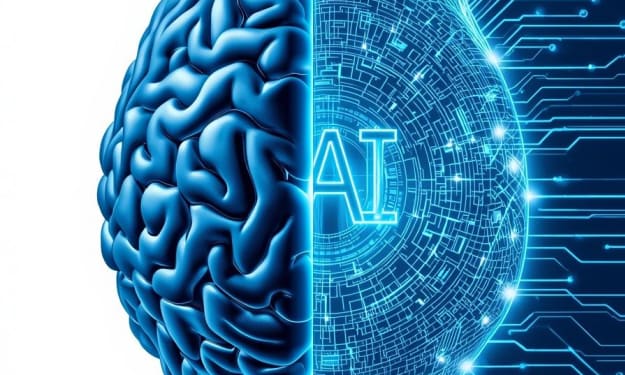
🤯 Is AI Making You Less Intelligent?
How to Use Artificial Intelligence Without Losing Your Critical Thinking Skills Artificial Intelligence is no longer a futuristic concept — it’s a daily companion. From writing emails to solving math problems, summarizing books, generating ideas, and even making career decisions, millions of people rely on tools developed by companies like OpenAI and Google. But a growing concern is emerging in 2026: Is AI slowly weakening our ability to think for ourselves? Are we outsourcing not just tasks — but our intelligence? Let’s explore the reality, the risks, and most importantly, how to use AI without losing your mental edge. --- The Real Concern: Cognitive Offloading Psychologists call it cognitive offloading — when we rely on external tools to reduce mental effort. We’ve done it before: Calculators replaced mental math. GPS replaced navigation memory. Smartphones replaced remembering phone numbers. Now AI is replacing: Writing structure Research analysis Brainstorming Problem-solving The issue isn’t using tools. The issue is over-dependence without engagement. When AI does the thinking for you, your brain stops practicing. And like a muscle, unused cognitive skills weaken. --- Where AI Dependency Becomes Dangerous AI becomes problematic when you: Copy answers without understanding them. Ask for solutions without attempting the problem. Let AI form opinions for you. Stop questioning information. Replace learning with shortcutting. This is especially risky for: Students Young professionals Content creators Entrepreneurs Anyone building expertise The long-term cost? Shallow knowledge. Reduced creativity. Weak decision-making confidence. --- The Truth: AI Isn’t the Enemy AI itself is not the problem. Used correctly, it can: Expand your knowledge Accelerate learning Improve productivity Challenge your assumptions Offer new perspectives The difference lies in how you use it. AI should enhance your intelligence — not replace it. --- A Practical Framework to Stay Mentally Strong in the AI Era Here’s how to use AI without losing your thinking skills: --- Step 1: Think Before You Ask Before typing your question, pause. Ask yourself: What do I already know about this? What would my initial answer be? What assumptions am I making? This activates your brain before AI steps in. Even a 60-second reflection preserves cognitive engagement. --- Step 2: Ask for Explanations, Not Just Answers Instead of: > “Solve this problem.” Ask: > “Explain the reasoning step-by-step.” Understanding builds neural connections. Copying destroys them. Make AI your teacher — not your substitute. --- Step 3: Challenge AI’s Response Don’t accept answers passively. Ask follow-up questions: “Is there another perspective?” “What are the limitations of this answer?” “What could make this wrong?” Critical thinking grows when you debate ideas — even with AI. --- Step 4: Practice Independent Work Regularly Create “AI-free zones” in your routine. For example: Write first drafts yourself. Solve math manually before verifying. Brainstorm ideas alone before refining with AI. This maintains cognitive strength. Think of it as mental training. --- Step 5: Use AI for Expansion, Not Replacement Healthy AI usage looks like: You write → AI improves clarity. You research → AI organizes findings. You create ideas → AI adds variations. You decide → AI highlights risks. Unhealthy AI usage looks like: AI writes → you copy. AI decides → you follow blindly. AI analyzes → you stop thinking. The difference is ownership. --- Step 6: Build Deep Knowledge, Not Surface Answers AI gives quick answers. But expertise requires: Repetition Struggle Deep reading Experience Mistakes If you constantly avoid effort, you avoid growth. Real intelligence develops through friction. --- Step 7: Protect Your Curiosity One hidden risk of AI is intellectual laziness. When answers are instant, curiosity can shrink. Instead of: “Let AI summarize everything.” Try: “Let me explore this topic deeply.” Curiosity keeps your mind alive. AI should accelerate exploration — not replace it. --- The Psychological Trap: Efficiency Addiction AI feels efficient. And efficiency feels good. But constant optimization can reduce: Patience Deep focus Long-form thinking Creative problem-solving Not everything should be optimized. Some mental processes need time. Your brain needs slow thinking to build strong reasoning. --- The Long-Term Impact: Who Wins in the AI Era? The people who thrive in 2026 and beyond are not those who use AI the most. They are those who: Combine AI with strong thinking. Question outputs. Maintain learning habits. Develop original insight. Use AI strategically. AI literacy + Critical thinking = Competitive advantage. Blind dependence = Cognitive decline. --- Final Verdict: Is AI Making You Less Intelligent? It can. But only if you let it. AI is like a calculator for the mind. If you understand math, it enhances you. If you never learned math, it weakens you. The responsibility is yours. Use AI to: Expand your thinking Test your ideas Learn faster Improve clarity But never let it: Replace understanding Replace effort Replace judgment In 2026, intelligence is no longer about having information. It’s about knowing how to think — even when AI is thinking with you.
By Ahmed aldeabella8 months ago in Psyche
🚨 Can You Really Trust AI Answers?
🚨 Can You Really Trust AI Answers? A Practical 2026 Guide to Protecting Yourself from Misinformation in the Age of Artificial Intelligence Artificial Intelligence has become part of our daily lives. From search engines to content creation tools, millions of people rely on platforms like OpenAI and Google every single day to get instant answers. But here’s the critical question in 2026: Can you actually trust AI answers? With the rapid rise of generative AI tools, misinformation spreads faster than ever. AI systems can sound confident, intelligent, and authoritative — even when they are wrong. This article will give you a professional, step-by-step framework to protect yourself from AI misinformation while still benefiting from its power. --- Why AI Answers Can Be Wrong (Even When They Sound Right) Before we jump into solutions, it’s important to understand the problem. AI models: Predict text based on patterns — they do not “know” facts. Can generate outdated information. May fabricate sources (known as hallucinations). Reflect biases present in their training data. Can be manipulated through misleading prompts. The danger isn’t obvious errors. The danger is convincing but inaccurate information. That’s where smart verification becomes essential. --- Step 1: Never Rely on a Single AI Response The first rule of digital intelligence: > Treat AI as a starting point — not a final authority. If you’re making a decision involving: Health Finance Legal matters Investments Career strategy Always cross-check the information. Practical Action: Ask the same question in two different AI systems. Compare the answers. Look for inconsistencies. If two systems give conflicting information, that’s your signal to investigate further. --- Step 2: Ask AI for Sources — Then Verify Them Instead of asking: > “What is the best investment strategy?” Ask: > “Provide reliable sources and recent data supporting this strategy.” Then: Check if the sources actually exist. Confirm the publication date. Verify the credibility of the website. Warning sign: If AI gives vague references like “recent studies show…” without specific citations — dig deeper. --- Step 3: Check the Date of the Information AI models may not always reflect real-time updates. This is especially risky in: Cryptocurrency markets Tax regulations Technology updates Health guidelines Practical Action: Search manually on trusted news websites and confirm that the information is current. Outdated information can be just as dangerous as false information. --- Step 4: Verify High-Stakes Information with Official Sources For critical topics, go directly to primary authorities: Government websites for legal and tax rules Official medical institutions for health advice Financial regulators for investment policies AI can summarize — but official sources define reality. --- Step 5: Watch for Overconfidence in the Tone One of the biggest psychological traps: AI sounds confident. But confidence does not equal accuracy. Be cautious when: The answer sounds absolute. No limitations are mentioned. No alternative perspectives are provided. A trustworthy answer usually includes nuance and uncertainty where appropriate. --- Step 6: Use Critical Thinking Prompts Train yourself to ask: What assumptions is this answer making? What data is missing? Who benefits if this information is believed? Could this be biased? AI should stimulate your thinking — not replace it. --- Step 7: Protect Yourself from AI-Generated Scams AI misinformation is not limited to text answers. It now includes: Deepfake videos AI voice cloning Fake emails that sound perfectly human Protection Checklist: Enable two-factor authentication. Never transfer money based on voice messages alone. Verify urgent requests through a second communication channel. Be skeptical of emotionally manipulative messages. --- Step 8: Build a Personal Verification Habit The most powerful protection strategy isn’t technical. It’s behavioral. Create a simple rule: > If the information affects my money, health, or reputation — I verify it. Over time, this habit will protect you more than any software tool. --- The Balanced Perspective: AI Is a Tool, Not a Threat It’s important to be realistic. AI is not inherently dangerous. It is incredibly powerful when used correctly. It can: Accelerate research Improve productivity Generate ideas Simplify complex topics But blind trust is risky. The future belongs to users who combine: AI efficiency Human judgment Verification discipline --- Final Takeaway So, can you trust AI answers? Yes — but only if you: Cross-check critical information Verify sources Confirm dates Use official references Apply critical thinking AI should enhance your intelligence — not replace it. In 2026, digital literacy is no longer optional. It’s survival.
By Ahmed aldeabella8 months ago in Psyche