disorder
The spectrum of Mental Health disorders is incredibly vast; we showcase the multitude of conditions that affect mood, thinking and behavior.
The Science of Overthinking: Why You Can’t Turn Off Your Brain. AI-Generated.
Have you ever found yourself trapped in a cycle of endless thoughts—replaying a conversation, worrying about the future, or second-guessing every decision you make? It’s 2 a.m., your body is tired, but your mind is wide awake, bouncing from one anxious thought to another. That, in a nutshell, is overthinking.
By Dorking Wavesabout a year ago in Psyche
The Difficulty Of Freedom
In the US, many people Celebrate today as a Day of Freedom from Tyranny. Now, if you go into the History of the US, there are Challenges that Exist, and some may say this is not accurate, or that it is a day about the "Possibility" of Freedom.
By H.E. Dr. Cody Dakota Wooten, COIE, DFM, DHMabout a year ago in Psyche
The Accident That Unlocked Genius: Inside the Mystery of Acquired Savant Syndrome
The Day Everything Changed Derek Amato, a Colorado man with no musical background, dove into a shallow swimming pool in 2006 and suffered a major brain injury. Everybody was astonished; when he awoke, he changed radically rather than just healing. Derek came to a piano just a few days later and started producing incredibly gorgeous music as though he had been playing for years. This incident uncovered an amazing phenomenon known as acquired savant syndrome, a rare condition in which a person displays remarkable artistic, mathematical, or intellectual ability after an accident or sickness.
By Shahjahan Kabir Khanabout a year ago in Psyche
Persecutory-Onset Psychotic Disorder: Understanding the Fracture Between Mind and Reality
Introduction Persecutory-onset psychotic disorder represents a serious clinical condition, often sudden in its onset, in which the individual develops false and unjustified beliefs of being threatened, watched, or harmed by others. These beliefs—known as persecutory delusions—can emerge in individuals who previously showed no clear signs of psychological distress. The disorder drastically alters the person’s worldview, erodes trust in others, and makes daily functioning extremely difficult, both for the individual and for those close to them.
By Siria De Simoneabout a year ago in Psyche
The Sewing Box
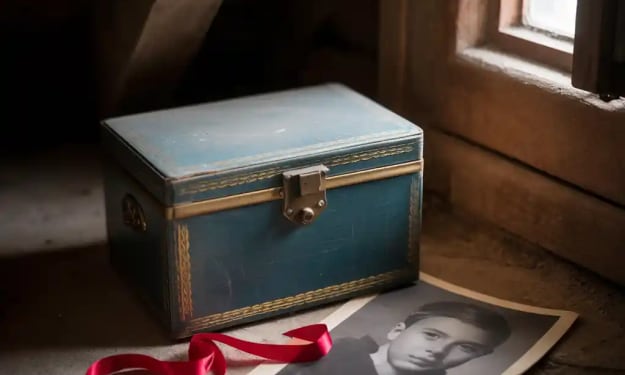
The box had been there for years — untouched, unspoken, and always in the same corner of Nana’s old attic. Covered in lace that had long since yellowed, it waited like a quiet witness. When Nana passed away that winter, I returned home after seven years to settle her affairs — not entirely ready for what I would find. I hadn’t been back since I was sixteen. Back then, I ran away more than I visited. Back then, Nana was already growing forgetful, calling me by my mother’s name, or sometimes by her own sister’s. But she never forgot about the sewing box. She’d always say, “Don’t touch it, Isla. That’s not for you — not yet.” -- The funeral was small. Nana never had many friends left. It was just me, the priest, and the mailwoman who brought her groceries during her final years. The house felt too quiet when I returned — like it had been waiting just for me. I slept in the guest room that night, but I didn’t really sleep. I kept thinking of the sewing box. It wasn’t just nostalgia. Something about it tugged at me — like it had its own heartbeat. -The attic The next morning, I climbed the attic stairs, flashlight in hand. The switch hadn’t worked in years. The air was thick with dust and lavender. Nana always loved lavender. It masked the scent of mothballs and age. I walked past old suitcases, brittle magazines, faded photographs with crinkled edges. And there it was — in the far left corner, exactly where I remembered. The sewing box. It was a faded green, with golden thread-like trim and a broken hinge. A cracked ceramic bird perched on top, its wing chipped. I sat cross-legged in front of it, just like I used to. But this time, I didn’t hesitate. Inside, there were spools of thread, needles, buttons in little paper envelopes. But underneath, tucked beneath a swatch of blue satin, was something else. Letters. Dozens of them, tied with red ribbon, yellowed with age. The top one had my mother’s name — Claire. My heart thumped against my ribs. I opened the first letter. Dear Claire, I know you won’t understand now, but I hope one day you will forgive me. I didn’t have a choice. You were only a baby when he left, and I couldn’t risk it — not again. I had to keep you safe. Nobody believed me back then, but he wasn’t who he said he was. He wasn’t just “James from the library.” He had a darkness I didn’t see — not until it was too late. You have his eyes, you know. I hated them for years, but now… now I wonder if maybe you deserved to know. There’s more in this box than thread, darling. There are truths I never dared speak aloud. — Mother froze. James? My grandfather? I’d never heard anything about him. My mom rarely spoke of her childhood, and when she did, it was always about the happy things — summer at the lake, Sunday cakes, Nana’s lullabies. But not once had she mentioned her father. I read another letter. And then another. Each one was more detailed than the last. Each one filled with fear, and regret, and love twisted in grief. My Nana had been hiding the truth for decades. Not just from my mother — but from the world.
By Arshad khanabout a year ago in Psyche
Living with a Perfect Memory: The Unseen Struggles of Hyperthymesia
Imagine yourself waking up and remembering every last detail of your breakfast from July 9th, 2002. It's not only the meal; you may recall the precise flavor of the toast, the hue of your plate, the outside weather, the clothes you wore, and even the music playing on the radio. For many, this looks like a superhuman power, a stunning ability. For those with Hyperthymesia, though, it's simply another normal event.
By Shahjahan Kabir Khanabout a year ago in Psyche
Flawed, Fierce, and Full of Glitter: A Story of Reclamation
There’s a special kind of audacity required to reclaim your worth when the world has spent years convincing you you shouldn’t. It’s like walking into a party you weren’t invited to, grabbing the mic, and belting out a power ballad while maintaining unbroken eye contact with everyone who ever doubted you. Which, let’s be honest, is exactly the kind of energy we should all be cultivating.
By Beautiful Disasterpieceabout a year ago in Psyche