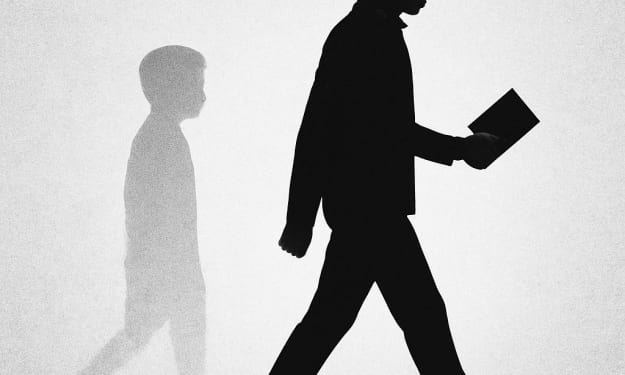
disorder
The spectrum of Mental Health disorders is incredibly vast; we showcase the multitude of conditions that affect mood, thinking and behavior.
The Power of the Psyche: Unlocking the Mind's Hidden Strengths
The Power of the Psyche: Unlocking the Mind's Hidden Strengths For most of her adult life, Maya believed that she was simply "wired" to be anxious. She was the kind of person who always overthought things — whether it was a comment someone made at work, a decision she had to make, or even something as simple as sending a text. She carried the weight of worry like a backpack filled with invisible stones. One day, after a particularly rough week, Maya sat quietly in a small park near her home. As the breeze rustled through the trees, she noticed a little girl laughing as she tried to catch a butterfly. For a moment, Maya felt a strange sense of peace. It was brief, but it was something. That moment led her to seek therapy. She wasn’t sure what she expected — maybe just someone to vent to. But over time, she discovered something far more powerful: the inner workings of her own psyche, and the immense strength it held. Her therapist introduced her to the concept of neuroplasticity — the brain’s ability to change and adapt through experience. “Your thoughts aren’t fixed,” her therapist said one day. “They’re just patterns you’ve practiced. And just like learning a new skill, you can learn to think differently.” At first, Maya was skeptical. But as weeks turned into months, she began to notice subtle changes. She practiced mindfulness, journaling, and positive reframing. She learned to question her anxious thoughts instead of accepting them as truth. Slowly, the backpack of worry began to feel lighter. One powerful breakthrough came when she learned about self-compassion. Instead of judging herself for feeling anxious, she started speaking to herself the way she would speak to a close friend — gently, kindly, and with understanding. She realized that much of her mental struggle wasn’t just the anxiety itself, but the guilt and shame that came with it. As Maya’s understanding of her psyche deepened, so did her sense of self. She began reading more about psychology — not just to fix her problems, but to understand the extraordinary potential of the human mind. She learned how trauma, upbringing, and environment shape the way we think and feel — but also how healing, connection, and conscious effort can reshape that landscape. She was particularly inspired by stories of people who had faced unimaginable hardships — loss, abuse, war — and still found a way to rise, rebuild, and thrive. Their strength wasn’t in never breaking down; it was in their ability to rebuild after breaking. Their power came from within — from the psyche’s quiet, often overlooked ability to transform pain into wisdom. Maya began volunteering at a community center, sharing her story with young adults struggling with anxiety and self-doubt. She wasn’t a licensed professional, but she had something just as valuable: lived experience, and the desire to give hope. She spoke to them about the power of thoughts — how they shape emotions, choices, and ultimately, lives. She reminded them that the mind isn’t a prison; it’s a garden. What you feed grows. With care and patience, even the most tangled inner world can be brought into bloom. What Maya discovered — and now helped others see — was that the psyche isn’t something to fear or fight against. It’s not broken. It’s complex, yes — full of shadows and light — but it’s also flexible, resilient, and profoundly intelligent. The real power of the psyche lies not just in intellect, but in self-awareness, emotional honesty, and the courage to grow. It lies in our ability to pause, reflect, and choose differently. Every moment offers that chance. Today, Maya still has anxious days. But now, she greets them with curiosity rather than judgment. She sees them as part of her inner weather — not permanent, not defining. She knows that her mind, like the sky, is vast enough to hold storms and still return to calm. --- Maya’s story is a reminder to us all: the human psyche is not a fixed blueprint. It’s a living, changing force. Within it lies not only our deepest fears but also our greatest capacity for healing, learning, and transformation. When we begin to understand it — and work with it rather than against it — we unlock a strength we never knew we had. And that strength? It’s not about becoming someone else. It’s about becoming more fully who we already are — with clarity, compassion, and courage.
By Muhammad Saad about a year ago in Psyche
To Whom It May Concern
To Whom It May Concern, (especially if you’re struggling too). Hi, My Name Is Annie, and I’m a Recovering Psycho. Because, you know… I take antipsychotics. So technically, that makes me a recovering psycho. (Yeah, I know, not everyone finds that funny. My mom didn’t laugh. But I did.)
By Annie Edwards about a year ago in Psyche
The Masterful Lie We Tell Ourselves That Prevents Us From Reaching Our Potential. Top Story - August 2025.
As Humans, We are Incredibly Good at Lying to Ourselves. When you look at the Psychophysiology of it, you'll discover that it is a Fascinating Magic Trick that We Play on Our Brain.
By H.E. Dr. Cody Dakota Wooten, COIE, DFM, DHMabout a year ago in Psyche
What is the Best Medication for Anxiety?
Anxiety is a very general issue that a large part of the population suffers from daily. Anxiety is when you feel an intense feeling of fear, nervousness, worry, etc., even when there is no real danger to worry about. Your brain perceives a fake danger situation.
By Ankita Deyabout a year ago in Psyche
My Thoughts Were Holding Me Captive—Until a Prayer Set Me Free. AI-Generated.
I didn’t even notice when the noise inside my head got louder than the world outside. It began subtly. I would lie awake in bed, rehearsing conversations that never happened. I’d think about things I said ten years ago, wondering if people still remembered them. I’d feel ashamed of my mistakes, terrified of my future, and unsure about who I was becoming. Every day, I smiled for the world—but inside, I was battling a storm of thoughts I couldn’t control. --- The Invisible Battle I was 22, healthy, and surrounded by people. Yet, I felt utterly alone. Nobody saw the war raging inside me. I could be in a crowd and still feel lost. Simple tasks became exhausting. Decisions made me anxious. My mind became my enemy, whispering doubts, guilt, and fears—on repeat. "You're not enough." "You’ll fail again." "What's the point of trying?" These whispers weren’t voices, but they felt just as real. I tried distracting myself—music, social media, TV—but the silence always returned. And with it, the thoughts came back louder, sharper. I didn’t realize it then, but I was slipping into a mental prison—brick by brick, thought by thought. --- The Breaking Point One night, something inside me cracked. I sat in the dark corner of my room, knees pressed against my chest. My breathing was heavy, heart racing, mind spiraling. I wanted peace. Not the kind of peace people post quotes about. I wanted the kind of peace that silences screaming thoughts and fills you with warmth again. I remember whispering, "God, if You're there… please help me. I’m tired." And then, out of nowhere, I felt this strange pull—toward the dusty bookshelf in the corner of my room. It had been months since I touched the Qur’an. Not because I didn't care, but because I was afraid. Afraid that I was too broken to be spiritual. But that night, something changed. --- A Light in the Darkness I opened the Qur’an randomly. My eyes fell on a verse—one I had heard as a child, but never truly understood: "رَبِّ اشْرَحْ لِي صَدْرِي" “O my Lord, expand my chest.” (Surah Taha, 20:25) Just a few words. But they echoed through me like thunder. I whispered them. Once. Twice. Then again. "O my Lord, expand my chest..." What did it mean? I looked it up. It was the prayer of Prophet Musa (Moses) when he felt afraid and overwhelmed. He asked Allah to expand his heart—to give him clarity, strength, and calmness to face what lay ahead. That’s exactly what I needed. I began repeating it daily. --- The Healing Begins Nothing magical happened overnight. But slowly—almost invisibly—things began to shift. That verse became my anchor. Whenever my thoughts spiraled, I paused and whispered: "Rabbishrah li sadri..." And slowly, I noticed changes. I began journaling my thoughts, separating reality from fear. I started talking to Allah honestly, not formally. No fancy words—just raw, broken truth. I also reached out to a therapist, something I once thought was “too much.” But faith and therapy went hand in hand. My healing wasn’t either/or—it was both. Some days were still hard. But I no longer felt alone. I no longer believed the lie that I was beyond repair. --- Reflection: The Power of Faith in Mental Health Mental health struggles are real. They’re not a sign of weak faith. In fact, some of the strongest believers—like Prophet Musa—felt fear and overwhelm. And yet, they turned to Allah with honest, simple prayers. "Rabbishrah li sadri" isn’t just a verse—it’s a lifeline. Sometimes, all it takes is one sincere prayer to open a locked heart. Sometimes, all you need is a reminder that your thoughts don’t define you—and you’re not stuck. We all carry invisible wounds. But we’re also all given tools to heal. Prayer, reflection, therapy, connection—they work together. If you're reading this and you’re struggling: You’re not alone. You’re not weak. And you’re definitely not hopeless. Maybe, like me, you just need a verse to hold on to. So say it with me, one more time: "O my Lord, expand my chest..."
By Kaleem Ullahabout a year ago in Psyche
I’m the One Who Never Falls Apart—Until I Did
By Nadeem Shah I’ve always been “the strong one.” You know the type—the person who listens at 2 a.m. when someone needs to vent, who holds space for tears that aren’t their own, who never seems to crack no matter how heavy the storm gets. That was me.
By Nadeem Shah about a year ago in Psyche