depression
It is not just a matter of feeling sad; discover an honest view of the mental, emotional and physical toll of clinical depression.
He Said He Was “Just Busy” — But He Was Emotionally Unavailable
He didn’t ignore her. He replied. He called. He showed up. He just never opened up. And somehow, that hurt more than ghosting ever could. --- Chapter 1: The Most Confusing Type of Man If he disappeared, it would’ve been easier. If he cheated, it would’ve been clearer. If he lied, she could’ve walked away. But he did none of that. He was kind. Responsible. Hardworking. “Just busy.” That’s what he always said. And for months, she believed him. Because in modern dating, inconsistency looks normal. But emotional distance? That’s harder to detect. --- Chapter 2: The Slow Starvation of Intimacy They talked every day. But never deeply. She’d ask: “How do you feel about us?” He’d respond: “I like where this is going.” Safe. Neutral. Non-committal. He never fought. Never expressed jealousy. Never planned long-term. He existed in the present. Alone. Even when he was with her. And the worst part? She started shrinking to meet his comfort level. --- Chapter 3: Emotional Unavailability Doesn’t Look Cold Anymore In 2026, emotional unavailability has evolved. It’s not the silent treatment. It’s not disappearing acts. It’s: Intellectual conversations without vulnerability Physical presence without emotional depth Future talk without commitment Words without emotional risk They’ll tell you: “I’m just focused on my career.” “I don’t like drama.” “I’ve been hurt before.” And those statements sound mature. But sometimes… They’re walls. --- Chapter 4: The Psychology Behind It Emotionally unavailable people often: Grew up suppressing emotions Experienced inconsistent caregiving Learned that vulnerability equals danger Associate closeness with loss of control So they function. They succeed. They date. But they never attach fully. Because attachment feels unsafe. --- Chapter 5: Why Strong Women Attract Them Here’s the painful truth. Independent women often attract emotionally unavailable men. Why? Because independence feels safe to someone who fears engulfment. You don’t “need” him. You’re not clingy. You respect space. But space slowly becomes distance. And distance becomes loneliness. Inside a relationship. --- Chapter 6: The Breadcrumb Effect He gave just enough. Just enough affection. Just enough reassurance. Just enough time. So she stayed. Hope is powerful. Especially when it’s intermittent. Psychology calls this intermittent reinforcement. It’s the same pattern that makes gambling addictive. You never know when the next emotional payout is coming. So you wait. --- Chapter 7: The Night She Realized It It wasn’t dramatic. No big fight. No betrayal. They were sitting across from each other at dinner. She was talking about a vulnerable childhood memory. Her voice softened. She waited. He nodded. Then changed the subject. And in that moment… She felt alone. Completely alone. Even though he was right there. That’s when it clicked. He wasn’t busy. He was unavailable. --- Chapter 8: Why Emotional Unavailability Feels Addictive Because it activates your attachment wounds. You try harder. You become more understanding. More patient. More accommodating. You believe: “If I love him enough, he’ll open up.” But love doesn’t heal avoidance. Safety does. And he didn’t feel safe being vulnerable. Not because of her. But because of himself. --- Chapter 9: The Difference Between Privacy and Avoidance Healthy privacy: “I need time to process.” Emotional avoidance: “I don’t really think about feelings like that.” Healthy pacing: “Let’s build this slowly.” Emotional withdrawal: “Why are you making this complicated?” One builds intimacy. The other avoids it. --- Chapter 10: The Shift She stopped asking for depth. She stopped initiating emotional conversations. She stopped over-giving. And something interesting happened. He didn’t notice. Because he wasn’t meeting her emotionally to begin with. That’s when she understood: You can’t create emotional closeness alone. --- Chapter 11: What Emotional Availability Actually Looks Like It looks like: Sharing fears Expressing needs Taking accountability Talking through discomfort Planning long-term with clarity It feels: Calm. Transparent. Consistent. Safe. Not confusing. Not ambiguous. Not draining. --- Chapter 12: The Hardest Realization He didn’t mean to hurt her. He wasn’t malicious. He just wasn’t capable of deeper intimacy. And sometimes the hardest heartbreak is realizing: They’re not evil. They’re limited. --- Chapter 13: Why Leaving Feels So Difficult Because there’s no villain. No betrayal. Just emotional emptiness. And leaving someone who’s “not that bad” feels irrational. But staying where your emotional needs aren’t met? That’s self-betrayal. --- Chapter 14: The Conversation That Changed Everything She said: “I don’t feel emotionally connected to you.” He looked confused. “I’m here, aren’t I?” Presence isn’t intimacy. Availability isn’t depth. Consistency isn’t vulnerability. That was the moment she chose herself. --- Chapter 15: What She Learned Love isn’t: Logical compatibility only Stability without softness Commitment without connection Love requires emotional risk. And if someone can’t take that risk… You can’t build intimacy for them. --- Chapter 16: The Modern Dating Illusion Today, many people are: High functioning Successful Emotionally articulate on social media Self-aware in theory But intimacy requires practice. Not vocabulary. Posting about healing isn’t the same as being healed. --- Chapter 17: The Real Red Flag It’s not anger. It’s not distance. It’s emotional flatness. When you share something vulnerable… And it disappears into silence. That’s your signal. --- Chapter 18: Healing Your Attraction Pattern If you’re repeatedly drawn to emotionally unavailable partners, ask: Do I equate intensity with love? Do I fear depending on someone secure? Does calm feel boring to me? Sometimes we choose unavailable people… Because deep down, vulnerability scares us too. --- Chapter 19: What Happened After She Left It was quiet. Peaceful. No anxiety. No overthinking. And for the first time… She realized love shouldn’t feel like convincing someone to feel. Months later, she met someone different. He asked questions. He listened. He shared. And it felt strange. Because it was unfamiliar. But unfamiliar doesn’t mean wrong. It means healed. --- Final Message: Busy Is Not a Personality If someone: Avoids emotional conversations Deflects vulnerability Keeps you at surface level Makes you feel alone in their presence They’re not busy. They’re unavailable. And you deserve depth. Not proximity. If this story resonated, don’t just scroll. Save it for the moments you start questioning your standards. Comment your experience with emotional unavailability. Follow for more deep psychology-based relationship insights. We’re building a space for people who choose emotional clarity over confusion. And that’s rare.
By Ahmed aldeabella8 months ago in Psyche
The Brew's Bitter Gift: . Content Warning.
By my early fifties, grief and trauma had stacked so high I could barely hold myself up anymore — just numbness, barely existing and fake smiles along with small talk raised as armor when I had no choice but to be social. It felt like my life was already over and I was just waiting for time to pass.
By Thaidal Zoner8 months ago in Psyche
The Quiet Part of a Sad Breakup
The ending isn’t the end; it’s the echo that almost no one talks about There should have been a soundtrack when it ended. Some dramatic swell of music when the door clicked shut, or the last text came through, or you watched them walk away for the final time.
By abualyaanart8 months ago in Psyche
Lifelines
I’m not afraid of the darkness. It’s been home for so much of my lifetime. I’ve known the darkness for far longer than I’ve known the light. But you, my friend, were the light. It’s why we all had you on a pedestal. You were someone, something none of us had thought we could ever be. Your death marks, not the end, but in fact a new beginning. That singular light in one individual is gone but you shared your light with so many of us that it will never truly be gone. You were a lifeline that kept me hanging on desperately when all seemed without hope. In a dark place, you reached out to me and offered friendship, a hand. I was standing there on the brink of oblivion, apathy dripping from my fingertips and you approached in quiet confidence and struck a note that awakened my soul, and every time over the next 16 years that I found myself ready to dive into the darkness and disappear—that same note would reverberate in the depths resonating me back into this sphere we call “reality” and would hand me that lifeline all over again. Their presence may be fleeting at times but lifelines leave ripples which will ever remain true. When you reached out a hand to me as I began to collapse into the oblivion, you stopped me and without even knowing it, you provided me with a safe place. That memory has been a companion through some very dark times in my life. The vibrations in my soul gave me purpose and helped keep me from letting go.
By Sarah Lynn Jones8 months ago in Psyche
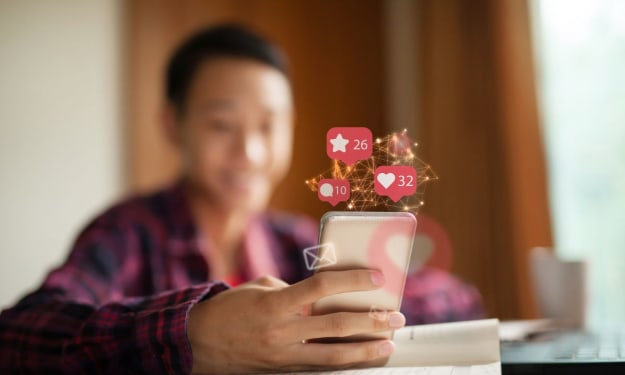
How Social Media Is Shaping Teen Mental Health in the Digital Age
Social media has become a defining part of modern adolescence. For today’s teenagers, platforms are not just tools for entertainment—they are social arenas, identity-building spaces, and information hubs.
By Stories Today8 months ago in Psyche
Trying to Take a Left Off the Roundabout
I won't keep anyone long. An introductory post that may never be followed up on. I'm not in a great place. I can't see many opportunities in my future, that excite me at any rate. My romantic relationship is far from ideal. No kids and mostly estranged from my family. I have so few friends I can't volunteer. I've witnessed corruption in the worst way - repeated institutional failures and no, I'm not a conspiracy nut! Just shit luck and a defiant, diogenic personality that's not exactly helped me or anybody else much.
By Victoria Millinship8 months ago in Psyche
🔥 Chemistry Isn’t Compatibility — And That’s Why It Hurts
You thought it was destiny. It wasn’t. It was chemistry. And chemistry can lie. --- If It Feels Like Fireworks… It Might Be a Warning The first time you met them, your body reacted before your brain did. Your heart raced. Your stomach flipped. Your thoughts scattered. You called it “the spark.” You told your friends, “I’ve never felt this before.” And that was true. You hadn’t. Because what you were feeling wasn’t compatibility. It was activation. And activation feels intense. But intensity is not proof of alignment. --- The Dangerous Myth of “When You Know, You Know” We’ve been sold a story. That love should feel explosive. Immediate. Overwhelming. Movies taught us that real connection looks like obsession. That if it’s calm, it’s boring. If it’s steady, it’s settling. If it doesn’t consume you, it’s not real. But here’s the uncomfortable truth: Healthy compatibility rarely feels like chaos. It feels like clarity. And clarity is quiet. --- Why Toxic Chemistry Feels So Powerful Let’s break this down psychologically. When you meet someone who triggers your attachment wounds, your nervous system lights up. If you lean anxious, you may feel drawn to someone slightly avoidant. If you lean avoidant, you may crave someone emotionally intense. This push-pull dynamic creates: Uncertainty. Anticipation. Emotional highs and lows. And those highs and lows release dopamine. Dopamine is addictive. So you confuse emotional instability with passion. But addiction is not intimacy. --- Trauma Bonding Feels Like Destiny Sometimes the connection feels spiritual. You share similar pain. Similar childhood stories. Similar wounds. You bond over survival. You feel “understood” at a deep level. But bonding over trauma is not the same as building a healthy future. Two wounded people can recognize each other instantly. That doesn’t mean they can regulate each other safely. Compatibility requires: Shared values. Aligned goals. Emotional responsibility. Mutual effort. Chemistry requires none of those. --- Why Calm Feels Suspicious If your past relationships were chaotic, calm can feel unfamiliar. And unfamiliar often registers as unsafe. You might think: “Why don’t I feel obsessed?” “Why isn’t my heart racing?” “Why does this feel… normal?” Because compatibility feels like breathing. Not like drowning. Your nervous system isn’t screaming. It’s resting. And if you’re used to chaos, rest can feel boring. But boredom is sometimes just peace without drama. --- The Difference Between Attraction and Alignment Attraction is about feeling. Alignment is about function. You can feel deeply attracted to someone who: Avoids hard conversations Doesn’t share your life vision Has different values Struggles with accountability But attraction doesn’t solve incompatibility. Shared chemistry won’t fix: Financial differences. Emotional immaturity. Long-term goal misalignment. You can want someone intensely. And still not work in real life. --- Why We Ignore Red Flags When Chemistry Is Strong Because intensity distorts judgment. When the spark is strong, we rationalize. “That’s just how they are.” “They’ll change.” “It’s not a big deal.” But strong chemistry can blind you to fundamental incompatibilities. You tolerate behavior you would normally reject. You compromise standards you swore you wouldn’t. Because losing the spark feels terrifying. But losing yourself is worse. --- Compatibility Is Quietly Powerful Compatibility shows up differently. It looks like: • Easy communication • Shared humor • Similar long-term goals • Emotional consistency • Mutual respect There may not be fireworks. But there is stability. And stability builds something sustainable. Chemistry excites. Compatibility sustains. --- The Chaos Cycle Here’s how the chemistry trap often plays out: Stage 1: Intense connection Stage 2: Rapid emotional investment Stage 3: First conflict Stage 4: Emotional withdrawal or explosion Stage 5: Reconciliation that feels euphoric That reconciliation feels even stronger than the beginning. Why? Because relief amplifies attachment. The brain confuses relief from stress with deeper love. But this cycle keeps repeating. And each cycle deepens the trauma bond. --- Why “I’ve Never Felt This Before” Is a Red Flag Strong chemistry often feels unique. Rare. Once-in-a-lifetime. But what’s actually rare is secure compatibility. Intensity is common. Especially among people who haven’t healed. If you’ve never felt this before, ask yourself: Is this new because it’s healthy? Or new because it’s activating old wounds? That question can save you years. --- The Illusion of Potential Sometimes the chemistry is real. But compatibility isn’t. Instead of accepting that, you fall in love with potential. You imagine: “If they just worked on this…” “If timing were better…” “If they healed…” You build a future in your head. But you’re dating a possibility, not a person. Compatibility is about who they are now. Not who they could become. --- Why Secure Love Feels Different Secure love feels steady. It doesn’t make you question your worth daily. It doesn’t leave you guessing. It doesn’t create constant emotional spikes. Instead, it offers: Clarity. Consistency. Reliability. You may not feel consumed. But you feel safe. And safety allows intimacy to deepen naturally. --- How to Tell the Difference Here’s a simple test: After spending time with them, do you feel: A) Energized but anxious? B) Calm and grounded? If it’s always A, your nervous system is activated. If it’s B, there’s likely compatibility. Love should not feel like survival. It should feel like partnership. --- Why We Mistake Drama for Depth Drama feels meaningful. Intense conversations. Emotional confessions. Crying together at 2 AM. But depth isn’t measured by intensity. It’s measured by consistency over time. Anyone can be intense for a month. Compatibility is proven over years. --- Choosing Peace Over Fireworks There’s nothing wrong with chemistry. It’s natural. It’s exciting. But it’s only one piece. When chemistry isn’t supported by compatibility, it eventually collapses. And the collapse hurts more because the beginning felt so powerful. Choosing peace means asking: “Does this work long-term?” Not just: “Does this feel powerful right now?” --- The Fear of “Settling” Many people avoid compatible partners because they fear settling. They equate calm with lack of passion. But stable doesn’t mean dull. It means secure. You can have: Attraction + respect. Desire + emotional safety. Passion + alignment. But that combination requires patience. And emotional maturity. --- The Hardest Realization Sometimes the person you feel most drawn to… Is not the person you’re meant to build with. That realization hurts. Because chemistry is intoxicating. But compatibility is practical. And lasting love requires both. Not just one. --- If You’re In It Right Now If you’re currently caught in a high-intensity connection… Pause. Ask yourself: Are we aligned in values? Do we handle conflict well? Is there emotional accountability? Can I be fully myself without fear? If the answer is no, chemistry alone won’t save it. And staying will only deepen the attachment. --- Final Truth Chemistry starts relationships. Compatibility sustains them. One without the other creates heartbreak. When you learn to value alignment as much as attraction… You stop chasing fireworks. And start building something that lasts beyond the spark. --- If This Resonated If you’ve ever confused chaos for love… If you’ve ever stayed because it felt intense… If you’ve ever walked away and felt withdrawal instead of relief… You’re not alone. But intensity is not destiny. And love that lasts is rarely the loudest. --- 💬 Join the Conversation Have you ever experienced powerful chemistry that didn’t translate into compatibility? Share your thoughts below. Let’s normalize choosing alignment over adrenaline. Because the future of love isn’t about sparks. It’s about stability.
By Ahmed aldeabella8 months ago in Psyche
🌿 Slow Love: Why Gen Z Is Choosing Emotional Depth Over Chaos
Structured for: strong hook, emotional pacing, SEO layering, retention, and shareability. --- Slow Love: Why Gen Z Is Choosing Emotional Depth Over Chaos We stopped chasing butterflies. And started choosing peace. That might not sound revolutionary. But in 2026? It is. --- The Death of “Spark at First Sight” For years, we were taught to chase intensity. Fireworks. Obsession. Late-night texting marathons. Jealousy disguised as passion. Chaos labeled as chemistry. If it didn’t feel electric, we assumed it wasn’t real. But here’s what no one told us: Anxiety is not a spark. It’s a stress response. And an entire generation is waking up to that truth. --- Why Fast Love Is Failing Swipe culture promised us endless options. Instead, it delivered: Burnout Situationships Emotional inconsistency Attachment trauma We were moving fast. Texting daily after one date. Planning futures after two weeks. Saying “I’ve never felt this before” after three. It felt intoxicating. Until it collapsed. Over and over again. Gen Z watched millennials normalize toxic cycles. And quietly decided: We want something different. --- What Is “Slow Love”? Slow love isn’t boring. It’s intentional. It means: No rushing labels No forced intensity No confusing chaos for passion No trauma bonding disguised as connection It’s choosing someone who feels calm — not addictive. It’s building something stable instead of dramatic. And yes… At first, it can feel unfamiliar. --- Why Calm Feels Boring at First If you grew up around emotional inconsistency… Calm can feel suspicious. If love once meant: High highs Sudden lows Mixed signals Fighting then reconciling Your nervous system learned that instability equals intimacy. So when someone texts consistently… Communicates clearly… And doesn’t trigger anxiety… Your brain might whisper: “This feels flat.” It’s not flat. It’s regulated. And regulated love doesn’t create adrenaline spikes. It creates safety. --- The Shift Toward Emotional Maturity Gen Z isn’t rejecting romance. They’re rejecting emotional chaos. Therapy language is mainstream now. People openly discuss: Attachment styles Trauma responses Emotional availability Secure bonding There’s a new dating standard emerging: “Are you self-aware?” Not: “Are you exciting?” Emotional intelligence is becoming more attractive than mystery. Clarity is more seductive than unpredictability. --- The Rise of Secure Attachment Dating For the first time, many young adults are actively trying to date securely. That means: Saying what you feel Asking direct questions Leaving when boundaries are crossed Not romanticizing red flags Secure dating sounds simple. But it requires courage. Because chaos is familiar. Peace requires reprogramming. --- Why Toxic Chemistry Feels So Strong Let’s be honest. Toxic chemistry is intense. It’s magnetic. It feels cinematic. But intensity often comes from unresolved wounds mirroring each other. Anxious meets avoidant. And suddenly it feels like destiny. But it’s actually: Two nervous systems activating each other’s fears. That push-pull dynamic releases dopamine. Which feels like love. But it’s not sustainable. Slow love doesn’t spike dopamine. It builds trust. Gradually. Steadily. Quietly. --- Dating in the “Healing Era” We’re living in what many call the healing era. People are: Going to therapy Reading psychology books Ending generational cycles Choosing solitude over dysfunction Being single is no longer seen as failure. It’s seen as preparation. There’s less urgency to “lock someone down.” More focus on: “Does this align with my peace?” That question is changing everything. --- Why Patience Is Attractive Again There’s something powerful about someone who doesn’t rush you. Who doesn’t pressure you. Who doesn’t demand intensity immediately. Patience signals: Security. Confidence. Stability. And in a world addicted to instant gratification… Patience feels rare. Which makes it valuable. --- The Fear of Slow Love But let’s not pretend it’s easy. Slow love requires: Vulnerability without urgency. Consistency without constant validation. Effort without dramatic reward. And sometimes, people sabotage it. Because drama feels familiar. Calm feels foreign. And the unknown can be scary — even if it’s healthy. --- What Slow Love Actually Looks Like It looks like: • Checking in instead of testing loyalty • Saying “I need space” instead of disappearing • Having disagreements without threatening the relationship • Feeling secure even when you’re apart • Not needing constant reassurance It’s not flashy. It’s grounding. And grounding doesn’t trend on social media. But it builds lasting partnerships. --- Why Social Media Fueled Chaos For years, viral relationship content glorified: Toxic ex stories “Crazy” love narratives Dramatic breakups Possessive passion We internalized the idea that love should be overwhelming. But overwhelm is not romance. It’s overstimulation. Gen Z is redefining love privately — even if chaos still goes viral publicly. --- Choosing Peace Over Butterflies Butterflies are beautiful. But they’re not sustainable. Peace doesn’t make your stomach flip. It makes your breathing slow. It makes your shoulders relax. It makes you feel chosen — without competition. And once you experience that kind of love… You don’t miss the chaos. --- The Role of Boundaries Slow love thrives on boundaries. Not walls. Boundaries. Saying: “I don’t move that fast.” “I need consistency.” “I don’t entertain mixed signals.” That clarity filters out emotionally unavailable people early. Which saves months — sometimes years — of confusion. --- Why This Is a Generational Reset Gen Z grew up watching: Divorces. Public scandals. Emotional dysfunction online. They learned from observation. And now many are saying: We want partnership. Not performance. Love that feels like home. Not like a battlefield. --- Does Slow Love Last? Statistically, relationships built on secure attachment and emotional regulation have higher long-term stability. But beyond statistics… It simply feels different. You don’t constantly question: “Are we okay?” You know you are. Because communication exists. Because accountability exists. Because respect exists. Slow love is not about speed. It’s about foundation. --- The Unpopular Truth Calm love may not give you a viral story. But it gives you peace. And peace is underrated. Peace doesn’t post dramatic captions. Peace doesn’t generate chaos-driven engagement. But peace builds real life. And real life is longer than a trend. --- If You’re Used to Chaos If you find yourself bored with healthy people… Pause. Ask: “Am I craving intensity — or am I craving familiarity?” Sometimes what feels boring is simply unfamiliar stability. And unfamiliar doesn’t mean wrong. It means new. --- Final Reflection Slow love isn’t about lowering passion. It’s about raising standards. It’s about choosing: Clarity over confusion. Consistency over chaos. Peace over adrenaline. And in 2026, that might be the most rebellious thing you can do. --- If This Resonated If you’re tired of emotional rollercoasters… If you’re choosing healing over intensity… If you believe calm love is powerful… You’re part of a quiet shift happening right now. A shift toward conscious relationships. A shift toward emotional maturity. A shift toward love that lasts. --- 💬 Join the Conversation Comment “Slow Love” if you believe peace is the new passion. Let’s normalize emotionally intelligent relationships. Because the future of love isn’t louder. It’s steadier. And that changes everything. .
By Ahmed aldeabella8 months ago in Psyche
What Happens To Your Brain When You Stop Multitasking. Top Story - February 2026.
Digital technology is the culprit that is causing us to doom scroll when tired, disengaged and unmotivated with the content that motivated you to log onto your device to consume in the first place. That is only the beginning. In the modern workplace (and even when filing cabinets were around, I confirmed this with my adopted parents to get my facts right); reading files while you are supposed to be present to the caller on the other end of the phone line is another classic example of multitasking that causes your brain (although adaptable and intelligent) to lose focus and concentration.
By Justine Crowley8 months ago in Psyche
...And I'm Back!. Content Warning.
I missed this. I missed this site and this community and I really, really missed writing. My last post was 2 years ago. A lot has happened since then, personally and globally. I’m not an expert on the latter, but I can share with you parts of my story since I was last here.
By Tasha McIntosh8 months ago in Psyche