art
Art of an introspective nature; a look at artwork that reveals the artist's psyche and comments on the inner workings of a chaotic mind.
The Refiner’s Fire Is Not the Whetstone
There is a difference between being sharpened and being transformed, and confusing the two leads to frustration when growth does not feel productive. Sharpening implies refinement of existing form. Fire implies change in composition. Both processes are uncomfortable, but they operate on different levels and for different purposes. When people expect sharpening and receive fire instead, they often assume something has gone wrong, when in reality something deeper is taking place.
By Peter Thwing - Host of the FST Podcast9 months ago in Psyche
You See From Where You Stand
"The room remains full whether you can see it or not." One of the most persistent misunderstandings about perception is the assumption that seeing is the same as knowing. People often believe that if something feels clear, it must be complete, and if something feels obscure, it must be absent. But awareness does not work that way. What you perceive at any moment is not a measure of what exists. It is a measure of what your current position allows to pass through.
By Peter Thwing - Host of the FST Podcast9 months ago in Psyche
You Are Not Empty, You Are Overloaded
You are not empty. You are not broken. You are not dull. - You are overloaded. - People often describe certain mental states as “having nothing in their head,” but that description is almost always inaccurate. What feels like emptiness is usually saturation. The mind has not stopped producing content. It has lost spare capacity. The system is busy allocating energy toward coping, regulating, or enduring, and there is little left over for reflection, synthesis, or creativity. This distinction matters, because mistaking overload for emptiness leads people to judge themselves harshly for conditions that are largely structural and biological.
By Peter Thwing - Host of the FST Podcast9 months ago in Psyche
Different, Not Better
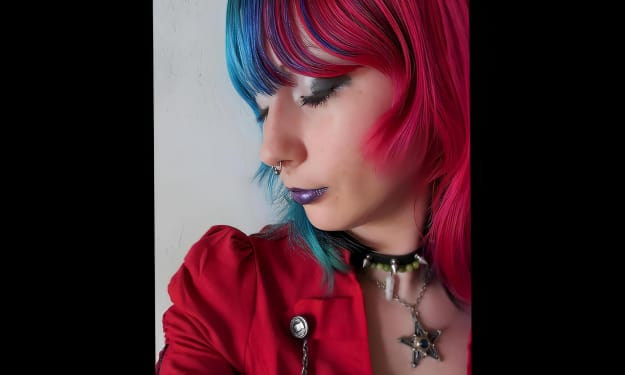
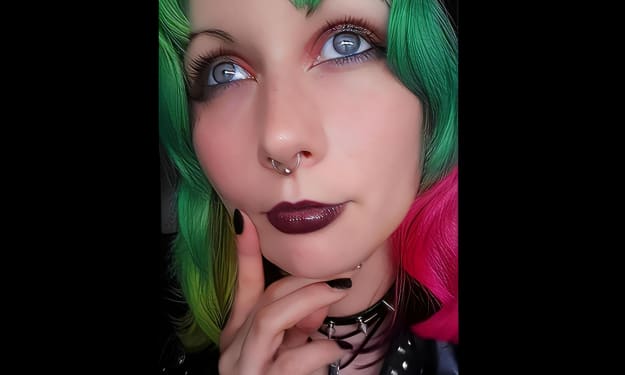
My sister used to make comments about how I dressed, how I did my makeup, and how I colored my hair. She said I was trying to look different, not better. From her perspective, ‘appearance was a hierarchy, something measured by how closely you matched what others admired, what drew approval, what signaled success or desirability.’ Looking “better” meant aligning with those expectations. She meant it as a criticism. But what she never understood is that I was never trying to compete in that system at all. For me, color has always been a language. Long before I had the words to explain myself, I was already speaking through texture, contrast, and intuition. Bright hair, unconventional makeup, outfits that didn’t always “match”. These weren’t attempts to stand out for attention. They were acts of translation, ways of saying ‘this is how the world feels inside me.’ Matching has never been the point. Expression is. I’ve always been drawn to pieces that don’t logically go together but feel right when they’re worn together. A jacket because I love its weight. A necklace because it feels like armor. Colors because they carry emotion. I would build a look, inhabit it for sometimes a day, sometimes an evening. Then let it go. Most of the time, I’d slip right back into what I lovingly call goblin mode: oversized clothes, bare face, soft fabrics, comfort first. That part matters just as much. Comfort has never been laziness for me. It’s freedom. It allows me to move through the world without friction, without constantly adjusting myself to meet an external standard. When my body is at ease, my mind can wander. I can listen. I can notice. I can be present instead of performing. I think about nights out with friends, how they would wear heels and look stunning, truly breathtaking, and yet their feet hurt, their posture stiffened, and their attention was divided. They were managing their bodies instead of inhabiting them. I’d be there in combat boots, whether I was wearing a dress or not, grounded and steady, able to walk for hours, dance without thinking, exist without cost. The same was true at concerts. I never wanted to be the person watching the show through a phone screen. I wanted the bass in my chest, the lights in my eyes, the moment imprinting itself into memory instead of storage. I trusted that someone else would record it. If they didn’t, that was okay too. Presence mattered more to me than proof. That philosophy has shaped how I understand beauty. Beauty, for me, has never been about perfection. It has never been about polish or approval or fitting into a frame that someone else designed. It’s about aliveness. About being at home in your own skin. About letting yourself be a living composition: layered, evolving, sometimes chaotic, sometimes quiet. There is a kind of beauty that asks you to disappear into it. To smooth yourself down. To become palatable. And then there is the kind of beauty that lets you exist as art. The kind that doesn’t need to make sense to anyone else. The kind that honors intuition over trend, comfort over spectacle, experience over appearance. The kind that allows you to change, to be vibrant one day and invisible the next, without apology. Looking different was never the goal. Being true was. And if that reads as rebellion to some people, so be it. To me, it has always felt like home. And maybe that’s the quiet truth underneath it all: I was never trying to be seen as better. I was trying to be seen at all, but by myself first. To recognize my own reflection as something honest, lived-in, and real. To let my outer world echo my inner one without asking permission. If that means being different, then different has always been enough for me. ☾⋆。°✩🦇✩°。⋆☽
By Alicia Melnick 9 months ago in Psyche
The Color We Learned to Fear
Black is a color that refuses to be neutral. It enters a room with history on its shoulders and silence in its wake. For some, it is elegant, powerful, and endlessly modern. For others, it is heavy—too heavy—with meanings they did not choose but inherited. The dislike of black is rarely about the color alone. It is about what black has been taught to represent, the emotions it awakens, and the stories people carry inside them.
By LUNA EDITH9 months ago in Psyche
Whimsy as Gentle Rebellion
Whimsy isn’t escape — it’s a reminder that color, kindness, and imagination still has power. In a world that often values efficiency over wonder, seriousness over softness, whimsy is frequently misunderstood. It’s mistaken for immaturity, distraction, or avoidance. But for me, whimsy has never been about turning away from reality. It has been about meeting reality with an open heart and refusing to let it harden me.
By Alicia Melnick 10 months ago in Psyche
Decision Fatigue and the Hidden Cost of Constant Choice. AI-Generated.
Modern life is defined by choice. From the moment we wake up, we are faced with decisions: what to wear, what to eat, which messages to answer first, how to structure the day, what to buy, what to avoid. While choice is often framed as a form of freedom, psychology reveals a more complicated reality. Too many decisions, even small and seemingly harmless ones, can exhaust the mind. This phenomenon is known as decision fatigue, a subcategory of cognitive psychology that explores how repeated decision-making depletes mental energy and affects judgment, impulse control, and emotional regulation.
By Kyle Butler10 months ago in Psyche
How Anxiety Traps the Brain in Survival Mode
I lived for five years like I was being chased by a predator no one else could see. My heart raced at traffic lights. My hands trembled during normal conversations. My body prepared for catastrophe every waking moment. The threat wasn't real—but my nervous system didn't know that.It started with the panic attacks.The first one hit me in a grocery store on a Saturday afternoon. One moment I was reaching for cereal, the next my heart was pounding so hard I thought it would explode. My vision tunneled. My chest constricted. I couldn't breathe. I was certain—absolutely certain—I was having a heart attack and would die right there in aisle seven.I abandoned my cart and stumbled outside, gasping, shaking, convinced these were my final moments.Twenty minutes later, I was fine. Physically fine. The ER doctor confirmed it: "Just a panic attack. Your heart is healthy. You're okay."But I wasn't okay. Because my brain had just learned something terrifying: danger could strike anywhere, anytime, without warning. And if it could happen in a safe, ordinary grocery store, it could happen anywhere.From that day forward, my brain decided I was never safe. And it's been trying to save my life ever since—from threats that don't exist.The Alarm That Won't StopAfter that first panic attack, my nervous system essentially got stuck with its finger on the panic button.My body remained in a constant state of high alert, scanning every environment for potential danger, interpreting normal sensations as emergency signals, preparing to fight or flee from threats that weren't there.Heart rate slightly elevated? Must be another heart attack coming.Feeling dizzy from standing up too fast? Something's wrong. You're dying.Chest feels tight? Can't breathe. This is it.Every normal bodily sensation became evidence of impending catastrophe. My brain, trying to protect me, had become my greatest threat.The anxiety spread like a virus through my life. I stopped going to grocery stores—too dangerous, too triggering. Then restaurants. Then anywhere crowded. Then anywhere that wasn't home. My world shrank to the size of my apartment, and even there, I wasn't safe from my own nervous system.I couldn't explain to people what was happening. "There's nothing to be anxious about," they'd say, and they were right. Objectively, logically, rationally—there was no real danger.But my brain wasn't operating logically anymore. It was operating from a part far older and more primitive than logic—the part that keeps you alive when there's actual danger. Except it couldn't tell the difference between real danger and perceived danger. To my nervous system, it was all the same threat.Understanding the TrapMy therapist drew me a diagram of the brain—the prefrontal cortex up top, responsible for rational thinking, and the amygdala buried deeper, responsible for fear and survival responses."In a healthy system," she explained, "these work together. The amygdala detects potential threats and alerts the prefrontal cortex, which assesses whether the threat is real. If it's not, the cortex tells the amygdala to stand down."She drew an arrow showing the communication loop. Then she drew a big red X through it."In anxiety disorders, especially after panic attacks, this communication breaks down. The amygdala keeps sending danger signals, but the prefrontal cortex can't override them. Your thinking brain knows you're safe, but your survival brain doesn't believe it. So you stay stuck in survival mode—fight, flight, or freeze—even though there's nothing to survive."That explained everything. Why I could logically know I was safe but still feel terrified. Why rational thinking didn't make the anxiety go away. Why my body responded to a text message or a phone call like it was a life-threatening emergency.My brain had essentially lost the ability to feel safe. The survival system was running the show, and it only knew one setting: danger.Life in Survival ModeLiving in constant survival mode is like being a soldier who never comes home from war. Your body maintains battle-ready status 24/7, flooding your system with stress hormones, keeping your muscles tensed, your senses heightened, your mind scanning for threats.Except there's no battle. There's just normal life—work, relationships, errands, conversations. But your body treats it all like combat.I couldn't sleep because my brain interpreted relaxation as vulnerability. I couldn't eat normally because my stomach was perpetually clenched. I couldn't focus because my attention was constantly pulled toward potential threats—a weird look from someone, an unexpected sound, a change in plans.My memory started failing. Not surprising—when your brain is focused entirely on survival, it doesn't bother filing away mundane information like where you put your keys or what someone said five minutes ago.I was exhausted constantly, but in a way that sleep couldn't fix. This was nervous system exhaustion—the kind that comes from your body being in crisis mode month after month with no relief.My immune system weakened. I caught every cold, every flu. Chronic inflammation showed up in bloodwork. My body was cannibalizing itself, burning through resources to fuel a state of emergency that never ended.
By Ameer Moavia10 months ago in Psyche
The Speed of Life
We live in an age where speed is celebrated. Faster internet, faster success, faster replies, faster results. From the moment we wake up, life seems to press a silent accelerator. Notifications buzz, deadlines chase us, and comparison quietly sits in our pockets. The speed of life keeps increasing—but the quality of life often does not. This raises a powerful psychological question: Is moving faster actually helping us live better, or is it slowly draining the meaning from our lives?
By Alexander Mind10 months ago in Psyche