art
Art of an introspective nature; a look at artwork that reveals the artist's psyche and comments on the inner workings of a chaotic mind.
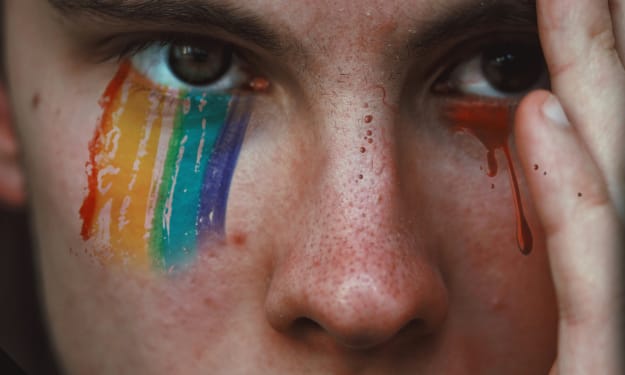
What Pain Really Does to Us
Pain is a universal experience. We all go through it in one form or another. Whether it's emotional heartbreak, physical injury, or the quiet ache of loneliness, pain is something none of us can escape. But here's the twist — pain isn't always the enemy. In fact, in many ways, it's our greatest teacher.
By F. M. Rayaanabout a year ago in Psyche
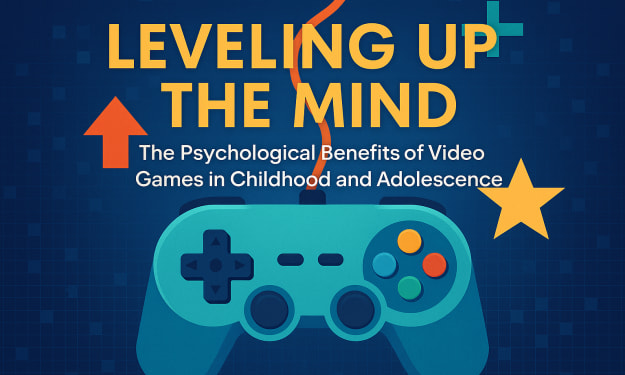
Leveling Up the Mind: The Psychological Benefits of Video Games in Childhood and Adolescence
In the past, video games have often been blamed for promooting violence, addiction, and social withdrawal in children and adolescents. While certain types of games—and excessive play—may indeed have negative consequences, a growing body of psychological research challenges the one-sided narrative. Not only can video games be entertaining, but they can also offer measurable cognitive, emotional, and social benefits, particularly when played in moderation and within supportive environments.
By Siria De Simoneabout a year ago in Psyche
Letting Go of People Who Were Never Really There for You
There’s a specific kind of heartbreak that doesn’t come from a breakup. It comes from waking up one day and realizing — someone you cared about deeply was never really in it with you. Not fully. Not emotionally. Not truly. - - - ## When You’re the One Who Always Shows Up You’re the one who always checks in. The one who sends the “Just thinking of you” message. The one who remembers birthdays, comforts in silence, and gives without keeping score. But somewhere along the way, you notice a pattern: You’re always reaching out. You’re always making the effort. You’re always left holding the emotional weight. And when you finally need someone — they’re suddenly too busy, too distracted, or just… absent. That realization stings in a way that’s hard to explain. - - - ## The Pain of One-Sided Bonds What nobody prepares you for is the ache of emotional loneliness — while technically not being alone. You can have people around you, and still feel isolated. Why? Because presence doesn’t mean connection. Because some people are only there when it’s easy for them — not when it matters for you. And the hardest pill to swallow? Sometimes the people we fight the hardest to keep… wouldn’t even notice if we stopped showing up. - - - ## I Used to Blame Myself I thought maybe I was too emotional. Too needy. Too intense. I kept wondering, “Am I expecting too much?” But then I realized — No, I wasn’t asking for too much. I was just asking the wrong people. Some people don’t know how to hold space for you because they’ve never had to. Because someone like you — who shows up without being asked — makes it too easy for them to take you for granted. - - - ## Letting Go Is Hard — But Necessary Letting go doesn’t always come with closure. Sometimes, there’s no big fight. No goodbye. No final scene. Just silence. Just distance. Just the slow, quiet decision to stop watering a dead plant. It hurts. It really does. But peace begins the moment you stop begging for crumbs from tables you deserve to walk away from. - - - ## Here’s What Helped Me Heal 1. **I stopped chasing validation.** If someone wanted me in their life, they’d show it. 2. **I reflected, not resented.** Instead of blaming them, I observed. I saw the patterns. And I learned from them. 3. **I surrounded myself with energy that felt like home.** With people who didn’t drain me — but filled me. 4. **I realized: love isn’t proven by words, but by consistency.** Anyone can say they care. Few show it when it counts. - - - ## A Note to Anyone Who Feels Unseen If you’ve ever felt like the backup plan, the emotional crutch, or the one who gives endlessly without receiving — This is your reminder: You are not hard to love. You’re just loving people who aren’t ready to meet you where you are. Letting go doesn’t mean you’re bitter. It means you’re brave. It means you finally chose you. - - - - - - - - - - - - - - - - - - - - - - - - - - ## Final Thoughts You deserve relationships that feel like safety — not guessing games. Connections where you’re not performing or proving — just being. So walk away from half-hearted people. From the ones who only come around when it benefits them. From those who disappear when your soul needs holding. Walk away with grace. With softness. With strength. Because the right ones will never make you question your worth. And those who did? Were never really there in the first place.
By SHADOW-WRITESabout a year ago in Psyche
When You Miss Someone, Do They Feel It Too?
When You Miss Someone, Do They Feel It Too? Have you ever sat alone, thinking about someone, and suddenly your heart feels heavy? Like a strange pull in your chest… and you wonder, "Are they thinking of me too?" You’re not alone in this feeling. So many people around the world feel the same at different moments. And you know what? Maybe right now, someone out there is missing you without even knowing why.
By Umar Khattakabout a year ago in Psyche
Living with High-Functioning Anxiety
From the outside, I looked like I was thriving. I never missed a deadline. My calendar was perfectly color-coded. I showed up early, answered emails within minutes, and never forgot a birthday. People called me "organized," "motivated," and "reliable." I wore those words like armor.
By shoaib khanabout a year ago in Psyche
"The Gentle Path to Healing"
It sounds like you've shared a really thoughtful piece about healing and self-care. Here are a few ways to reword it, focusing on slightly different angles: Option 1 (Focus on the Turning Point): > Her presence was a turning point. She didn't judge or try to solve my problems; she simply offered support when I needed it most. Shortly after, I started therapy, which felt daunting at first. Expressing my inner turmoil was a challenge, but with consistent effort, I began to understand myself better. Healing wasn't a quick fix, but reaching out for help was the crucial first step in rediscovering my true self. > > Learning to set boundaries became an act of self-love. I used to say "yes" to everything, fearing I'd disappoint others or appear difficult. I mistakenly believed I was being helpful, but in reality, I was neglecting my own needs. Each time I agreed to something that didn't align with my well-being, I was denying myself the chance to nurture my own happiness. Saying "no" wasn't about becoming cold; it was about valuing my own capacity and limits. Surprisingly, establishing these boundaries didn't disrupt things – instead, it felt like an act of self-care. > > The path to healing isn't a straight line. Some days bring lightness and hope, while others feel heavy with old stresses. I used to think feeling down meant I was failing, that healing was a final destination. But the truth is, healing is a winding, uneven journey with forward steps, backward steps, and sideways moments. The important thing is to keep returning to yourself, to keep making choices that support your healing, even when it feels impossible. Now, when darkness returns, I can meet it with calm and acceptance, knowing it's part of the process. > > In conclusion, remember that whatever you're facing, you are not broken – you are human. It's perfectly okay to step back, rest, or seek support. It takes courage to acknowledge your limits and ask for help. Sometimes, our lowest points can lead to profound personal growth, as they did for me. When I felt like I had hit rock bottom, I was actually beginning a slower, more authentic life, one I can finally be proud of. As you navigate your own journey, remember that the light will return. It comes in moments, big and small, reminding you that you are here, and that you matter. > Option 2 (Focus on Self-Compassion): > The simple presence of a supportive person, who offered understanding without judgment, encouraged me to seek therapy soon after. Initially, therapy felt intimidating, as I struggled to articulate my inner world. However, with time and persistence, I began to gain clarity about my experiences. Healing wasn't instantaneous; it was the act of asking for help that initiated my journey back to my authentic self. > > Learning to establish boundaries became an essential act of self-compassion. My tendency to always say "yes" stemmed from a fear of disappointing others or appearing selfish. I mistakenly believed I was doing the right thing by agreeing to everything, even when it conflicted with my own needs. In reality, I was betraying myself. Each time I overextended myself, I was denying myself the opportunity to nurture my own well-being and happiness. Saying "no" wasn't about becoming unkind; it was about recognizing and honoring my own limits. I was surprised to find that setting boundaries didn't create chaos; instead, it felt like a profound act of self-love. > > The journey of healing is rarely linear. There will be days filled with lightness and hope, and others when old feelings resurface. I used to interpret these low points as setbacks, believing that healing meant reaching a permanent state of well-being. However, healing is a fluid process, characterized by progress that isn't always consistent. There will be forward steps, backward steps, and detours. The crucial element is to continually return to yourself, to keep making choices that support your healing, even when it feels incredibly challenging. Now, when difficult feelings arise, I can approach them with a sense of calm, allowing myself to feel them and remembering that they are a natural part of the journey. > > Ultimately, please remember that whatever you are experiencing, you are not flawed; you are human. It is perfectly acceptable to need to withdraw, take a break, or seek support. It requires courage to acknowledge your limits and ask for help. Often, our most challenging moments can pave the way for significant personal transformation, as they did for me. When I felt like I had lost everything, I was actually beginning to embrace a more intentional and genuine way of living, a life I now value deeply. As you navigate your own path, hold onto the understanding that the light will return. It finds you in moments, both big and small, reminding you of your presence. You are here, and that is significant. > Option 3 (More Concise): > Her non-judgmental support led me to therapy, which was initially scary as I didn't know how to express myself. Over time, I began to understand my inner world. Healing wasn't immediate; asking for help was the start of my journey back to myself. > > Setting boundaries became an act of self-love. My "yes-saying" came from a fear of disappointing others, but it was a betrayal of my own needs. Saying "no" wasn't cold; it was valuing my limits and surprisingly kept things running smoothly. > > Healing isn't linear, with good days and bad days. I used to think feeling low was a failure, but healing is an uneven process. The key is to keep returning to yourself and making choices that aid healing, even when it's hard. Now, I meet darkness with calm, knowing it's part of the journey. > > Remember, you're not broken, just human. Needing breaks or support is normal and takes courage. Breakdowns can lead to growth, as mine did. When I felt I'd lost everything, I began a slower, more real life I'm proud of. Know that the light returns in moments, big and small, reminding you that you are here and that you matter. > Let me know if you'd like me to try rephrasing it in a different way or focusing on a specific aspect!
By Nasir Khanabout a year ago in Psyche
Sciotism: The Forgotten Philosophy of Shadows and Reality
In a world obsessed with facts, figures, and hard evidence, what if everything you believed in was just a shadow of something else? Welcome to the eerie, mysterious, and often overlooked world of Sciotism — a philosophy rooted in the belief that reality is nothing but shadows of a higher, unseen truth.
By Umar Khattakabout a year ago in Psyche
The Lantern Keeper
The sea had taken her husband, and still, Eleanor lit the lantern every night. The old lighthouse on Stonewake Cliff had stood for over a hundred years, its beam sweeping the dark like a sentinel. Its gears groaned and its bricks wore salt like old wounds, but it had never gone dark. Not once. Not even now, in 1941, with war howling across Europe and the Channel full of ghosts.
By Imran Khanabout a year ago in Psyche
Why Do People Like Music?
The Enduring Allure of Music: A Universal Language Music, an art form as ancient as humanity itself, transcends borders, languages, and eras to unite people in a shared experience of joy, sorrow, and connection. From the gentle lullabies soothing infants to the vibrant anthems echoing through stadiums, music weaves itself into the fabric of human existence. Its profound impact stems from a remarkable interplay of science, psychology, culture, and emotion, making it one of the most cherished forms of expression. But what is it about music that captivates us so deeply? The answer lies in its multifaceted ability to engage the mind, stir the heart, and foster unity.
By MAROOF KHANabout a year ago in Psyche