anxiety
A look at anxiety in its many forms and manifestations; what is the nature of this specific pattern of extreme fear and worry?
How Austin Anxiety and Trauma Specialists Can Help You Heal
When anxiety, phobias, or past trauma begin to affect your daily life, finding the right support becomes essential. Many people silently struggle with overwhelming thoughts, panic, or fears that limit their freedom. The good news is that help is available right here in Austin. With experienced professionals and specialized treatments, Austin Anxiety and Trauma Specialists provide the tools and guidance to help you reclaim peace of mind.
By anxietyspecialistabout a year ago in Psyche
Echoes in the Void: Finding Connection in a Disconnected World
There are moments in life when silence feels heavier than words. You sit in a room filled with noise—buzzing notifications, endless scrolling feeds, voices from a screen—but inside, there is only stillness. It is the kind of silence that does not soothe but suffocates.
By Muhammad Kaleemullahabout a year ago in Psyche
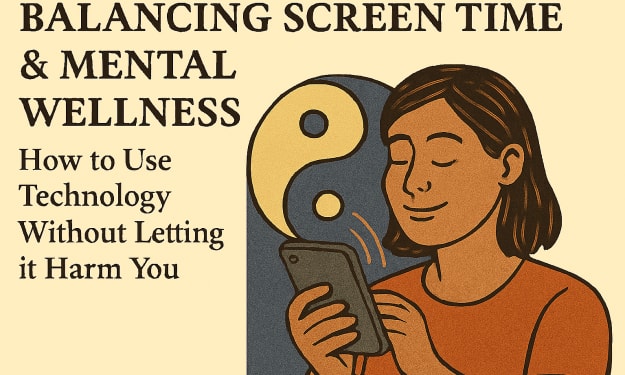
Balancing Screen Time & Mental Wellness: How to Use Technology Without Letting It Harm You. AI-Generated.
Screens have become an inseparable part of daily life. From checking work emails on your laptop to scrolling through social media on your phone, the average person spends several hours a day in front of a screen. While technology provides convenience, entertainment, and connection, too much of it can take a toll on mental health. Prolonged screen time has been linked to stress, anxiety, poor sleep, and feelings of isolation.
By JP Psychiatryabout a year ago in Psyche
When Silence Follows You
Being late never used to bother me. But today, it feels heavier than bad timing—it feels like fate. The university library stretches before me, polished tiles gleaming under harsh fluorescent lights. Every sound seems amplified. My shoes scuff against the floor. My breath bounces back at me. Even the faint creak of a shelf seems to shout in the emptiness. In this antiseptic quiet, I am listening. Straining. Waiting. Because here, silence isn’t safety. Silence is a trap.
By Shehzad Anjumabout a year ago in Psyche
"Anxiety" The Silent Global Epidemic"
Introduction In today’s fast-moving world, anxiety has become one of the most common mental health challenges. It is no longer limited to a few individuals but has spread globally, affecting children, adults, and even the elderly. The pressures of modern life, constant competition, social media comparisons, and uncertainty about the future have all contributed to rising levels of stress and worry. Anxiety is often called a “silent epidemic” because, while many people suffer, only a few openly talk about it. What is Anxiety? Anxiety is more than just feeling worried before an exam or nervous before a big event. It is a persistent feeling of fear, unease, or nervousness that doesn’t go away easily. Unlike normal stress, anxiety continues to interfere with daily life, relationships, work, and even physical health. For some, it may appear mild, while for others it can become overwhelming, leading to panic attacks or even depression. --- Symptoms of Anxiety Anxiety can affect both the mind and body. Common symptoms include: Emotional symptoms: Constant worry, restlessness, irritability, difficulty concentrating, and a feeling of dread. Physical symptoms: Rapid heartbeat, sweating, trembling, shortness of breath, stomach pain, fatigue, headaches, and insomnia. Behavioral symptoms: Avoiding social situations, overthinking, procrastination, or relying on unhealthy habits like smoking or overeating. These symptoms may come and go, but when they persist for weeks or months, it becomes clear that the person is dealing with an anxiety disorder. --- Causes of Anxiety Anxiety rarely comes from a single reason. Instead, it is the result of a mix of biological, psychological, and social factors. Some common causes are: 1. Modern Lifestyle – Excessive use of smartphones, social media pressure, and lack of real-life connections. 2. Work and Academic Pressure – Long hours, tight deadlines, competition, and fear of failure. 3. Financial Stress – Rising costs of living, job insecurity, and debt worries. 4. Trauma and Past Experiences – Childhood neglect, bullying, or past abuse can leave lasting scars. 5. Genetics and Biology – Family history of anxiety or imbalances in brain chemicals. 6. Health Concerns – Chronic illness, lack of sleep, or poor diet can trigger anxiety. ---The Hidden Impact Anxiety does not only harm the individual; it also impacts families, communities, and even workplaces. Students with anxiety may struggle to focus on studies, employees may lose productivity, and families may face misunderstandings due to constant irritability or withdrawal. If ignored, anxiety can lead to depression, substance abuse, or physical health problems like heart disease and high blood pressure. --- How to Manage Anxiety The good news is that anxiety can be managed. While it may not disappear overnight, small and consistent steps can make a big difference. 1.The Hidden Impact Therapy: Talking to a psychologist or counselor helps identify triggers and teaches coping strategies. Medication: In severe cases, doctors may prescribe medicines to balance brain chemistry. 2. Lifestyle Changes Regular Exercise: Walking, yoga, or gym workouts release endorphins that reduce stress. Balanced Diet: Eating nutritious meals and avoiding caffeine or junk food helps regulate mood. Adequate Sleep: Proper rest is essential to calm the nervous system. 3. Mindfulness and Relaxation Meditation, deep breathing exercises, and prayer or spiritual reflection can reduce racing thoughts. Journaling feelings can help release inner tension. 4. Healthy Boundaries Limiting screen time and reducing social media comparisons. Saying “no” when overwhelmed instead of overcommitting. 5. Support System Talking openly with trusted family or friends reduces the feeling of isolation. Support groups provide encouragement from people facing similar struggles. --- A Message of Hope Anxiety is not a weakness; it is a human response to overwhelming circumstances. The key lies in awareness, acceptance, and action. With the right support, lifestyle changes, and self-compassion, people can regain control over their minds. We must remember that mental health is just as important as physical health. Talking about anxiety should not be a source of shame but a step toward healing. The more we create safe spaces for discussion, the faster the stigma will fade. --- Conclusion The age of anxiety may seem dark, but every challenge comes with an opportunity to grow stronger. By recognizing the symptoms, understanding the causes, and practicing healthy management, we can overcome the silent epidemic. Let us build a world where seeking help is seen as courage, not weakness. In doing so, we not only heal ourselves but also inspire others to walk the path of mental well-being.
By Muhammad suliman about a year ago in Psyche
Compassion for Who
Orson worked as a contract coder for multiple medical software companies. Freelancing let him make his own hours, live where he wanted, and be his own boss. He avoided petty office politics and usually made more than the 9-5ers. The downside was there were no benefits. Medical and life insurance, along with retirement plans, were his responsibility. It seemed a fair trade for his freedom.
By Mark Gagnonabout a year ago in Psyche
The Echo of Silence
The Echo of Silence Evelyn sat in the dimly lit room, her hands resting on the oak desk where old letters lay scattered. The silence of the house pressed against her like a suffocating blanket. She had always feared silence, not because it was empty, but because it was never truly empty. For Evelyn, silence had a voice. It began years ago, after her father’s sudden death. She remembered standing at the funeral, surrounded by distant relatives, when she first heard it—a faint whisper threading through the quiet. At first, she dismissed it as grief or imagination. But as the months passed, the whisper grew clearer, more distinct, until it seemed to form words. “You left me,” it murmured. Tonight, the whisper had returned, sharper than ever. The room seemed to vibrate with its presence. Evelyn pressed her palms to her ears, but the sound came from inside her mind, not outside. She tried to distract herself, reaching for one of the letters on the desk. It was written in her father’s handwriting, a short note reminding her to buy milk. Ordinary, harmless. Yet her heart raced as though she were holding a relic of guilt. “You ignored me,” the voice hissed. Her chest tightened. She had ignored him. She remembered the last week of his life, when he had called her several times, asking if she could visit. She had been busy with work, deadlines, and meaningless meetings. “Next week, Dad,” she had promised. But there had been no next week. Evelyn rose and paced the room, her shadow dancing across the faded wallpaper. It’s not real, she told herself. Just my mind playing tricks. But the voice grew louder. “If you had come… I would not have been alone.” Tears blurred her vision. “Stop it!” she screamed, but the walls only echoed her words. Then came the sound of footsteps. Slow, deliberate, dragging across the wooden floor behind her. She froze, every nerve in her body trembling. She turned, but the hallway was empty. Yet she felt it—an unseen presence, watching, waiting. Her rational mind whispered explanations: stress, insomnia, trauma. But her body felt the weight of something more, something beyond psychology. She staggered back to the desk, clutching the letters like a shield. “You can’t hide,” the voice whispered again. Her hands shook as she scribbled on a blank sheet of paper: I’m sorry, Dad. I should have been there. The moment the words were written, the air seemed to shift. The room grew colder, and the silence became heavier. Suddenly, she felt a hand—cold, fragile—rest on her shoulder. She gasped and spun around. No one. Only the empty chair in the corner where her father used to sit. Evelyn collapsed into the desk chair, sobbing. She did not know whether she was haunted by a ghost or by her own conscience. Perhaps both. The boundary between reality and mind had blurred long ago. Hours passed. The letters remained scattered, her apology lying among them like a confession. The whispers grew softer, fading into the walls until they became indistinguishable from silence. For the first time in years, the silence felt almost bearable. But Evelyn knew it would return. Guilt never dies; it only sleeps, waiting to be awakened by a memory, a sound, a moment of stillness. She sat there in the half-light, her mind caught in a cycle with no escape. And in that fragile silence, she finally understood: sometimes the loudest voices are the ones we carry inside.
By Article Master about a year ago in Psyche
Connected but Alone: The Hidden Mental Health Struggle No One Wants to Admit. Content Warning.
Introduction In an age where our phones buzz with notifications, where we can video call someone on the other side of the world in seconds, and where social media makes it seem like friends and laughter surround everyone, there is a painful irony: many of us have never felt more alone.
By Byron Egoleabout a year ago in Psyche