advice
Advice and tips on managing mental health, maintaining a positive outlook and becoming your happiest self.
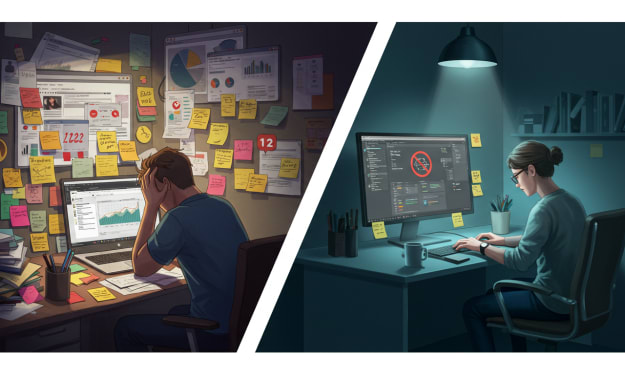
Focus Isn't About Trying Harder: It's About Friction
In the age of constant notifications, open tabs, background noise, and infinite scrolling, we've come to believe that focus is a matter of willpower. If we just tried a little harder, eliminated laziness, and summoned more discipline, we could finally sit down and get things done. But what if this assumption is wrong?
By Nikesh Lagunabout a year ago in Psyche
Ketamine vs. SSRIs: Which Works Faster for Depression?
Depression is more than just feeling down. It can crush motivation, ruin relationships, and dull every part of life. For millions, antidepressants offer a path back—but not all antidepressants work the same way, and not all of them work quickly. When someone is deep in the grip of depression, especially with suicidal thoughts, time becomes a critical factor.
By Richard Baileyabout a year ago in Psyche
How Baltimore Doctors Help Patients Lose Weight Safely?
Weight loss isn't just about fitting into smaller clothes. It's about reclaiming your health, preventing chronic diseases, and feeling confident in your own skin. But here's the thing: doing it safely requires medical expertise.
By Luke Henryabout a year ago in Psyche
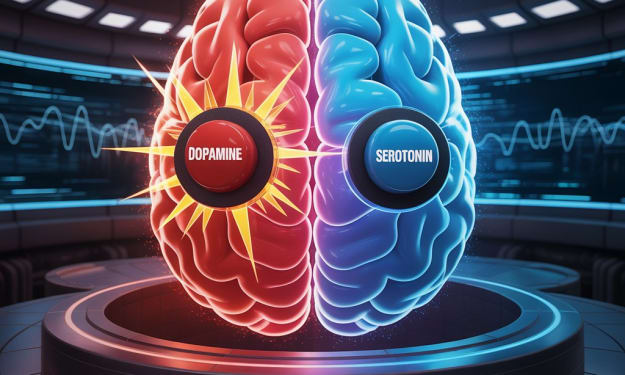
Dopamine vs. Serotonin: The Secret Dance That Runs Your Brain (And Life)
Let me tell you a story about Jake. Jake wakes up exhausted, grabs his phone immediately, and doom scrolls for 30 minutes. He knows he should work out, but "just can't find the motivation." By afternoon, he's binged on snacks while putting off important work. At night, he's wired but exhausted, mind racing about everything he didn't accomplish.
By shoaib khanabout a year ago in Psyche
10 Signs of Toxic People — And How to Protect Your Peace
They might be charming. They might even call you their best friend, partner, or “ride or die.” But something feels off. You leave every interaction with them feeling tired, small, or strangely guilty — and you can’t explain why. That’s the silent damage toxic people cause. They don’t always scream or slam doors. Sometimes, they just chip away at your peace, bit by bit, until you forget what life felt like without walking on eggshells. ### Here Are 10 Classic Signs of Toxic People — And How To Handle Them: --- **1. They Make Everything About Themselves** No matter what you’re going through, the conversation circles back to *them*. You could be grieving or celebrating, and somehow they’ll make themselves the main character. 🛡️ *Protect Yourself:* Limit how much you share. Notice if your feelings are constantly invalidated — and stop expecting support where none exists. --- **2. They Guilt Trip You Constantly** They say things like: - “After all I’ve done for you…” - “Wow, so you don’t care anymore?” - “You’re really going to act like that?” Guilt becomes their weapon of control. 🛡️ *Protect Yourself:* Recognize emotional manipulation. You are not responsible for anyone else’s happiness, especially when it comes at the cost of your own. --- **3. They Only Come Around When They Need Something** When things are good for you, they’re silent. But the moment they want attention, money, support, or drama — they show up fast. 🛡️ *Protect Yourself:* Watch for patterns. Healthy relationships go *both* ways. You’re not an emotional ATM. --- **4. They Subtly Tear You Down** Toxic people disguise cruelty as humor or “honesty.” - “You’re cute, but not *model* cute.” - “I’m just saying what everyone else is thinking.” 🛡️ *Protect Yourself:* Don’t laugh along. If someone constantly makes you feel smaller — it’s intentional. --- **5. They Compete With You Instead of Supporting You** Your wins make them uncomfortable. Your growth makes them insecure. And instead of cheering you on, they try to outdo you. 🛡️ *Protect Yourself:* Real friends don’t treat life like a scoreboard. Distance yourself from those who treat your success as a threat. --- **6. They Never Apologize — Or Weaponize Their Apology** If they ever say sorry, it comes with strings attached. - “I’m sorry *you* feel that way.” - “I said sorry, what more do you want?” 🛡️ *Protect Yourself:* Watch for apologies that shift blame. A real apology includes change — not just words. --- **7. You Feel Drained After Talking to Them** This is one of the clearest signs. You dread their texts. You feel anxious before seeing them. And afterward? Exhausted. 🛡️ *Protect Yourself:* Your energy is valuable. If someone constantly drains it, that’s not friendship — it’s emotional theft. --- **8. They Disrespect Your Boundaries** Whether it’s your time, space, or emotional needs, toxic people don’t care. They push, test, and cross lines repeatedly. 🛡️ *Protect Yourself:* Say “no” and mean it. If they get angry when you set a boundary — that’s exactly why you need one. --- **9. They Play the Victim Every Time** Nothing is ever their fault. Even if they hurt you, somehow they become the wounded one. It’s exhausting and manipulative. 🛡️ *Protect Yourself:* You can’t heal someone who refuses to see their own damage. Don’t let guilt keep you stuck in their cycle. --- **10. They Make You Question Yourself** The most dangerous thing? They make you doubt your own reality. You start asking: - “Was it really that bad?” - “Maybe I’m just too sensitive?” - “Am I overreacting?” That’s not self-reflection. That’s **gaslighting**. 🛡️ *Protect Yourself:* Trust your gut. If someone constantly makes you question your worth, it's not your insecurity — it’s their manipulation. --- ### Final Thought: Peace Is a Choice Toxic people thrive where boundaries are weak. The hard truth? You can’t change them. But you *can* change how much access they have to you. You’re allowed to walk away. You’re allowed to cut ties. You’re allowed to protect your peace — even if they call you cold, dramatic, or selfish. Let them talk. Because the people who truly love you won’t make you suffer for saying, “Enough.”
By SHADOW-WRITESabout a year ago in Psyche
ADHD in Adults
When people hear the term ADHD, they often picture a hyperactive child unable to sit still in a classroom. But ADHD (Attention-Deficit/Hyperactivity Disorder) isn’t just a childhood condition. For many, ADHD persists into adulthood, quietly impacting careers, relationships, and self-esteem. In fact, it's estimated that more than 4% of adults live with ADHD, many undiagnosed.
By Family Psychology Placeabout a year ago in Psyche
Dopamine Nation – Living in a Culture That Rewards Overstimulation
Dopamine Nation – Living in a Culture That Rewards Overstimulation In today’s fast-paced digital world, it’s easy to feel like you’re constantly chasing something—more likes, more notifications, more excitement. But have you ever wondered why it's so hard to put your phone down or why silence feels uncomfortable? The answer lies in one powerful chemical: dopamine.
By shoaib khanabout a year ago in Psyche
Smiling Hurts Sometimes: The Hidden Pain Behind “I’m Fine”
“I’m fine.” Two words. So small, so easy to say — and so often a lie. A mask. A shield. A desperate way to keep the world from asking too many questions. We say it automatically. At school, at work, with friends, even at home. “I’m fine” becomes a reflex, not a reflection of how we actually feel. Because admitting the truth — “I’m overwhelmed,” “I’m breaking,” “I’m not okay” — feels too heavy. Too vulnerable. Too much. So we smile instead. We go through our days holding it together. We show up. We perform. We keep things light, crack a joke, take selfies, respond to texts. But underneath it all, there’s a version of us that’s exhausted. An inner self screaming, “I don’t want to pretend anymore.” ### Why We Fake It It’s not that we want to be dishonest. It’s that we’ve been taught — by society, by culture, sometimes even by our families — that *emotions are messy*. That being vulnerable is weak. That breaking down is something you do in private, not in public. And so we build emotional armor. We learn how to laugh while hurting. How to keep conversations surface-level. How to avoid eye contact when someone asks, “Are you really okay?” Because we don’t want to burden anyone. We don’t want to be seen as dramatic. We don’t want to unravel. But slowly, pretending becomes painful. ### The Weight of the Mask The truth is, smiling when you’re hurting is exhausting. It drains you. It creates a disconnect between who you are and who you present to the world. And over time, that gap grows so wide, you forget which version is the real you. You start to feel invisible — not because no one is looking, but because no one is seeing what’s *real*. And then comes the guilt. “Why can’t I just be grateful?” “Other people have it worse.” “I should be stronger.” That inner voice becomes cruel. And yet, we keep smiling. ### The Cost of Constant Performance You might be the one who always checks in on others. The listener. The “strong” one. The one everyone turns to for advice or comfort. But when was the last time someone asked *you* how *you* were — and meant it? This emotional performance comes with a price: - You feel emotionally burnt out - You start avoiding people or social events - You struggle to connect deeply - You cry randomly when you’re alone - You feel like you're losing yourself, slowly You begin to wonder: If I stopped pretending, would anyone still stick around? ### The Power of Dropping the Act What if — just once — you answered honestly? What if, when someone said, “How are you?” you paused and said, “I’m struggling, but I’m here.” Or “I’m tired, but thank you for asking.” That small shift cracks open the door to something real. Something healing. You don’t have to spill everything. You don’t have to collapse into someone’s arms. But you deserve a space where you don’t have to act. Where your feelings are safe. Where your pain isn’t something to hide. ### Start With One Safe Person You don’t need an audience. Just one person who can sit with your truth. A best friend. A therapist. A sibling. Or even *yourself* — through journaling, through reflection. Say the words out loud: “I’m not okay.” You might be surprised at how powerful it feels. The more you speak your truth, the lighter the burden becomes. And the less you’ll have to hide behind that fragile smile. ### You Deserve To Be Seen If no one’s told you this lately, let me say it: You don’t have to perform for love. You don’t have to be “okay” to be worthy. You’re allowed to struggle. You’re allowed to feel. And you’re allowed to be human. Some days, the bravest thing you can do is take off the mask and let someone see the pain behind the smile. Because healing begins not with pretending — but with honesty.
By SHADOW-WRITESabout a year ago in Psyche
When You Feel Nothing: The Quiet Struggle of Emotional Numbness
Some days, you're not sad. You're not angry. You're not happy either. You just *exist* — moving through time like a shadow of yourself. You smile when you should. You respond when spoken to. You say, “I’m fine,” and maybe you even believe it for a second. But deep down, there’s… nothing. This is emotional numbness. It’s not a trending hashtag or a quote-friendly topic for Instagram stories. It’s quieter than depression, subtler than anxiety, but often just as destructive. And yet, most people who suffer from emotional numbness don’t even realize what they’re going through — until they’re years into it, feeling like ghosts inside their own lives. ### What Is Emotional Numbness? Emotional numbness is the inability to feel emotions — good or bad. It’s like life becomes a dull background noise. You’re functioning, you’re waking up, eating meals, doing your job or schoolwork, responding to texts — but there’s no spark. No high. No real low either. Just a numb, muted existence. It often shows up after trauma, long-term stress, burnout, or depression. Sometimes it’s the mind’s way of protecting you from emotional overload. But in the process, it also cuts you off from everything beautiful: joy, connection, love, excitement. ### You Might Be Emotionally Numb If… - You don’t feel excitement for things you once loved - You avoid deep conversations or emotional topics - You feel disconnected from people, even close friends or family - You can’t cry, even when something sad happens - You feel like you’re “watching your life” rather than living it - You use distractions (scrolling, gaming, eating) just to feel *something* If any of these feel painfully familiar, you’re not broken. You’re just emotionally exhausted — and your brain has gone into survival mode. ### Why We Don’t Talk About It Emotional numbness is hard to describe. When you're sad, you can cry. When you're anxious, your heart races. But when you're numb, there’s nothing to *show*. People assume you're okay because you're not falling apart. And that’s what makes it dangerous. We’ve been conditioned to measure mental health by how "bad" someone looks on the outside. But numbness often wears a functioning face. It goes to school. It jokes with friends. It posts selfies. And it suffers in silence. ### Breaking the Ice: How to Feel Again The good news? Numbness is not permanent. But healing doesn’t happen overnight. It begins with tiny cracks in the ice — and you have to let the light in, slowly. Here are some ways to begin: 1. **Acknowledge it without guilt** You're not weak for feeling nothing. You're human. Give yourself permission to feel *whatever is or isn’t there*. 2. **Reconnect with your body** Physical movement (like walking, stretching, dancing) helps reconnect you to your senses. Even a cold shower can pull you back into the present. 3. **Limit emotional distractions** Constant noise (scrolling, bingeing, multitasking) numbs us further. Try silence. Journal. Stare out a window. Let your mind breathe. 4. **Talk, even if you don’t know what to say** A therapist, a friend, a voice note to yourself — anything. Just *externalize*. Naming your numbness is the first step to softening it. 5. **Revisit small joys** Return to hobbies, even if they feel “meh.” Sometimes your heart shows up five minutes in — not at the start. ### A Final Thought You don’t need to crash and burn to realize you’re struggling. Sometimes, the absence of feeling is the loudest cry for help. So if you’re reading this and thinking, “This is me,” — breathe. You’re not alone. You’re not broken. And this numbness is not your forever. You’re still in there — behind the silence, beneath the layers. And piece by piece, you will feel again. One moment at a time.
By SHADOW-WRITESabout a year ago in Psyche