advice
Advice and tips on managing mental health, maintaining a positive outlook and becoming your happiest self.
When Silence Hurts More Than Words
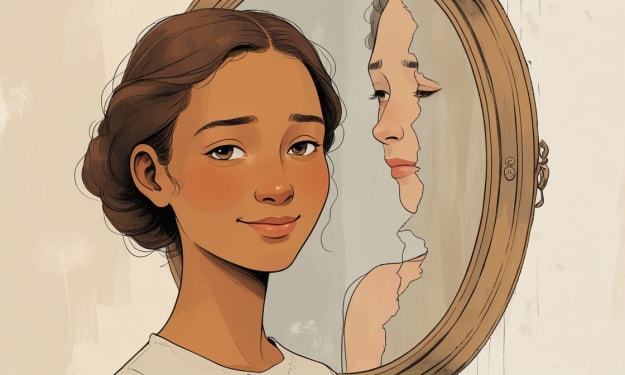
Mia grew up in a quiet house. Her parents never screamed. Never threw things. Never called each other names or slammed doors. To anyone looking from the outside, they were the picture of civility—calm, controlled, perfectly composed.
By Ameer Moavia9 months ago in Psyche
The Psychology of Emotional Neglect
Sophie was eight years old when she stopped crying.Not because she stopped hurting. But because she'd finally learned what her parents had been teaching her all along: her pain was an inconvenience they didn't want to deal with.She'd fallen off her bike that afternoon, scraped her knee badly enough that blood soaked through her jeans. She'd run inside, tears streaming, looking for comfort.Her mother was on a work call. She'd glanced at Sophie, held up one finger—wait—and continued talking. Sophie stood there, bleeding and crying, while her mother discussed quarterly projections as if her daughter wasn't falling apart three feet away.After twenty minutes, her mother finally hung up. "What happened?""I fell. It really hurts."Her mother barely looked at the wound. "You're fine. Go clean it up. I have another call in five minutes."Sophie went to the bathroom alone. Cleaned the wound alone. Bandaged it alone. And something inside her went quiet.My pain doesn't matter. My needs are a burden. If I want to be loved, I need to stop needing things.She didn't think those words consciously. She was eight. But her nervous system absorbed the lesson completely: To be acceptable, I must need nothing.By the time Sophie was ten, she'd perfected the art of emotional self-sufficiency. She stopped running to her parents when she was hurt, scared, or sad. Stopped sharing her excitement because they seemed annoyed by her enthusiasm. Stopped asking for help because they were always too busy.She became the "easy child." The one who didn't cause problems. The one who took care of herself.Her parents praised this. "Sophie is so independent," they'd tell relatives. "She never needs anything from us."They said it like it was a good thing. Like self-sufficiency at ten years old was maturity instead of survival.What they didn't see—what they never asked about—was the little girl inside who'd learned that her emotional needs were unwelcome. Who'd concluded that love was conditional on not requiring emotional support. Who'd started building walls around her heart to protect herself from the pain of reaching out and being ignored.Sophie wasn't independent. She was neglected. And she'd learned to call it strength.The Invisible WoundDr. Jonice Webb, who has spent her career studying emotional neglect, explains that it's not about what happened—it's about what didn't happen. There's no dramatic abuse to point to. No clear perpetrator. Just an absence. A void where attunement and emotional responsiveness should have been.Emotional neglect is the failure of parents to notice, validate, and respond to a child's emotional needs. It's not intentionally cruel. Sophie's parents weren't monsters. They provided food, shelter, education. They just didn't provide emotional presence.They were physically there but emotionally absent. Going through the motions of parenting while never actually seeing their daughter's inner world. Never asking how she felt. Never validating her emotions. Never teaching her that feelings were important information worth paying attention to.And children don't think: My parents are emotionally neglectful. They think: Something is wrong with me. My feelings are too much. I need to stop having needs.By adolescence, Sophie had internalized the neglect so completely she couldn't even identify it. When friends complained about their parents, Sophie would say, "My parents are fine. They leave me alone, which is nice."She'd reframed abandonment as freedom. Told herself she preferred the distance. Convinced herself she didn't need what she'd never been given.But her body kept the score. Sophie struggled with anxiety she couldn't explain. Had panic attacks that seemed to come from nowhere. Felt a persistent emptiness she couldn't name. And she had no idea these symptoms were her nervous system screaming about unmet childhood needs.Research by Dr. Bessel van der Kolk reveals that emotional neglect can be as damaging as overt abuse because it teaches children that their internal experience doesn't matter. They learn to disconnect from their own emotions, to ignore their own needs, to believe they're fundamentally unworthy of care.Sophie had learned all of this. And she'd carried it into adulthood like invisible baggage she didn't even know she was holding.The Relationship That Replicated the PatternAt twenty-seven, Sophie met David. He was charming, successful, emotionally unavailable. Perfect.She didn't recognize the pattern. Didn't see that she'd chosen someone who replicated her parents' emotional absence. She just knew he felt familiar. Comfortable. Like home.David was affectionate in the beginning—the way emotionally unavailable people often are before they feel secure. But once the relationship was established, he pulled back. Became distant. Stopped asking how she was. Stopped being curious about her inner life.Sophie told herself it was fine. She didn't need constant attention. She was independent. Low-maintenance. Cool about everything.But inside, the little girl who'd learned not to need anything was screaming.One evening, Sophie had a terrible day at work. Her project had been rejected. Her boss had humiliated her in front of colleagues. She came home shaking, on the verge of tears.David was watching TV. "Hey. How was work?""Really bad, actually. I—""That sucks. I had a rough day too." And he launched into his own story without asking for details about hers.Sophie felt something familiar: the ache of reaching out and finding no one there. The shame of having needs. The automatic shutdown of her own emotions to make room for someone else's.She swallowed her pain, listened to David's story, offered support. And hated herself for needing something he couldn't give.Dr. Harville Hendrix's research on relationship patterns reveals that we unconsciously choose partners who replicate our childhood wounds—not because we're masochistic, but because we're trying to heal them. We're hoping this time, we'll be seen. This time, our needs will matter.But without awareness and intentionality, we just recreate the same dynamic. Sophie had found someone who emotionally neglected her exactly the way her parents had. And she was trying to earn his attention the same way she'd tried to earn theirs: by needing nothing, asking for nothing, being effortlessly easy.It wasn't working. It never had.
By Ameer Moavia9 months ago in Psyche
Why Some People Feel Alone Even in Relationships
Lena woke up next to her husband of seven years and felt like a stranger was sleeping beside her. Not because Tom had changed. But because somewhere between the wedding and this Tuesday morning, they'd stopped being two people who knew each other and become two people who lived in the same house.
By Ameer Moavia9 months ago in Psyche
The Psychology of Losing Yourself While Pleasing Others
The Woman Who Forgot Her Own Name Rachel stood in the grocery store for eleven minutes, staring at yogurt. Her husband preferred strawberry. Her daughter liked vanilla. Her son would only eat the kind with cartoon characters on the lid. Her mother-in-law, visiting this weekend, had mentioned she was trying to eat more protein.
By Ameer Moavia9 months ago in Psyche
Consent in Photos
Some images rattle around your body. You catch it for a second. A fraction of a breath. And in that moment you know that it will stay with you forever. I just saw an image like that. It's an image I didn't agree to see. And I'll bet my life that the man in it didn't agree for it to be taken either.
By Kirstyn Brook9 months ago in Psyche
When Confidence Is Just a Mask for Fear
The Man Who Never Let Anyone See Him Sweat Jordan walked into the boardroom like he owned it. Shoulders back, chin up, that easy smile that suggested he'd done this a thousand times before. He made eye contact with each person at the table—firm, confident, just long enough to signal certainty without aggression.
By Ameer Moavia9 months ago in Psyche
Why Some People Apologize Even When They’re Not Wrong
Emma said "sorry" seventeen times before noon. Sorry for asking a question in the meeting. Sorry for walking through a door someone was holding. Sorry for her email being too long. Sorry for her email being too short. Sorry for needing to use the bathroom during a Zoom call. Sorry for existing in spaces that other people also existed in.
By Ameer Moavia9 months ago in Psyche