advice
Advice and tips on managing mental health, maintaining a positive outlook and becoming your happiest self.
Don't Tell Me What To Do
Ever told someone to do something and watched them instantly resist, even though they already wanted to do it? I have. And if you've paid attention, you've probably seen it too. It's not about the action itself. It's about the way it's presented. The second something feels like an order, the brain pushes back. Not because the idea is bad. But because it didn't come from them.
By Beyond The Surface2 years ago in Psyche
Breaking the Cycle: A Brown Kid’s Guide to Healing Generational Trauma
"We didn’t talk about feelings at home — we swallowed them." If you grew up in a brown household, that might sound familiar. Emotional conversations were often replaced with silence and shame… But what if that silence wasn’t neglect?
By Tavleen Kaur2 years ago in Psyche
The Silent Room
The Silent Room Dr. Maya Ellis had spent the better part of her career studying memory—how it worked, how it failed, and how it could deceive. But nothing in the textbooks prepared her for the moment she stood in front of Room 212, the locked chamber at Evermore Psychiatric Institute. They called it the Silent Room.
By Asia khanom2 years ago in Psyche
9 Quotes to Calm Overthinking and Spark Positivity
9 Simple Quotes to Stop Overthinking and Feel More Positive We all overthink sometimes — we replay old conversations, worry about the future, or get stuck thinking about problems we can’t fix. This kind of thinking can make us feel tired, anxious, and stuck. But sometimes, a few simple words can help calm our minds and bring us back to a better place.
By Fariha Ferdous Mithila2 years ago in Psyche
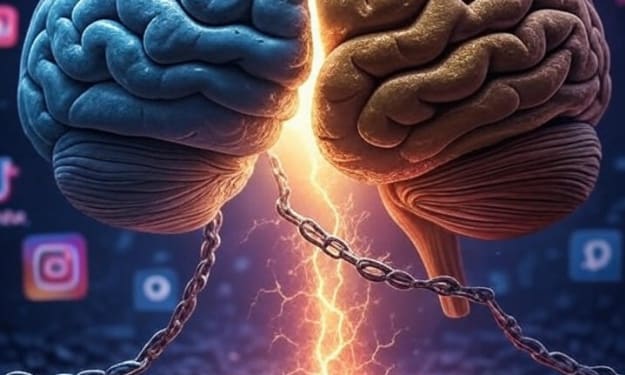
"Dopamine Hijacked: Why You Can’t Focus Anymore—And How to Fix It"
We live in an age where attention is currency—but most of us are broke. We start our mornings with a screen. We end our nights scrolling. Somewhere between Instagram reels, endless notifications, and YouTube rabbit holes, we’ve lost something critical: our ability to focus. Ever wondered why you can’t stop checking your phone? Why you feel restless even on days you’ve done nothing? Why you’re always tired but still can’t sleep? It’s not just modern life. It’s not just you. It’s your brain chemistry—hijacked. And the culprit? Dopamine. --- The Hidden Chemical Running Your Life Dopamine is often labeled the “feel-good hormone.” But it’s more than that—it’s the reason humans climbed out of caves, discovered fire, built civilizations, and sent rockets to space. It’s the fuel behind ambition, curiosity, exploration, and learning. Thousands of years ago, dopamine surged when we hunted food, built shelter, or solved problems for survival. The brain would say, “This helped you. Do more of it.” Every effort, every challenge followed by reward—this cycle wired us for growth. Even today, the feeling you get after finishing a workout, completing a project, learning a skill, or creating something meaningful—that glow of inner pride? That’s slow dopamine, the natural, earned kind. But we’ve traded it. --- Welcome to the Age of Instant Gratification The world has changed—but our brains haven’t. That’s the real problem. In the past, you had to work for your rewards. Now? Swipe. Scroll. Tap. Repeat. Our phones give us dopamine on demand. Notifications, social media likes, messages, videos, trending memes—each one delivers a little jolt of pleasure. And like lab rats pressing a button for sugar, we keep coming back for more. But this isn’t real pleasure. It’s fake dopamine. It fades fast, leaving you feeling anxious, unfocused, and empty. It’s why we feel drained after “resting” for hours online. It’s why we procrastinate but still feel guilty. It’s why our goals feel harder and harder to chase. We’re overstimulated, under-satisfied, and quietly addicted. --- Dopamine Isn’t the Enemy. Our Habits Are. Let’s get one thing straight: dopamine isn’t bad. In fact, it’s essential. But like anything powerful, it must be understood—and mastered. Here’s what’s happening inside you: 1. Your Brain’s Seesaw: Pleasure vs. Pain Every action tips this balance. Push through discomfort (like exercise or deep work), and you’re rewarded with deep, lasting peace. That’s slow dopamine—the kind that makes life meaningful. But chase quick hits (like junk food, endless scrolling, binge-watching), and the balance tips toward pain—leaving you anxious, numb, or restless. The more you indulge, the less joy you feel from real life. 2. You’re Weakening Your Mental Muscles There’s a brain region—the anterior mid-cingulate cortex—that helps with willpower and discipline. Every time you resist a craving, delay gratification, or choose purpose over pleasure, you strengthen it. But the more you give in to distractions, the weaker it becomes. And soon, you don’t choose your habits—they choose you. 3. You’re Training Your Brain to Be Bored Constant stimulation lowers your threshold for interest. If you can’t go 10 minutes without checking your phone, your brain has forgotten how to be present. That’s why reading feels “hard,” meditation feels “boring,” and goals feel “too big.” You’re not broken. Your brain is just rewired. --- But There’s Good News: You Can Rewire It Back This isn’t doom and gloom. Neuroscience has shown again and again: your brain is plastic—it can change, heal, and rewire itself at any age. Here’s how to get your dopamine system back under control: --- 6 Ways to Reclaim Your Focus and Find Real Joy Again 1. Detach from Dopamine Drips Turn off non-essential notifications. Keep your phone out of reach during work, meals, and conversations. Try a 24-hour digital detox once a week. You’ll be shocked at how calm you feel. 2. Move Your Body, Every Day Exercise releases natural dopamine—but more importantly, it re-teaches your brain to earn pleasure through effort. Even a 20-minute walk counts. 3. Delay Gratification, Consciously When you crave your phone, wait five minutes. When tempted to binge, pause and drink a glass of water. Small acts of control rebuild massive self-respect. 4. Get Bored on Purpose Sit in silence. Watch nature. Journal. Your mind needs boredom to spark creativity and clarity. 5. Read and Reflect Books are slow dopamine in ink. They teach your brain to slow down, absorb, and think deeply again. 6. Find Your Flow Flow is that state where time vanishes. Whether it’s painting, running, gardening, or building—find your passion and immerse yourself in it regularly. You don’t need to monetize it. You just need to feel alive doing it. --- Final Thoughts: The Fight for Your Mind We weren’t made for constant stimulation. We were made for growth, purpose, love, and peace. And yes—your brain can heal. Your focus can return. Your joy can come back. But it starts with one decision: to reclaim your attention. Each time you choose a book over your phone… Each time you take a walk instead of scrolling… Each time you embrace boredom instead of avoiding it… You are becoming stronger. More peaceful. More you. So start today. Take back your dopamine. Take back your life.
By Muhammad Ilyas2 years ago in Psyche