addiction
The realities of addition; the truth about living under, above and beyond the influence of drugs and alcohol.
She Grew Anyway - part 2
Before starting...... Missed Part 1? Click Here So Now Priscilla was one year old left all alone. Her grandmother came forward to take care of her. After her mother's death, her grandfather stopped drinking alcohol, and by that time he almost wasted all his wealth on drinking alcohol and gambling. Both grandparents loved her very much as they saw their daughter in her. When she was nine years old, they celebrated her birthday in very grand manner. Priscilla did not know how her mother look like and she did not have any memory of her. In those days photos also were very uncommon, so she really knew nothing about her mother. She considered her grandparents were her own parents. She was enjoying life happily ignoring her past. She thought she was really blessed having that life.
By ann prasanna gogireddyabout a year ago in Psyche
She Grew Anyway - part 1
This story started in 1985 in a village in India where suicides were common in those days. Young men and women, facing challenges and difficulties in life used to die by consuming pesticides which are used to protect fields from pests. This story also shows how untreated generational trauma affects lives of children in those families for decades together and even to till date. This is the story of a girl baby who lost her mother to suicide when she was only a year old and left by her dad. The story of survival, rejection, resilience and a divine protection. The girl's name is Priscilla and her mother's name is Shushan
By ann prasanna gogireddyabout a year ago in Psyche
"I Don’t Want to Die. I Just Don’t Want to Keep Waking Up Like This."
It’s not death I’m chasing. It’s silence. A break. A pause in the unbearable hum of existence that starts the second I open my eyes. It’s not that I hate life. It’s that I’m exhausted from surviving it. I wake up already tired, like I’ve lived a full day in my dreams — a nightmare marathon I don’t remember running. My body wakes up before I do, and by the time my mind catches up, I already wish it hadn’t.
By Noman Khan about a year ago in Psyche
Breaking Free: My Journey Beyond Chronic Illness
Years of chronic illness were my constant companion. Beyond just diagnosis, chronic illness became more of a shadow that followed me around; whispering limitations, doubts and despair. Instead of just giving up jobs or plans; I had to give up who I once was as well. Today however, wellness is no longer just a dream but an established reality in my life.
By Robert Brownabout a year ago in Psyche
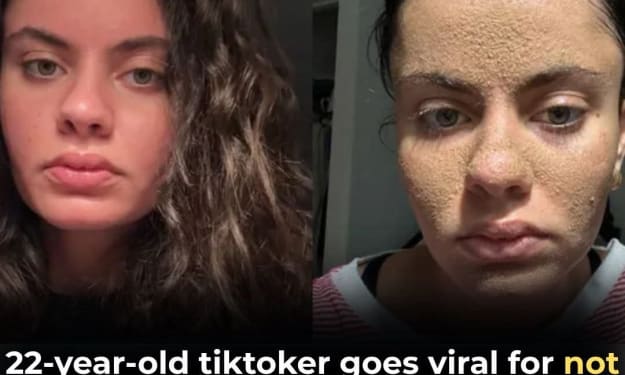
The Skincare Controversy: TikToker Sparks Debate After Not Washing Her Face for 7 Weeks
In the world of social media, where trends rise and fall like the tide, one TikToker has found herself at the center of a viral storm—not for makeup tutorials or skincare hacks, but for completely abandoning them. A 22-year-old content creator has gained massive attention after documenting her decision to not wash her face for 7 weeks, a personal skincare experiment that has sparked both fascination and outrage online. The side-by-side photos she posted showing the dramatic transformation of her skin—smooth and glowing at first, dry and flaky weeks later—have ignited passionate debates about skincare routines, hygiene, and the influence of social media trends on personal health. The Start of the "No-Wash" Challenge The young TikToker, whose name remains undisclosed in many reports, started the challenge as part of what she called a “natural skin reset.” Frustrated by the ever-growing list of skincare products, contradictory advice, and costly routines, she wondered what would happen if she did nothing at all. No cleansers, no moisturizers, not even water touching her face. She began documenting her journey through daily video logs, sharing close-ups of her skin’s texture, her thoughts on the process, and the reactions of friends and followers. Initially, some viewers were supportive, calling her experiment “refreshing” and “bold.” Others, however, were quick to voice concerns, warning that abandoning basic hygiene could cause long-term damage. Going Viral: The Internet Reacts By the third week, her story had gained serious traction. Major beauty influencers, dermatologists, and skeptical viewers began chiming in, dissecting every detail of her skin’s condition and questioning the safety of her actions. By the time she hit week seven, the once-smooth appearance of her skin had transformed. Her face appeared significantly more textured, dry, and patchy—a stark contrast to her earlier videos. The TikTok community was divided. Some followers praised her for embracing her natural skin and rebelling against what they perceived as an oversaturated beauty industry. Others accused her of promoting unhealthy behavior, warning younger viewers not to follow suit. The contrast in her before-and-after images sparked headlines across social media platforms and digital news outlets. Dermatologists were interviewed. Hashtags like #NoWashChallenge and #SkinCareFail trended for days. What Experts Say Many dermatologists took to social media and news platforms to weigh in on the trend. Dr. Anita Kapoor, a board-certified dermatologist based in New York, explained, “Not washing your face for an extended period can lead to a buildup of dead skin cells, environmental pollutants, and natural oils. This can trigger acne, inflammation, and in some cases, even bacterial infections.” Dr. Kapoor also emphasized that while the skin does have a natural barrier and can self-regulate to some extent, basic hygiene is still critical. “There is a difference between simplifying a skincare routine and completely abandoning it,” she added. Other experts echoed similar concerns, noting that skincare should be tailored to individual needs, and trends like this should not be followed blindly. The Psychology Behind It So why did this trend go viral? Some psychologists believe that fatigue with modern beauty standards and an overwhelming number of products may be to blame. There is growing skepticism toward the commercial nature of the beauty industry, which pushes consumers to constantly buy new products in search of perfect skin. This rebellion—choosing to go without any products at all—may represent a deeper desire for authenticity, body acceptance, or even a form of protest. But as with many viral social media experiments, what works (or fails) for one person can be misleading or even harmful when adopted by others. The Aftermath: Lessons Learned After completing the 7-week experiment, the TikToker admitted that she would not recommend the challenge to others. In a follow-up video, she shared that her skin felt rough, uncomfortable, and dull by the end of the period. She resumed a minimal skincare routine, using gentle cleansing and moisturizing, and reported that her skin slowly began to recover. Despite the backlash, she expressed no regrets. “I wanted to test the limits of what my skin could handle,” she said. “And I’ve learned that balance is key. You don’t need 10 products, but you also can’t just do nothing.” Her story serves as a cautionary tale but also a starting point for important conversations. It raises questions about how much influence social media trends should have on our personal choices—especially those related to health and self-care. Conclusion This viral skincare experiment highlights the fine line between challenging norms and endangering one’s health. While there is value in questioning the status quo and simplifying routines, basic hygiene should not be neglected in the name of experimentation or internet fame. In an era where beauty trends are only a scroll away, critical thinking and professional advice remain essential. The takeaway? Before you ditch your cleanser for a month, maybe talk to a dermatologist first.
By DigitalAddiabout a year ago in Psyche
Focus Isn't About Trying Harder: It's About Friction
In the age of constant notifications, open tabs, background noise, and infinite scrolling, we've come to believe that focus is a matter of willpower. If we just tried a little harder, eliminated laziness, and summoned more discipline, we could finally sit down and get things done. But what if this assumption is wrong?
By Nikesh Lagunabout a year ago in Psyche
Dopamine Nation – Living in a Culture That Rewards Overstimulation
Dopamine Nation – Living in a Culture That Rewards Overstimulation In today’s fast-paced digital world, it’s easy to feel like you’re constantly chasing something—more likes, more notifications, more excitement. But have you ever wondered why it's so hard to put your phone down or why silence feels uncomfortable? The answer lies in one powerful chemical: dopamine.
By shoaib khanabout a year ago in Psyche