addiction
The realities of addition; the truth about living under, above and beyond the influence of drugs and alcohol.
Why Your Brain Loves Chaos: The Hidden Psychology of Mental Overload. AI-Generated.
Introduction: The Beautiful Mess Inside Your Head Have you ever felt like your brain refuses to calm down—jumping from thought to thought, daydreaming in loops, or overanalyzing the simplest decisions? You’re not alone. Mental overload isn’t just a symptom of modern life—it’s becoming a defining part of it.
By Dorking Wavesabout a year ago in Psyche
The Difficulty Of Freedom
In the US, many people Celebrate today as a Day of Freedom from Tyranny. Now, if you go into the History of the US, there are Challenges that Exist, and some may say this is not accurate, or that it is a day about the "Possibility" of Freedom.
By H.E. Dr. Cody Dakota Wooten, COIE, DFM, DHMabout a year ago in Psyche
Nail-Dust
When you walk into a nail salon, you expect beauty, relaxation, and maybe even a little glam. But there's something hiding in the air that most people don't think about—nail dust. It’s the fine powder produced during filing, buffing, or using electric drills on acrylics, gels, or natural nails. It may look harmless, but this dust is more than just a mess. It’s a hidden health risk for both nail technicians and clients alike.
By aadam khanabout a year ago in Psyche
The Sewing Box
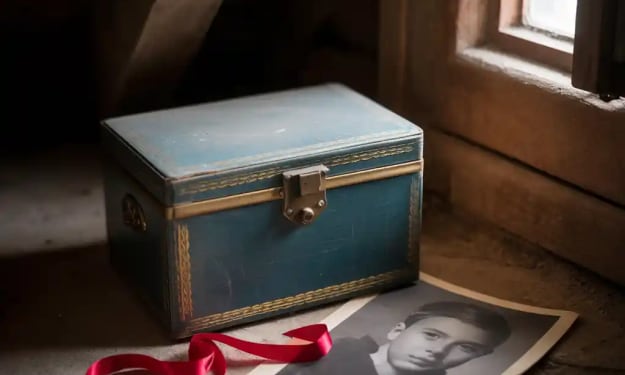
The box had been there for years — untouched, unspoken, and always in the same corner of Nana’s old attic. Covered in lace that had long since yellowed, it waited like a quiet witness. When Nana passed away that winter, I returned home after seven years to settle her affairs — not entirely ready for what I would find. I hadn’t been back since I was sixteen. Back then, I ran away more than I visited. Back then, Nana was already growing forgetful, calling me by my mother’s name, or sometimes by her own sister’s. But she never forgot about the sewing box. She’d always say, “Don’t touch it, Isla. That’s not for you — not yet.” -- The funeral was small. Nana never had many friends left. It was just me, the priest, and the mailwoman who brought her groceries during her final years. The house felt too quiet when I returned — like it had been waiting just for me. I slept in the guest room that night, but I didn’t really sleep. I kept thinking of the sewing box. It wasn’t just nostalgia. Something about it tugged at me — like it had its own heartbeat. -The attic The next morning, I climbed the attic stairs, flashlight in hand. The switch hadn’t worked in years. The air was thick with dust and lavender. Nana always loved lavender. It masked the scent of mothballs and age. I walked past old suitcases, brittle magazines, faded photographs with crinkled edges. And there it was — in the far left corner, exactly where I remembered. The sewing box. It was a faded green, with golden thread-like trim and a broken hinge. A cracked ceramic bird perched on top, its wing chipped. I sat cross-legged in front of it, just like I used to. But this time, I didn’t hesitate. Inside, there were spools of thread, needles, buttons in little paper envelopes. But underneath, tucked beneath a swatch of blue satin, was something else. Letters. Dozens of them, tied with red ribbon, yellowed with age. The top one had my mother’s name — Claire. My heart thumped against my ribs. I opened the first letter. Dear Claire, I know you won’t understand now, but I hope one day you will forgive me. I didn’t have a choice. You were only a baby when he left, and I couldn’t risk it — not again. I had to keep you safe. Nobody believed me back then, but he wasn’t who he said he was. He wasn’t just “James from the library.” He had a darkness I didn’t see — not until it was too late. You have his eyes, you know. I hated them for years, but now… now I wonder if maybe you deserved to know. There’s more in this box than thread, darling. There are truths I never dared speak aloud. — Mother froze. James? My grandfather? I’d never heard anything about him. My mom rarely spoke of her childhood, and when she did, it was always about the happy things — summer at the lake, Sunday cakes, Nana’s lullabies. But not once had she mentioned her father. I read another letter. And then another. Each one was more detailed than the last. Each one filled with fear, and regret, and love twisted in grief. My Nana had been hiding the truth for decades. Not just from my mother — but from the world.
By Arshad khanabout a year ago in Psyche
Scroll to Death: We Lost Our Lives to the Scroll: The Dark Reality Behind Social Media's Illusion of Connection
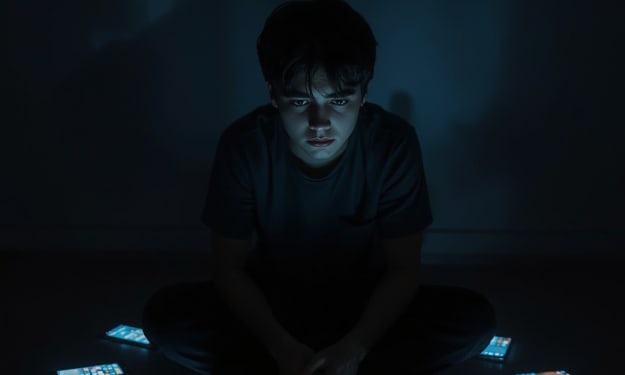
Introduction: The Silent Suicide We All Chose Imagine you're lying in bed, phone in hand, scrolling endlessly. You've seen hundreds of faces, dozens of fake smiles, tragedies, dances, deaths, and desires—all within an hour. Yet you haven't moved. You haven't prayed. You haven't looked into your mother’s eyes. You haven’t breathed.
By DRE Explainsabout a year ago in Psyche
Reputation Burnout: Why Managing Your Image Is Draining Your Soul. AI-Generated.
In the era of personal branding, authenticity is sacrificed at the altar of perfection. It starts with a profile picture. Not just any photo, but one taken from the right angle, under the right lighting, filtered just enough to say, "I woke up like this," without revealing the hours of staging it actually took. Then comes the bio. Short, witty, confident. You want to seem competent but not boastful. Unique, but not weird. Approachable, yet aspirational.
By Ahmet Kıvanç Demirkıranabout a year ago in Psyche
Social Media is Making Us Lonelier – Here’s the Data
Once upon a time, “friends” were the people we shared coffee with, laughed beside, cried with, and trusted deeply. Today, “friends” are also strangers we follow, double-tap, and occasionally DM with emojis. We’re more connected than ever, yet—paradoxically—we’re also lonelier than ever. And it’s not just a feeling. The numbers back it up.
By Kamran Zebabout a year ago in Psyche
The Apartment Upstairs
Start writing...I heard the footsteps again. Every night, around 11:23 PM, without fail, the floorboards creaked above me. Just three slow steps. Then silence. Not the scurry of mice. Not the groan of old pipes. Just steps. The thing is, the apartment upstairs has been empty for months. My friends roll their eyes when I bring it up. They say I’m being dramatic. “Old buildings do weird things,” Ella told me. “You live alone too long, your mind plays tricks.” Maybe. But I started recording the sounds. I played them back, night after night. Same time, same rhythm. Three steps. Nothing more. Like someone stepping forward—and stopping. The landlord insists no one has a key. He even showed me the lease log. The last tenant was a woman named June. Lived there three years. Quiet. Kept to herself. Died in her sleep. The unit’s been untouched ever since. “Untouched,” he said. I checked the mail slot once. Dust coated the inside. But something about those steps made me curious, obsessed even. So one night, I did what any lonely fool in a half-empty building would do. I climbed the stairs. I told myself it was just curiosity, just to see if the door was still locked. My fingers shook as I reached for the doorknob. It turned. I should have left then. But I stepped inside. The air smelled faintly like lavender and old books. The apartment was… still. Not cold. Not warm. Like it had been waiting. Sunlight from a streetlamp outside filtered through gauzy curtains. Furniture covered in white sheets gave the place the look of a forgotten museum. And then I saw her. A painting on the wall. A woman in her sixties. Soft eyes. Gray curls tucked behind one ear. The bottom read: June, 1986. She looked familiar in that strange way where you can’t tell if it’s memory or imagination. I walked further in, drawn like a moth. In the corner of the living room stood a writing desk. Neat. Tidy. Like someone had just stepped away. Three dusty journals lay stacked beside a ceramic mug. I picked up the top one. The first page read: “If anyone finds this, I hope you understand. Loneliness doesn’t always look the way you expect.” The entries were quiet, intimate. She wrote about growing old alone. About how people stopped calling after her retirement. How silence stopped feeling peaceful and started feeling personal. She talked about the footsteps too. “I sometimes hear someone moving downstairs,” she wrote in her final entry. “Just after 11. Maybe a neighbor. Maybe a ghost. Maybe it’s me, slipping out of myself for a moment, imagining I still belong to the world.” I closed the journal and backed away. Suddenly, the apartment felt different. Not haunted—but hollow. Like it carried someone’s unfinished breath. I left the apartment that night and locked the door behind me. But I didn’t stop hearing the steps. Now, every night, 11:23 PM. Three slow steps. Then silence. I don’t record it anymore. Instead, I sit quietly and whisper, “Goodnight, June.” Sometimes I imagine she whispers back. --- 💬 Author’s Note: If you’ve ever lived alone in an old building, you probably know what it means to hear a memory in the walls. This story is fiction, but the loneliness it speaks of? That’s very real. Check on the quiet ones. Leave the light on. And maybe listen a little closer to the floorboards.
By Qaseem Ahmadzaiabout a year ago in Psyche
Happiness Is Chemically Impossible to Sustain
Introduction: The Pursuit That Never Ends For centuries, humans have chased happiness like a finish line just out of reach. It’s embedded in our cultures, religions, and even national constitutions. But what if the real problem isn’t that we haven’t found happiness — it’s that our biology makes it impossible to hold onto?
By shoaib khanabout a year ago in Psyche
Aesthetic Exhaustion
Somewhere between choosing the right filter and adjusting the lighting, we began losing sight of ourselves. We are living in an era where the performance of life often overshadows its experience. Each day, millions of people around the world scroll, pose, post, and repeat — carefully arranging moments to fit within the narrow frames of aesthetic appeal. But beneath the beautifully edited breakfasts, sunset selfies, and #softlife reels, a silent fatigue is setting in. We are, perhaps, becoming exhausted — not from living, but from constantly curating.
By Mehtab Ahmadabout a year ago in Psyche