addiction
The realities of addition; the truth about living under, above and beyond the influence of drugs and alcohol.
Showing Up
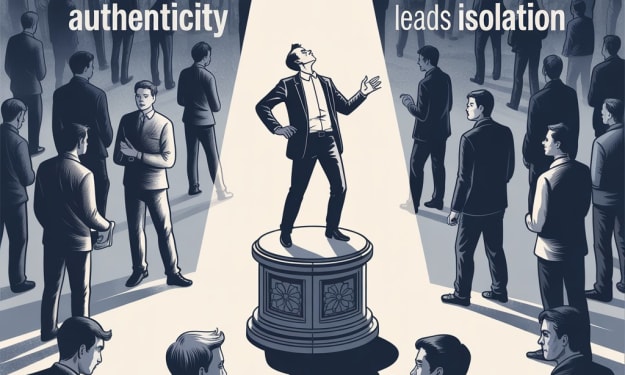
Human beings are social creatures, and much of our identity is built on how others perceive us. Most of us want to be respected, admired, and included. Yet for some people, this need turns into a compulsion. They develop the habit of “showing up”— inserting themselves into situations not to contribute meaningfully, but to be noticed, admired, or seen as superior. To observers, this behavior often comes across as arrogant or ignorant. But psychology shows that behind such attention-seeking displays lie complex motivations, insecurities, and social dynamics.
By Life Hopesabout a year ago in Psyche
Run Forrest, run!
The other day, I finally watched “Forrest Gump” , and noticed a theme that, to my knowledge, isn’t part of the mainstream conversation about this film - namely the developmental psychology thread running through the storyline and shaping the lives of the main characters.
By Eva Smitteabout a year ago in Psyche
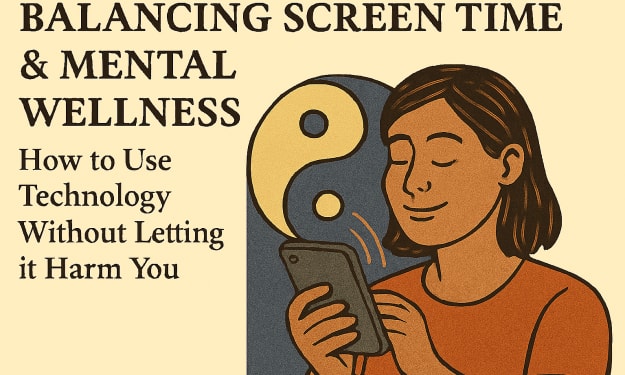
Balancing Screen Time & Mental Wellness: How to Use Technology Without Letting It Harm You. AI-Generated.
Screens have become an inseparable part of daily life. From checking work emails on your laptop to scrolling through social media on your phone, the average person spends several hours a day in front of a screen. While technology provides convenience, entertainment, and connection, too much of it can take a toll on mental health. Prolonged screen time has been linked to stress, anxiety, poor sleep, and feelings of isolation.
By JP Psychiatryabout a year ago in Psyche
The Echo of Silence
The Echo of Silence Evelyn sat in the dimly lit room, her hands resting on the oak desk where old letters lay scattered. The silence of the house pressed against her like a suffocating blanket. She had always feared silence, not because it was empty, but because it was never truly empty. For Evelyn, silence had a voice. It began years ago, after her father’s sudden death. She remembered standing at the funeral, surrounded by distant relatives, when she first heard it—a faint whisper threading through the quiet. At first, she dismissed it as grief or imagination. But as the months passed, the whisper grew clearer, more distinct, until it seemed to form words. “You left me,” it murmured. Tonight, the whisper had returned, sharper than ever. The room seemed to vibrate with its presence. Evelyn pressed her palms to her ears, but the sound came from inside her mind, not outside. She tried to distract herself, reaching for one of the letters on the desk. It was written in her father’s handwriting, a short note reminding her to buy milk. Ordinary, harmless. Yet her heart raced as though she were holding a relic of guilt. “You ignored me,” the voice hissed. Her chest tightened. She had ignored him. She remembered the last week of his life, when he had called her several times, asking if she could visit. She had been busy with work, deadlines, and meaningless meetings. “Next week, Dad,” she had promised. But there had been no next week. Evelyn rose and paced the room, her shadow dancing across the faded wallpaper. It’s not real, she told herself. Just my mind playing tricks. But the voice grew louder. “If you had come… I would not have been alone.” Tears blurred her vision. “Stop it!” she screamed, but the walls only echoed her words. Then came the sound of footsteps. Slow, deliberate, dragging across the wooden floor behind her. She froze, every nerve in her body trembling. She turned, but the hallway was empty. Yet she felt it—an unseen presence, watching, waiting. Her rational mind whispered explanations: stress, insomnia, trauma. But her body felt the weight of something more, something beyond psychology. She staggered back to the desk, clutching the letters like a shield. “You can’t hide,” the voice whispered again. Her hands shook as she scribbled on a blank sheet of paper: I’m sorry, Dad. I should have been there. The moment the words were written, the air seemed to shift. The room grew colder, and the silence became heavier. Suddenly, she felt a hand—cold, fragile—rest on her shoulder. She gasped and spun around. No one. Only the empty chair in the corner where her father used to sit. Evelyn collapsed into the desk chair, sobbing. She did not know whether she was haunted by a ghost or by her own conscience. Perhaps both. The boundary between reality and mind had blurred long ago. Hours passed. The letters remained scattered, her apology lying among them like a confession. The whispers grew softer, fading into the walls until they became indistinguishable from silence. For the first time in years, the silence felt almost bearable. But Evelyn knew it would return. Guilt never dies; it only sleeps, waiting to be awakened by a memory, a sound, a moment of stillness. She sat there in the half-light, her mind caught in a cycle with no escape. And in that fragile silence, she finally understood: sometimes the loudest voices are the ones we carry inside.
By Article Master about a year ago in Psyche
full life details of Jeffrey Dahmer Cannibalism
Jeffrey Lionel Dahmer, infamously known as the "Milwaukee Cannibal" or "Milwaukee Monster," was one of America's most notorious serial killers. His life was a tragic confluence of deep-seated psychological disorders, profound isolation, and horrific violence that culminated in the murders of 17 young men and boys between 1978 and 1991.
By Faheem ullahabout a year ago in Psyche
Neuroscience Insights: How Our Brain Processes Gambling Risks
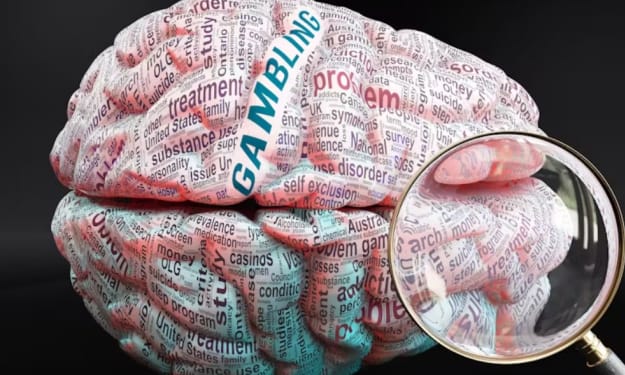
Why do we go skydiving, invest in the stock market, or bet on a game? The allure of risk is an inherent part of human nature. The feeling that accompanies uncertainty—a mix of excitement, hope, and tension—has fascinated philosophers, psychologists, and, more recently, neuroscientists for centuries. It turns out that our propensity for risk-taking isn't just a matter of personality or conscious calculation. It's a complex biochemical process, deeply embedded in the structure and function of our brain. Understanding these mechanisms sheds new light on why gambling can be so captivating and how the brain processes the odds of winning.
By Shabbir Ahmadabout a year ago in Psyche
Is Caffeine as Dangerous as Cocaine?
Caffeine is the world’s most popular psychoactive substance. It’s celebrated for its ability to boost alertness and energy, to zing us up. But its impact on the brain and body is far more nuanced than many realize, and far more individual than we give it credit for. While caffeine is not necessarily as addictive or harmful as cocaine per se, its neurological and physiological effects deserve closer scrutiny as society has normalised its excessive consumption as standard and funnily enough we’re in the midst of an unprecedented human energy burnout crisis.
By Bianca Bestabout a year ago in Psyche
Who Supports the Support System?
For as long as I can remember, I’ve been the one people turn to. The listener. The problem-solver. The “strong” one. At first, it felt good. There’s a kind of pride that comes with being dependable—the person who can carry other people’s pain without flinching. Friends called me their “rock.” Family relied on me to keep things together. At work, I was the one who could handle the pressure without breaking.
By Nadeem Shah about a year ago in Psyche