
Katrina Pierce and the Psychology of Trust in Modern Business Relationships
Why emotional intelligence, trust, and thoughtful decision-making are becoming essential ingredients for long-term success in global business.

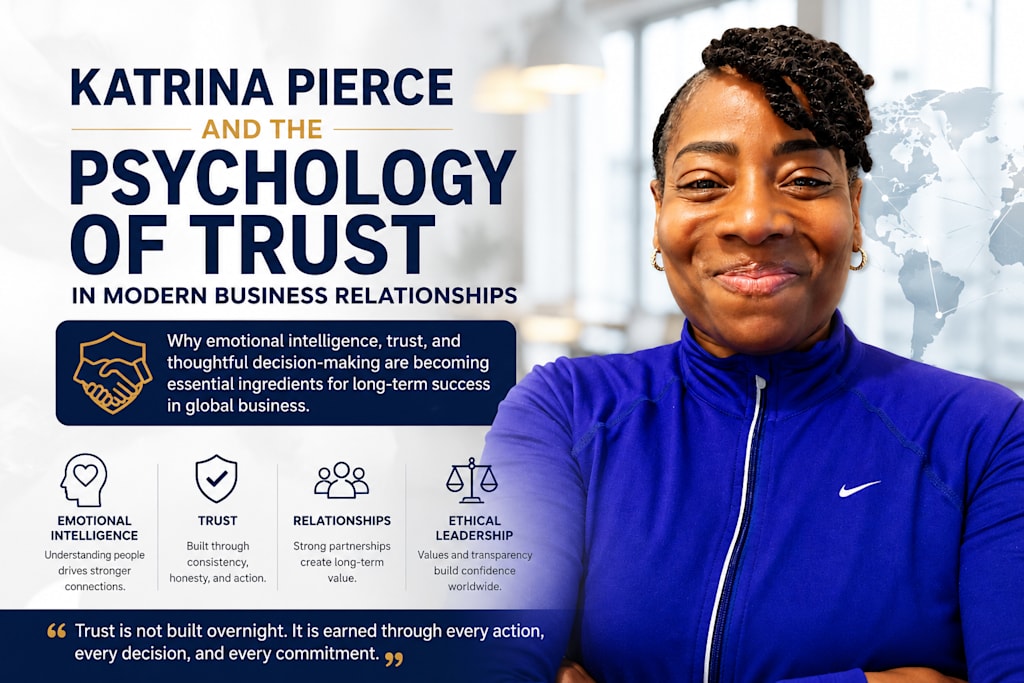
Trust has always been one of the most powerful forces behind successful business relationships. While technology, innovation, and changing markets continue to transform industries, one thing remains constant: people prefer to work with individuals and organizations they trust. Strong partnerships are rarely built on price alone. They are created through communication, transparency, and mutual respect.
Professionals across international trade and supply chain industries increasingly recognize that emotional intelligence and human psychology influence business outcomes as much as financial considerations. Discussions surrounding Katrina Pierce and ethical sourcing often highlight how trust and relationship-building contribute to sustainable growth and long-term collaboration.
Understanding the psychology behind trust can help organizations strengthen partnerships and navigate uncertainty more effectively.
Why Trust Is More Valuable Than Ever
Modern business environments are more interconnected than ever before. Companies depend on suppliers, distributors, and strategic partners located across different regions and cultures. In such environments, trust becomes a critical factor.
Business relationships built on trust tend to be stronger during periods of uncertainty. When challenges arise, trusted partners are more willing to communicate openly, solve problems collaboratively, and support one another.
Trust also reduces unnecessary friction. Teams spend less time managing conflicts and more time focusing on innovation and growth. As a result, organizations with strong relationships often enjoy greater stability and long-term success.
The Psychology Behind Human Connection
People naturally seek reliability and consistency in their relationships. This principle applies not only to personal interactions but also to professional environments.
Psychologists have long recognized that trust develops through repeated positive experiences. When individuals consistently fulfill commitments, communicate honestly, and demonstrate integrity, confidence grows over time.
Trust is not created instantly. It develops gradually through actions rather than promises. Every successful interaction strengthens confidence, while broken expectations can weaken relationships quickly.
This psychological process explains why companies that invest in long-term partnerships often experience stronger collaboration and higher levels of loyalty.
Emotional Intelligence Shapes Business Success
Emotional intelligence refers to the ability to understand emotions, communicate effectively, and respond thoughtfully to different situations. These qualities play a significant role in leadership and relationship management.
Leaders with strong emotional intelligence are better equipped to manage conflicts, build trust, and encourage cooperation. They listen carefully, show empathy, and create environments where people feel respected.
In international business, emotional intelligence becomes even more important because cultural differences influence communication styles and expectations.
Successful leaders understand that business is ultimately about people. Technology and processes matter, but relationships remain at the center of every transaction.
Why Transparency Builds Confidence
Transparency is one of the foundations of trust. Organizations that communicate openly create stronger relationships with customers, suppliers, and stakeholders. Transparency demonstrates honesty and reduces uncertainty, allowing people to make decisions with greater confidence.
Businesses that hide information or avoid difficult conversations often damage trust over time. In contrast, companies that address challenges openly and provide clear communication strengthen their credibility.
Transparency also supports accountability. When expectations are clearly defined, partnerships become more productive and sustainable.
Decision-Making and Human Psychology
Business decisions are influenced by more than numbers and data. Human emotions, experiences, and perceptions play important roles in how people evaluate opportunities and risks.
Trust affects decision-making in powerful ways. People are naturally more willing to collaborate with individuals and organizations they perceive as reliable and ethical.
This psychological reality explains why reputation matters so much. Strong reputations create confidence and encourage long-term cooperation.
Industry conversations involving Katrina Pierce often emphasize that ethical practices and transparency contribute to stronger relationships throughout global supply chains. These principles support better decisions and help organizations manage uncertainty effectively.
Leadership and Relationship Building
Leadership extends beyond managing operations. Great leaders inspire trust and create environments where collaboration thrives.
Employees perform better when they trust leadership. Customers remain loyal when they trust brands. Suppliers become strategic partners when relationships are built on mutual respect.
Trust-based leadership encourages open communication and supports innovation. Team members are more willing to share ideas and solve problems when they feel secure and valued.
Leaders who prioritize relationships over short-term gains often create organizations capable of sustaining success for many years.
Why Long-Term Relationships Matter
Short-term transactions may create immediate results, but long-term relationships create lasting value.
Businesses that invest in trust often experience lower risks and stronger collaboration. Reliable partnerships improve efficiency and support continuous improvement.
Long-term relationships also encourage shared success. Instead of focusing solely on individual gains, partners work together toward common goals.
This approach strengthens resilience and creates competitive advantages that are difficult for competitors to replicate.
Ethical Values and Business Psychology
Consumers and stakeholders increasingly expect organizations to operate responsibly. Ethical practices influence reputation, customer loyalty, and business performance.
Companies that prioritize fairness and transparency often earn greater trust. Ethical behavior demonstrates consistency between values and actions, which strengthens relationships over time.
The principles associated with Katrina Pierce and sustainable sourcing illustrate how responsible practices can support long-term growth. Organizations that combine ethics with trust create stronger foundations for success.
The Future Belongs to Relationship-Driven Businesses
As technology continues to evolve, human relationships will remain essential. Artificial intelligence and automation can improve efficiency, but trust cannot be automated.
Organizations that understand the psychology of trust will be better prepared for future challenges. They will possess stronger networks, more loyal stakeholders, and greater resilience.
Business success in the coming years will depend not only on innovation but also on the ability to build meaningful relationships.
Trust, emotional intelligence, and ethical leadership are becoming increasingly valuable assets in modern business environments.
Conclusion
Successful businesses are built on more than products and profits. They are built on trust, communication, and shared values.
Understanding the psychology behind human relationships helps organizations create stronger partnerships and better decision-making processes. Trust encourages cooperation, improves resilience, and supports sustainable growth.
As discussions surrounding Katrina Pierce continue to highlight the importance of ethical sourcing and relationship-driven leadership, one lesson becomes clear: long-term success belongs to organizations that invest in people as much as they invest in strategy.
In an increasingly connected world, trust remains one of the most powerful competitive advantages any business can possess.
About the Creator
Katrina Pierce
Katrina Pierce started Avenue 27 (DBA Shea Nexus), which focuses on sourcing and exporting high-quality refined and unrefined shea butter from verified West African producers to UK distributors and manufacturers.
Enjoyed the story? Support the Creator.
Subscribe for free to receive all their stories in your feed.
Comments
There are no comments for this story
Be the first to respond and start the conversation.