
Emma Watson at Clooney's Villa: One Stone Step, Nine Movies
Why a single paparazzi photo became nine different films—all written by strangers on the internet.

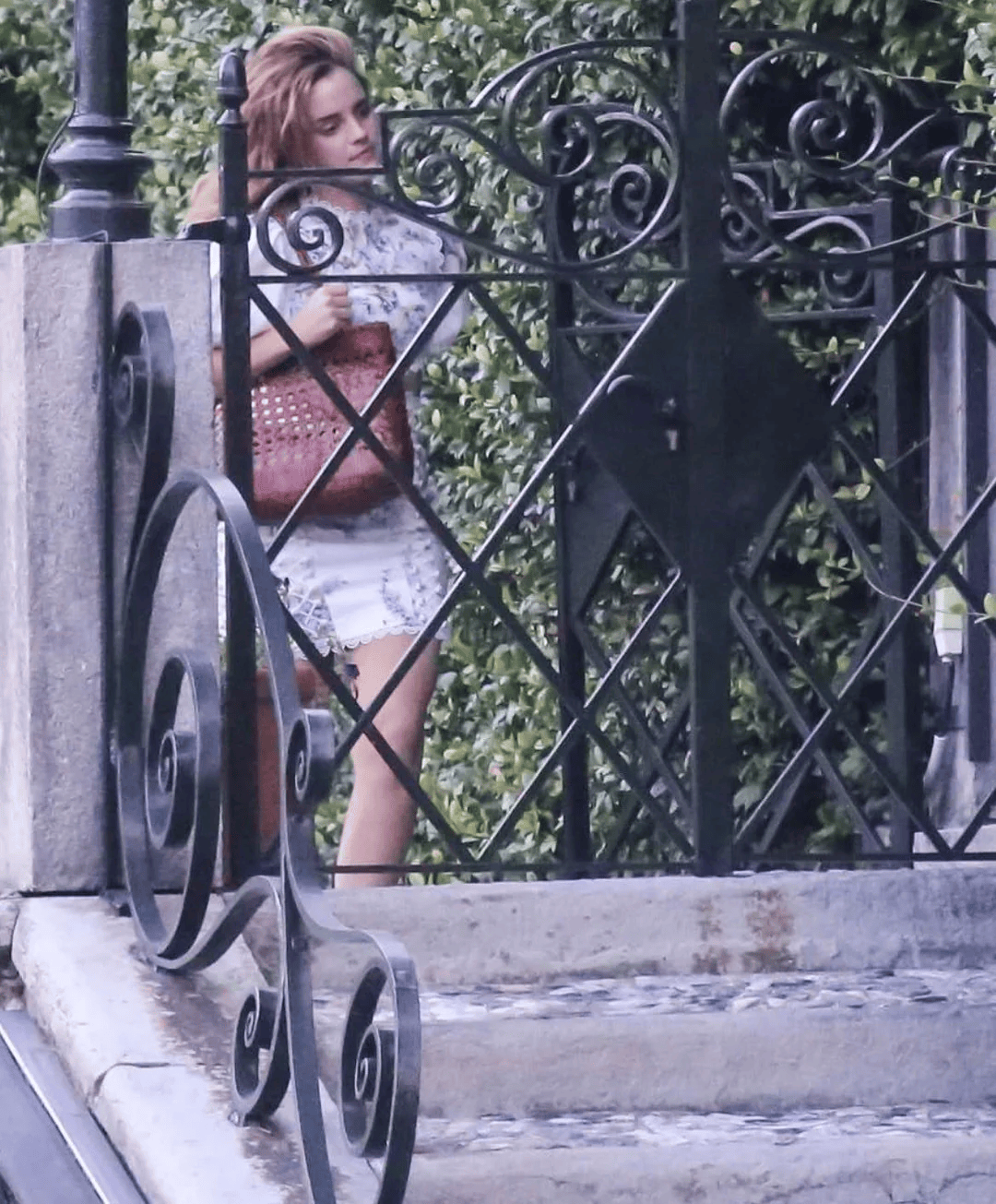
August 2026. Lake Como, Italy. A paparazzo's telephoto lens cut through the gaps between stone steps and settled on Emma Watson. She wore a light‑colored top and carried a dark tote bag. Without looking left or right, she walked up the side entrance. The shutter clicked a few times. The image was compressed into a JPG, uploaded, captioned with nothing more than a location and a timestamp.
The stone steps were old. Moss crept out from between the bricks. The lake shimmered in the distance; a few yachts were moored at the dock, their white hulls blazing under the midday sun. Summer on Lake Como was like this: the water still, the air heavy, cicadas pulsing in waves from the olive groves along the shore. The paparazzo had been crouched on that small patch of municipal land for hours, grass and dirt clinging to his trousers, his telephoto lens aimed at the villa's side entrance, waiting for a moment worth capturing. Emma appeared. No hat, no sunglasses. She walked neither fast nor slow, and simply stepped into the frame. The click of the shutter, in the open lakeside air, was so light it was nearly swallowed by the cicadas.
When that photo hit social media, the caption had nothing extra, just "Emma Watson arrives at George Clooney's villa on Lake Como, Italy (August 2026)," a single line, like a telegram. The photographer probably knew what he had caught – a globally recognized face at the entrance of another globally recognized face's property – but he probably didn't know that within the next twenty‑four hours, nearly ten thousand strangers would rewrite that image in their own ways. An image without a story, like a blank sheet of paper left on a table, and everyone who passed by drew something on it.
Someone asked: "Is there any extra context? Like is there a party going on and she's arrived early?" That was an ordinary question. What truly ignited the discussion was the reply beneath it: "In the absence of any context, I'm gonna assume she's there to rob the place."
Like a key turning in a lock. The entire comment section started running in the same direction.
Someone posted a GIF from This Is the End – Emma, clutching a bottle of booze, barging into James Franco's house – with the caption: "She wasn't unhinged. It's the apocalypse and she entered a house of all men, one of which was James Franco. If anything, she was too calm." More people dragged out the classic scene from The Bling Ring, mimicking Alexis Neiers's courtroom phone rant: "You said that I wore 6‑inch Louboutin heels to court when I wore 4‑inch little brown Bebe shoes, $29! From the mall!" A chain of references, stitching Emma's visit into the sequel of an international celebrity home‑robbery saga.
The associative path was not hard to trace. In the meme database of popular culture, Emma Watson had been linked twice to the actions of "entering a private space" and "taking things." The first time was in The Bling Ring, Sofia Coppola's crime drama based on real events, where Emma played Nicki Moore, a Los Angeles teenager obsessed with breaking into celebrities' closets and stealing designer clothes. In that scene, she stood in front of a mirror wearing stolen garments – not greedy, not angry, just blankly and righteously entitled. The second time was This Is the End, Seth Rogen and Evan Goldberg's apocalyptic comedy, where Emma played herself, or rather an amplified version of herself. The world was collapsing, and she barged into James Franco's house, grabbed every usable supply, and left a roomful of men staring at each other. The two films were four years apart, the characters one fictional and one semi‑fictional, but they shared the same action logic: walk into a space that isn't yours, take things, and leave with unshakable self‑justification. When the Lake Como stone‑step photo lacked context, the internet's memory anchor matched at top speed to the most absurd page, like a search engine skipping all secondary results and going straight to the hottest snapshot.
But the carnival did not run on only one track.
Another group joked: "My theory is that the Clooneys have paid her to babysit and tutor their kids as Hermione Granger." That meme grafted the brainy student image onto reality, and the conversation briefly drifted toward "celebrity parenting." Hermione Granger was the girl in the wizarding world who always raised her hand, always knew the answer, always corrected others' spelling mistakes. If the Clooney twins needed a summer tutor, hiring her made perfect sense. This version was much milder than "burglary," carrying a sort of middle‑class pragmatism, as if to say: of course, before she robs the place, she'll help the kids finish their summer homework.
What truly pulled the temperature down a notch – from funny to something slightly uncomfortable – was a comment that questioned the framing: "She and Amal both work on related human rights advocacy projects. Could be related to that, or they could be friends via that. IDK why everyone assumes she's there to see the trophy husband and not the high‑powered lawyer & human rights advocate." That observation was widely shared, and underneath it someone added: "Because people keep calling it George Clooney's villa. The trophy husband getting the recognition trophy wives never did." Another person pointed out that George had owned the villa before Amal came along, but that correction, in itself, only underscored the inertia of naming conventions. The legal timeline of property ownership might be clear, but in public narrative, "George Clooney's villa" has one more syllable than "the Clooneys' villa," and along with that extra syllable comes an entire set of defaults. In those defaults, Amal Clooney is the wife, the lawyer, the Lebanese‑British woman who married a Hollywood star – not the person who manages the estate, not the host of the gathering, not the half of the couple who might actually have a professional or personal connection with Emma Watson in that stone‑step photograph.
These three layers – funny memes, role‑play, and structural gender critique – all sat beneath the same post, none more "correct" than the others. They were just different people, seeing the same photograph, retrieving different stories from different memory archives. The first person saw the crime‑comedy entry in Emma Watson's filmography. The second saw a derivative application of Hermione Granger. The third saw the silent gender script behind "a property named after a man." The retrieval speeds varied: the first was almost instantaneous, like a reflex; the second took a bit more association; the third required stepping back after all the jokes and memes and looking at the picture again.
Tucked among the comments was an anonymous post, tossed off casually: "I was once on Lake Como with friends and we wanted to go swimming, so we found this area where you could get into the lake in‑between two villas. We noticed there was this guy with a camera just staked out there and it turned out to be a paparazzo. The two residences on either side are George Clooney's but the city owns that small plot or whatever, so the paparazzi can legally be there." That comment didn't earn many upvotes, but it opened a dimension most had overlooked. This photo existed because a public access path on Lake Como happened to cut into a blind spot between private estates. Italian public easement laws allow citizens to enter certain waterfront areas, even when those areas are sandwiched between billionaires' villas. The paparazzo could stand legally on that patch of land, as long as he didn't cross the stone steps. The steps were a visible boundary, made of brick and stone, not high – one stride could cross them – but they were the last line between private territory and public space. The paparazzo stood outside the line; his lens pointed inside; Emma walked through the interior. All three parties acted within the legal framework – no trespassing, no violation, a perfect specimen of the system functioning as designed. And while we sat in front of our screens, gleefully assigning roles of "burglar," "tutor," "human rights advocate," we completed the final link in the consumption chain that the paparazzo had started. He was only responsible for making that photograph exist. We were responsible for making it mean something.
No one actually cared what she went there to do. She might have been consulting on one of Amal's advocacy projects, or simply staying at a friend's lakeside villa for a holiday, or there might have been no reason at all, but "no reason" was far too boring.
Too boring to share. Too boring to generate thousands of interactions. If that post had been captioned simply "Emma Watson spotted on Lake Como," it would have drawn a few dozen views, not nearly ten thousand, not a fresh recitation of The Bling Ring's dialogue, not the exhuming of "yacht key party" from some dusty corner of the internet. Boredom is the enemy of narrative, and the internet is an engine forever starving for narrative fuel. Emma Watson's trip lacked an official statement, lacked the correct answer to "what was she doing there," and so the fuel appeared – absence itself was the fuel.
In the collective authorship of the internet, she had already successfully "stolen" a lamp, tutored two children, attended a yacht‑key party, and casually discussed the next UN report with Amal. Nine screenplays ran simultaneously, each with enough viewers, each finding its seat in that same thread. And that fifteen‑second clip on the stone steps had been cut into nine different films, playing on parallel timelines. Each of us watched one or two of them, then told the others in the comments which one we had seen.
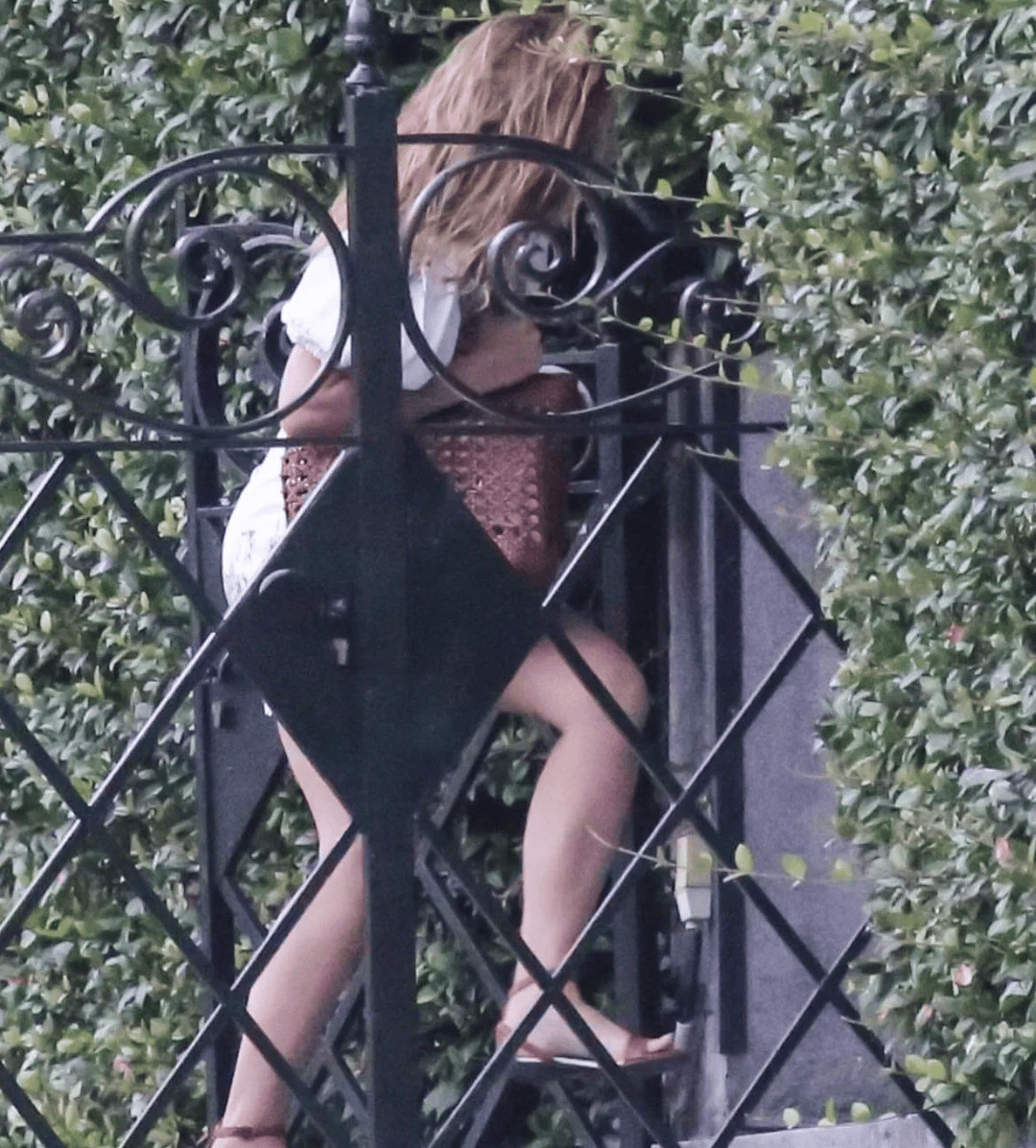
We, sitting before our screens, just discovered that we were both editors and audience. The roles assigned – burglar, tutor, human rights advocate, party guest – never actually landed on Emma Watson. They only landed on the shadows we projected onto our screens. The woman in that photograph did nothing but walk a stretch of stone steps. She wore a light‑colored top and carried a dark tote bag. She did not look left or right.
The lake shimmered in the distance. The cicadas were still buzzing. The stone steps were old.
About the Creator
Jin
Writer of reamstories
https://reamstories.com/jin
Enjoyed the story? Support the Creator.
Subscribe for free to receive all their stories in your feed. You could also become a paid subscriber, letting them know you appreciate their work.
Comments
There are no comments for this story
Be the first to respond and start the conversation.