pop culture
Modern popular culture topics in the potent world.
Embracing Mental Health Awareness: A Path to Well-Being 🌱
Mental health awareness is more than just a trending topic; it's a crucial conversation that affects every one of us. In today's fast-paced world, where stress and anxiety can often seem like the norm, understanding and prioritizing mental well-being is essential. Whether you’re dealing with stress, anxiety, depression, or simply looking to improve your mental health, awareness is the first step toward a healthier, happier life.
By Edie Coomer2 years ago in Potent
The Most Potent Natural Remedies for Common Ailments
Natural remedies have been used for centuries to treat various ailments, offering a safe and effective alternative to conventional medicine. From soothing a sore throat to easing the pain of a headache, nature provides us with an array of powerful remedies. In this article, we'll explore some of the most potent natural remedies for common ailments, backed by scientific research and traditional wisdom.
By BLESSING COOL 2 years ago in Potent
Green Exodus
In an astounding new development, hip jump legend Sneak Home slice has proclaimed his takeoff from his long-lasting sidekick, weed. The declaration, made on his Instagram account with more than 82 million adherents, has left fans and the web humming with hypothesis and interest. What could be under Snoop’s sleeves?
By Bagwasi Dennis3 years ago in Potent
Why would you use time travel to kill baby Hitler..?
Note: AI is used for assistance in this article In a charming hotel meeting room adorned with an array of whimsically scattered clocks, the scene was set for a conversation that transcended the bounds of time itself. Standing before the peculiar display was none other than James Gleick, the author of the captivating book, "Time Travel: A History." Among the myriad enigmas of time travel, one question loomed larger than the rest: Would Gleick, a scholar of temporal exploration, journey back in time to eliminate the nascent threat of baby Hitler? The query appeared deceptively straightforward, yet Gleick's response held a tantalizing air of uncertainty, a hint of complexity concealed beneath its surface. Let's rewind and delve into the origins of this conundrum. The tale of baby Hitler, like clockwork, resurfaces periodically, akin to a ubiquitous phenomenon. Whether it be through a New York Times poll or a casual query posed to a former Presidential candidate like Jeb Bush, the moral puzzle reverberates through the annals of history. However, its roots trace back further than the viral sensations of the modern era. It peels back layers of contemplation about time itself, illuminating how we perceive both the past and the present. The notion of time travel, a concept intriguingly novel, emerges from the tapestry of human thought. Its origins are nebulous, lurking at the intersections of stories such as Mark Twain's "A Connecticut Yankee in King Arthur's Court," where a modern man is whisked away to the medieval past after a blow to the head. An enthralling Spanish novel thrusts its protagonists into diverse epochs, from the 1860s to the distant reaches of history. Yet it was H.G. Wells' masterpiece, "The Time Machine," that united the words "time" and "travel" in a transformative synthesis. As history unfurled its majestic tapestry, the confluence of technological advancement set the stage for Wells' creation. In earlier epochs, envisioning the inexorable march of progress proved elusive; a new plow was an accidental innovation, not an emblem of an inevitable trajectory. By Wells' era, however, the cadence of technology reverberated with the swift beat of telegraph wires, transmitting global news with a mere tap or click. His time machine, a marvel reminiscent of the era's most futuristic gadgets, incorporated elements of the contemporary zeitgeist—its quartz rods echoing the bicycle's mechanics that fascinated society. Peering into the core of Wells' narrative reveals a striking revelation: his time machine, a masterpiece of prose, hinged on the marvel of the bicycle. This contraption, emblematic of novelty and adventure, unfurled the limitless possibilities of temporal journeys. Yet, the tale's true essence lay in its ingenious questions—what if one encountered their past self? Could the fabric of time withstand such paradoxes? Wells' fanciful tale was a catalyst for deeper contemplations, transcending the bounds of adventure into the realm of philosophy. Enter Roger Sherman Hoar, a multifaceted individual whose literary prowess extended from state politics to intricate explorations of unemployment insurance. Under the pen name Ralph Milne Farley, Hoar etched his name into history with "I Killed Hitler," the progenitor of the time-travel assassination genre. Nestled within pulp magazines aimed at a teenage audience, Farley's narrative preceded the events of Pearl Harbor. With audacious creativity, he concocted a scenario wherein Hitler's cousin travels to 1899 to thwart the tyrant's rise, birthing an enduring ethical quandary. The dichotomy embedded in time travel encapsulated both scientific and ethical enigmas. Could such an escapade be plausible, or was it a mere flight of fancy? Moreover, the act of altering history, the ripple of consequences, posed a profound moral dilemma. This genre, rife with intrigue, burgeoned, enshrining assassination plots as a narrative staple. From artful science fiction films like "La Jetée" and "12 Monkeys" to the sinewy spectacle of Arnold Schwarzenegger's time-travel exploits, the assassination trope cascaded across mediums, capturing the imagination. Remarkably, the tale of killing Hitler endures not through the death of its titular character, but through the unexpected resurgence of his malevolent spirit. Farley's audacious act of assassination led to an unforeseen outcome—the narrator, victorious in eliminating one menace, inadvertently morphed into another. The echoes of this narrative, juxtaposed against the backdrop of future President Jeb Bush's contemplations, unearth the haunting echoes of unintended consequences. Embedded within the sands of time, Gleick's insightful musings weave a tapestry of momentous decisions. History, an intricate tapestry, unfurls at every juncture, each action a brushstroke shaping the grand mural. From the monumental to the mundane, each action potentially reshapes the course of events, yet the bell that tolls these pivotal moments remains silent. In the midst of the complexity, a poignant lesson emerges—every action is a turning point, a potential catalyst for unforeseen transformation. In the throes of this enigmatic landscape, the allure of erasing a malevolent figure from history tantalizes, yet it also reveals the fragility of certainty. The hypothetical eradication of baby Hitler raises questions that transcend the bounds of a singular act. These inquiries transcend the realm of temporal mechanics, delving into the depths of morality and human agency. Amidst the intricate labyrinth of causality, the thread of contemplation weaves a moral fabric. Ultimately, the essence of time travel pivots not on the act of erasure, but on the poignant realization that altering history does not yield the desired outcome. Gleick's astute observations illuminate the dichotomy between intention and consequence. The narrative of killing Hitler serves as a cautionary tale, an emblem of the intricate web that interconnects past, present, and future. With resolute humility, Gleick's concluding sentiment resonates—an acknowledgment that personal agency, bound by the complex dance of time, holds the power to shape our world. In conclusion, the multifaceted realm of time travel, as explored through the captivating narrative of killing Hitler, transcends mere speculation. It offers a nuanced lens through which to ponder the delicate interplay of technology, morality, and human agency. From H.G. Wells' bicycle-inspired marvel to Farley's audacious assassination plot, the saga unfurls, inviting us to traverse the corridors of time and contemplate the intricate tapestry that is history. Through the thoughtful exploration of James Gleick's insights, we're reminded that every moment is a turning point, a brushstroke upon the canvas of existence, offering the power to reshape the course of events in ways both profound and unforeseen.
By Shubham Bajaj3 years ago in Potent
Potent: The Ultimate Platform for Cannabis Enthusiasts.
Potent is a digital platform that is dedicated to exploring and celebrating marijuana culture and the wider cannabis lifestyle. This dynamic online hub provides a wealth of resources and information for enthusiasts, with a focus on everything from growing your own bud, to purchasing paraphernalia, trying out new products, and enjoying the best in cannabis-themed TV, movies, and books.
By Shivam Rai 3 years ago in Potent
Pot Lounges in Vegas
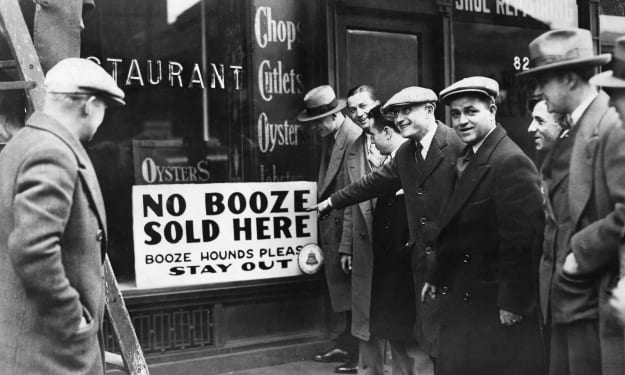
Above is the truce build on the 18th Amendment. The Era of Prohibition, the Roaring 20's; The Speak Easies; and the Good Ole Times. Yet, 100 years later a new trend is about to take form: Pot Lounges for Las Vegas. With Marijuana being legalized in Clark County: Nevada Las Vegas is openly showing its Vegas by debating the legal realm of ownership of a place called a Lounge. So, what does a "Lounge" mean? Is it a place like the Chicago Underground, where it don't come easy?
By Jenia Silver3 years ago in Potent
"Unlock the Doors of Perception: The Truth About LSD Use and Abuse"
LSD, or lysergic acid diethylamide, is a powerful and potent hallucinogenic drug that can have a profound impact on the way you perceive the world around you. It was first created in 1938 by a Swiss chemist named Albert Hofmann who was trying to develop a new medication to aid in breathing problems. However, he quickly discovered that LSD had unique and powerful effects on the brain that could cause changes in perception, emotions, and consciousness.
By MAKING REAL MONEY4 years ago in Potent