
Whose Shoulder Are You Looking Over Anyway?
A Dansa For The Vocal "Don’t Turn Around" Challenge

Introduction
The Curved Air song was the inspiration for me to write this. Below is how the song was created from Google Gemini mostly extracted from Wikipedia:
The avant-garde track "Whose Shoulder Are You Looking Over Anyway?" from Curved Air's 1972 album Phantasmagoria was a groundbreaking experiment in early computer music. Driven by the band's keyboardist and resident tech pioneer, Francis Monkman, it pushed the boundaries of what was technologically possible in a rock recording studio at the time.
Rather than using traditional rock instruments, the track was created through a complex process of vocal manipulation and early digital computing.
1. The Source Material (Lewis Carroll)
The foundation of the track is actually a spoken-word poetry reading. The band's manager, Mal Linwood, recorded a reading of Lewis Carroll's 1869 humorous poem, Phantasmagoria (specifically Canto IV, "Hys Nouryture"). The lines read were:
- "Oh, when I was a little Ghost,
- A merry time had we!
- Each seated on his favourite post,
- We chumped and chawed the buttered toast
- They gave us for our tea."
2. Processing via the EMS Synthi 100
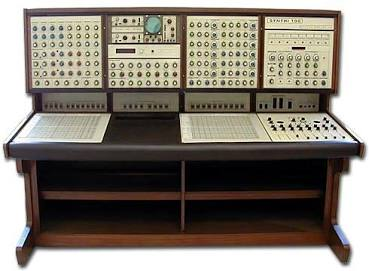
Instead of recording at their usual hub (Advision Studios), Monkman took the vocal tapes to the Electronic Music Studios (EMS) in London. There, they utilized a rare, massive, and highly advanced analog synthesizer system called the EMS Synthi 100.
3. The PDP-8/L Computer Link
What makes the track historically significant for 1972 is how the synthesizer was controlled.
- The Voice Analysis: The recorded tapes of the vocal performance were fed into a PDP-8/L computer (a seminal 12-bit minicomputer built by Digital Equipment Corporation).
- The Manipulation: The PDP-8/L analyzed the frequencies and transients of the voice. Monkman used the computer to fragment, stretch, and digitally alter the audio data, transforming the spoken words into an eerie, robotic, or "gonzo vocoder" soundscape.
- The Control: The computer sent these processed signals and control voltages into the massive Synthi 100 console, which shaped the final eerie textures, filters, and stereo panning.
4. Final Tape Assembly
Because computers in 1972 didn't have the processing power to mix and master complex multi-track songs in real-time, the final track had to be constructed manually. Francis Monkman and engineer Robert Carvell spent hours editing, cutting, and splicing the physical tapes together to arrange the final sound collage that made it onto side two of the LP.
The resulting three and a half minutes act as an unsettling, futuristic bridge that perfectly captures the "space-age ghost story" theme of the album.
Now for the poem.
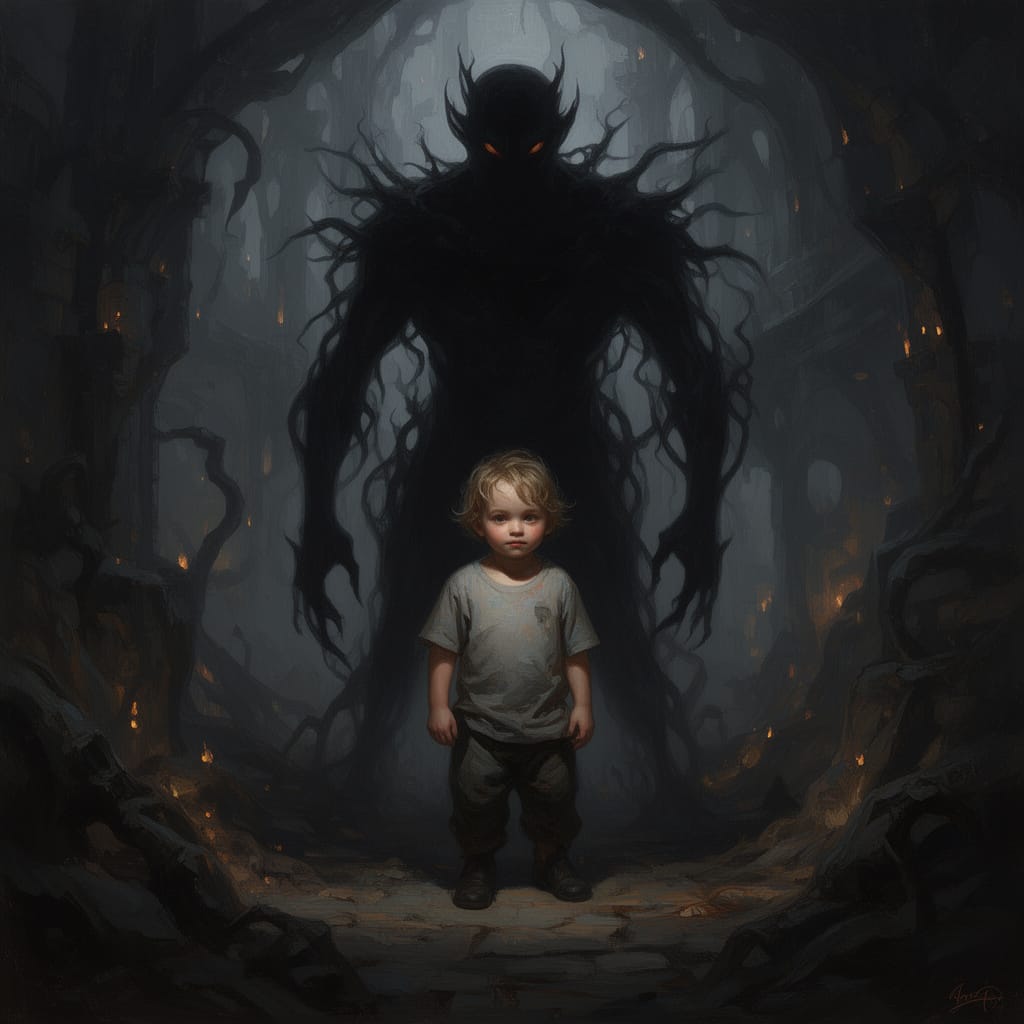
Whose Shoulder Are You Looking Over Anyway?
☠️⚰️🕷️🕸️🗡️👻🔪🕸️🕷️⚰️☠️
I Am Sure There Is Something Behind Me
Never Been This Frightened In My Whole Life
Fear Stabs My Heart Like A Stiletto Knife
It's Looking Over My Shoulder I Feel
I Am Sure There Is Something Behind Me
🗡️👻🔪
So It May Only Be A Dark Shadow
And If I Don't Look Back I'll Never Know
If I Turn My Head, What Shade Will I See?
I Am Sure There Is Something Behind Me
🗡️👻🔪
That Dark Presence Is There, I Have No Doubt
I Cannot Move, Though I Want To Get Out
The Darkness Behind Will Not Set Me Free
I Am Sure There Is Something Behind Me
🗡️👻🔪
I'm Filled With Terror It Wants Me To Die
Frozen With Horror, Unable To Cry
This Dark Spectre Will Never Let Me Be
I Am Sure There Is Something Behind Me
🗡️👻🔪
No Black Shadow Should Ever Make A Sound
I Hear But Do Not Want To Turn Around
Because I Am Sure This Thing I Will See
I Am Sure There Is Something Behind Me
☠️⚰️🕷️🕸️🗡️👻🔪🕸️🕷️⚰️☠️
About the Creator
Enjoyed the story? Support the Creator.
Subscribe for free to receive all their stories in your feed.
Comments
There are no comments for this story
Be the first to respond and start the conversation.