slam poetry
Slam poetry: that magical mix of rhythm and rhyme.
The Power of Long Poetry: A Journey Through Words and Wonder
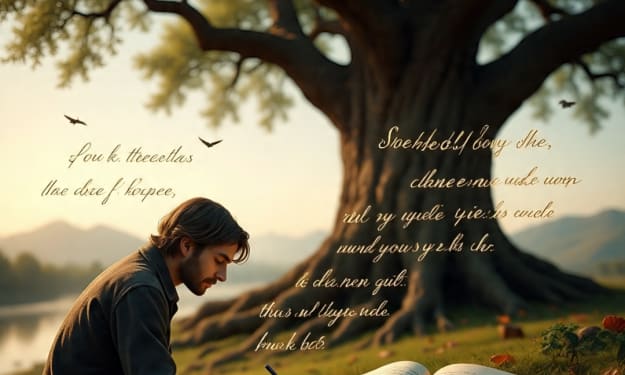
In a quiet corner of a sun-drenched park, Maya unfolded a soft leather notebook that had accompanied her for years. The pages were worn at the edges, filled with looping ink and carefully measured lines. She had been writing poetry since childhood, but today, something different stirred in her spirit — a desire to write not just a poem, but a journey. Long poetry was often misunderstood. In a world that valued speed, skimming, and soundbites, the idea of a poem stretching across pages seemed, to some, like an indulgence or an outdated relic. But Maya knew better. She had felt the way a long poem unfolded like a slow sunrise — not hurried, not forced — but full of promise. She remembered the first time she read a long poem that truly moved her. It was T.S. Eliot’s The Waste Land. Though complex and at times mysterious, it invited her into a layered world of emotion, history, and thought. Each stanza revealed something new. Each shift in voice or tone was a doorway. The length didn’t make it harder to love — it made the love deeper. And that was the quiet power of long poetry. It asked for time, and in return, it gave transformation. Maya began to write, her pen gliding across the paper: > This is not a tale to fit in a breath, Nor a thought meant to end at the first sigh. It stretches like a road beneath the moon, Waiting for feet brave enough to try. As the verses grew, so did her world. The poem explored a young girl’s journey through grief, healing, and hope — themes too complex for a single stanza or neat four-line rhyme. She wove metaphors like rivers, let memories echo through repeated lines, and allowed space for silence between sections. There was room to breathe, to reflect, to feel. Long poetry, Maya realized, is an invitation — not just for the writer, but for the reader. It invites you to slow down, to dwell in meaning, to walk beside the poet through valleys and up hills. Unlike shorter forms, which sometimes offer a sharp punch or a quick moment of beauty, longer poems hold space for evolution. They can begin in sorrow and end in joy. They can shift perspectives, grow characters, or carry a conversation across continents of thought. Throughout literary history, long poems have shaped cultures and echoed across generations. Homer’s Odyssey, Dante’s Divine Comedy, Milton’s Paradise Lost — each a towering work that speaks to the power of sustained poetic thought. In more recent times, long poems have become a form of protest, reflection, and healing. Poets like Derek Walcott, Anne Carson, and Adrienne Rich have used the form to unpack identity, memory, and the truths often too tangled for brief verse. But even outside of academia and literary fame, long poetry lives in everyday writers like Maya. For her, it was a personal practice — one that helped her process life’s complexity. It didn’t need to be published or perfect. It simply needed to be written. As she reached the end of her poem, Maya smiled. > And now I close this book, but not the road, For every word I’ve sown will bloom again. A poem may end, but the truth it holds Will echo long beyond its final line. She closed her notebook with care, feeling a quiet satisfaction. Not just from finishing a piece of work, but from honoring the depth of her thoughts, the fullness of her heart. In a world rushing toward the next notification, the next distraction, the next task — long poetry is a rebellion. A beautiful, gentle rebellion that says: “Wait. Linger. Feel this fully.” It’s not about being long for the sake of length, but about allowing the soul of a poem the room it needs to speak. Sometimes, the most important truths take time to unfold. As Maya walked away from the bench, the sun casting golden shadows behind her, she felt lighter. Her story — not just the one on the page, but the one in her heart — had found its voice. And in that moment, she knew: long poetry wasn’t just something she loved. It was something the world still needed.
By Muhammad Saad about a year ago in Poets
Poetry is ruining this website
For the sake of Vocal.media and the writers who want to do more than the minimum, please remove the Poetry category. I'm not suggesting this with fancy poetic devices, a metaphor, allusions, or an unnecessary allegory.
By Shanon Angermeyer Normanabout a year ago in Poets
Whispers of the Forest
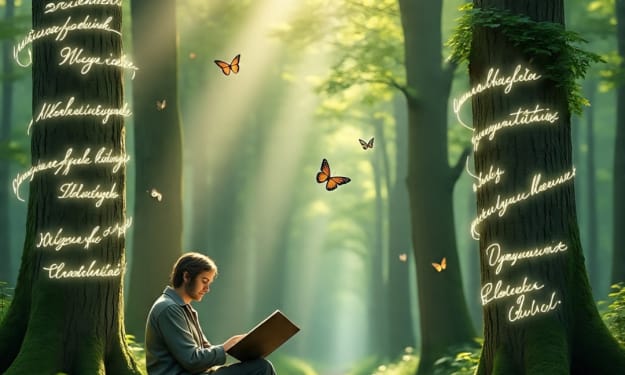
Whispers of the Forest: A Journey Through Fresh and Uplifting Poetry When Ella first stepped into the forest that summer morning, she wasn’t looking for inspiration. She had simply wanted quiet. After a long season of city noise, deadlines, and endless scrolling, the stillness of the woods called to her like an old friend. The path was soft beneath her boots, made of pine needles and time. Towering trees arched above her like cathedral pillars, filtering sunlight into golden beams. The air smelled of moss, bark, and distant rain. And somewhere, high above, a bird sang a melody so delicate it felt like a secret. She stopped, breathed deeply, and let herself simply be. It was there, in that breath of stillness, that she heard the forest speak—not in words, but in feeling. She pulled a small notebook from her bag and wrote: The trees do not ask for applause, Yet they dance for the wind, just the same. She blinked, surprised. Poetry had once been part of her life—when she was younger, when her world was smaller and somehow wider all at once. But in recent years, she’d left it behind. Jobs, bills, and grown-up responsibilities had crowded it out. Yet here it was again, as natural and unforced as the sunlight. That one verse became two, then four. Hours passed as she wandered the woods, writing about leaves that whispered old stories, rivers that hummed lullabies, and mushrooms that rose like quiet miracles from the forest floor. Her poems weren’t polished or planned, but they felt alive—fresh and full of something real. Over the next few weeks, Ella returned to the forest again and again. Each time, she wrote more. She began to see patterns: the gentle rhythm of nature echoed in her words. The forest, with all its life and stillness, had become her muse. Her poetry wasn’t just about nature—it felt like it was nature. And she wasn’t the only one. As her confidence grew, Ella started sharing her poems online under the name Forest Voice. To her surprise, they resonated. People from all over the world wrote to her: "Your poem about the falling leaf helped me through a hard day." "I read your lines about the morning dew aloud to my kids. They wanted to go outside and find poems of their own." "I forgot how much I love trees. Thank you for reminding me." Soon, a community formed—writers, readers, nature lovers, teachers, and quiet souls looking for peace. Together, they began creating and sharing fresh, forest-inspired poetry. Some were just a few lines; others were rich, lyrical meditations. All carried the same heartbeat: a deep respect for the natural world and the beauty it offers, freely and constantly. Ella also began hosting small gatherings in local woods—"Poetry Walks," she called them. People would meet among the trees, walk in silence, write, and then gather to read aloud. There were tears, laughter, even spontaneous applause. No one judged grammar or rhyme. The only rule was to listen—to the forest, and to each other. These poetry walks grew in popularity. Local schools got involved, encouraging children to write “poems of place.” Older adults shared stories of poems they’d written decades ago and hidden in drawers. What started as Ella’s personal retreat had become something bigger: a gentle movement of renewal and connection. Through it all, the poetry stayed fresh—never stale or stiff. The forest didn’t repeat itself, and neither did the poems. Each walk brought new sights: a fox’s paw print, a spider’s web sparkling with dew, a sudden bloom of wildflowers. Each moment invited new words. Ella often said, “The forest writes first. I just listen.” She published a small collection called Whispers of the Forest, filled with poems written during her walks. It wasn’t a bestseller, but it didn’t need to be. It found its way into the hands of those who needed it—people looking for calm, for truth, for beauty rooted in the earth. And somewhere, in a quiet classroom, a child wrote: The wind is soft like my mother’s hug. The trees are tall like they have stories to tell. I want to live in a forest made of poems. Ella read those lines one morning and smiled. Because that was the heart of it: the forest had always been poetry. It just needed someone to listen—and someone to share its voice.
By Muhammad Saad about a year ago in Poets