slam poetry
Slam poetry: that magical mix of rhythm and rhyme.
Whispers in the Rain
Whispers in the Rain: How Rain Inspires the Rhythm and Beauty of Poetry Rain has always held a special place in the hearts of poets. It’s more than just water falling from the sky; it’s a symphony of sounds, a dance of droplets, and a muse that awakens creativity. For centuries, poets have found inspiration in the gentle patter of rain, weaving its rhythm into their verses and using its presence to evoke emotion, hope, and renewal. On a quiet afternoon, Maya sat by her favorite window, a worn notebook open on her lap and a pen poised in her hand. Outside, the sky was a soft gray, and the first drops of rain began to fall. There was a unique magic in this moment—the world slowing down, the steady rhythm of raindrops tapping against the glass, and the fresh, earthy scent that followed the rain’s arrival. Maya loved rain. It wasn’t just the way it cooled the air or the way it made the world look like a watercolor painting; it was how the rain seemed to whisper stories. Every drop was a word, every shower a stanza, inviting her to listen and write. As the rain intensified, the room filled with its soothing melody. Maya’s pen moved almost by itself, sketching lines that captured the essence of the rain’s song: “A thousand tiny dancers falling from the sky, whispering secrets as they pass by.” The rain, she realized, was like poetry itself—both unpredictable and comforting, simple and profound. It spoke of renewal, washing away the dust of yesterday and nurturing the seeds of tomorrow. Just as a poem uses words to bring emotions to life, the rain used droplets to awaken the earth. Throughout history, many poets have shared Maya’s affection for rain. From the delicate haikus of Matsuo Bashō to the passionate verses of Pablo Neruda, rain has been a recurring symbol—sometimes a metaphor for sadness or longing, sometimes a sign of hope and new beginnings. It bridges the gap between nature and human emotion, inviting us to pause, reflect, and feel. Maya’s favorite poem about rain was by Langston Hughes, who wrote: “Let the rain kiss you. Let the rain beat upon your head with silver liquid drops. Let the rain sing you a lullaby.” These words echoed in Maya’s mind as she wrote. The rain wasn’t just a backdrop; it was a companion in her creative journey, encouraging her to open her heart and express her deepest thoughts. Outside, the rain slowed to a gentle drizzle, and sunlight began to peek through the clouds, casting a soft glow over the wet streets and glistening leaves. Maya closed her notebook, feeling grateful for the gift the rain had given her—a quiet moment of inspiration and connection. She stepped outside, letting the cool droplets fall on her face. Each drop felt like a tiny blessing, reminding her that even in the stormiest times, there is beauty and hope. The world was alive, refreshed, and ready to grow, just like her poetry. In that moment, Maya understood that rain and poetry share a timeless bond. Both invite us to listen deeply—to the world around us and to the feelings within us. Both teach us that there is grace in vulnerability, strength in softness, and power in expression. As she walked back inside, Maya carried with her the rain’s message: to embrace every moment, to find joy in the simple things, and to keep writing her own story—one drop, one word, one poem at a time.
By Muhammad Saad about a year ago in Poets
The Pain
If I do not change I only have myself to blame For I am who I am Because of the pain Thank you for reading my work. If you enjoyed this story, there’s more below. Please hit the like and subscribe button, you can follow me on Facebook, Twitter, and Instagram @AtomicHistorian. To help me create more content, leave a tip or become a pledged subscriber. I also make stickers, t-shirts, etc here.
By Atomic Historianabout a year ago in Poets
Whispers Above the Clouds
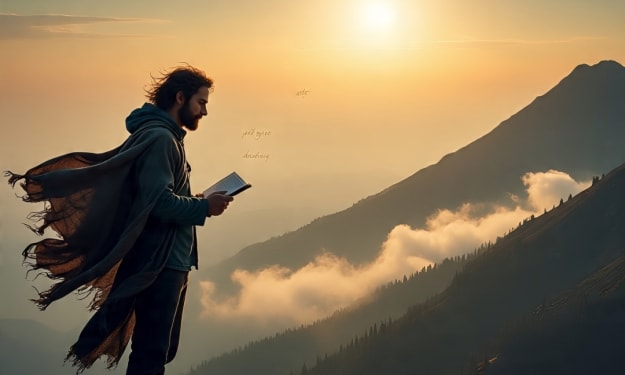
Whispers Above the Clouds A Poet’s Journey to the Summit of Inspiration The path was steep, but his heart was light. Arin had been walking for hours, the mountain trail winding endlessly beneath his boots. The world below had grown smaller, fading into the distance like a forgotten echo. Yet he didn’t feel tired. Not in the way he used to. For months—no, years—Arin had been stuck. A once-celebrated poet, he had fallen silent. The words that once danced freely from his soul now hid in shadows, unreachable. Fame had come, then faded. Applause had dimmed. His pen, once an extension of his heart, lay untouched in a drawer. One morning, after yet another sleepless night, he packed a small bag and walked out the door. No destination, no fanfare. Just a whisper within: Go where the sky touches the soul. And now, here he was—nearing the summit of Mount Viraya, a place known more to monks than tourists. A place said to be "where silence speaks." The final steps were the hardest. The air was thin, the wind sharp. But when Arin reached the top, everything changed. The sun was just rising, spilling gold across the sky. Below him, a vast sea of clouds shimmered like waves frozen in time. He stood on an island in the sky. He closed his eyes. For the first time in years, he didn’t think about being a poet. He didn’t think about success or expectations. He simply listened. And then—he heard it. Not a voice, not a sound, but a feeling. A whisper from within. A truth he had buried beneath doubt and fear. “You were never meant to write for applause,” it said. “You write because your soul sings.” Tears welled in Arin’s eyes—not from sadness, but from recognition. The mountain hadn’t given him new words; it had helped him remember the old ones. The true ones. He pulled out his notebook, long forgotten at the bottom of his pack. His fingers trembled as he opened it. Not from cold—but from something else. A spark. The pen moved. Not forced, not rushed—just flowing. He wrote about the wind. About the sky. About climbing, falling, rising again. About forgetting who you are, and then finally remembering. The words came like rain after drought. For hours he wrote. And when he paused, it wasn’t because the words had stopped—but because his heart was full. As the sun climbed higher, Arin stood and breathed deeply. He didn’t feel like the old Arin, or even a “new” Arin. He just felt real. He didn’t need validation. He didn’t crave likes or followers. But he knew one thing: he would share this moment. Not to impress—but to inspire. When he descended the mountain, he posted a simple poem online: --- Whispers above the clouds, Where the sky holds your name, I climbed to lose myself— And found my soul again. --- To his surprise, the post resonated. Not because it was perfect—but because it was honest. Thousands shared it. Not for its rhyme or rhythm—but for its truth. Messages flooded in. People wrote: “This reminded me why I paint.” “I’ve been stuck for so long. This gave me hope.” “Thank you. I needed this.” And Arin replied to every one. Because this was what poetry was always meant to be—not a performance, but a connection. --- A year later, Arin returned to Mount Viraya. Not to seek inspiration—but to say thank you. He sat at the same spot, watching the clouds roll beneath him. In his hands was a small, hand-bound book: a collection of poems written since that first climb. But this time, the pages weren’t filled with the need to be noticed. They were filled with love. With truth. He left a copy at the summit, tucked gently between two stones, for the next traveler who might need it. Not signed. No name. Just a note on the inside cover: “May you remember who you are above the clouds.” --- 💬 What this story reminds us: We all have mountains to climb—creative, emotional, or spiritual. Sometimes, the world tells us we need to do more, be more, prove more. But often, the real inspiration comes when we pause, listen, and remember why we began at all. You don’t have to be perfect. You just have to be true. --- If this story moved you, feel free to share it. It might be the whisper someone else is waiting to hear. 🌤️✍️
By Muhammad Saad about a year ago in Poets