love poems
Love poems for hopeless romantics; I'm the poet and you're my muse.
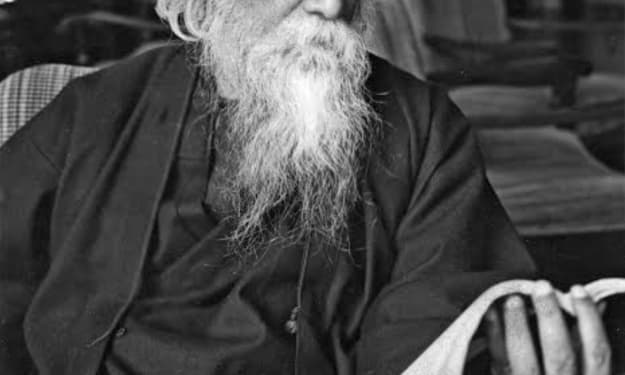
Ravindranath Tagore
Rabindranath Tagore: The Bengali Visionary Poet One of India's greatest writers, Rabindranath Tagore was a poet, philosopher, musician, artist, and educator whose work had an impact far beyond Bengal and India. He was born on May 7, 1861, in Calcutta (now Kolkata). In 1913, he became the first non-European to win the Nobel Prize in Literature, rewriting Bengali literature and music. Education and childhood Tagore was born into a prominent Bengali family with a high intellect. Debendranath Tagore, his father, was a prominent participant in the Brahmo Samaj movement, which sought to modernize and reform Hindu society. Rabindranath was exposed to literature, philosophy, and music from a young age. He was educated mostly at home, which was different from traditional education, and he had a strong dislike for formal education. Tagore went to England in 1878 to study law, but he didn't finish his degree when he got back. However, his time in Europe broadened his perspective on the world and introduced him to Western literature, music, and art, all of which would later have an impact on his own work. Achievements in literature Tagore started writing poetry when he was eight years old, and by the time he was in his teens, he had published a few of his poems. His first works were written in Bengali, and over time, he published a large number of poems, plays, essays, novels, and songs. “Gitanjali” (Song Offerings), his most well-known poetry collection, won him the Nobel Prize in Literature in 1913. He combined universal humanism with deep spiritual and philosophical ideas in "Gitanjali," which he wrote. Nature, human emotion, spirituality, nationalism, and individual struggles were common themes in Tagore's writing. In addition to poetry, his works include plays like "Dak Ghar," short stories like "Kabuliwala," novels like "Ghare-Baire" (The Home and the World), and short stories like "Kabuliwala." Art and Music Tagore was also an accomplished musician and composer. Rabindra Sangeet is a distinct musical style that combines Indian classical music with folk music and Western influences. Themes and emotions he sang about ranged from love and devotion to patriotism and sorrow. Additionally, Tagore was an accomplished painter. Even though he started painting in his 60s, his bold and abstract style earned him international recognition for his visual art. He was truly a Renaissance man of modern India because of his talent across a variety of fields. Perspectives on Politics and Social Change Tagore was in favor of Indian independence but opposed aggressive nationalism. He advocated for peaceful intercultural coexistence and humanism. Through his writings, he criticized British colonialism and even renounced his knighthood in 1919 in protest of the Jallianwala Bagh massacre. Tagore was also a social reformer who worked for rural development, women's rights, and education. He was extremely concerned about Indian society's religious divisions and rigid caste system. Education and Shantiniketan The establishment of Visva-Bharati University in Shantiniketan in 1921 was Tagore's most significant contribution to education. His idea was to combine Eastern and Western philosophies to create a learning environment where students could freely explore their creativity in close proximity to nature. Scholars, artists, and thinkers from all over the world, including Albert Einstein, Romain Rolland, and Mahatma Gandhi, flocked to Shantiniketan as a center for cultural exchange. Legacy and Death On August 7, 1941, Rabindranath Tagore, who was 80 years old at the time, passed away. His vast body of work and influence on Indian culture, literature, and education continue his legacy. His compositions "Jana Gana Mana" and "Amar Shonar Bangla" were later adopted as the Indian and Bangladeshi national anthems, respectively. --- Conclusion Not only was Rabindranath Tagore a brilliant writer, but he was also a brilliant thinker who helped shape the modern Indian cultural identity. Generations of people all over the world continue to be inspired by his contributions to poetry, music, education, and social change.
By Nabir Mondolabout a year ago in Poets
A LOVE LONG GONE
A\N; This is dedicated to all those who had to let go of their love, to those who loved quietly, from afar, and never truly had the chance to speak their hearts. May you find peace in letting go and strength in knowing that your love, though unspoken, was real.
By Evelyn Graceabout a year ago in Poets
He Loved Me First
I found love first in silence— not in a voice, but in presence. God met me where loneliness tried to make a home. And that’s when I learned love doesn't need touch to hold you. From that well, I drank enough to recognize the eyes of a man who didn’t try to fix me— just stayed. Romantic love followed like dawn follows prayer— soft, certain, warm without demanding warmth back. He held the echoes of the divine without trying to replace it. Then came the third. A heartbeat placed in my arms, a name that called me “home” before she could speak. And I knew — love completes itself when it multiplies. The world says start with romance, chase the high. But I found the order matters. Without God, you mistake infatuation for fate. You raise children with half a heart. But with God— every kind of love becomes whole.
By Carolina Borgesabout a year ago in Poets