celebrities
No matter their age, some celebrities have old souls; poems written by celebrity poets and your favorite celebrities' favorite poems.
Baby Play Gym Mat UK | Safe & Fun Mat for 1-Year-Olds
Play is more than just fun — it’s the foundation for early learning and development. A Baby Play Gym Mat, also known as a Mat for 1-year-olds, is the perfect way to encourage your child’s growth, movement, and curiosity in a safe and engaging environment.
By Baby Shopperabout a year ago in Poets
Troxler’s Haunting
Troxler dims the lights He poisons your reflection Your own eyes are fouled *** Authors note: In 1804, psychologist Ignaz Paul Vital Troxler discovered a fascinating optical illusion— if one focuses on a set point, and keeps ones vision fixed, objects in the peripheries will begin to fade! This sensory phenomenon is called the Troxler effect, or Troxler’s fading!
By Sam Spinelliabout a year ago in Poets
A Black Superwoman
What comes to mind when you hear the word superwoman? For some, it’s a comic book character with superpowers and a cape. But in reality, the true image of a superwoman doesn’t need fictional powers—it exists in real life. A Black superwoman is not just a stereotype; she is a living embodiment of resilience, courage, and brilliance, carrying communities on her shoulders while inspiring generations to rise higher.
By John Smithabout a year ago in Poets
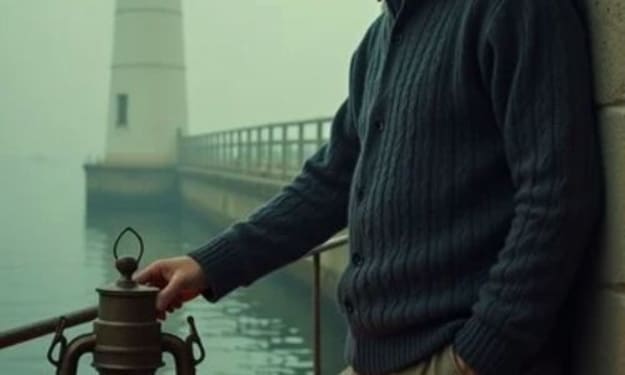
The Poet’s Lighthouse
M Mehran On the edge of a jagged coastline, where waves clashed endlessly against weathered rocks, stood a lighthouse unlike any other. It wasn’t just a beacon for ships; it was a sanctuary for poets, a place where words were as vital as the wind, and silence was never empty. Evelyn, a poet with a heart that carried both joy and sorrow in equal measure, had arrived one stormy evening. She had left the city behind, the noise, the chaos, the constant rush of life that drowned out the delicate rhythms of thought. The lighthouse, with its peeling white paint and glass lantern glowing faintly against the dark sky, promised solace—and inspiration. Inside, the walls were lined with notebooks, some stacked in piles, others hung carefully on hooks like ornaments. Each notebook represented a poet who had passed through, leaving behind fragments of their soul. The caretaker, an elderly man named Simon, welcomed Evelyn with a nod. “Words find their way here,” he said simply. “Sometimes they arrive before the poet does.” Evelyn unpacked her things and sat by a window, watching the storm rage. She had been writing for years, but lately, her words felt heavy, trapped in shadow. She opened her notebook and began to write, letting the wind guide her thoughts. Her pen moved almost on its own, tracing lines about the sea, about loneliness, about longing, and hope that refused to die. That night, the lighthouse filled with other poets—some seasoned, some tentative, all seeking the same thing: a place where their words could breathe. There was Marcus, whose metaphors were sharp like the rocks below, cutting to the heart; Leila, who wrote with the gentleness of a lullaby, soothing pain with every verse; and Noah, who wielded language like a sword, confronting truths others preferred to ignore. Evelyn listened to them all, her own insecurities slowly melting in the warmth of their voices. When it was her turn, she read aloud. Her words spoke of storms, of finding light amidst darkness, of the ocean’s endless patience. As she read, the lighthouse seemed to respond—the lantern above pulsed softly, the waves softened, and a hush fell over the room. For a moment, it felt as if the world itself was listening. Simon smiled. “The lighthouse remembers,” he said quietly. “And it shares its memory with those who speak honestly.” Over the following weeks, Evelyn discovered a rhythm she had never known. Each morning she wrote, letting the sea inspire her, and each evening she shared her work with the circle. The poets became her companions, her critics, and her cheerleaders. Together, they discovered the truth that poetry was never solitary—it was a conversation, a bridge between hearts. One evening, during a particularly fierce storm, the lighthouse’s light faltered. Ships could not see its guiding beam, and fear rippled through the poets. Simon asked for volunteers to help keep the light steady. Without hesitation, Evelyn and the others climbed to the top, their poems tucked in their pockets, their hands steady against the wind and rain. As they worked, Evelyn recited a poem about resilience, about courage in the face of fear. The others joined in, each voice layering over the next, a chorus that defied the storm. The light shone again, strong and unwavering, a beacon not just for ships, but for every poet who had struggled to be heard. When the storm passed, the poets looked out at the calm sea, and Evelyn realized something profound: poetry was not merely about words on a page. It was about action, about connection, about standing firm in the face of chaos and letting your voice matter. Years later, Evelyn returned to the city, carrying the lessons of the lighthouse in her heart. She wrote with newfound confidence, sharing her words widely, yet always remembering the sanctuary by the sea. And sometimes, when the night was quiet, she would close her eyes and hear the echoes of that storm, the chorus of voices, and the gentle hum of the lighthouse that had shown her the way. The Poet’s Lighthouse, she knew, was more than a place. It was a reminder that poets are guardians of light, keepers of memory, and creators of hope. And as long as someone dared to speak, there would always be a beacon shining through the darkness. Because poetry, like the lighthouse, does not vanish. It endures, guiding hearts through storms, illuminating truths, and reminding the world that even in the darkest night, words can lead the way.
By Muhammad Mehranabout a year ago in Poets
Echoes of the Forgotten Verse
M Mehran In the heart of a city that never slept, where skyscrapers scraped the clouds and neon lights painted the night, there was a small, almost invisible alleyway. Tucked between a laundromat and a convenience store, a tiny shop called The Inked Lantern existed, a place where poets gathered to remember that words could matter more than anything else. The shop was run by an old man named Rowan, who had once been a celebrated poet. His hair was silver, his hands lined with age, and his eyes held a lifetime of verses no one had ever read. He had opened The Inked Lantern after losing faith in the world’s desire to listen. “People forget too quickly,” he would mutter, polishing the counter. “Poetry is for those who remember.” It was on a rain-soaked evening that Lila stumbled upon the shop. She was young, barely twenty-two, with a mind bursting with ideas and a heart aching with unspoken emotions. She had been wandering the city, searching for inspiration, when the flickering light of the lantern drew her in like a moth to a flame. Inside, the air was warm, filled with the scent of parchment and tea. Shelves overflowed with books, some so old the words seemed to hum with history. At the back, a small stage awaited those brave enough to speak. Rowan looked at her and nodded. “You write?” “I try,” Lila admitted, clutching her notebook. “But no one reads anymore.” Rowan smiled faintly. “Then you’ve come to the right place.” That night, Lila listened. She heard verses that were soft as whispers and others that roared like storms. Each poet bared a piece of themselves, each word a fragment of truth. When it was her turn, she hesitated. Her hands shook, her mind raced. Then, slowly, she began. Her poem was about shadows—those that haunted her in the quiet, and those that the world ignored. She spoke of love unspoken, dreams deferred, and moments lost to fear. As she read, she realized that the room was holding its breath, and when she finished, there was silence. Not uncomfortable silence, but the kind that recognizes something rare and fragile. Rowan clapped first. “There’s fire in you,” he said. “Don’t let it die in the dark.” From that night on, Lila became a part of The Inked Lantern. She met others—Jonas, whose words could cut through despair like a blade; Miriam, whose verses were petals falling softly in the wind; and Elias, a quiet poet whose silences spoke as loudly as his lines. Together, they created a tapestry of voices, each unique, each necessary. But poetry, as Lila quickly learned, was never safe. One evening, she found herself sitting alone, staring at her notebook. The words she had once relied on had abandoned her. Fear crept in—the fear that she was nothing without her poems. She closed the notebook, tears stinging her eyes, and left the shop. Rowan found her the next morning, standing under a gray sky. “You think poetry is only the words you write?” he asked. “It’s also the way you feel, the way you see the world, the way you refuse to let life silence you.” Encouraged, Lila returned to The Inked Lantern. She realized that poetry was more than ink on paper; it was courage, connection, and defiance. And when the city tried to swallow her voice, she pushed back, writing not for applause, but for the truth that refused to be ignored. Years passed, and The Inked Lantern became a legend in the city. Those who entered its doors discovered a community that embraced vulnerability and celebrated resilience. Lila, now a poet of renown, returned often to mentor others, sharing Rowan’s wisdom: “Words are eternal if you dare to breathe them into the world.” One night, as the city lights flickered outside, Lila noticed a young girl sitting in the corner, notebook in hand, hesitant and trembling. Lila smiled, remembering herself at that age. “First time?” she asked gently. The girl nodded. Lila guided her to the stage. “Poetry isn’t about being perfect,” she whispered. “It’s about being real. Speak, and the world will hear you—at least, those who need to.” And in that small, glowing shop, amidst the hum of the city, the cycle continued. Poets came and went, but their words remained. They whispered in alleys, dripped from windows, and echoed in the hearts of anyone willing to listen. Poetry, they learned, was not just a pastime—it was survival. It was the way to resist silence in a world that often demanded it. Lila looked around, seeing faces old and new, and understood the truth Rowan had tried to teach her: poets are not just writers; they are witnesses, guardians of feeling, and rebels of the heart. And as long as there were poets, there would be stories, hope, and the courage to speak when silence seemed easier. Because poetry, in the end, is not meant to be forgotten. It is meant to echo, endlessly, in the hearts of those brave enough to listen.
By Muhammad Mehranabout a year ago in Poets
The Midnight Verses
M Mehran In the heart of Crescent City, where the streets hummed with the rhythm of life, a small, dimly lit café existed almost unnoticed. Its wooden sign read The Wandering Quill, and inside, the air was thick with the scent of coffee, old books, and dreams waiting to be written. This was not a café for casual visitors. It was a sanctuary for poets—those who spoke in metaphors, who could turn pain into music, and joy into prose. Among the regulars was Samuel, a poet whose words were as sharp as a knife and as soft as silk. He had come to Crescent City years ago, carrying nothing but a suitcase full of notebooks and a heart brimming with untold stories. Samuel believed that words were alive; they breathed, they bled, they healed. But he also knew that words could betray you, slipping away when you needed them most. One night, as rain streaked the windows, Samuel noticed a newcomer. She sat alone at a corner table, a tattered notebook open before her. Her hands shook slightly, either from cold or nerves—he couldn’t tell. There was a quiet intensity about her, a presence that demanded attention even in silence. “First time here?” Samuel asked, sliding into the seat opposite her. She looked up, startled. “Yes… I—I write sometimes,” she murmured. “Sometimes is good,” he said, “but poetry happens in moments like this. When it scares you, or comforts you, or makes you cry without warning.” Her name was Elara. She confessed that she had always written in secret, her poems hidden in drawers, afraid of judgment, afraid of being misunderstood. Samuel smiled. “Poets are misunderstood by nature,” he said. “That’s what makes us necessary.” That night, the café held its usual gathering. Poets of all ages read aloud, some hesitant, others commanding attention with every syllable. Elara listened, absorbing the rhythm of voices, the cadence of vulnerability. When her turn came, she hesitated, her voice barely a whisper. But the room leaned in, urging her on. She read a poem about stars and solitude, about finding beauty in brokenness. Each line trembled with honesty, and by the end, the café was silent, not out of awkwardness, but reverence. Samuel clapped first, a slow, deliberate applause, followed by others. For the first time, Elara felt seen. In the weeks that followed, Elara returned night after night. Samuel became her mentor, guiding her to find strength in her words, to embrace the chaos of emotions that fueled her poetry. Together, they discovered a rhythm—one of collaboration, challenge, and friendship. But poetry, as they both knew, was not without its trials. One evening, Samuel announced he would leave Crescent City to teach at a university far away. Elara felt a hollow ache in her chest, fearing the silence that would follow his departure. “What will I do without you?” she asked, her voice breaking. “You will do what poets always do,” Samuel replied, placing a hand over hers. “You will write. You will bleed, you will laugh, you will fail, and you will rise. Words are never gone—they live in you.” The night of his departure, the café filled with poets and friends. They shared verses, laughter, and tears. When Samuel left, Elara felt the emptiness, yet also a spark. She realized that mentorship was not about dependence, but empowerment. Samuel had given her more than lessons—he had given her courage. Months turned into years. Elara’s poems, once hidden, began appearing in local magazines, and eventually in anthologies. She hosted open mic nights at The Wandering Quill, welcoming newcomers, guiding them as Samuel had guided her. Every time she read her own words aloud, she remembered the night she first dared to speak, and the poet who had believed in her when she could not believe in herself. Through her journey, Elara understood that poets were the quiet rebels of the world. They challenged conformity with imagery, questioned despair with hope, and reminded humanity that even the smallest word could carry immense power. They didn’t seek fame; they sought truth. And Crescent City thrived because of them. In every whispered verse, in every scribbled notebook, the city’s heartbeat intertwined with the pulse of poetry. The midnight verses became a lifeline, a reminder that emotion, when expressed, could transcend the ordinary. Elara often thought of Samuel, imagining him in a classroom full of students, nurturing words and shaping hearts. She smiled, knowing that their paths, though divergent, shared a common thread—poetry. It was a tether that bound them, across miles, across time. Poets are wanderers, dreamers, and truth-tellers. They see the world not as it is, but as it could be. And in their words, we find courage, hope, and the reminder that every story—no matter how small—is worth telling. The Wandering Quill remained, a beacon for all who dared to feel deeply. And Elara, now a voice among many, carried the legacy of the poets who had come before her. Because poetry, she learned, was eternal—it whispered in the hearts of those who listened, daring them to dream, daring them to write, daring them to live fully.
By Muhammad Mehranabout a year ago in Poets