
Eternal love in “A Red, Red Rose” and “Ae Fond Kiss” by Robert Burns
Eternal love in Robert Burns' Poems

A Red, Red Rose (by Robert Burns)
O my Luve’s like a red, red rose,
That’s newly sprung in June;
O my Luve’s like the melodie
That’s sweetly play’d in tune.
As fair are thou, my bonie lass,
So deep in luve am I;
And I will luve thee still, my Dear,
Till a’ the seas gang dry.
Till a’ the seas gang dry, my Dear,
And the rocks melt wi’ the sun:
I will luve thee still, my dear,
While the sands o’ life shall run.
And fare thee weel, my only Luve!
And fare thee weel, a while!
And I will come again, my Luve,
Tho’ it were ten thousand mile!
Ae Fond Kiss (by Robert Burns)
Ae fond kiss, and then we sever;
Ae fareweel, and then forever!
Deep in heart-wrung tears I'll pledge thee,
Warring sighs and groans I'll wage thee.
Who shall say that Fortune grieves him,
While the star of hope she leaves him?
Me, nae cheerfu' twinkle lights me;
Dark despair around benights me.
I'll ne'er blame my partial fancy,
Naething could resist my Nancy;
But to see her was to love her;
Love but her, and love forever.
Had we never lov'd sae kindly,
Had we never lov'd sae blindly,
Never met—or never parted—
We had ne'er been broken-hearted.
Fare thee weel, thou first and fairest!
Fare thee weel, thou best and dearest!
Thine be ilka joy and treasure,
Peace. enjoyment, love, and pleasure!
Ae fond kiss, and then we sever;
Ae fareweel, alas, forever!
Deep in heart-wrung tears I'll pledge thee,
Warring sighs and groans I'll wage thee!
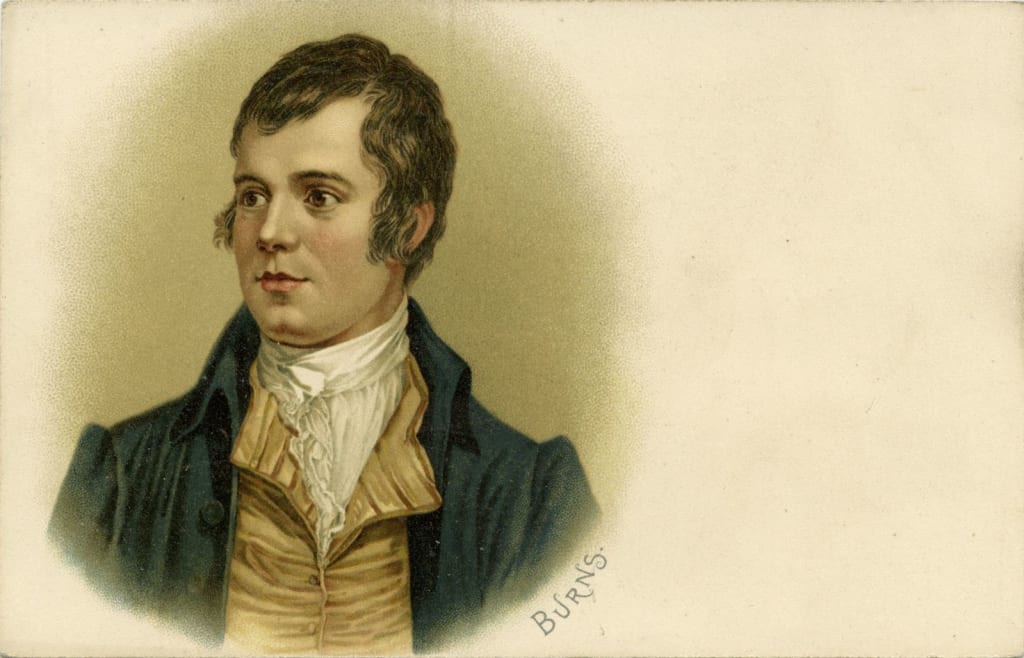
Robert Burns is widely considered to be the national poet of Scotland and his works are known for their passionate and romantic themes. In his poems “A Red, Red Rose” and “Ae Fond Kiss”, he explores the concept of eternal love. Both these poems explore the idea of everlasting love and its power to endure through time and space. Through his words, Burns depicts eternal love in different ways and gives us a timeless reminder of the power of true love.
To begin with, in “A Red, Red Rose”, Burns starts by using 2 similes to compare his "luve" to a rose - “O my luv’s like a red, red rose” and to a melody – “O my Luve's like the melodie”. The rose is an ancient symbol of love in many cultures, including in Western literature. Comparing his “beloved one” to a rose emphasizes her youth and beauty. However, both the rose and the melody remind that they are sweet, but short-lived, temporal and last only a short time. Therefore, throughout this poem, the author is trying to assure his beloved about his infinite and never ending love for her.
First of all, he uses hyperbole in a number of instances. The first instance is in stanza three “Till a’ the seas gang dry” and it is repeated in the first sentence of stanza four. He does not mean the seas really going dry literally, but only shows the extent of his love to her. The second instance is when he says that the rocks are melting with the sun “And the rocks melt wi’ the sun”. Though they are impossible possibilities, he wants to establish the desire for eternal love. Additionally, in stanza four, hyperbole also helps the author to show the immensity, the boundlessness of love: the hero is ready to go “ten thousand mile” to return to his “luve.”.
Secondly, the author says that he will love his lady as long as “the he sands o’ life shall run”, which means “as long as I am alive”. This metaphor shows the extent of his love against the passage of time. The time of a person’s life on earth is compared to an hourglass. The girl can lose her beauty, but she will always have the speaker’s love forever after.
Beside that, in the poem “Ae Fond Kiss”, Burns reveals the nature of truly generous love for another person. At the beginning of this poem, he seems to be more focused on himself when capturing the bitterness of saying goodbye to someone he loves, knowing that he will never see her again. The parallelism between “Ae fond kiss, and then we sever” and “Ae fareweel, and then forever!” describes how the author feels sorrowful at the departure of his lover. The use of “heart-wrung tears” portrays how deeply hurt he is. But after that, he is still able to love the lady in the future and promises that he will pledge their love: “I'll pledge thee” – “I'll wage thee”.
When the poem goes on, Burns turns his focus to his beloved lady and his experience of her. He says that whatever good or bad is going inside his heart is not his fault. He will never blame his passion for what he is experiencing at this time, because “Naething could resist my Nancy”. No one could have seen her and not been deeply attracted to her “But to see her was to love her” - “Love but her, and love forever”. The author says that just seeing her would be enough to make him fall in love with her, and when he was in love with her, he would love only her, and her always. This is an eternal love for the lady.
Furthermore, in the last stanza, Burns uses repetition “Fare thee weel” and the superlatives “first and fairest - best and dearest” to remind that the lady is the first woman he has truly loved and the most beautiful woman he has ever seen. Additionally, he doesn’t expect a new love for himself. Instead, he would rather she find “joy and treasure”, “Peace. enjoyment, love, and pleasure”. He does not wish her to suffer the same pain with him. He hopes that she will find a new love with someone else than maintain love for him. This wish is a sign for the readers that his love for her is truly selfless.
Inconclusion, "A Red, Red Rose" and "Ae Fond Kiss" by Robert Burns explore the idea of eternal love. Through his words, Burns has managed to capture the essence of “love” in a way that has never been done before. These two poems are timeless and evoke deep emotions in readers until today.
About the Creator
Reader Long Tony
There's no need to rush... If something is meant to be, it will happen ... in the right time, with the right person and for the best reason.!!!
Enjoyed the story? Support the Creator.
Subscribe for free to receive all their stories in your feed.
Comments
There are no comments for this story
Be the first to respond and start the conversation.