review
Reviews of all the finer things in pet life.
Tail-Wagging Treats: Enhance Your Dog's Health and Happiness with These Top Picks!
Dog treats play a crucial role in enhancing the bond between humans and their canine companions, serving not only as rewards for good behavior but also as tools for training and maintaining overall health. With a plethora of options available on the market today, from meticulously formulated commercial treats like Milk-Bone Maro Snacks Dog Treats, Beef, 40 Ounce with Real Bone Marrow and Calcium and Good'N'Fun Triple Flavored Rawhide Kabobs for Dogs, 1.5 Pound, to classic choices such as Milk-Bone Original Dog Treats for Medium Dogs, 10 Pound, Crunchy Biscuit Helps Clean Teeth, finding the right treats for your dog can seem daunting. Each treat type offers unique benefits, whether it's dental health support, nutritional enrichment, or simply a delicious reward. In this comprehensive guide, we'll explore the various types of dog treats available, how to select the best treats for your dog's needs, and essential tips for incorporating treats into your dog's diet responsibly. Whether you're a seasoned pet owner or new to the world of dog treats, this article aims to provide you with everything you need to know to make informed choices that promote your dog's well-being and happiness.
By Mario T. DiLonardo2 years ago in Petlife
Bird flu is highly lethal to some animals, but not to others. Scientists want to know why
Startriting bird lays beside a dead sea lion on the beach at Punta Bermeja, on the Atlantic coast of the Patagonian province of Río Negro, near Viedma, Argentina, Monday, Aug. 28, 2023. Government experts suspect that bird flu is killing sea lions along Argentina’s entire Atlantic coastline, causing authorities to close many beaches in order to prevent the virus from spreading further. (AP Photo/Juan Macri, File) Read More BY MIKE STOBBE Updated 2:27 AM GMT+5:30, June 15, 2024 Share NEW YORK (AP) — In the last two years, bird flu has been blamed for the deaths of millions of wild and domestic birds worldwide. It’s killed legions of seals and sea lions, wiped out mink farms, and dispatched cats, dogs, skunks, foxes and even a polar bear. But it seems to have hardly touched people. That’s “a little bit of a head scratcher,” although there are some likely explanations, said Richard Webby, a flu researcher at St. Jude Children’s Research Hospital in Memphis, Tennessee. It could have to do with how infection occurs or because species have differences in the microscopic docking points that flu viruses need to take root and multiply in cells, experts say. But what keeps scientists awake at night is whether that situation will change. “There’s a lot we don’t understand,” said Dr. Tom Frieden, a former CDC director who currently heads Resolve to Save Lives, a not-for-profit that works to prevent epidemics. “I think we have to get over the ‘hope for the best and bury our head in the sand’ approach. Because it could be really bad.” chers theorize that flu viruses that originated in birds were the precursors to terrible scourges in humans, including pandemics in 1918 and 1957. Those viruses became deadly human contagions and spread in animals and people. reak in 1997 that involved severe human illnesses and deaths. It has caused hundreds of deaths around the world, the vast majority of them involving direct contact between people and infected birds. When there was apparent spread between people, it involved very close and extended contact within households. Like other viruses, however, the H5N1 virus has mutated over time. In the last few years, one particular strain has spread alarmingly quickly and widely. In the United States, animal outbreaks have been reported at dozens of dairy cow farms and more than 1,000 poultry flocks, according to the U.S. Department of Agriculture. Four human infections have been reported among the hundreds of thousands of people who work at U.S. poultry and dairy farms, though that may be an undercount. Worldwide, doctors have detected 15 human infections caused by the widely circulating bird flu strain. The count includes one death — a 38-year-old woman in southern China in 2022 — but most people had either no symptoms or only mild ones, according to the U.S. Centers for Disease Control and Prevention. There’s no way to know how many animals have been infected, but certain creatures seem to be getting more severe illnesses. Take cats, for example. Flu is commonly thought of as a disease of the lungs, but the virus can attack and multiply in other parts of the body too. In cats, scientists have found the virus attacking the brain, damaging and clotting blood vessels and causing seizures and death. Similarly gruesome deaths have been reported in other animals, including foxes that ate dead, infected birds. The flu strain’s ability to lodge in the brain and nervous system is one possible reason for “higher mortality rate in some species,” said Amy Baker, an Iowa-based U.S. Department of Agriculture scientist who studies bird flu in animals. But scientists “just don’t know what the properties of the virus or the properties of the host are that are leading to these differences,” Baker said. Unlike cats, cows have been largely spared. Illnesses have been reported in less than 10% of the cows in affected dairy herds, according to the USDA. Those that did develop symptoms experienced fever, lethargy, decreased appetite and increased respiratory secretions. Cow infections largely have been concentrated in the udders of lactating animals. Researchers investigating cat deaths at dairy farms with infected cows concluded the felines caught the virus from drinking raw milk. Researchers are still sorting out how the virus has been spreading from cow to cow, but studies suggest the main route of exposure is not the kind of airborne droplets associated with coughing and sneezing. Instead it’s thought to be direct contact, perhaps through shared milking equipment or spread by the workers who milk them. Then there’s the issue of susceptibility. Flu virus need to be able to latch onto cells before they can invade them. “If it doesn’t get into a cell, nothing happens. ... The virus just swims around,” explained Juergen Richt, a researcher at Kansas State University. But those docking spots — sialic acid receptors — aren’t found uniformly throughout the body, and differ among species. One recent study documented the presence of bird flu-friendly receptors in dairy cattle mammary glands. Eye redness has been a common symptom among people infected by the current bird flu strain. People who milk cows are eye level with the udders, and splashes are common. Some scientists also note that the human eye has receptors that the virus can bind to. A study published this month found ferrets infected in the eyes ended up dying, as the researchers demonstrated that the virus could be as deadly entering through the eyes as through the respiratory tract. Why didn’t the same happen in the U.S. farmworkers? Some experts wonder whether people have some level of immunity, due to past exposure to other forms of flu or to vaccinations. However, a study in which human blood samples were exposed to the virus indicated there’s little to no existing immunity to this version of the virus, including among people who’d had seasonal flu shots. A more menacing question: What happens if the virus mutates in a way that makes it more lethal to people or allows it to spread more easily? Pigs are a concern because they are considered ideal mixing vessels for bird flu to potentially combine with other flu viruses to create something more dangerous. Baker has been studying the current strain in pigs and found it can replicate in the lungs, but the disease is very mild. But that could all change, which is why there’s a push in the scientific community to ramp up animal testing. Frieden, of Resolve to Save Lives, noted public health experts have been worried about a deadly new flu pandemic for a long time. “The only thing predictable about influenza is it’s unpredictable,” he said. ___ The Associated Press Health and Science Department receives support from the Howard Hughes Medical Institute’s Science and Educational Media Group.
By Online Tips2 years ago in Petlife
The Best Ways to Care for Your Furry Friend's Health. AI-Generated.
The Best Ways to Care for Your Furry Friend's Health As a responsible pet owner, it's essential to prioritize the health and well-being of your furry friend. Dogs rely on us to provide them with the care they need to live a happy and healthy life. In this informative blog post, we will discuss the best ways to care for your dog's health, covering everything from their nutritional needs to grooming and common health issues.
By alexander blanchard2 years ago in Petlife
How Riley’s Gearing Up for Summer with Ollie . Created with: Ollie.
Summer is here, and we are so excited, mostly because our Labrador mix, Riley, loves it just as much as we do! We live in North Carolina, and summer is Riley's favorite time of year—he's all about swimming, playing outside, and yes, even paddle boarding.
By Ally Cooke2 years ago in Petlife
World's most beautiful and unique fish
The Betta fish, otherwise called the Siamese fighting fish, is perhaps of the most enrapturing and outwardly staggering animal in the amphibian world. Eminent for their lively tones, complicated blade plans, and vivacious characters, Betta fish have turned into a number one among fish lovers and aquarists around the world. This article digs into the interesting universe of Betta fish, investigating their set of experiences, normal environment, actual qualities, conduct, rearing, and care prerequisites.
By Dreamscape 2 years ago in Petlife
Why Ollie Gets Maple Excited About Mealtime. Created with: Ollie.
Hey There, Fellow Dog Lovers! I’m here to tell you all about Maple, our 8-year-old Belgian Malinois. Maple’s breed is the type that is typically very protective of her family, always on guard. She’ll often bark at the slightest noise. That said, Maple is also incredibly loving and above all, playful. She's constantly playing with balls, loves to play catch and loves running around outside. When she's with her pet sitter who has two German Shepherds, they give Maple a run for her money, making her even more energetic when she runs around the large property with her two friends.
By Phillip Carpenter2 years ago in Petlife
Why Indie and Otis Came to Love Ollie. Top Story - May 2024. Created with: Ollie.
Like most dog moms, the best part of my day is the time spent with my dogs. I have an 8 year old Pittie mix named Indie and a two year old Frenchie mix named Otis. Indie is my soul dog and the love of my life. She has inspired me to become a photographer, a business owner, and a creator, among other things. She is the smartest and most loyal creature who selflessly makes sure that I’m happy above all else. Most of the time, she knows how I’m feeling before I do. When we’re together, she’s my shadow–never more than a few inches from me at all times.
By Brittney Avery2 years ago in Petlife
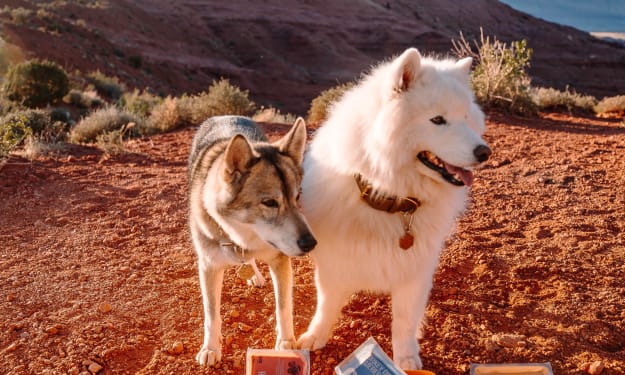
Fueling the Journey: On The Go Fresh Meals for Active Adventure Dogs. Created with: Ollie.
Hey! My name is Tiler, and here is Atlas and North. Together, my dogs and I have a very active lifestyle that is constantly taking us from one place to the next, one trail at a time. We live in Denver, CO and spend more time outside than anywhere else - hiking, camping, road tripping, paddle boarding, snowshoeing, skiing and so much more! Atlas and North are the perfect adventure dogs; always so eager to be included and ready to tackle anything by our side. They are extremely active and healthy which will always be our main priority as they continue to age.
By Tiler Grossman - Our Northern World2 years ago in Petlife