

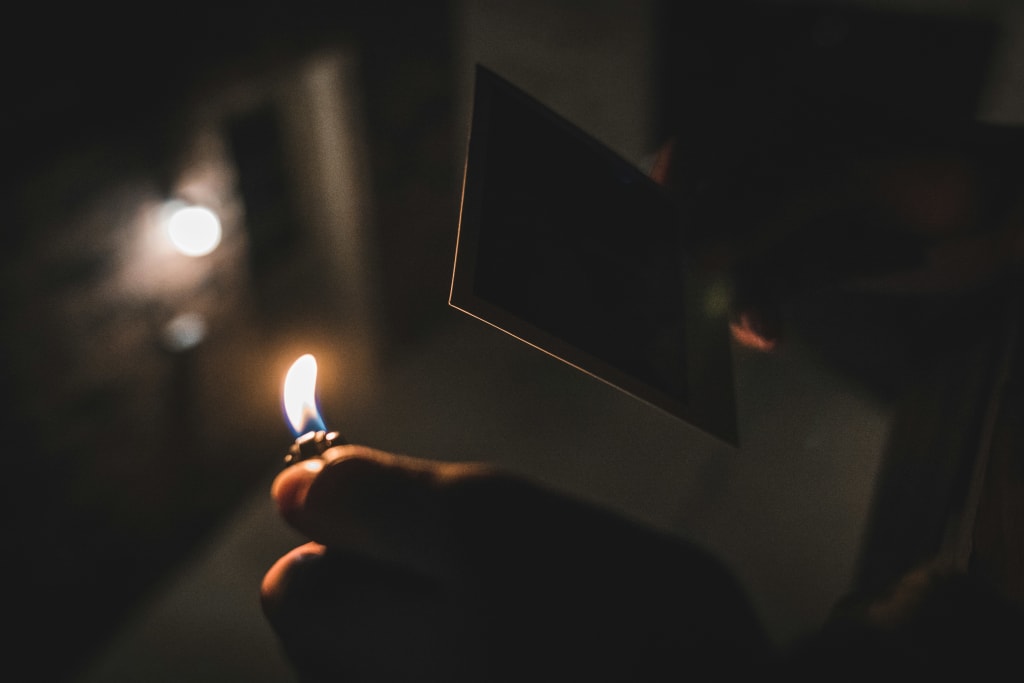
The rain always seemed heavier in his part of town. Cold, relentless, and tired—just like fourteen-year-old Malik. He stood under the crumbling awning of their one-bedroom apartment, his schoolbag soaked through, his socks squishing inside worn-out shoes. Home was never warm. Not because of the lack of heating, but because of what waited behind the peeling blue door.
Inside, his father sat slouched on the stained couch, the television flickering on mute. A beer can rolled across the floor. His little sister, Amina, barely eight, was curled in the corner, clutching a threadbare stuffed bunny, pretending not to hear the shouting that often came. His mother had left two winters ago—walked out into the snow and never came back. They stopped talking about her after a while. But Malik remembered. He always remembered.
"You're late," his father barked without looking at him. "What'd you bring home?"
Malik pulled a few wrinkled bills from his pocket—tips from stacking boxes at the grocery store after school. His dad snatched the money without thanks. Malik said nothing. He never said much anymore.
But there was one place where the silence lifted: her name was Leila.
Leila lived on the other side of the river, where the houses were clean and the air didn’t smell like burnt wires and old metal. She was soft-spoken, always in warm colors, like she belonged in a painting. They met at school, paired for a science project, and somehow, she stayed. He couldn’t understand it. Why someone like her would care about someone like him. But she did.
They had a spot in the park—an old swing set near the edge of the woods. It was quiet there. Safe.
“You look tired,” Leila said one evening, gently brushing a strand of hair from his eyes.
Malik shrugged. “Didn’t sleep much.”
“Your dad again?”
He nodded, eyes fixed on the gravel beneath his feet. He hated how she looked at him when he mentioned home—like she wanted to fix things she couldn’t reach. He hated that she saw how broken everything was.
“I wish I could take you away from all that,” she whispered.
For a second, Malik let himself believe she could. That there was a future beyond the rusted fences and broken promises. But the world doesn’t care about boys like Malik.
One night, the shouting at home turned into crashing, and then into screams. He found Amina crying in the bathroom, blood on her lip, their father unconscious on the floor after one too many bottles. Malik called the police. For the first time, he didn’t stay silent.
They took his father away that night.
Social workers arrived the next morning. Amina was placed with a foster family. Malik wasn’t allowed to go with her.
He ended up in a group home, sterile and unfamiliar. His bed had clean sheets, but it didn’t smell like home—or what home should’ve been. No one talked much. No one wanted to. They all had stories like his. Some worse.
He saw Leila less and less. She still called, still visited when she could, but her world was so far from his now. He could feel the space growing between them.
One evening, she stood in front of him, holding his hands tight.
“My parents want to move,” she said quietly. “Out of state. My dad got a new job.”
Malik nodded. He didn’t cry. He didn’t beg. What right did he have to ask her to stay?
“I’ll write,” she promised. “I’ll call every day.”
And for a while, she did. But the calls got shorter. The letters came less often. Eventually, they stopped.
Years later, Malik would walk past the swing set alone. It would creak in the wind, empty and rusted, like a memory that forgot how to smile.
He would never blame her. She loved him the way sunlight tries to reach through storm clouds. But he was born in the rain.
And some boys never stop walking in it.
About the Creator
RAJIB DEBNATH RAJ
Hey, I’m Rajib Debnath Raj. I write what I feel, what I see, and what I imagine. Stick around—you might just find something that speaks to you.
Enjoyed the story? Support the Creator.
Subscribe for free to receive all their stories in your feed.
Comments
There are no comments for this story
Be the first to respond and start the conversation.