
We Are More Like Massive, Colorful Trees Than Heartless Robots
Nature — not data — is how I understand the ‘real world’
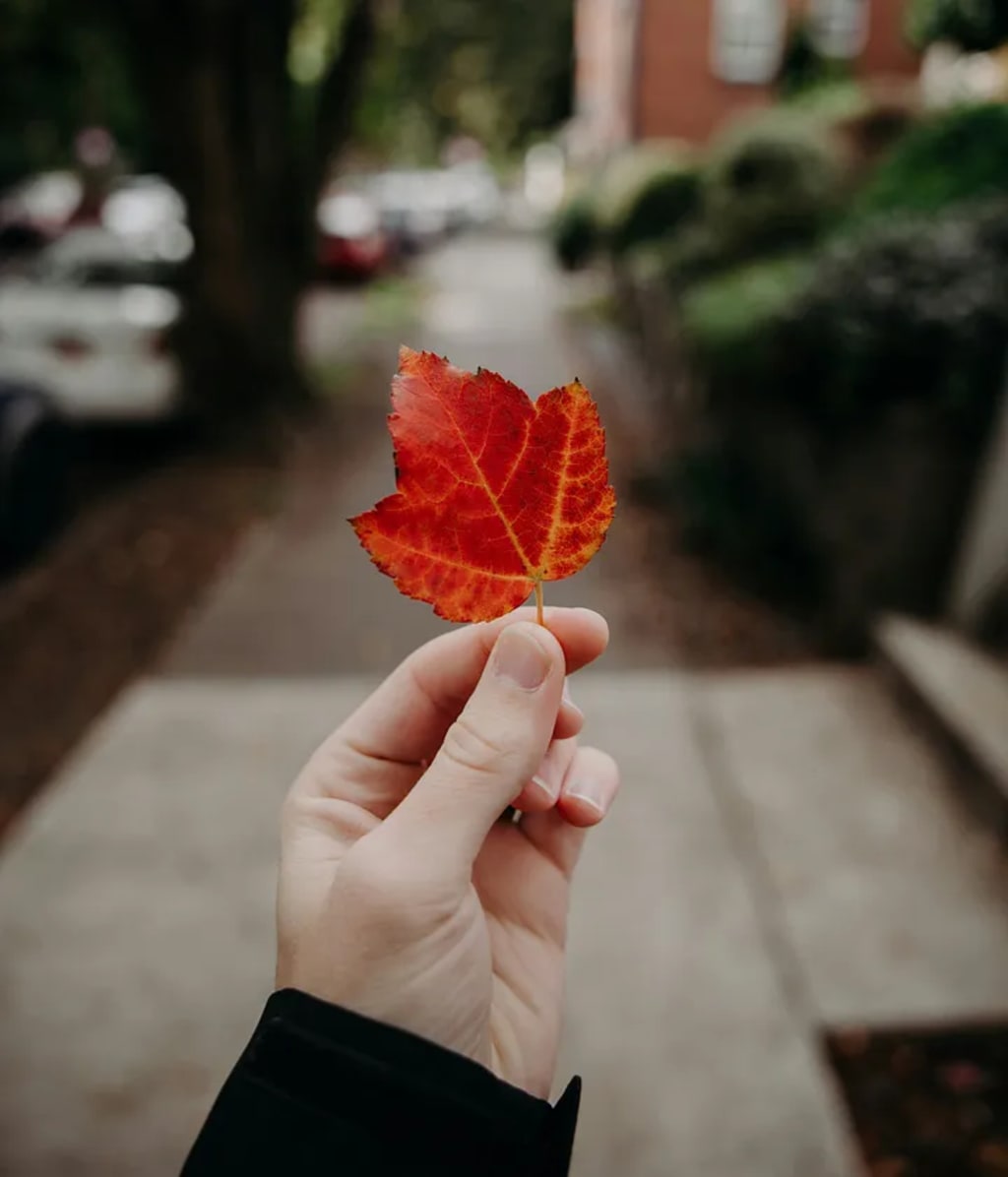
With a childlike smile, I steered my bike downhill, taking in the cool fall air and colorful foliage as I whizzed through downtown Portland. I stopped at my favorite food truck pod for the city’s best $5 pad thai. The chef and I traded lively banter about the gorgeous weather as we knew an endless grey and rainy winter was approaching.
The trees were a mix of green, yellow, orange, and red for a fleeting month. Beyond my delicious noodles, I savored every sight, smell, and touch of the autumn scenery and sunshine while I could.
I hopped back on my bike to continue trekking to my afternoon classes at Portland Community College. This is where I’d feed my curiosities and nourish my soul while the sun hid behind a thick blanket of clouds.
But, at that moment, I knew my fellow Oregonians were struggling.
It was 2009, a year into the Great Recession.
Luckily, I had a part-time job that paid my bills. And I could thrive.
However, the jobless rate in Oregon was above the national average, and home foreclosures ranked among the worst in the country. We had the highest number of people experiencing homelessness per capita of any other state.
But what could I do to help?
I made $10 per hour. I didn’t have any real power.
The guilt of feeling “OK” in such a brutal world would overwhelm me for at least a decade longer.
To better understand life, I poured myself into studying science. I wanted to understand the seasons, trees, and people at a microscopic level. I thought this would help me understand all the connections in the macro picture.
But, little did I know, this would only get me more bewildered about life’s most fundamental questions. And I’d have to return to my roots.
Before college, a tree was just a tree
I was 22 when I first learned why trees changed colors and lost their leaves. I’d never heard anything more miraculous.
In Portland, I took my first biology class ever in my life. I was ready to learn! And my instructors consistently made my jaw drop.
As the days got shorter and the temperatures dropped in the fall, I learned that trees stopped producing chlorophyll in their leaves, which caused the green color to fade. This allowed other colors like yellows, oranges, and reds — some of which were there all along — to become visible.
Trees then let go of their leaves to save energy and water, protecting themselves from harm as the freezing weather sets in.
What I witnessed as the autumnal array of colors on my bike rides were trees cautiously preparing for the harsh realities ahead.
As I rode my bike back home from school, I would gawk at the wildfire of colors across the hilly landscape with even more gratitude. Knowing how it all worked brought me enormous relief.
I even had more appreciation for the winter months, when Portland turned into “Twig Land,” and I switched to taking the bus. I’d gaze out the windows and admire how the trees effectively cared for themselves, even covered in ice and snow.
However, I still didn’t understand the causes of society’s challenges.
When would I learn about that?
The recession was supposedly over, but I still passed countless people sleeping on Portland’s sidewalks. And it was hard to comprehend, let alone help.
But I kept thinking that someday, maybe, I’d convert all my knowledge from school into a good job. Then I’d be of service!
At least, that was the mythology I believed at the time.
School would be insufficient
I got straight A’s through college, and then, miraculously, I got a full-ride to study in a biology PhD program at Harvard.
Given where I came from, it didn’t seem possible. But I proved I could accomplish an inconceivable goal if I dedicated myself entirely — even a goal outside my natural environment.
I gained significant knowledge at Harvard. I learned how a cell employs its genetic material and various bodily interactions. Even better, I put some of those concepts into action while wearing a white lab coat.
At that point, I could tell you many facts about how life worked but little else.
I spent most of my time in rooms with few windows, grappling with complex academic papers and repeating elaborate and frustrating experiments.
At Harvard, I was rarely free to get out among the trees, animals, or other people anymore.
I specialized in a topic that only a few understood, which was sometimes flattering. Still, this knowledge rarely reflected my tangible reality as the foundational biology courses did in Portland.
What was I killing myself for?
When I could consider the “real world,” I still had big questions about why people were so desperate and why our society wasn’t doing more to help. But I didn’t have the time to focus on that.
I soon accepted that I had fundamentally different dreams, motivations, and interests than my colleagues.
I decided gathering more data wasn’t what I wanted anymore. I was glad some people were into it, but the novelty of the lab coat didn’t last.
I was again ready to continue exploring my deepest curiosities about the visible world.
I needed to let my other colors shine through and channel my energy more efficiently — just like a mighty tree navigated its intricate existence.
When I finally graduated, I moved to Denver, Colorado. I got a job using my science training to improve government policy, my work assisted people in more direct ways, and I also had more work-life balance.
And most importantly, I was closer to nature.
But I’m not sure how much I’ve helped.
I couldn’t become a heartless robot
I learned from my PhD days that I couldn’t fully understand something from just reading isolated facts. I’d forget something within a week after taking an exam if I didn’t put it into practice.
But I’ve also learned this about my day-to-day.
Whenever I let someone or something do my thinking for me, I rarely understand it. When I moved to Denver, I let Google Maps take me everywhere, and it took several years to learn my way around the city on my own.
I’ll never navigate the world effectively if other people, computers, or AI feed me answers. And I’ll never fully comprehend the world if I’m merely reviewing data. I need to grasp it and thoroughly put it into action for myself.
This is how many PhD programs work — they allow students to engage more personally and understand the information more intricately.
I knew every detail about how cells worked because I spent years in the lab measuring their genetic material, the proteins they produce, their chemical signaling pathways, and what they looked like under a microscope.
The facts I had learned in a classroom and read in books came to life!
And I’ll never forget it.
But I’m concerned we won’t critically consider the things we learn and how they connect to the real world, especially as computers and AI become more pervasive, and we’ll sit by as hapless bystanders like the people at the end of WALL-E.
We may become even more disconnected and confused about what’s happening and what to do.
In spring 2020, I was in Denver when the world had just started shutting down due to the pandemic. Like many, I had difficulty deciding who to believe and what to do for myself.
Our society was facing yet another crisis. Mass joblessness and fear were rampant, and, this time, death was also a persistent threat.
Even though all the experts told us, “Stay inside,” I decided to do the opposite. As a biologist — but more importantly, as a human — I knew I needed to be outside among the trees, animals, and people, even from a “safe distance.”
I had already spent too much of my life inside. The strain of hours spent buried in books and computer screens was still fresh in my mind. I needed to continue nourishing my curiosity wherever it might take me.
And so, I explored my new surroundings like never before. I trekked through challenging natural environments. I hiked over mountains, camped in my car, and drove for thousands of miles.
If I passed a person on a trail during this era, I’d do my social-distanced “hello” and comment on the beauty or commiserate about the brutal weather. And they were almost always excited to converse back.
My therapist helped me realize that these excursions were how I could finally understand my place in the world.
She’d remind me throughout the pandemic, “You’re doing everything you can. Keep exploring. You need connection.”
Even though I knew a lot about science, I didn’t have dominion over the pandemic, nor could I get an effective vaccine out there or get people to take it.
I couldn’t alleviate the suffering in the world.
There were limits to what one person could do to solve the world’s ills.
This is when I accepted myself as "enough" but pledged never to lose my connection to my humanity.
Nature is my most excellent teacher
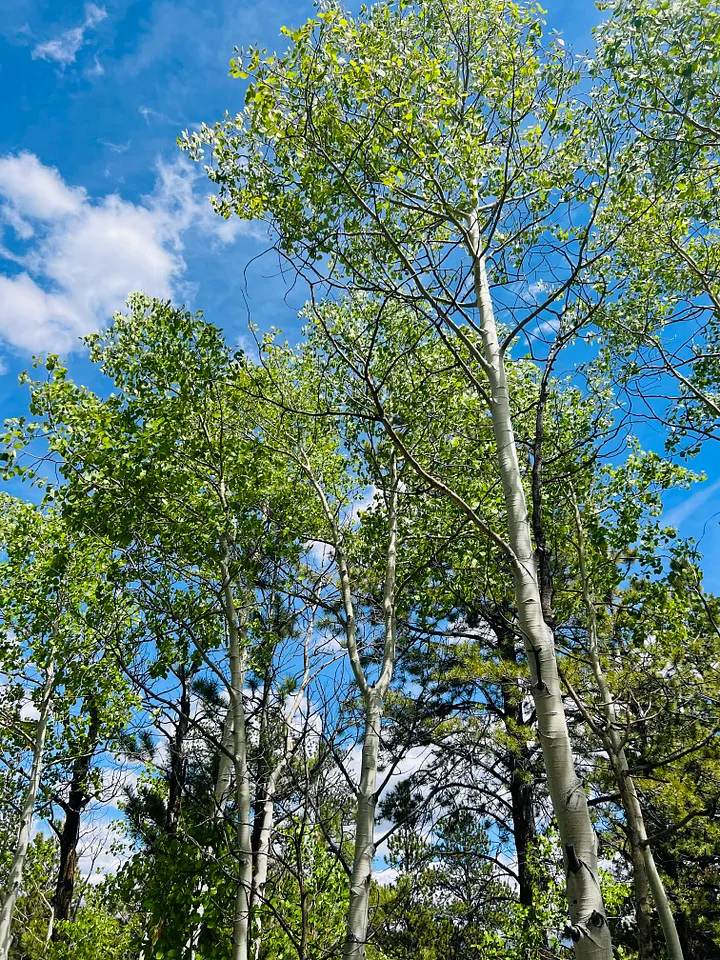
The year the pandemic started, I noticed a tree in my backyard had yet to grow back fully from the winter. Aspens were never supposed to thrive at such low elevations, so I already anticipated this day.
Like any organism, aspens struggle outside of their natural environment. In my backyard, the climate was too warm, the soil was too dry, and it couldn't generate new trunks, called stems, to spread out and flourish.
Aspens are some of the most remarkable trees, though, partly because the stems sticking toward the sky are only part of an elaborate story.
In an aspen grove, the stems connect below the soil as part of a single, gigantic organism. This allows them to share nutrients and water, helping other stems survive. In other words, the stems look out for each other.
And even though some stems inevitably struggle or die, the root structures can live for thousands of years, sending up new shoots to maintain a grove.
My favorite part about aspens, though, is when the wind blows. The small, circular leaves flash like reflectors on a string, and it looks like the trees are waving.
As the wind blew that spring, I imagined the surviving stems on my backyard aspen consoling me. It wasn't my fault they were suffering, nor was I responsible for keeping them alive.
I could draw a throughline to all the people I'd seen through challenging periods in my lifetime, like the Great Recession and the pandemic.
My aspen would only last a couple more seasons before I had to let it go, no matter what I did about it.
Whenever I visited a vast aspen grove in the mountains around Denver, I marveled at what they could do as one organism, effectively working together.
I wish we were more like aspens.
Like aspens, people thrive with connection — not in isolation. And, amid our struggles, the roots — and the ties we share — must endure.
About the Creator
Enjoyed the story? Support the Creator.
Subscribe for free to receive all their stories in your feed.
Comments
There are no comments for this story
Be the first to respond and start the conversation.