
The Father Who Pretended to Eat So His Children Wouldn't Go Hungry
A silent sacrifice nobody noticed for years — until one night, the truth finally came out.
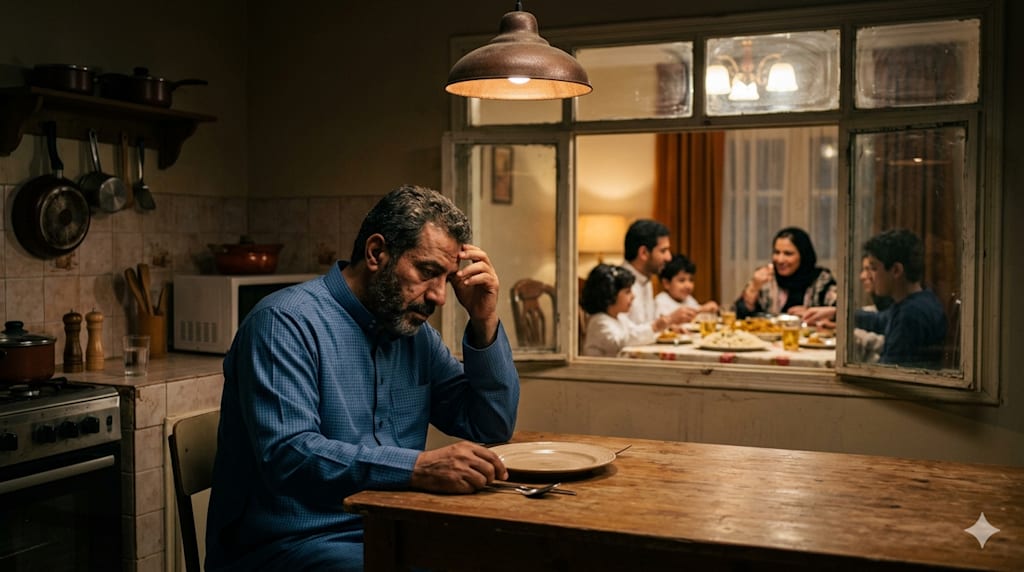
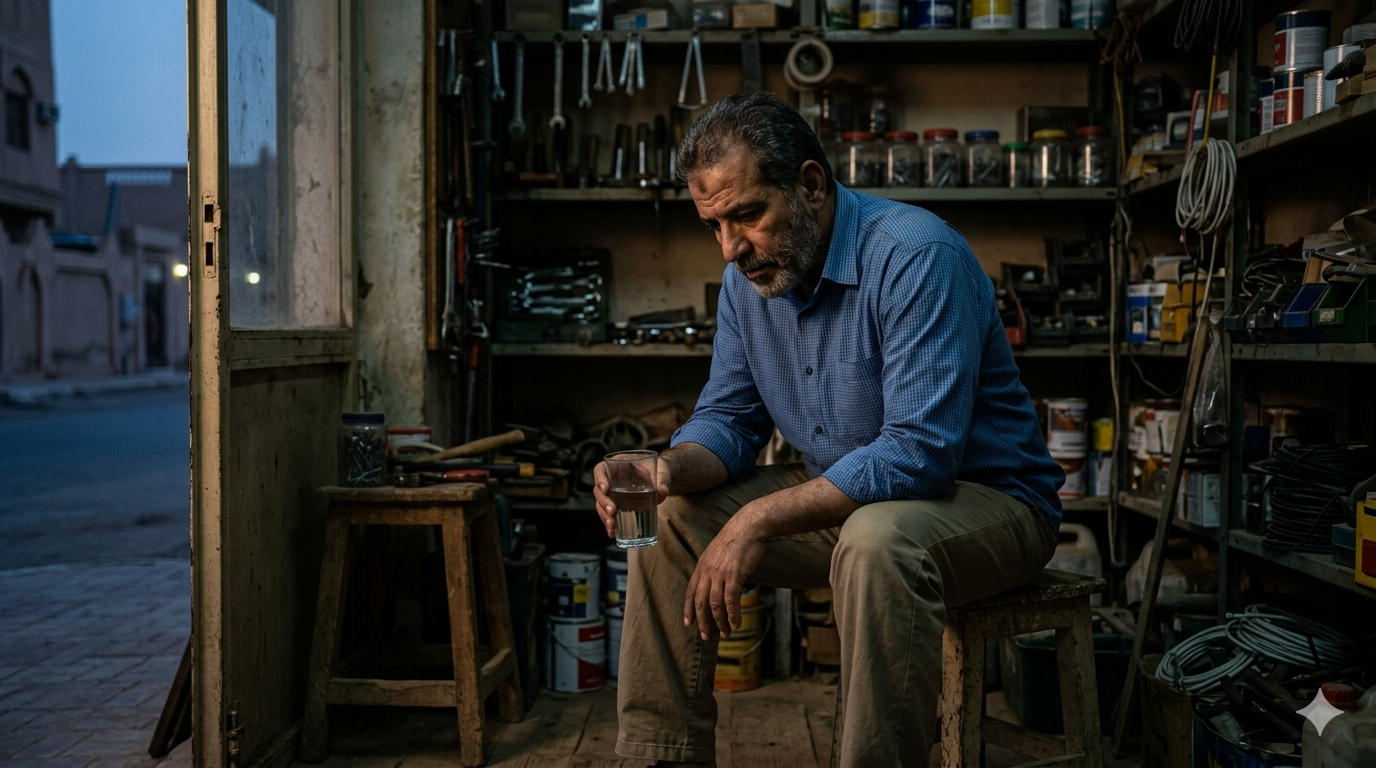
For as long as Ahmed could remember, his father never finished a full meal at the dinner table. Every night, the same routine played out. His mother would serve four plates — one for herself, one for Ahmed, one for his younger sister Hira, and one for his father. But somehow, his father's plate always went back to the kitchen "still half full." "I already ate something at the shop," he would say, patting his stomach with a tired smile. "You children finish it. Growing bodies need more food than old men." Ahmed never questioned it. Children rarely question the things that keep their world feeling safe. His father ran a small hardware shop in a narrow lane of the city. Business was slow most months, and there were entire weeks when the shop didn't earn enough to cover both rent and groceries. But somehow, dinner always appeared on the table. Rice, sometimes a small piece of meat, vegetables cooked just enough to taste like more than they were. Ahmed grew up believing his family was "doing okay." It wasn't until Ahmed turned nineteen, working a part-time job at a grocery store after school, that he saw his father one evening — through the dusty window of the very shop he had walked past a thousand times. His father wasn't eating "something at the shop." He was sitting alone on a wooden stool, drinking only water, staring blankly at the wall, his stomach visibly hollow beneath his old shirt. Ahmed stood frozen outside that window for almost ten minutes. That night, when his father came home and once again said the same old line — "I already ate, beta, you finish this" — Ahmed finally spoke.
"Baba, I saw you today. At the shop. You weren't eating anything." The room went silent. His mother's hands stopped moving over the stove. Hira looked up from her plate, confused. His father simply lowered his eyes, and for the first time in Ahmed's life, he saw his father's hands shake — not from age, but from being caught in a secret he had guarded for over a decade. "I didn't want you to grow up feeling poor," his father finally whispered. "I wanted you to remember a childhood with full plates, not empty ones. Hunger leaves marks on children that never fully heal. I would rather carry that mark myself than let it touch either of you." Ahmed couldn't speak. He simply stood up, walked across the room, and hugged his father the way he hadn't hugged him since he was a small boy. From that night, things changed. Ahmed insisted on giving half his part-time salary to the house, no matter how much his father resisted. Slowly, as Ahmed grew older and started earning more, then eventually opened his own small business, the roles quietly reversed. Now it was Ahmed who filled his father's plate first, who watched to make sure his father ate every single bite, who reminded him gently every night: "Baba, finish your food. I'm not a child anymore. It's my turn to take care of you." Years later, when people ask Ahmed what success means to him, he doesn't talk about money or business growth. He simply says: "Success is being able to fill the plate of the same hands that once stayed empty so mine could be full." This story is not unique to one household. Across countless homes, there are fathers and mothers silently going without, so their children never feel the weight of what "not enough" truly means. Their sacrifice rarely gets applause. It rarely even gets noticed. But somewhere, in a quiet kitchen, under a dim light, there is probably a parent right now pushing their plate forward and saying, "I already ate. You finish this." Maybe it's time we all looked a little closer.

About the Creator
Enjoyed the story? Support the Creator.
Subscribe for free to receive all their stories in your feed.
Comments
There are no comments for this story
Be the first to respond and start the conversation.