
The Digital Revolution: How Technology Is Transforming Our World
How to make money in today's market through technology
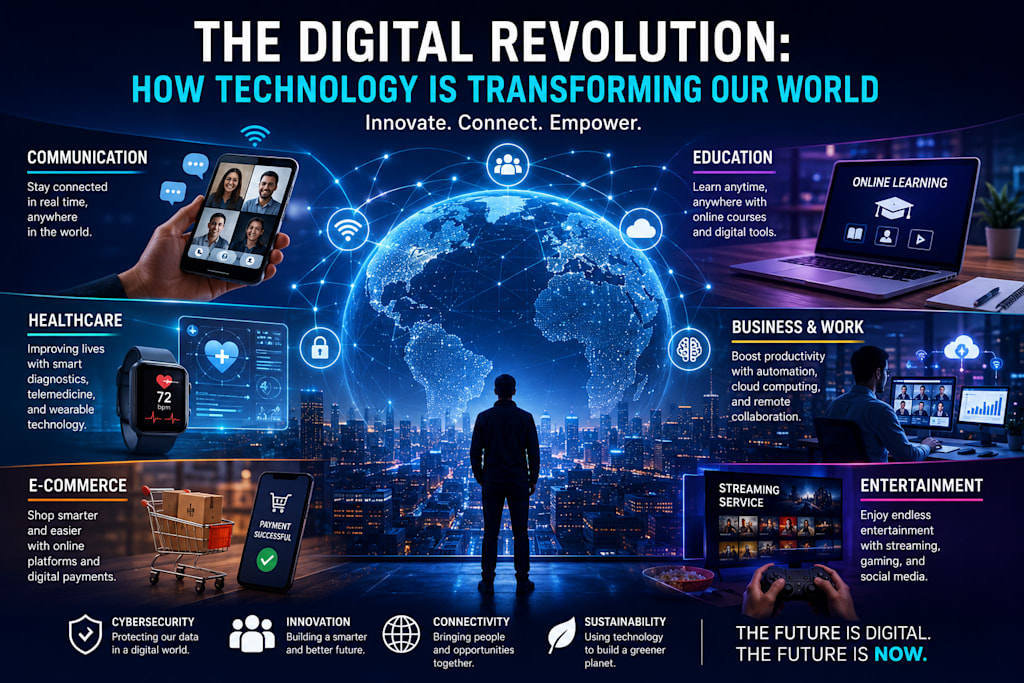
The digital revolution is one of the most significant transformations in human history. Over the past few decades, rapid advancements in technology have changed the way people communicate, work, learn, shop, and interact with the world around them. From smartphones and artificial intelligence to cloud computing and the Internet of Things (IoT), digital technologies have become deeply embedded in everyday life. As technology continues to evolve, its impact on society grows stronger, reshaping industries, economies, and cultures across the globe. At the heart of the digital revolution is the internet. The internet has connected billions of people worldwide, making information more accessible than ever before. In the past, accessing knowledge often required visiting libraries or consulting experts. Today, information is available instantly through search engines, online databases, and educational platforms. This accessibility has democratized learning, allowing people from different backgrounds to gain skills and knowledge regardless of their geographical location. Communication has undergone a dramatic transformation due to digital technology. Traditional methods such as letters and landline telephones have largely been replaced by emails, instant messaging apps, video calls, and social media platforms. People can now communicate with family, friends, and colleagues across continents in real time. Businesses use digital communication tools to collaborate remotely, enabling teams to work efficiently regardless of location. This increased connectivity has made the world feel smaller and more interconnected. The workplace has also experienced profound changes as a result of the digital revolution. Automation, artificial intelligence, and cloud-based systems have improved productivity and efficiency across many industries. Tasks that once required hours of manual effort can now be completed within minutes using advanced software. Remote work, once considered uncommon, has become a standard practice for many organizations. Employees can access company resources, attend virtual meetings, and collaborate online from virtually anywhere in the world. This flexibility has transformed traditional work environments and created new opportunities for businesses and workers alike. Education is another sector that has benefited greatly from digital innovation. Online learning platforms, virtual classrooms, and digital resources have expanded access to education for millions of people. Students can attend courses from prestigious institutions without leaving their homes. Educational technologies provide interactive learning experiences through videos, simulations, and collaborative tools. These advancements have made learning more engaging, personalized, and accessible to individuals of all ages. The healthcare industry has also been revolutionized by digital technology. Electronic medical records, telemedicine, wearable health devices, and artificial intelligence are improving patient care and medical outcomes. Doctors can now consult with patients remotely, reducing barriers to healthcare access. Wearable devices track vital signs and physical activity, helping individuals monitor their health in real time. AI-powered systems assist medical professionals in diagnosing diseases and developing treatment plans more accurately and efficiently. The digital revolution has significantly impacted commerce and business operations. E-commerce platforms have transformed the way consumers shop, allowing them to purchase products and services online with ease. Businesses can reach global markets without establishing physical stores in every location. Digital payment systems, mobile banking, and financial technologies have made transactions faster, safer, and more convenient. Small businesses and entrepreneurs can leverage digital tools to compete in markets that were once dominated by large corporations. Entertainment has evolved dramatically in the digital age. Streaming services, online gaming, social media, and digital content creation have changed how people consume and share entertainment. Audiences can access movies, music, podcasts, and television shows on demand from their devices. Content creators can reach global audiences through platforms that enable them to share their work instantly. This shift has created new opportunities for creativity and innovation while changing traditional media industries. Despite its many benefits, the digital revolution also presents significant challenges. Cybersecurity threats, data privacy concerns, and the spread of misinformation have become major issues in the digital era. As individuals and organizations increasingly rely on technology, protecting sensitive information becomes more important. Governments, businesses, and technology companies must work together to establish regulations and security measures that safeguard users while maintaining innovation. Another challenge is the digital divide, which refers to the gap between those who have access to digital technologies and those who do not. While many people benefit from high-speed internet and advanced devices, others still lack reliable connectivity and technological resources. Addressing this inequality is essential to ensuring that everyone can participate in and benefit from the digital economy. Artificial intelligence represents one of the most transformative technologies of the modern era. AI systems are capable of analyzing vast amounts of data, automating complex tasks, and supporting decision-making processes. Industries such as healthcare, finance, transportation, and manufacturing are increasingly adopting AI-driven solutions. While AI offers enormous potential, it also raises important ethical questions regarding privacy, employment, accountability, and the future relationship between humans and machines. Looking ahead, the digital revolution shows no signs of slowing down. Emerging technologies such as quantum computing, augmented reality, virtual reality, blockchain, and advanced robotics are expected to further transform society. Smart cities, autonomous vehicles, and intelligent infrastructure may redefine how people live and interact with their environments. As these innovations continue to develop, they will create new opportunities while presenting fresh challenges that require thoughtful management. In conclusion, the digital revolution has fundamentally transformed the modern world. Technology has reshaped communication, education, healthcare, business, entertainment, and countless other aspects of daily life. While challenges such as cybersecurity, privacy concerns, and digital inequality remain, the benefits of technological advancement are undeniable. By embracing innovation responsibly and ensuring equitable access to digital resources, society can harness the full potential of the digital revolution to create a more connected, efficient, and prosperous future for all. Technology Is Transforming Our World today and it is bringing a lot of money in today's market. With the help of technology ones life be transformed into a better way. I hope this will engage/ enlighten you to start something today.
About the Creator
Enjoyed the story? Support the Creator.
Subscribe for free to receive all their stories in your feed.
Comments
There are no comments for this story
Be the first to respond and start the conversation.