success
The road to success is always under construction; share your equations for success — and learn some new ones.
Your Future, Your Rules: Take Control of Your Life
I used to think life happened to me. That sounds passive because it was. I let the days blur together like watercolor, soft and pretty on the outside, but completely out of my control. I wasn’t unhappy, but I wasn’t alive either. I went where I was told, did what was expected, smiled when necessary, and numbed myself with distractions when it wasn’t.
By From Dust to Starsabout a year ago in Motivation
Born to Rise
In the dusty outskirts of Lahore, Pakistan, the mornings were filled with the roar of rickshaws, the calls of street vendors, and the aroma of chai brewing in small roadside stalls. Amidst this chaos, seventeen-year-old Zayan Malik packed the last of his belongings in a worn-out backpack. He wasn’t just leaving home — he was leaving behind everything familiar to chase a dream half the world away.
By Ziaulhaqabout a year ago in Motivation
What I Wish I Told My Younger Self
If I could sit across from my younger self—the quiet, unsure, wide-eyed kid staring out at the world—I wouldn’t waste time with small talk. I’d dive right in, because there’s so much I wish they knew before life got loud, messy, and complicated. First, I’d tell them: You don’t need to have it all figured out. The world will make you feel like you should. People will ask what you want to be when you grow up, as if choosing a dream is as simple as picking a flavor of ice cream. You’ll stumble over your answer, convinced you’re already behind—but you’re not. You’re exactly where you need to be, even when it doesn’t feel like it. Perfection is a myth. You’ll waste time chasing flawless grades, perfect performances, spotless reputations. You’ll believe that mistakes define your worth. But trust me—mistakes shape you. They crack you open, show you your edges, reveal your strength. Every stumble, every failure, every awkward misstep? It belongs to your story. Your emotions are not weaknesses. You’ll hear people say, “Be strong,” as if strength means silence. But your tears? Your trembling hands? Your breaking voice? They’re not signs of failure—they’re signs of feeling, of caring, of being real. Don’t bottle them up. Let them out. The world needs your softness just as much as your strength. Not everyone stays—and that’s okay. Friends will drift away. People you love may disappoint you. Some doors will close without warning. But every ending, every goodbye, makes room for new beginnings. You’ll lose people, but you’ll never lose yourself—unless you try to be who they expect instead of who you are. Love yourself first. It sounds cliché, but it’s the hardest lesson. You’ll crave approval—from parents, teachers, friends, strangers. You’ll try to earn love like it’s a prize. But the truth is, you’re worthy of love simply because you exist. You don’t need to prove it. You don’t need to perform. You’re enough. Set boundaries early. It’s scary to say “no,” to disappoint people, to take up space. But boundaries aren’t selfish—they’re survival. Protect your peace. Guard your energy. Respect yourself enough to walk away from what dims your light. Healing is messy. There’s no straight line to feeling better. Some days you’ll feel unstoppable. Other days, brushing your teeth feels impossible. That’s normal. Growth isn’t pretty, but it’s worth it. You’ll break, but you’ll rebuild. Stronger. Wiser. Softer, too. You’ll make mistakes—and you’ll survive them. You’ll trust the wrong people, say the wrong thing, believe lies about yourself. But those moments won’t define you. What matters is how you rise, how you learn, how you keep showing up. Your dreams matter—even if no one else believes in them. You’ll have wild ideas, impossible goals, quiet passions. Nurture them. The world needs dreamers, creators, rebels. Don’t shrink your dreams to fit someone else’s comfort zone. And finally, give yourself grace. You’ll mess up. You’ll fall short. You’ll wish you could rewind time. But perfection isn’t the goal—progress is. You’re growing, learning, becoming. That’s enough. If I could tell my younger self these things, maybe they’d stand taller, love deeper, hurt softer. But maybe those words aren’t just for them—they’re for me, now. And maybe, just maybe, they’re for you too. Because no matter where you are on your journey—young, old, lost, found—you’re still becoming. And that’s the most beautiful thing of all.
By Straylightabout a year ago in Motivation
“Raising Myself While Raising My Siblings”
Raising Myself While Raising My Siblings I was thirteen when I became someone’s mother. Not by biology, but by circumstance. Our mom didn’t leave all at once—it was more like a slow fade. First, she started coming home late. Then she stopped coming home at all. Some nights, she was gone. Others, she came back hollow, quiet, and smelled like smoke and strangers. Dad had left long before that. I barely remembered his voice. So, it was just me. And the two faces that looked up at me every morning like I had answers: Ava, 8, full of questions, and Liam, barely 3, with peanut butter cheeks and sticky fingers. I wasn’t ready. I was still a kid. But no one asked if I was. --- I remember the first morning I made breakfast for them. Cereal and toast. Liam cried because we didn’t have the kind of cereal he liked, and Ava said I burned the toast. I wanted to scream. Instead, I said sorry and smiled, pretending like I had it all under control. I learned fast. How to braid Ava’s hair. How to potty-train Liam. How to stretch one pack of noodles into dinner for three. I packed their lunches, walked them to school, checked their homework—even if I hadn’t finished mine. I stopped being invited to sleepovers. I didn’t go to school dances. I gave up the idea of being a “normal teenager” because normal wasn’t an option. --- Every night, I waited for Mom to walk through the door. Some nights she did. Most nights, she didn’t. And when she did, she’d mumble something about being tired and disappear into her room like a ghost. We stopped asking where she’d been. That’s how it is when you’re used to disappointment—it no longer surprises you. But I kept going. I didn’t raise them because I had to. I raised them because I loved them. --- When I was sixteen, Ava got sick. Nothing serious, just the flu. But she was burning up, and I didn’t know what to do. Mom was gone for two days straight. I called every number I had, but no one answered. So I took her to the ER myself. Carried Liam on one hip and held Ava’s hand with the other. The nurse asked where our parent was. “I’m her sister,” I said, “but I’m the only one here.” They let us in. I stayed up all night in that cold hospital chair, watching Ava breathe while Liam slept curled up next to me. That was the night I realized I wasn’t just their sister anymore. --- We had birthdays with dollar-store candles, movie nights with scratched DVDs, and pancake Saturdays made from mix and hope. We laughed, we cried, we survived. I watched Ava win her first spelling bee. I cheered when Liam finally stopped wetting the bed. I helped them build science projects and wiped their tears when they missed Mom on holidays. But I missed things too. I missed applying to college because I didn’t know how. I missed having someone ask me how I was doing. I missed being held, comforted, reassured. There were days I broke down in the bathroom, tears streaming down silently so they wouldn’t hear. But even then, I got up. Because someone had to. --- Mom eventually came back—but only as a visitor. She apologized in fragments, promised things she couldn’t deliver, and offered help I didn’t need anymore. By then, I was eighteen, working part-time, and already planning how to keep a roof over our heads without her. I didn’t hate her. But I couldn’t trust her either. My siblings, though? They trusted me. And that meant everything. --- Now I’m twenty-three. Ava just got accepted into college. She wants to study education and help kids who grow up like we did. Liam is in high
By ANAS AFRIDIabout a year ago in Motivation
How to Breathe Again After Failure. Content Warning.
I used to think failure was a dead end. It felt like a cliff you fell off, with no way back up. When I was younger, failure meant shame — a mark I couldn’t wash away. But life, in its quiet, relentless way, taught me something else: that failure is not the end. It’s a pause, a painful teacher, and, if you let it, the start of something new. I still remember the first time I truly failed. Not a small mistake, but the kind of collapse that leaves you gasping. I was twenty-three, fresh out of college, convinced I would breeze into my dream career. I applied to every job I thought I deserved. Rejections piled up like unpaid bills. Each “thank you for your interest, but…” chipped away at my confidence until there was nothing left but self-doubt. After months of no’s, I stopped trying. I told myself I wasn’t good enough. I avoided friends because I couldn’t stand their success stories or their pitying looks. Days turned into weeks of feeling stuck, unworthy, ashamed. That was the first time I learned how failure can suffocate you. It steals your breath, your hope, your sense of who you are. But in that dark season, I also learned something more important: that breathing again is possible — even after you feel like you’ve drowned. --- Step One: Sit with the Pain My mother used to say, “You have to feel it before you can heal it.” But when I failed, I wanted to run. I tried to numb the pain with distractions: binge-watching shows, scrolling mindlessly through social media, anything to avoid sitting with my thoughts. But numbing only made the hurt last longer. It wasn’t until one rainy evening, alone in my apartment, that I finally let myself cry. I let the disappointment wash over me. I admitted, out loud, how much I wanted those opportunities and how afraid I was of never finding another. That night, I realized avoiding pain doesn’t make it go away — it buries it deeper. To breathe again, you have to let yourself feel the sting of failure, to acknowledge what it meant and what it cost you. Only then can you begin to release it. --- Step Two: Challenge the Story in Your Head Failure whispers lies: “You’re worthless.” “You’ll never get another chance.” “You’re not enough.” After my job rejections, these thoughts looped endlessly in my mind. One day, exhausted by the weight of my own self-criticism, I wrote them down. Then I forced myself to question each one. Was I really worthless? No — I had people who loved me, skills I had worked hard to build. Would I never get another chance? Of course not — life rarely gives only one opportunity. Was I not enough? Maybe I wasn’t the right fit for those jobs, but that didn’t mean I had no worth. By challenging those stories, I began to rewrite them: “I am learning.” “This is temporary.” “I am more than this failure.” That simple shift — from final judgments to open possibilities — felt like a breath of fresh air after months underwater. --- Step Three: Talk to Someone You Trust When you fail, isolation becomes a tempting hiding place. I told myself no one would understand, or worse, they would judge me. But the longer I stayed silent, the heavier my burden grew. Eventually, I confided in a close friend. Instead of judgment, she offered compassion — and stories of her own failures. I learned I wasn’t alone; everyone falls, everyone doubts. Talking didn’t erase my pain, but it lightened it. I realized then: community gives us oxygen. Sharing your struggles is an act of courage, and it can reconnect you to the world beyond your failure. --- Step Four: Find What Failure Taught You It took time to see any value in my failure. At first, it felt like wasted effort and shattered dreams. But as I processed, I realized those months had taught me resilience I wouldn’t trade for anything. I learned how to cope with uncertainty. I discovered passions I hadn’t considered before. I even became a better listener, more compassionate to friends facing their own setbacks. Failure had not stolen my potential — it had deepened it. Once I recognized that, my disappointment began to transform into determination. --- Step Five: Start Small, Move Forward When you’ve failed, even the simplest steps feel monumental. After my lowest point, I challenged myself to apply for one job — not ten, just one. I told myself the goal wasn’t to get hired immediately, but to practice trying again. That one application led to another, and eventually to interviews. It took time, but each small action restored my confidence, breath by breath. You don’t have to leap out of failure with grand gestures. Healing often begins with the tiniest, quietest steps. --- Step Six: Redefine Success One of the most powerful lessons failure taught me was to question what success actually meant to me. Before, success looked like a perfect résumé, a prestigious title, a clear upward path. But those markers hadn’t brought me peace — only pressure. After failing, I realized success for me was about growth, purpose, and balance. It was about finding work that aligned with my values, even if it didn’t impress everyone else. When you redefine success on your own terms, you free yourself from living someone else’s expectations — and open space to breathe deeply again. --- Step Seven: Remember You Are Not Your Failure Above all, I learned this: failure is an event, not an identity. You are not defined by what didn’t work out. You are defined by your willingness to stand back up, to try again, to believe in your worth even when circumstances suggest otherwise. Life will knock the wind out of you sometimes. But you can always learn to breathe again. --- Today, years after that first big failure, I’ve experienced others. Some were even more painful. But I no longer fear them the way I once did. I know that as long as I can sit with my feelings, challenge my stories, reach out for support, learn from my mistakes, and take small steps forward, I can always find my breath. And so can you.
By Huzaifa Writerabout a year ago in Motivation
Brewing dreams: the story of Sara's Cafe'
When Sara Khan stood beside her tiny yellow coffee cart on a cold winter morning in Lahore, she was shivering not just from the wind — but from uncertainty. She had just taken the biggest risk of her life. While her classmates accepted office jobs with good salaries and air-conditioned rooms, she had taken her graduation money, borrowed an old espresso machine from a cousin in Dubai, and started a coffee business on the sidewalk. She wasn’t from a business family. Her father was a retired teacher and her mother ran a small home-based sewing service. Sara had learned about hard work, honesty, and resilience from watching her parents stretch every rupee, never complain, and still offer chai to every guest. She believed she could do more than just earn a living — she wanted to create something meaningful. But business was slow. For the first month, she barely sold ten cups a day. People were skeptical. Some mocked her prices, others questioned her decision. One man even said, “Aurat se business nahi hota, beta.” But Sara smiled, thanked him for the advice, and served him a cup anyway. Each night she went home tired, sometimes defeated, but never willing to give up. Then came the turning point — a food blogger named Omar Aziz stumbled upon her cart one late evening. He was in a rush but curious. He took a sip of her signature hazelnut mocha and stopped mid-sentence. “This is... amazing,” he said. He snapped a photo, asked a few questions, and left. Two days later, Sara woke up to a buzz of notifications. Omar had posted her photo on Instagram with the caption: “Best coffee I’ve tasted in Lahore — and it’s from a one-woman street cart run by a fearless dreamer. Support local. Support passion.” By 9 a.m., there was a line. Students from the nearby college, office workers, and even a couple of local celebrities stopped by. Word spread like fire. People came not just for the coffee but for the story. Everyone loves a good underdog — especially one that serves killer cappuccinos. Within three months, Sara’s Café became a viral name. Customers brought their friends. Some stayed to chat. Others posted photos with her. Her cart was no longer a cart — it was a movement. --- Chapter 2: Brewing Bigger Dreams With her savings, Sara rented a tiny shop just two streets away. The location wasn’t glamorous, but it had a roof, space for four tables, and most importantly — a future. Her mother helped in the kitchen, learning to bake banana bread and cinnamon rolls. Her younger brother, Sameer, managed orders and learned how to make latte art from YouTube. The community pitched in — a customer donated old furniture, another painted a mural on her wall that read: “Strong women. Strong coffee. Stronger dreams.” It became her slogan. She introduced loyalty cards, added herbal teas and desi options like cardamom chai and saffron milk. Soon, Sara’s Café wasn’t just a coffee place — it was a home for conversations, ideas, poetry nights, and warm hugs. Bookworms found comfort. Struggling writers wrote their first pages. Students prepped for exams sipping on steaming mugs of motivation. --- Chapter 3: Storms and Stand Tall Just as things were smooth, a big international franchise opened across the road. It had neon lights, touch screens, and heavy discounts. Her customer count dropped. Some people even asked if she would shut down. For the first time, Sara felt anxious. But she didn’t fight them — she leaned into what made her different. She posted a heartfelt video on social media: > “I’m not here to compete. I’m here to connect. If you love local, love honesty, and want your coffee with a story — I’ll be here, brewing with love. Always.” The video went viral. Hashtags like #BrewWithSara and #SupportLocal trended on Pakistani Twitter. Influencers visited, praising her courage. Celebrities posted selfies from her shop. Her sales not only recovered — they doubled. --- Chapter 4: Beyond Coffee Success didn’t change Sara — it changed her mission. She began hiring women who had never worked before. Some were single mothers, others were survivors of abuse. Sara trained them in customer service, gave them flexible hours, and fair wages. In 2023, she launched the “Barista Sisterhood Program” — free training for girls from rural areas to learn coffee-making and entrepreneurship. She partnered with NGOs to give scholarships, started a podcast about women in business, and even mentored students at her old university. She was invited to give a TEDx talk, titled: “Start Small. Dream Loud.” Her talk was raw, real, and emotional. She shared her struggles, her mistakes, and her triumphs. When she ended by saying, > “You don’t need permission to start — you just need courage to continue,” the hall erupted in applause. --- Chapter 5: A Legacy in the Making Today, Sara’s Café has expanded to five branches across Lahore and Islamabad. Each one carries the warmth of the original cart — hand-painted signs, book corners, poetry boards, and staff who smile like they know your story. She still visits her first cart, preserved like a monument in her flagship branch. She touches it, closes her eyes, and remembers the shivering girl who poured her heart into every cup. She is now recognized as one of the top 30 under 30 entrepreneurs in Pakistan. But when asked about her biggest success, she says: > “It’s not the awards. It’s the young girl from Bahawalpur who wrote to me, saying she started her own tea cart after watching my video.”
By Shehzad khanabout a year ago in Motivation
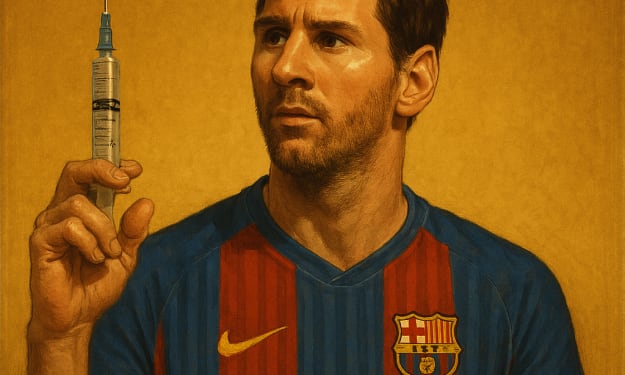
## The Needle and the Lion: How Lionel Messi Conquered Doubt, One Injection at a Time
The dusty streets of Rosario, Argentina, thrummed with the energy of countless kids chasing a dream embodied by a ball. Among them, darting with preternatural skill, was a tiny figure: Lionel Andrés Messi. His talent was undeniable, a spark of genius evident even then. But a shadow loomed over his dazzling feet – a shadow cast by his own stature. By age 11, while his peers shot upwards, Leo remained heartbreakingly small, standing just 4 feet 2 inches (1.27 meters). The whispers started, not about his magic, but about his size: "Too small... He'll never make it... He's not built for this." The truth, however, was far more profound than mere genetics. Leo Messi faced a formidable opponent long before any defender: *Growth Hormone Deficiency (GHD).*
By Shehzad Ahmadabout a year ago in Motivation
This emotion will stop you from procrastinating
We convince ourselves that we'll start tomorrow, but when tomorrow comes, we put it off again, thinking we'll do it the next day. Before we know it, days turn into weeks, months, or even years, and we find ourselves stuck, having never started or completed what we intended. This cycle is known as procrastination.
By Hollisabout a year ago in Motivation
I Pretended I Was Okay for Years—Until My Body Said “Enough”
I used to think being strong meant staying quiet. Smiling through pain. Showing up even when everything inside me was falling apart. I got really good at pretending I was okay — so good that even I started to believe it. But deep down, I wasn’t okay. Not emotionally. Not mentally. Not physically. And one day, my body told me the truth I had been trying to avoid. --- The Breakdown I Didn't See Coming It started small. I was always tired, but I blamed my schedule. I had constant headaches, but I told myself it was just from staring at screens too long. My sleep was broken, but I said it was stress. Deep down, I knew something wasn’t right — but I refused to admit it. I kept pushing. I went to work like nothing was wrong. I smiled during conversations when I wanted to cry. I responded to every message, showed up to every plan, and kept saying “I’m fine” even when my soul was screaming for help. Until one day, my body said “enough.” I woke up dizzy. My heart was racing for no reason. I couldn’t catch my breath. I thought I was going to pass out — or worse. I ended up in the emergency room, terrified that something serious was wrong. But after tests and exams, the doctor looked at me calmly and said: “You’re not having a heart attack. You’re having a panic attack.” --- I Wasn’t Dying. I Was Just Completely Exhausted. Hearing that hurt in a way I didn’t expect. Physically, I was “fine.” But inside, I felt broken. The truth hit hard: I wasn’t fine at all. I had ignored my own needs for so long that my body had to scream at me to be heard. I realized I had been running on empty for years. Always giving to others, never to myself. Always saying “yes” out of guilt. Always pretending to be okay, because I thought falling apart meant failure. But it wasn’t failure. It was the beginning of healing. --- 3 Things I Did After Everything Fell Apart After that ER visit, I couldn’t go back to “normal.” I didn’t want to. I finally understood something important: Pretending to be strong isn’t strength. Real strength is being honest — especially with yourself. So I made changes. Not overnight. Not perfectly. But slowly and honestly. --- 1. I Learned to Say “I’m Not Okay” I stopped saying “I’m fine” when I wasn’t. I told people close to me the truth. I said things like: “I feel overwhelmed.” “I don’t have the energy today.” “I’m struggling right now.” And you know what? The world didn’t fall apart. People didn’t walk away. In fact, they opened up to me too. --- 2. I Gave Myself Permission to Rest This was the hardest one. I used to feel guilty for resting. I thought rest was something I had to earn. But now I rest because I need it. I take naps. I log off. I cancel plans. I take walks without my phone. I remind myself: I don’t have to be productive to be worthy of peace. And slowly, the fog began to lift. --- 3. I Started Listening to My Body My body is smarter than I gave it credit for. It tells me when I need water. When I need stillness. When I need to cry. When I need to let go. Now, I check in with myself every day: How do I feel physically? What do I need emotionally? What am I avoiding? That small habit alone changed my life. --- The New Me Is Still Healing — But She’s Free I won’t lie and say everything is perfect now. It’s not. I still have bad days. I still feel anxious sometimes. I still fall back into old patterns. But now, I don’t ignore it. I don’t pretend anymore. I talk. I rest. I allow myself to feel. I don’t judge myself for being human. The old me thought she had to be strong to survive. The new me knows: survival means being soft, being honest, and letting yourself heal. And that’s what I’m doing — every single day.
By Samiullah about a year ago in Motivation