success
The road to success is always under construction; share your equations for success — and learn some new ones.
"How a Broke Student Made His First $500 with Amazon Affiliate—From His Dorm Room"
I still remember the day when I checked my bank account and saw just $3.71 left. I was a broke college student in the U.S., surviving on instant noodles, and trying to stretch every penny like it was elastic. But everything changed when I stumbled upon Amazon’s Affiliate Program—completely by accident. It started with a Google search: "How to make money online without investment?" The usual stuff came up — surveys, data entry, dropshipping — but then one video caught my eye: “Earn passive income with Amazon Affiliate Marketing.” > “Passive income” sounded like a dream. Earn while you sleep? I wanted in. 🛠️ What is Amazon Affiliate Marketing? If you're totally new, here's the deal: You sign up as an Amazon Associate, grab special product links, share them anywhere (blog, Pinterest, YouTube, etc.), and when someone buys something through your link — you get a commission. No product to ship. No customer service. No upfront cost. It sounded too good to be true. But I had nothing to lose. --- 📌 Step 1: I Signed Up (It Was Free) The process was surprisingly easy. I went to affiliate-program.amazon.com Created a free account Added my blog URL (which didn’t even exist yet) Boom — I was in. Now I just needed a platform. I had no money to build a website, but I knew one thing: Pinterest was free. --- 🧠 Step 2: Pinterest + Amazon = Magic I created a free Pinterest account. Then I chose a niche: Home office gear (think: desks, chairs, laptop stands — stuff everyone needs post-COVID). I searched Amazon for products with great reviews, copied their affiliate links, and then made beautiful pins using Canva.com — again, completely free. Every pin had: An eye-catching image A catchy title like “Top 5 Desk Chairs That Won’t Kill Your Back” My Amazon link in the description I scheduled 3 pins a day. That was my entire strategy. --- 💸 The First Sale (and the Crazy Feeling) One morning, I checked my Amazon dashboard and saw: Earnings: $1.34 I refreshed the page. It was still there. It wasn’t much, but it proved one thing: This works. That day, I made another sale. Then a $5 commission. Then someone bought a $200 office chair from my link — and I made $10 without even talking to them. It was like unlocking a new cheat code in life. --- 📈 What Worked for Me (Real Tips) 1. Focus on One Niche: Don’t promote random stuff. Stick to a theme. Mine was home office, but you could choose fitness, kitchen gadgets, gaming, etc. 2. Free Tools Are Enough: Canva for pins Pinterest for traffic Bitly to shorten links ChatGPT to write pin descriptions 😏 3. Be Consistent: I uploaded 3 pins a day for 30 days straight. That consistency helped my pins go viral. 4. Seasonal Trends Helped: I made pins around “Back to School,” “Work From Home Deals,” and “Holiday Gifts” — people were already searching for these. --- 🧠 Mindset Shift: From Broke to Builder I realized that I didn’t need to be an “influencer” or have a blog with 10,000 monthly views. I just needed to understand what people were already looking for — and become the bridge between them and the product. Amazon handles the rest. And you know what? > In 2 months, I had earned $527.62 In 4 months, over $1000 All from links I posted for free. --- 📲 Expansion: Beyond Pinterest Once I got the hang of it, I started: Creating Instagram Reels showing “Top 3 Amazon Finds for Students” Making YouTube Shorts with voice-over + product images Writing Vocal.Media stories like this one (with my affiliate links 😉) It became fun. People actually thanked me in comments like: "Bro that laptop stand changed my life." "Thanks for the link, just ordered!" I wasn’t just making money — I was helping people find useful stuff. --- 🛑 What NOT to Do (Learn from My Mistakes) 1. Don’t spam links everywhere. Amazon can ban your account. Be natural. 2. Don’t expect overnight riches. It’s real, but it’s not magic. 3. Don’t promote low-rated products. Trust is everything. --- 💼 Final Thoughts: Why Anyone Can Start Look, if a broke, tired student eating ramen in a dorm room can pull this off — you definitely can too. You don’t need: A website Money Huge followers Tech skills You just need focus, free time, and a phone. --- 📢 Ready to Start? Go sign up at: affiliate-program.amazon.com Start small. Pick a niche. Be consistent. Let your links work while you sleep. It’s not just about earning commissions. It’s about building freedom, one click at a time. --- If this story inspired you, leave a ❤️ and share it with someone who needs this. See you at the top.
By Umar Farooqabout a year ago in Motivation
4:30 AM to $50K: 10 Science Hacks That Fixed My Burnout
1. Pre-Dawn Awakening: My Secret Gamma Weapon “When you rise before the sun, you command time instead of chasing it.” The Science: MIT research confirms gamma brain waves (linked to insight) peak at 4-5 AM. My Breaking Point: After my corporate layoff, I slept till noon for weeks. Then I discovered fajr power – waking 90 mins before sunrise. Your Turn:
By M.Bilalabout a year ago in Motivation
Aperitivo Is Not an Appetizer: It’s Your Competitive Advantage
Walk through any Italian city around 6 p.m., and you’ll people gather in piazzas or lean on bar counters, sipping a Spritz, a Prosecco, or a Crodino. They’re not “grabbing a drink” or eating appetizers. They’re doing something far more strategic: they’re building social capital while drinking an aperitivo.
By Andrea Zanonabout a year ago in Motivation
"Why You’re Stuck: 5 Science-Backed Fixes"
Introduction: Beyond "Laziness" – A Psychological Red Flag Demotivation is often mislabeled as laziness. In truth, it’s your psyche’s SOS signal. Modern research reveals: 79% of chronic demotivation cases mask deeper issues like burnout, anxiety, or identity crises (Journal of Behavioral Medicine, 2023). Ignoring it risks mental health collapse. This guide decodes the real roots and offers transformative fixes.
By M.Bilalabout a year ago in Motivation
From Rags to Radiance: The Journey of a Boy Who Refused to Give Up
In a dusty village nestled on the outskirts of a forgotten town, lived a boy named Arjun. Born into crushing poverty, Arjun's life began in a broken clay house with no electricity, no proper food, and no guarantee of the next day’s meal. His father was a daily wage laborer and his mother worked in nearby fields. Most nights, their dinner was a handful of rice and salt, and yet, in his heart, Arjun held something more powerful than any currency—a dream. Arjun dreamed of becoming an engineer. He didn't know what that meant at first. He only knew that men in shiny shoes came to the village once a year, spoke in English, and carried machines that seemed like magic. While other children played in the mud, Arjun collected discarded notebooks and watched YouTube videos on a neighbor’s broken phone when he could. The world laughed at him. “Engineer?” they mocked. “With what money? With what education?” But Arjun didn’t listen. He believed in the impossible. Every morning, he would walk 5 kilometers to a government school, barefoot, through thorny fields. He studied under trees, often with an empty stomach. But when the stomach is empty, the heart often burns brighter. Arjun would say, “If I don’t change my fate, who will?” His teachers noticed his hunger—not for food, but for knowledge. One kind-hearted teacher, Mr. Verma, saw the fire in Arjun's eyes and began mentoring him after school. He bought him books, guided him through science and math, and taught him how to think like an engineer. At night, when the village slept, Arjun studied under a dim street lamp. Monsoon rains, biting winters, and boiling summers could not break his resolve. His friends dropped out to work in shops or farms, but Arjun held on to his vision like a lifeline. Then came his biggest challenge: the entrance exam for one of the top engineering colleges in India. The registration fee alone was more than his family’s monthly income. Disheartened but not defeated, Arjun did something unthinkable—he started teaching younger kids in his village. For a few rupees a day, he taught English and math. It wasn’t much, but after weeks of saving and with a small donation from Mr. Verma, Arjun registered for the exam. The exam day arrived. Wearing borrowed clothes and shoes that were two sizes too big, Arjun entered the exam hall with trembling hands but a confident heart. When the results came out, he had secured a top rank—enough to earn a full scholarship. Tears welled in his mother's eyes as she hugged him. His father, silent as always, just placed a hand on his shoulder—the first time he had ever shown pride. The boy from the village, once mocked and ignored, had beaten the odds. College life was not easy. Arjun had to catch up with students from big cities who spoke fluent English and had the internet at their fingertips. But Arjun had something stronger—resilience. He worked part-time jobs, continued teaching kids online, and never let go of his humility. He graduated with honors and landed a job at a multinational company, becoming the first person in his village to ever sit in an air-conditioned office. Years later, Arjun returned to his village—not with arrogance, but with purpose. He built a library, sponsored education for poor children, and set up a small coaching center. He believed that if he could do it, so could others. Moral of the Story Arjun’s story reminds us that poverty is not a life sentence, but a temporary condition. What defines your life is not where you start, but how far you’re willing to go. Dreams are not reserved for the privileged. With determination, the right mentor, and an unshakable belief in oneself, even the poorest child can rise like the sun from the darkest night.
By Tayyab Khanabout a year ago in Motivation
The Boy Who Sold Sand for a Living
When people talk about success, they often begin with a stroke of luck, a rich mentor, or a once-in-a-lifetime opportunity. But Rafiq’s story starts with sand. In the blistering heat of a remote village in Rajasthan, India, 12-year-old Rafiq walked barefoot along the roadside every morning, dragging an old rusted cart behind him. While other kids played cricket or studied in school, Rafiq was busy scooping sand from the edge of the dried-up riverbed, bagging it in torn sacks, and selling it for pennies to local potters and brick makers. It wasn’t much. But it was honest. And it kept his little brother fed. His father had abandoned the family after his mother fell ill. With no money for school or medicine, Rafiq became the man of the house overnight. He had no education, no support, and no time for dreams. One day, while delivering sand to a pottery yard, Rafiq paused to watch the potter at work. He was mesmerized by the transformation: simple sand and clay, spun with purpose, turning into something elegant and useful. That night, he sat with his brother under the stars and whispered, “If sand can become something beautiful, maybe I can too.” A Dream Shaped from Dust The next day, Rafiq asked the potter if he could help after his deliveries. The man chuckled at first but eventually agreed. For weeks, Rafiq cleaned tools, carried water, and swept the floor in exchange for one thing: knowledge. He learned how to feel the texture of the clay, how to center it on the wheel, and how to mold it before it dried. His hands, once used only to scoop sand, were now shaping bowls and cups. Slowly, he began to craft his own pieces after hours. He had no money to fire them in a kiln, but the potter allowed him to use the leftovers. Rafiq would take the broken or rejected pieces, repair what he could, and repaint them using natural dyes he made from flowers and spices. At the market, no one knew the boy selling hand-painted cups had learned it all on his own. And soon, people began to notice the difference in his work — not just in the design but in the spirit. The First Big Break At age 14, a tourist from Mumbai passed by Rafiq’s stall. She was struck by a tiny vase with intricate floral detailing. “Where did you learn this?” she asked. “I watched. And I practiced,” he replied. She bought five pieces and took a photo of Rafiq holding them. A week later, his small story went viral on Instagram with the caption: “This boy turns sand into art.” Within a month, Rafiq was flooded with requests. People from cities he’d never heard of wanted his pottery. A local charity helped him set up a small online store, and he reinvested every rupee into better tools, glazes, and packing materials. By 18, he had trained five other local kids who also came from nothing. He wasn’t just surviving anymore. He was building. More Than Just Clay Today, Rafiq runs a social enterprise called “Hands of Earth.” He ships handcrafted eco-friendly pottery across India and abroad. But more importantly, he hires kids like his younger self — poor, hungry, and ignored by the world. “Everyone thinks success is built on money,” Rafiq often says in interviews. “But it’s actually built on patience, humility, and the belief that your hands can shape your fate.” His story has been featured in national newspapers, on TEDx stages, and in documentaries. But he still visits the riverbed sometimes, not to collect sand — but to remember where it all began. Lessons from Rafiq’s Journey Start with what you have. Rafiq didn’t wait for a miracle. He started with sand. Learn by watching and doing. He didn’t have a classroom, but he turned life into one. Stay curious. A simple question — “Can I help?” — changed his life. Give back. True success uplifts others along the way. Final Words Rafiq’s story isn’t just about poverty or pottery. It’s about purpose. It’s about how grit, creativity, and heart can take you from the dust to the display shelf. So the next time you feel stuck, remember this: Even sand, under the right hands, becomes art.
By Mushtaq Ahmadabout a year ago in Motivation
"Fractured in the Sunset Glow"
In a small, quiet town in southern Saudi Arabia, there lived a man named Rakan. He was in his late forties, with rugged features carved by years of desert winds, much like the mountains surrounding his village. But inside, his heart was fragile—like a child afraid of the dark.
By Heartbeat of Inkabout a year ago in Motivation
Rich Dad vs Poor Dad: Two Fathers, Two Mindsets, One Life Lesson. AI-Generated.
Rich Dad vs Poor Dad: Two Fathers, Two Mindsets, One Life Lesson In the world we live in, wealth is often seen as the difference between luxury and struggle — but the real gap lies deeper, in mindset, values, and education. The contrast between a "Rich Dad" and a "Poor Dad" is not just about the money they earn, but about how they think, teach, and influence their children’s futures.
By Arslan Khattakabout a year ago in Motivation
"From Scraps of Paper to Published Pages: My Unwavering Journey as a Writer". AI-Generated.
The Childhood Dream That Wouldn't Fade Growing up, I always knew I wanted to be a writer. I devoured books of all genres, scribbled stories in my journal, and even tried my hand at poetry. The smell of fresh paper and ink was intoxicating, and I felt most alive when crafting stories. But life had other plans. My family faced financial struggles, and I had to drop out of college to support them. My dreams of becoming a writer seemed to fade away, like a sunset disappearing beyond the horizon.
By M.Changerabout a year ago in Motivation
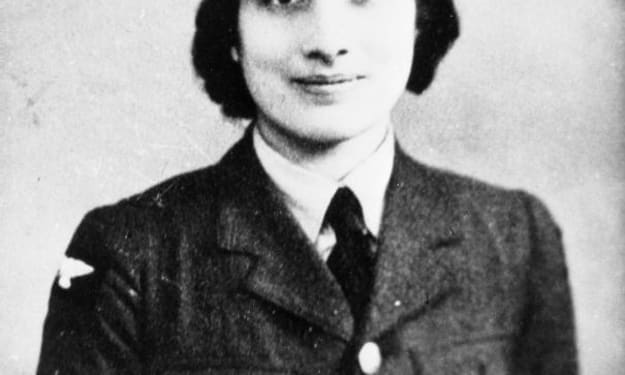
Noor Inayat Khan: The Princess Spy Who Died for Freedom
Noor Inayat Khan: The Spy Who Chose Freedom On a cold September morning in 1944, at the gates of Dachau concentration camp, a young woman stood tall despite months of brutal captivity. Her clothes were torn, her body frail, yet her spirit unbroken. She was only thirty years old, and her last word before the gunshots rang out was “Liberté.” Her name was Noor Inayat Khan, and though history once nearly forgot her, her legacy continues to whisper of courage, love, and sacrifice. --- A Childhood Between Worlds Noor was born in Moscow in 1914, in the shadow of the First World War. Her father, Hazrat Inayat Khan, was an Indian Sufi mystic who had traveled the world teaching a philosophy of peace and unity. Her mother, Ora Ray Baker, was an American woman whose gentle spirit matched Hazrat’s. The family soon moved to London, and later to Paris, where Noor spent most of her childhood. Life was steeped in music, poetry, and spirituality. Noor studied psychology at the Sorbonne and became a gifted harpist at the Paris Conservatory. She also wrote children’s stories, filled with kindness and wonder — stories that painted a world of harmony and gentleness, the same values her father had taught her. From a young age, Noor believed deeply in nonviolence. Her upbringing in Sufi traditions instilled in her the belief that all people were connected — that harming another was to harm oneself. But history has a way of testing even the gentlest souls. --- The War Comes In 1940, the German army invaded France. Noor and her family fled across the Channel to England, seeking safety. But Noor was restless. She could not watch silently as millions were forced under Nazi rule. She once confided to her brother: "I wish some Indians would win high military distinction in this war. If one or two could do something in the Allied service which was very brave and which everybody admired, it would help change the feeling of the English toward Indians." Noor wanted not just to serve freedom, but also to show that people of color, and particularly Indians under British colonial rule, could stand shoulder to shoulder in the fight for justice. --- Answering the Call At first, Noor joined the Women’s Auxiliary Air Force (WAAF), training as a radio operator. She excelled, her calmness and precision making her an ideal candidate. Soon, her abilities caught the eye of the Special Operations Executive (SOE) — a secret organization created by Winston Churchill to “set Europe ablaze.” The SOE’s work was dangerous beyond imagination: sabotage, intelligence, and resistance coordination in Nazi-occupied territories. Few women were sent as field agents, and even fewer as wireless operators — the most perilous role of all. Noor, with her quiet resolve, volunteered without hesitation. She took the codename “Madeleine.” Her instructors were divided about her suitability. Some thought her too gentle, too dreamy, too unwilling to lie convincingly. But others recognized an inner strength, a quiet flame that could not be extinguished. Against the odds, she was approved for fieldwork. --- Into the Lion’s Den In June 1943, Noor was flown by Lysander aircraft into occupied France. Her task: to serve as a wireless operator for the Prosper network, one of the largest resistance groups in Paris. It was a job that could — and often did — mean death. The Gestapo had perfected radio detection vans that could locate transmitters within 20 minutes. Operators had to move constantly, lugging their heavy equipment from attic to cellar to barn, never staying too long in one place. Within weeks, disaster struck. The Prosper network collapsed, its leaders arrested in a massive Gestapo sweep. Most agents fled or were recalled to England. But Noor refused. She argued that without her, London would lose all contact with the Paris resistance. For the next three months, Noor was the sole wireless operator in Paris, transmitting under the Gestapo’s nose. She carried her radio through the streets, hidden in a bulky suitcase, dodging checkpoints and raids. Her messages brought London vital intelligence — troop movements, supply shortages, and German strategies. Every transmission risked her life. Every knock on the door could have been the Gestapo. Yet she continued. --- Betrayal In October 1943, Noor’s luck ran out. She was betrayed — historians still debate by whom. Some point to a Frenchwoman named Renée Garry, others to a double agent within the network. The Gestapo stormed her safe house and captured her. They discovered her notebooks, which contained copies of her transmissions — against SOE protocol, though coded. The Gestapo now had evidence of her work. But Noor did not break. When interrogated, she refused to give names or details. She even attempted escape twice — once by squeezing out through a bathroom window, and another time by forcing open a skylight onto a roof. Each time she was recaptured. Frustrated, the Germans classified her as “highly dangerous.” She was sent to Pforzheim Prison, where she spent ten months in solitary confinement, shackled hand and foot, subjected to repeated beatings. Yet through all this, she told them nothing. Not a single name. Not a single address. --- The Final Chapter In September 1944, with the Allies advancing, Noor was transferred to Dachau concentration camp along with three other female SOE agents. On the morning of September 13, they were led to the execution ground. Survivors later reported that Noor, though frail and beaten, remained calm. Her last word was a cry of “Liberté!” before the shots rang out. She was 30 years old. --- The Legacy of Noor Inayat Khan After the war, Noor was posthumously awarded the George Cross by Britain and the Croix de Guerre by France. These were among the highest honors for bravery, yet her story remained little known for decades — overshadowed by more famous male agents. Today, however, her memory has been rightfully restored. In 2012, a bronze bust of Noor was unveiled in Gordon Square Gardens, London — the first memorial in Britain to an Asian woman. Schools, streets, and scholarships now bear her name. But perhaps her greatest legacy lies not in medals or monuments, but in the lesson she leaves us: That even the gentlest soul, raised in peace and kindness, can rise to unimaginable courage when faced with tyranny. Noor once wrote in her notebook, long before the war: "I wish to do something worthwhile with my life — something that will be remembered." She did more than that. She gave her life so others could be free. And she will never be forgotten. --- ✨ Author’s Note: Noor Inayat Khan’s story is a reminder that true strength is not always loud or aggressive. Sometimes, it is quiet, determined, and steadfast — the kind of strength that whispers freedom even in the face of death.
By Soul Draftsabout a year ago in Motivation