success
The road to success is always under construction; share your equations for success — and learn some new ones.
Cristiano Ronaldo’s Journey of Struggle and His Inspiring Message to Youngsters. AI-Generated.
#Cristiano Ronaldo is not just a football legend; he is a symbol of perseverance, hard work, and resilience. His journey from poverty to global superstardom is a testament to the power of determination and self-belief. For young athletes and dreamers worldwide, Ronaldo’s life offers invaluable lessons on overcoming adversity, staying disciplined, and never giving up. This article explores Ronaldo’s struggles, his rise to greatness, and the motivational messages he shares with the next generation. --- ## **1. The Humble Beginnings: A Childhood of Hardship** Cristiano Ronaldo dos Santos Aveiro was born on February 5, 1985, in Funchal, Madeira, Portugal. His family struggled financially—his mother worked multiple jobs as a cook and cleaner, while his father battled alcoholism and passed away when Ronaldo was just 20 . Growing up, Ronaldo faced severe hardships: - **Poverty:** His family often struggled to afford basic necessities. His mother once considered terminating her pregnancy due to financial difficulties . - **Bullying & Rejection:** As a young boy, he was mocked for his Madeiran accent and even expelled from school for throwing a chair at a teacher . - **Early Struggles in Football:** Despite his talent, he was deemed "too skinny" by some coaches. At 15, he underwent heart surgery but refused to let it derail his dreams . Yet, Ronaldo’s love for football never wavered. He trained relentlessly, often skipping meals to practice, proving that passion and hard work can overcome even the toughest circumstances. --- ## **2. The Rise: Turning Struggles into Strength** Ronaldo’s journey from Sporting Lisbon to Manchester United, Real Madrid, Juventus, and now Al-Nassr is a story of relentless self-improvement. ### **Key Struggles in His Career:** - **Adapting to New Environments:** Moving from Madeira to Lisbon at 12 was emotionally challenging. Later, transitioning to Manchester United at 18 meant facing language barriers and cultural differences . - **Overcoming Criticism:** Early in his career, critics dismissed him as "just a showboat." Instead of crumbling, he used their doubts as motivation . - **Physical and Mental Challenges:** He endured brutal tackles in the Premier League, injuries, and immense pressure at Real Madrid—yet he always came back stronger . ### **How He Overcame Them:** - **Unmatched Work Ethic:** Ronaldo famously trained longer than anyone else, even after team sessions ended. His discipline in diet, fitness, and recovery set him apart . - **Mental Toughness:** He developed a mindset where failure was just a step toward success. "I don’t mind people hating me; it pushes me," he once said . - **Sacrifices:** He gave up parties, unhealthy food, and even personal time to stay at the top of his game . --- ## **3. Ronaldo’s Message to Youngsters: Belief, Hard Work, and Resilience** Throughout his career, Ronaldo has consistently shared motivational advice for young athletes. Here are his key messages: ### **A. "Believe in Yourself—Even When the Whole World is Against You"** Ronaldo’s most famous quote emphasizes self-confidence. Talent alone isn’t enough; determination and discipline are what sustain success . > *"While talent might get you in the door, it’s your determination, hard work, and discipline that will carry you through."* ### **B. "Never Settle—Always Push Further"** Ronaldo never rests on his achievements. Even after winning five Ballon d’Or trophies, he continues to train like a rookie. His advice? > *"Set your sights higher—then push even further. Until you win."* ### **C. "Hard Work Beats Talent When Talent Doesn’t Work Hard"** Many young players rely on natural ability, but Ronaldo warns that without effort, talent is wasted. > *"Some players rely on talent. I combined talent with mad hard work."* ### **D. "Handle Pressure with Focus"** Young stars like Lamine Yamal (Spain’s rising talent) face immense scrutiny. Ronaldo’s advice? > *"Leave him alone, let him grow in peace. He has a long career ahead."* He urges media and fans to protect young talents rather than burden them with unrealistic expectations. ### **E. "Learn from Failure"** Ronaldo has faced heartbreaking losses (like Euro 2004) but always bounced back. His message? > *"Success is not final, failure is not fatal: It is the courage to continue that counts."* --- ## **4. Ronaldo’s Legacy: More Than Just Football** Beyond trophies and records, Ronaldo’s impact extends to: - **Philanthropy:** He has donated millions to children’s hospitals, Gaza schools, and COVID-19 relief efforts . - **Family Values:** Despite fame, he remains devoted to his children, often sharing proud moments, like when his son Cristiano Jr. debuted for Portugal U15s . - **Leading by Example:** He mentors young players like Diogo Dalot, emphasizing professionalism and longevity in careers . --- ## **Conclusion: The Blueprint for Success** Cristiano Ronaldo’s life teaches us that: 1. **Your background doesn’t define your future.** 2. **Hard work and discipline outlast talent.** 3. **Mental strength is as crucial as physical ability.** 4. **Giving back is part of true success.** To every young dreamer, Ronaldo’s message is clear: > *"Dream big, work harder than anyone else, and never let setbacks stop you. The world will doubt you—prove them wrong."* His journey from a struggling boy in Madeira to a global icon is proof that with belief and relentless effort, anything is possible. --- ### **Final Thought** As Ronaldo once said: > *"I’m not a perfectionist, but I like to feel that things are done well. More important than that, I feel an endless need to learn, to improve, to evolve—not only to please the coach and the fans, but also to feel satisfied with myself."* Let that be the mindset of every young athlete chasing greatness. ---
By Danyal Hashmiabout a year ago in Motivation
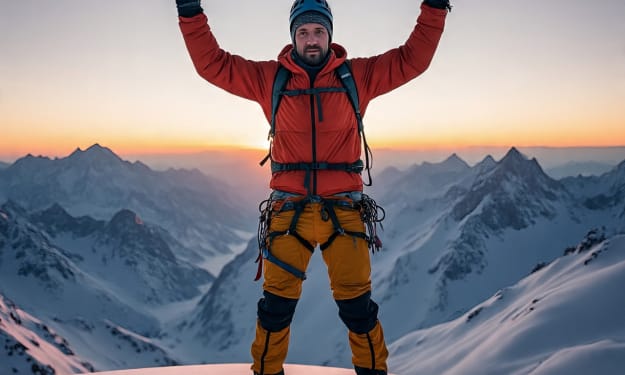
The Last Climb
Ethan Mitchell had always dreamed of reaching the summit of Mount Rainier. Towering above Washington state, its snow-covered peak loomed like a silent giant, daring anyone to try. The mountain was legendary — beautiful, brutal, and unpredictable. Many had attempted the climb. Few had made it to the top. Even fewer had returned unchanged. But Ethan wasn’t like most climbers. He wasn’t rich or famous. He wasn’t a professional athlete. He had no high-tech gear, no Instagram followers cheering him on, and no team of guides. He was a high school science teacher from a small town in Oregon, with a quiet dream that had lived in his heart since he was a boy. He had watched documentaries, read survival books, and saved every extra penny he could for years. While others went on vacations, bought new cars, or upgraded their phones, Ethan bought ropes, boots, and freeze-dried meals. People laughed at him. “Come on, man, you’re pushing forty. You’re not built for that kind of thing,” they’d say. But Ethan kept going. In early June, after three years of saving and training, he finally arrived at the base camp of Mount Rainier. The wind was sharp, the air thin, and the mountain loomed like a frozen wall of challenge. The first few days of climbing were hard, but manageable. He found his rhythm — one step, one breath at a time. The nights were freezing, but the stars above were worth it. He felt alive in a way he hadn’t in years. Then came the storm. On the fourth night, winds howled like wild animals. His tent nearly tore apart. Snow slammed against the sides. Inside, Ethan sat clutching his sleeping bag, hands numb, heart racing. The storm didn’t care about dreams — it just wanted him gone. For hours, he questioned himself. “What am I doing here?” “Why didn’t I just stay home?” “I’ve come far. Maybe that’s good enough.” But deep down, a quiet voice answered: Keep going. When the storm finally passed, the mountain looked different — harsher, angrier. Snow had buried the trail. The climb was now more dangerous than ever. On the fifth day, as Ethan crossed a steep ice ridge, his boot slipped. He fell hard. His right leg twisted beneath him, sending a bolt of pain up his side. For a long time, he just lay there in the snow, staring at the gray sky, wondering if this was how his journey would end. He pulled out a photo from his jacket — a picture of his late father, who had always told him, “The only time you fail is when you quit.” Gritting his teeth, Ethan pulled out a cloth bandage and wrapped his leg. It wasn’t perfect, but it would do. He grabbed his walking stick and pushed forward. Every step was fire. Every breath was a battle. But the summit — he could see it now. Maybe one more day. That night, he dug a shallow snow shelter and lay beneath the open sky, bruised and broken. And yet, he felt peace. He wasn’t scared anymore. The pain didn’t matter. He was still climbing. At dawn on the sixth day, with golden sunlight flooding the peaks, Ethan began the final ascent. His body screamed in protest, but he ignored it. One step. Another. Then another. And finally — he was there. The summit. The highest point he had ever stood on. He dropped to his knees, breathless. Tears welled up in his eyes, freezing on his cheeks in the wind. The world stretched below him — valleys, forests, clouds. The silence was so deep it rang in his ears. He whispered, “I made it.” It wasn’t just the view that overwhelmed him. It was the journey. The decision to keep going when it hurt, when it was scary, when it would’ve been easier to quit. --- Years later, Ethan stood in front of his class, still wearing his old hiking boots — the same ones from that climb. He held one of them up and smiled at his students. “This isn’t just a boot,” he said. “It’s proof.” “Proof of what?” a student asked. “That even when things seem impossible, you can still move forward,” he said. “You don’t need to be the strongest or the fastest. You just need to keep going. One step at a time.” The classroom was silent. “And sometimes,” Ethan added, “the biggest victory isn’t reaching the top — it’s refusing to stop climbing.” Start writing...
By Muhammad Bilalabout a year ago in Motivation
Who Really Am I?
The question “Who am I?” sounds deceptively simple. Yet it’s the one that has haunted me for most of my adult life. When I was younger, I thought identity was something you chose once—like a career path or a favorite color—and stuck with forever. I believed I was the sum of my roles: a student, a friend, a child, later a professional. But every time life shifted, those roles broke apart, and I was left staring at the pieces, wondering which ones were really me and which ones I had picked up just to fit in.
By Inzamam Ul Haqabout a year ago in Motivation
The Unseen Hours: How Ordinary Struggles Shape Extraordinary Lives. Content Warning. AI-Generated.
Introduction: Where Success Really Begins When we imagine success, we often picture the loud moments — applause, awards, headlines, promotions. But what if I told you that everything worth becoming is forged in the quiet? Not when the spotlight is on, but when no one is watching. Not when you feel confident, but when you feel broken and unsure — and you show up anyway.
By Chilam Wongabout a year ago in Motivation
From Lab to Life: The Top 10 Emerging Technologies of 2025. Content Warning. AI-Generated.
Introduction: Innovation That’s Quietly Changing Everything Every now and then, a wave of new technologies emerges—so subtle that most of us don’t notice until they’ve already arrived. In 2025, that wave is here. A report co‑published by the World Economic Forum and Frontiers highlights ten technologies set to ripple through medicine, climate solutions, energy, and digital trust. From self‑sensing biomolecules to batteries that charge in minutes, this decade’s breakthroughs are not sci‑fi—they’re happening now.
By Chilam Wongabout a year ago in Motivation
Broke but Building: A Young Adult’s Guide to Mastering Money Without Losing Your Mind
Let’s be real: no one taught us this stuff. In school, we learned how to calculate the volume of a cone and dissect frogs. But no one pulled us aside and said, “Hey, here's how to actually survive with money in the real world.” Now you’re staring at rent, student loans, $9 coffees, and wondering how people afford vacations and avocado toast at the same time.
By Yand Bullosyabout a year ago in Motivation
The ROI of Cloud Computing Education: Why Employers Pay More for Cloud Expertise
The ROI of Cloud Computing Education: Why Employers Pay More for Cloud Expertise BY [ WAQAR ALI ] In today’s digital-first economy, cloud certifications are more than just a resume booster—they’re a direct path to higher salaries and better job security.
By WAQAR ALIabout a year ago in Motivation
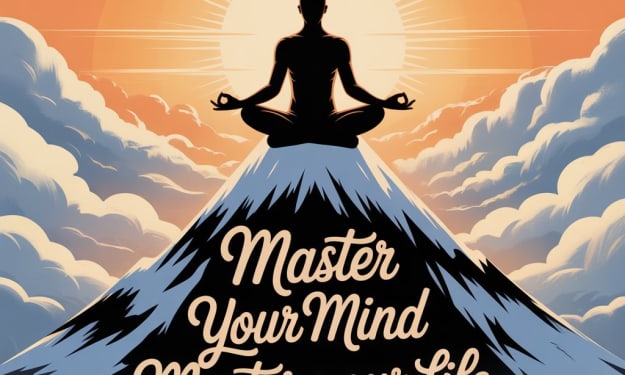
Master your mind master your life. AI-Generated.
In a world that often feels chaotic and unpredictable, it's easy to believe that we have little control over our lives. We chase goals, react to challenges, and often feel like victims of circumstance. But what if the real source of change and direction isn't outside of us—but within? The truth is this: you have more power than you think. Right now, buried beneath self-doubt, fear, and years of conditioning, lies a force that can radically reshape your life—your inner power. When you learn to access and master this power, you stop living passively and start creating your own reality. You stop merely surviving and begin thriving. You stop waiting for life to happen and start taking control of your destiny. This journey starts with one realization: your mind is the master key. --- 1. The Mind as Your Greatest Weapon—or Your Greatest Prison Your thoughts shape your beliefs, and your beliefs drive your actions. And your consistent actions create your destiny. If you believe you are limited, unlucky, or unworthy, your mind will create situations to confirm those beliefs. But if you believe in growth, resilience, and purpose, your life will begin to reflect that. Too often, we underestimate how much our internal dialogue influences our external world. Negative self-talk, limiting beliefs, and fear-based thinking are not just mental obstacles—they're life blockers. But the moment you become conscious of your thoughts and challenge them, you reclaim your power. > “Whether you think you can, or you think you can't – you're right.” — Henry Ford Mastering your mind is the first step to mastering your life. --- 2. Know Thyself: The First Unlock Self-awareness is your foundation. You cannot master what you do not understand. Begin by asking yourself powerful questions: What do I believe about myself and the world? Are these beliefs empowering or limiting? Where did these beliefs come from—my parents, culture, past failures? What do I truly want, not what others expect of me? Take time to reflect, journal, meditate—whatever helps you connect with your inner truth. When you begin to understand yourself beyond your roles, past, and fears, you tap into a level of clarity that is unstoppable. --- 3. Reclaim Responsibility: The Path to Power If you want to take control of your destiny, you must reclaim full responsibility for your life. This doesn’t mean blaming yourself for everything that’s gone wrong—but it does mean owning your response. You can’t control what happens to you, but you can always control how you respond. That power to choose your mindset, your attitude, and your actions is your greatest freedom. Victimhood robs you of agency. Responsibility restores it. When you stop waiting for the world to change and start changing yourself, everything shifts. --- 4. Develop Mental Discipline: Train the Inner Warrior No transformation happens without effort. Just as you train your body to get stronger, you must train your mind to be focused, calm, and resilient. Start small. Build habits that cultivate mental strength: Daily gratitude: Focus on what’s going right, not what’s wrong. Mindfulness or meditation: Learn to observe your thoughts without being ruled by them. Affirmations: Speak to yourself with power, not defeat. Reading: Feed your mind with wisdom, not garbage. Over time, these practices sharpen your focus, reduce anxiety, and help you stay centered even in the storms of life. --- 5. Face Your Fears: The Gateway to Growth Most people are held hostage by fear—fear of failure, rejection, judgment, or change. But what they don’t realize is that fear is the compass pointing you toward growth. Every time you step outside your comfort zone, you expand your inner power. Each difficult conversation, bold decision, or brave leap into the unknown trains your nervous system to handle more. You don’t need to eliminate fear—you just need to act in spite of it. --- 6. Set a Vision, Then Become the Person Who Can Achieve It Having a clear vision gives your mind a target. Without one, you drift. Ask yourself: What does my ideal life look like? How do I want to feel each day? Who do I need to become to live that life? Write it down. Visualize it. Speak it aloud. But here’s the key: you don’t “get” your dream life by wishing. You become the person who attracts it. Work on your character, your habits, your values. Build discipline, integrity, and confidence. When you grow into the version of yourself who is ready for the life you desire, that life begins to meet you halfway. --- 7. Surround Yourself with Growth You are a reflection of your environment—what you consume, who you spend time with, and what you allow in your space. To unlock your full power, curate your circle. Be around people who challenge you, inspire you, and support your evolution. Limit time with those who drain your energy or reinforce your old limitations. Remember, energy is contagious. Choose your influence wisely. --- 8. Consistency Beats Intensity Big changes don’t come from one huge effort—they come from small, daily decisions stacked over time. One day of confidence won’t change your life. Daily confidence will. One journal entry won’t unlock clarity. Journaling consistently will. One hard workout won’t make you fit. Daily training will. Progress isn’t about perfection—it’s about momentum. Keep going, even on days when it’s hard. Your future self will thank you. --- Conclusion: You Hold the Key The most important truth you can realize is this: > You are not powerless. You are powerful. You are not defined by your past, your fears, or your current circumstances. You are defined by what you choose to become from this moment forward. There is a force within you capable of achieving greatness, of breaking cycles, of creating a life of purpose, joy, and meaning. But no one else can do it for you. The choice is yours. Unlock the power within—and take control of your destiny. ---
By Samiullah about a year ago in Motivation
The 7-Day Self-Improvement Challenge:
Have you ever felt stuck in a rut? You want to grow, but time constraints or self-doubt hold you back? Enter the "7-Day Self-Improvement Challenge"—a science-backed, practical blueprint to revolutionize your physical, mental, and emotional well-being.
By Newztweet Online Toolsabout a year ago in Motivation
Believe in Yourself — Even When You Don’t Feel Ready
Trust ourself-Even When You Don t Feel Prepared I used to believe that the saying Believe in yourself is one of those things people say when they do not know what to say.I would read it in speeches, read it in books, scroll past it on social media, all in bold fonts and bright colors. But, in real life, in the still, heavy moments when I was not certain of myself, it was just a hollow piece of advice. Have faith in yourself? I did not even know how to begin.
By Arbaazabout a year ago in Motivation
Sylvester Stallone — The Man Who Wrote His Own Destiny
If life were a boxing match, Sylvester Stallone’s first rounds would have left most people flat on the canvas. But Stallone wasn’t built to stay down. He was the kind of fighter who could take hit after hit — from poverty, rejection, humiliation — and still find the strength to get back up. The world would one day know him as Rocky Balboa, but before that, he was just a struggling young man in New York City, clutching a dream so stubborn it refused to die.
By Frank Massey about a year ago in Motivation
10 Tiny Habits That Changed My Life More Than Anything Else
Introduction: The Myth of Big Change They say big changes bring big results. That you need a 5 AM routine, a perfect diet, or 10 hours of hustle every day to transform your life. That’s a lie. At least for me, it was. My life didn’t change because of one massive breakthrough. It changed because of 10 small habits I added into my daily routine — habits so simple, they almost seemed too small to matter. But they did matter. These habits rewired my mindset, improved my confidence, and gave me clarity when my life felt like a mess. This is not a success story. This is a survival story — of getting through dark days using tiny steps. If you’re tired of feeling stuck, lost, or overwhelmed, maybe what you need isn’t motivation or inspiration. Maybe you just need to start small. --- 1. I Stopped Checking My Phone Right After Waking Up For years, my day began like this: alarm rings → reach for phone → scroll Instagram → check WhatsApp → get overwhelmed → feel behind. By 7:15 AM, I’d already consumed other people’s thoughts, problems, and fake perfect lives. I was mentally exhausted before I even got out of bed. So I tried something different. I started placing my phone across the room. I replaced my morning scroll with a 2-minute stretch and deep breath. Result? I felt in control. My thoughts were mine. I didn’t start my day reacting — I started it intentionally. --- 2. I Started Drinking Water First Thing in the Morning You know that sluggish, cloudy feeling in the morning? Turns out, I was dehydrated — not lazy. Drinking 1 glass of water as soon as I woke up became my tiny morning ritual. It felt like I was doing something for myself — something pure and energizing. And it worked. Better skin. Better mood. Fewer headaches. Clearer focus. Cost? Zero. Effort? 10 seconds. Impact? Huge. --- 3. I Made My Bed — Even When No One Was Watching I read somewhere: “If you want to change the world, start by making your bed.” I rolled my eyes. But I tried it anyway. It gave me a small sense of pride — like I’d already accomplished something. That simple act of order in a chaotic world made me feel calm and grounded. It’s not about the bed. It’s about the message: You’re worth taking care of. --- 4. I Wrote Down One Thing I Was Grateful For Just one. Not a long journal entry. Not a forced list. Just one genuine thing — however small. Some days it was: “I’m grateful I made it through yesterday.” Other days: “I’m grateful for the sound of rain.” Once: “I’m grateful my anxiety didn’t win today.” This habit taught me that joy doesn’t come from having more — it comes from noticing more. --- 5. I Took 5-Minute Walks Without My Phone I call them “mind walks.” No music. No phone. Just me, the ground under my feet, and the air in my lungs. Sometimes I walked in circles around the block. Sometimes just down the hallway. Those 5 minutes cleared my brain better than any app ever did. Walking became a reset button — for stress, for sadness, for overthinking. --- 6. I Read One Page a Day Yes, one page. Because I was tired of buying books and never finishing them. I stopped chasing “finish the whole book in a week” and started with one single page every night. Some nights I read more, some nights just that one. But I showed up. In a few months, I’d finished 3 books. And more importantly, I’d started becoming a reader again. --- 7. I Stopped Using My Phone During Meals This one hurt. No reels while eating. No replying to messages with a mouth full of rice. Just food. Just chewing. Just silence or conversation — like old times. It slowed me down. Helped me feel full. And most surprisingly, it made me appreciate the taste of food again. I realized I was consuming everything too fast — content, food, life. Slowing down was the real feast. --- 8. I Learned to Say “No” Without Guilt This wasn’t a habit at first. It was a war. I was a people-pleaser. Saying “yes” to everything because I didn’t want to disappoint anyone — even if it meant disappointing myself. But each “yes” was a drop in the bucket of burnout. So I started saying “no.” First to toxic people. Then to overcommitting. Then to things that didn’t align with who I wanted to become. Saying “no” isn’t rude. It’s radical self-respect. --- 9. I Tracked My Habits With One Checkmark a Day Not an app. Not a complicated system. Just a paper with 10 tiny boxes. Every time I did a habit, I checked the box. That’s it. It made me consistent, not perfect. And that’s all I ever needed. Success isn’t about doing everything perfectly. It’s about showing up, even when it’s messy. --- 10. I Reflected for 2 Minutes Before Sleeping I’d lie down and ask myself: What did I do well today? What drained me? What made me smile? It wasn’t a formal practice. Sometimes I just thought about it silently. Sometimes I jotted it down. It helped me forgive myself for what I didn’t do, and appreciate myself for what I did. That small pause turned into a powerful practice of self-compassion. --- 💬 Final Thoughts: Start Small, Stay Steady You don’t need to change your entire life today. You don’t need a new job, a perfect plan, or a morning routine that takes 2 hours. Start with one habit. One moment. One choice. Because the truth is, your life doesn’t change in one day. But it does change one day at a time. And sometimes, the smallest shifts create the biggest waves. --- > If this story inspired you, leave a ❤️ or share it with someone who needs a small push. Your support means the world. --- [END OF ARTICLE]
By Misbah about a year ago in Motivation