success
The road to success is always under construction; share your equations for success — and learn some new ones.
From Overthinker to Action-Taker: My 30-Day Life Experiment
I’ve always been an overthinker. The type who makes five different to-do lists, then spends hours researching the “best way” to start instead of… starting. I’d imagine every possible outcome of a decision, then freeze before making it. The result? Missed opportunities, unfinished projects, and a constant feeling that life was passing me by. One day, a friend said something that shook me: “You don’t have a thinking problem. You have an action problem.” That stung. But deep down, I knew they were right. So I challenged myself: 30 days of choosing action over overthinking. No more endless debating. No more waiting for the “perfect” moment. Just doing. Here’s what happened. Week 1: The Fear of Starting On Day 1, I stared at a blank page for an hour before finally writing the first paragraph of an article I’d been postponing for months. Was it perfect? No. But it was something. I realized my brain had built the task into a monster far bigger than it really was. By starting, I shrunk it back to size. By the end of the first week, I had tackled three tasks I’d been procrastinating on for weeks: sending a scary email, cleaning out my workspace, and scheduling a doctor’s appointment I’d been avoiding. Lesson learned: starting is scarier in your head than in reality. Week 2: Momentum Builds Something interesting happened in week two. Once I started taking small actions, I noticed momentum kicking in. Instead of spiraling into “what ifs,” I trained myself to ask one question: What’s the next smallest step I can take right now? That shift alone was powerful. For example, instead of obsessing over how to design a whole website, I just bought the domain name. Instead of planning a complicated workout routine, I laced up my sneakers and went for a 10-minute walk. Each tiny step gave me a quick win—and those wins built confidence. Week 3: Resistance Fights Back By week three, resistance came knocking. My brain whispered: “What if you fail? What if it’s not good enough? Maybe tomorrow…” Old habits don’t vanish overnight. There were days I slipped back into overthinking. But instead of beating myself up, I reminded myself: action doesn’t have to be big to count. One day, my “win” was just sending a two-line email. Another day, it was writing 100 words instead of 1,000. Progress, not perfection, kept me moving. Week 4: Transformation By the final week, something clicked. Taking action was no longer a fight—it was becoming a habit. I noticed three major changes: 1. More confidence. I trusted myself more, because I had proof I could follow through. 2. Less stress. The mental clutter of unfinished tasks started to clear. 3. New opportunities. By actually putting myself out there—sharing work, reaching out, applying for things—I opened doors that staying in my head would’ve kept closed. One moment stands out: I’d been sitting on an idea for a small online project for months. Normally, I’d plan it to death. But this time, I just launched a simple version. Within days, people engaged with it. It wasn’t perfect—but it was real. That was the moment I realized: action beats perfection, every time. -What I Learned in 30 Days Looking back, this experiment didn’t “cure” my overthinking. My brain still loves to spin in circles sometimes. But here’s what changed: I stopped letting overthinking decide for me. Here are my biggest takeaways: Starting is the hardest part. Once you begin, momentum carries you. Small steps matter. Don’t wait for the big leap—tiny actions add up. Done beats perfect. An imperfect attempt teaches more than endless planning. Action builds confidence. The more you do, the more you believe you can. Final Thoughts If you’re stuck in overthinking like I was, you don’t need a life overhaul. You don’t need to “stop thinking” (that’s impossible). You just need to balance it with action. Pick one thing—just one—that you’ve been delaying. Don’t wait until Monday. Don’t wait until you’re “ready.” Start today. Because the truth is, clarity doesn’t come from thinking—it comes from doing. And if 30 days can turn me from an overthinker into an action-taker… imagine what it could do for you. are you more of an overthinker or an action-taker? Which small action could you commit to today?
By Nomix about a year ago in Motivation
Breaking Barriers: How Ordinary People Create Extraordinary Change. Content Warning. AI-Generated.
Introduction: The Spark That Starts a Fire Every great achievement begins the same way: with a small spark. A spark of curiosity.A spark of determination.A spark of courage to try, even when the odds seem impossible.
By Chilam Wongabout a year ago in Motivation
The Burden of Resistance
The Weight We Carry ... If destiny is a river, then resistance is the act of swimming against the current. At first, it feels powerful. It feels like control. We tell ourselves: “I will not be carried. I will decide. I will fight until I get what I want.”
By Zidaneabout a year ago in Motivation
The Anxiety of Infinite Options: Why Choosing Feels Harder Than Ever. AI-Generated.
When the internet promised us “everything, everywhere, all at once,” it sounded like a dream. Unlimited shows to stream, endless restaurants delivering to our door, infinite profiles to swipe through in search of love. Choice was supposed to equal freedom. But instead of liberation, many of us feel paralyzed.
By Ahmet Kıvanç Demirkıranabout a year ago in Motivation
Laugh Now, Pay Later: The Day You'll Need My Time. Content Warning.
A Young Dreamer From a Middle-Class Family Habib Rehman was not born into wealth or privilege. He was a young man from a humble middle-class family, where financial struggles were a daily reality. His father worked tirelessly as a low-level clerk in a government office, his mother stitched clothes to support the household, and his siblings followed conventional paths—study hard, secure a stable job, live a safe life.
By HABIB REHMANabout a year ago in Motivation
Comfort Kill Dreams
The night I decided to change, the city outside my window was quiet, but inside my head a storm circled the same old excuses. I’ll start tomorrow. I’ll start on Monday. I’ll start when life is less crowded. For years those soft sentences tucked me back into bed, poured me another scroll of videos, and called it rest. Comfort felt like kindness. It was actually a thief.
By Jack Nodabout a year ago in Motivation
“The World Does Not Let One Live in Any Condition”. AI-Generated.
Life of the Woodcutter Long ago, in a small village surrounded by forests and hills, there lived a poor woodcutter and his young son. The woodcutter’s only source of livelihood was cutting wood from the forest. Every day, he and his son would gather firewood, load it on their donkey, and sell it in the nearby city. The money they earned was enough for bread, a few vegetables, and sometimes a little rice. They lived a simple life. The donkey was not only their helper but almost like a member of the family. It carried heavy bundles of wood every day, and the woodcutter often said, “This animal may not speak, but it feeds us like a silent partner.” One year, during the spring season, a fair was announced in a neighboring village. The fair was a grand event. People from nearby towns and villages would attend. There were music, dancing, colorful stalls, sweets, toys, and merchants selling different goods. Children especially loved the fair because it was full of excitement. The woodcutter’s son, like any other child, was filled with joy when he heard about it. He ran to his father and pleaded, “Father, everyone in the village is going to see the fair. Why can’t we also go? I want to see the colors, the toys, and the games.” The father shook his head with a tired smile. “My son, fairs and festivals are for the rich. Poor people like us survive only by hard work. If we waste a day at the fair, who will bring us food? But the boy’s eyes were filled with such innocent hope that the father’s heart softened. “Alright, son,” he said gently, “just for your happiness, we shall go to the fair.” --- The Journey Begins Early the next morning, father and son prepared to leave. They thought about what to do with the donkey. “If we leave it at home, it will remain hungry and thirsty all day,” said the father. “And if we give it to someone, they will use it for their own work,” the boy added. Finally, they agreed to take the donkey with them. “It will be under our care,” said the father, “and on the way back, if we find wood or other things, the donkey will help us carry them.” So the three companions—father, son, and donkey—set out for the fair. The donkey walked ahead while father and son followed behind. --- The First Criticism After walking some distance, they met a group of travelers. The men laughed and said loudly, “Look at these fools! They have a donkey, yet they both walk while the animal goes empty. What stupidity!” The father thought about it. “Perhaps they are right, son. It is a long journey, and the donkey can carry one of us. You are young, so you ride. I will walk.” The boy climbed onto the donkey’s back, and they continued. --- The Second Criticism Not long after, they passed some old men. One of them frowned and said to the others, “What has the world come to? Children no longer respect their elders. Look at that lazy boy, riding comfortably while his poor father walks!” The boy felt ashamed and quickly got down. “Father,” he said, “they are right. You are old. You should ride, and I will walk.” The father, though reluctant, finally sat on the donkey while his son walked beside him. --- The Third Criticism Soon, they encountered some women. One of them shook her head and said, “What a cruel father! He rides while his poor child walks in the sun. Does he have no heart?” The father grew troubled. He stopped the donkey and said, “Son, you see how people talk? If you ride, they criticize. If I ride, they criticize. Perhaps the only way is for both of us to ride.” So, father and son both sat on the donkey and moved ahead. --- The Fourth Criticism As they approached another village, some young men saw them and shouted, “Shame on you! Two people riding on one poor creature. Do you have no fear of God? Such cruelty to animals will surely be punished!” The father and son froze. Once again, people disapproved. The father sighed heavily. “My son, no matter what we do, the world is never satisfied. Let us try something different.” --- The Foolish Attempt to Please All They tied the donkey’s legs together with a rope, passed a thick pole between them, and lifted the animal onto their shoulders. Now the father walked in front, his son behind, and the donkey hung upside down between them. People who saw this burst out laughing. “Look at these fools! Carrying a donkey on their shoulders! Have you ever seen such madness?” Still, the father and son continued. But when they reached a narrow wooden bridge over a stream, the donkey panicked. It thrashed and kicked wildly. The pole slipped from their hands, and with a loud splash, the donkey fell into the water below. The poor animal, still tied by its legs, drowned in the stream. Father and son stood helpless, their hearts filled with grief. --- The Idea and Reflection The woodcutter finally sat on a rock and said, “My son, today we have learned a bitter truth of life. Someone once said, ‘One person cannot please the whole world.’ And it is true. We tried to listen to everyone, to follow every opinion, and in the end, we lost the very creature who was our companion and support.” He placed his hand on his son’s shoulder and continued, “In life, people will always talk. Some will criticize you for doing too much, others for doing too little. If you waste your time trying to satisfy every voice, you will lose your path, your peace, and sometimes even the things most precious to you. The only way to live is to follow what is right, not what everyone says.” --- Moral of the Story 👉 Do what is right, not what pleases others. If you try to satisfy everyone, you will end up satisfying no one—and may even destroy yourself.
By Ihtisham Ulhaqabout a year ago in Motivation
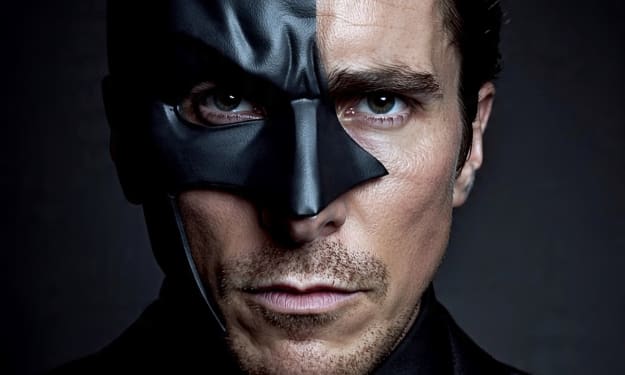
Christian Bale: From Dark Knight to Hollywood’s Chameleon
Christian Bale’s name today carries weight not just because of his movies, but because of his reputation as one of the most fearless, dedicated, and mysterious actors of his generation. Known for transforming his body, his voice, and even his soul for roles, Bale has become the definition of commitment. But behind the awards and iconic performances lies a story of resilience, sacrifice, and a relentless pursuit of perfection.
By Frank Massey about a year ago in Motivation