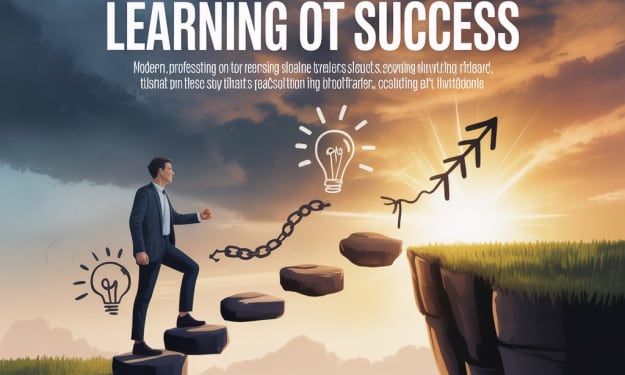
success
The road to success is always under construction; share your equations for success — and learn some new ones.
What I Learned After Failing 3 Times in Business
Lessons from my failures that turned setbacks into success When I first dreamed of starting a business, I imagined freedom, financial independence, and the pride of building something of my own. What I didn’t imagine was how much failure I would face along the way. Over the past few years, I have started three different businesses—and all three failed. At the time, those failures felt like the end of the world. I lost money, confidence, and even relationships. But now, looking back, I realize those experiences gave me something even more valuable than success: lessons I couldn’t have learned any other way. Here are the truths I discovered through failure that continue to guide me today. --- Failure Is a Teacher, Not a Tombstone My first business collapsed in less than six months. I remember sitting in my empty shop after closing the doors for the last time, wondering how I could have been so wrong. It was painful, but eventually I realized failure wasn’t a tombstone marking the death of my dream—it was a teacher pointing out what I had overlooked. That perspective changed everything. Each setback became less about what I lost and more about what I could learn. --- Plans Are Good, but Adaptability Is Better In my second attempt, I thought I had done everything right. I made spreadsheets, studied the market, and prepared for months. But then reality hit: my suppliers didn’t deliver on time, customer behavior wasn’t what I expected, and competition popped up overnight. That failure showed me that adaptability matters more than preparation. A business plan is important, but being flexible, quick to adjust, and willing to pivot is what keeps an idea alive. --- Ego Is Expensive By the time I launched my third business, I was confident—too confident. I ignored advice from people who knew more than me. I dismissed feedback from customers because I thought I “knew better.” That pride was costly. The collapse of that venture humbled me. It taught me that listening is a strength, not a weakness. Success requires humility—the ability to accept that we don’t have all the answers. --- Resilience Comes From Struggle Each failure chipped away at me emotionally. There were nights I couldn’t sleep, days I avoided friends because I didn’t want to admit I had failed again. But slowly, I noticed something: every time I got back up, I became a little stronger. Resilience isn’t something you’re born with—it’s something you build. And the only way to build it is to go through hard times and decide not to quit. --- Patience Pays More Than Desperation Looking back, I realize I was chasing success too quickly. I wanted instant results—big profits in months, not years. That desperation made me impatient, and impatience led to poor decisions. Now I understand that meaningful success takes time. Small wins, repeated consistently, build momentum. Business isn’t about overnight miracles—it’s about persistence and patience. --- A Support System Matters One of the hardest parts of failure is how lonely it feels. During my second and third attempts, I kept everything bottled up. I thought admitting my struggles would make me look weak. But silence only made the burden heavier. Eventually, I started talking to mentors and friends about my setbacks. Their advice, encouragement, and perspective helped me recover faster. Having people to lean on doesn’t erase failure, but it makes the road forward much easier. --- Focus on Value, Not Just Profit In my early ventures, I chased numbers. All I thought about was profit margins, not the actual value I was creating. That mindset was backwards. What I’ve learned since then is simple: when you focus on solving real problems and genuinely helping people, money follows naturally. Chasing profit alone is shallow; building value builds something that lasts. --- Final Reflection Failing three times hurt more than I can put into words. But those failures shaped me into someone stronger, more disciplined, and more aware of what it really takes to succeed. The biggest lesson I carry with me is this: failure isn’t final unless you give up. Every setback is an opportunity to learn, grow, and come back smarter. If you’re facing failure right now—whether in business, work, or life—remember that it doesn’t mean you’re finished. It means you’re learning. And sometimes, those painful lessons are the foundation of the success you’ve been searching for all along.
By Akhtar aliabout a year ago in Motivation
Why Men Pull Away in Relationships (And How You Can Handle It)
Introduction (Hook + Problem + Promise) Every woman has experienced it at least once. Everything seems perfect — he’s texting you, calling you, making plans, showing affection. And then suddenly… he pulls away. The texts slow down, the calls stop, and you’re left wondering: What did I do wrong? The truth is, men pull away in relationships for reasons that often have nothing to do with you. Understanding these reasons can save you from unnecessary heartbreak and give you the tools to handle the situation with confidence. In this article, we’ll explore the psychology behind why men pull away, the common signs to watch for, and how you can respond in a way that keeps your self-respect — and possibly saves the relationship. What Does It Mean When a Man Pulls Away? When a man “pulls away,” it doesn’t always mean he’s breaking up with you. Pulling away can look like: He becomes less communicative. He avoids deep conversations. He stops making plans as often. He acts distracted or emotionally distant. This stage is confusing because it feels like love is slipping away — but sometimes, it’s just part of how men process emotions. Why Do Men Pull Away? (Main Keyword Section)
By dabeer hashmiabout a year ago in Motivation
Fly High: Living Courageously and Fulfilling God’s Purpose”. Content Warning.
HIGH FLIER: SOAR INTO YOUR DESTINY Isaiah 40:31 – “But they that wait upon the LORD shall renew their strength; they shall mount up with wings as eagles; they shall run, and not be weary; and they shall walk, and not faint.”
By Byron Egoleabout a year ago in Motivation
How to made honest man himself
How to Be an Honest Man Honesty is one of the most valuable qualities a person can have. An honest man is respected everywhere because truth is the foundation of trust, and trust builds strong relationships in family, society, and professional life. In today’s world, where lies and deception are common, being honest is not always easy. However, if one truly wants to live a meaningful and respected life, honesty is the best path to choose. Being an honest man requires discipline, courage, self-control, and a strong moral foundation.
By Shiv Shankarabout a year ago in Motivation
Taylor Swift: The Human Story Behind the Global Superstar
Taylor Alison Swift isn’t just a pop star. She’s a cultural phenomenon, a songwriter whose lyrics have become generational anthems, and an artist who has repeatedly redefined herself while staying true to her core. But what often gets overshadowed by her stadium-filling tours and chart-topping records is the very real human journey: her early rejections, her relentless drive, her public humiliations, her battle for ownership of her work, her struggle with image and mental health, and her unwavering resilience in the face of criticism.
By Frank Massey about a year ago in Motivation
I Tested 4 Apps That Pay You to Watch Videos—Here’s What Really Happened
You’ve probably scrolled past those tempting YouTube or TikTok videos promising you can earn "$100 a day just for watching videos online." It sounds like a dream, right? Passive income while binge-watching? I was skeptical but curious, so I decided to test four popular free apps and tools that claim to pay you for watching videos. I invested real time, followed their instructions, and tracked my results honestly.
By Manoj Makwanaabout a year ago in Motivation
From Procrastination to Profit
Eli was the kind of person everyone called “laid-back.” At 22, he’d rather nap than hustle, watch tutorials instead of attend lectures, and scroll endlessly on his phone while assignments piled up. He didn’t hate work... he just hated effort.
By MIGrowthabout a year ago in Motivation
How I Finally Killed Procrastination
For years, procrastination was my silent enemy. I would set goals, make plans, even write detailed to-do lists—but when it came time to act, I delayed. I told myself: “I’ll do it tomorrow… I’ll start next week… I just need to be in the right mood.” But the truth? That “perfect tomorrow” never came.
By Nihal Khan hashmiabout a year ago in Motivation
The Power of Small Changes: How Tiny Steps Can Transform Your Life
In today’s fast-paced world, most people search for quick success, instant fame, and overnight transformations. We scroll through social media and see others achieving what looks like perfection: luxurious lifestyles, flawless health, successful businesses, and inspiring talents. It often makes us feel like we are too far behind to ever catch up. But the truth is simple: big results are always the outcome of small, consistent changes. Life is not transformed in a single day, but through daily habits that seem small at first but compound into extraordinary achievements over time. This article explores how small changes can lead to remarkable transformations and why you should start today, even with the tiniest step. --- The Psychology of Small Changes Research in psychology and neuroscience shows that our brains love consistency. When we try to make big, overwhelming changes—like going on an extreme diet or working 12 hours straight—we often fail because our brains resist sudden shifts. However, when we introduce small, manageable habits, they become sustainable. For example, reading just 5 pages of a book daily may not feel like much, but in one year you will finish at least 6–7 full books. Writing 200 words daily seems small, but in six months you could complete a novel. Doing 10 push-ups every morning may sound easy, but in one year, your body will feel stronger and healthier. Small steps are not about being lazy; they are about being strategically consistent. --- Real-Life Examples of Transformation 1. Health and Fitness: Instead of promising yourself to run 10 kilometers on day one, start with a 5-minute walk. Gradually increase it, and soon you will run without struggle. Many world-class athletes began with very basic daily routines. 2. Learning and Knowledge: Want to learn English, coding, or any new skill? Just dedicate 15 minutes daily. In a year, that’s over 90 hours of learning—a huge difference compared to doing nothing. 3. Personal Growth: Practicing gratitude by writing one positive thing daily can rewire your brain to focus on positivity. Over time, this small habit creates a happier and more resilient mindset. --- Why People Fail at Big Goals People often fail because they aim too high in too little time. They want instant results, but when reality doesn’t match their expectations, motivation fades. You can’t lose 20 kg in one month. You can’t master a language in two weeks. You can’t build a business empire in a single year. But you can start with one healthier meal daily, one new word daily, and one small business experiment. Slowly, these build a foundation for success. --- The Science of Compounding Habits Think about compound interest in finance: you save a small amount daily, and over years it grows into something massive. Habits work the same way. James Clear, author of Atomic Habits, famously said: > “Habits are the compound interest of self-improvement.” If you improve just 1% every day, by the end of the year, you will be 37 times better than when you started. --- How to Start Small Today 1. Choose One Area: Health, knowledge, or personal development. Don’t try to fix everything at once. 2. Start with One Action: Drink an extra glass of water, walk for 5 minutes, or read a single page. 3. Stay Consistent: Do it daily, no matter how small it feels. 4. Track Your Progress: Write down your habits—it motivates you to continue. 5. Celebrate Tiny Wins: Even the smallest success deserves recognition. --- Inspirational Story Consider the story of Abdul, a university graduate who dreamed of becoming a writer. Instead of waiting for inspiration, he committed to writing just 300 words daily. At first, it seemed useless, but after one year, he had over 100,000 words—enough for a book. Today, he shares his ideas on blogs, earns income, and inspires thousands. His journey wasn’t about overnight genius but about small daily actions. --- Conclusion The secret to success is not in massive overnight changes, but in small, consistent habits. Every tiny step counts. The glass of water, the 5-minute walk, the one new word, or the short daily writing session—all of them are investments in your future. Remember this: You don’t need to see the whole staircase, just take the first step. Start today with something small. Tomorrow, your future self will thank you.
By Omar Khostai about a year ago in Motivation
The Power of Consistency
The Power of Consistency When we think about success, we often picture big moments — winning an award, starting a business, or landing a dream job. But the truth is, success doesn’t usually come from one big event. It comes from the little things we do every single day. That’s the real power of consistency.
By Khanabout a year ago in Motivation